

1 Michelin Star · World's 50 Best #82
Our verdict
Xin Rong Ji on West Nanjing Road holds a Michelin star and a place on Asia's 50 Best Restaurants list (ranked 82nd in 2025), making it the city's most prominent address for Taizhou cuisine. The seafood arrives daily from Taizhou, with guests selecting live catch at the entrance stall and directing how it is cooked. Pre-ordering signatures such as braised yellow croaker or golden deep-fried hairtail is advised.

Pearl is the En Primeur Club membership app, where members save venues, book tables and use the concierge.
The menu
What to order
- Braised yellow croaker
- Golden deep-fried hairtail
- Sea anemone sweet potato noodles
Where the East China Sea Reaches the Table
Step into the 688 Plaza on West Nanjing Road and the first thing you encounter at Xin Rong Ji is not a host stand or a drinks trolley but a seafood stall. Tanks and trays hold the morning's catch, shipped directly from the port city of Taizhou, a coastal prefecture roughly 300 kilometres south of Shanghai on Zhejiang's coast. That stall is not decorative. It is the operational spine of everything that follows.
Taizhou cuisine sits in an interesting position among China's regional traditions. It does not carry the national recognition of Cantonese or Shanghainese cooking, yet practitioners in that culinary tradition argue, with some justification, that its proximity to some of the most productive fishing grounds on the East China Sea gives it an ingredient base that few Chinese regional styles can match. The cooking tends toward cleaner preparations that allow the seafood's texture and salinity to hold the centre, rather than layering on sauces that would obscure provenance. At a restaurant operating at this level, that restraint is a statement about supply chain as much as it is about culinary philosophy.
The Sourcing Model as the Editorial Story
The mechanics of how Xin Rong Ji sources and presents its seafood make it a useful case study in what responsible provenance looks like at the fine-dining tier in China. The daily shipment from Taizhou means the menu is not predetermined. What arrived that morning determines what is available. Guests are invited to select from the live and fresh seafood at the entrance stall, a format that distributes choice to the diner while anchoring the kitchen in whatever is genuinely in season and in supply. Nothing about that model is accidental. It removes the structural incentive to over-source: if you only cook what guests select from what arrived that day, waste is compressed at the point of purchase rather than managed after the fact.
For a restaurant holding a Michelin star and ranking 82nd on Asia's 50 Best Restaurants list in 2025, operating this way carries a signal beyond sustainability optics. It means the kitchen must be technically consistent across a rotating cast of ingredients rather than refined around a fixed menu that can be rehearsed indefinitely. That is a harder discipline, and the awards record suggests it is being maintained.
The restaurant's pre-visit communication policy reinforces this dynamic. Guests are contacted before their reservation to discuss the day's options, which creates a pre-ordering window for signatures that may require longer preparation. Braised yellow croaker and golden deep-fried hairtail are cited as the preparations worth planning around. Both are Taizhou staples, and both reflect the cuisine's logic: the croaker is a prized East China Sea catch, and the hairtail, silvery, long-bodied, and abundant in that coastal corridor, rewards a confident frying technique that crisps the exterior without losing the fish's natural richness.
Taizhou Cooking in Shanghai's Regional Dining Scene
Shanghai has always been a city where regional Chinese cuisines compete for serious dining attention. Cantonese institutions anchor one end of the market, see 102 House for a sense of how that tradition operates at the premium end. Vegetarian fine dining has carved its own tier, with Fu He Hui holding multiple stars in a format entirely its own. And the Rong family of restaurants, including The House of Rong and Rong Cuisine, represents a distinctly Shanghai sensibility around ingredient-led cooking.
Taizhou cuisine occupies a more specialist niche within all of that. It is not widely represented at the Michelin level in Shanghai, which makes Xin Rong Ji's position in the city's fine-dining tier more significant than the address alone might suggest. The cuisine's reliance on fresh seafood also means it is inherently seasonal in a way that some other Chinese regional traditions are not, the fish and shellfish calendar in the East China Sea produces distinct peaks and gaps, and a kitchen that tracks those rhythms honestly will serve very different plates in March than in October.
For visitors exploring the wider Xin Rong Ji network across China, the group also operates in Beijing, at both Xinyuan South Road and Jinrong Street, as well as Chengdu. Those outposts bring the same Taizhou sourcing logic to cities without coastal proximity, which is its own test of the model's integrity. For Taizhou cuisine from a different operator in the Beijing market, Qian Li provides a useful comparison point.
Beyond Taizhou, the Zhejiang coastal tradition has other expressions worth knowing. Ru Yuan in Hangzhou offers a window into how the adjacent Hangzhou culinary tradition handles freshwater and seasonal produce, while Lin Family of One on the Bund represents the premium Shanghainese tier. For comparable seafood-focused Chinese fine dining in other cities, Chef Tam's Seasons in Macau, Imperial Treasure Fine Chinese Cuisine in Guangzhou, and Dai Yuet Heen in Nanjing each represent how the premium-Chinese dining model operates in different regional contexts.
Planning Your Visit
Xin Rong Ji is located on the second floor of 688 Plaza on West Nanjing Road in Jing'an, one of Shanghai's most accessible commercial corridors. The ¥¥¥ price point places it in a tier that is serious but not at the ceiling of the Shanghai fine-dining market, meaningfully below a ¥¥¥¥ operation like Fu He Hui while carrying comparable award weight.
The pre-visit communication protocol is not optional formality: the kitchen uses that exchange to confirm what is available from the day's Taizhou delivery and to accommodate pre-orders for dishes that require advance preparation. Guests who arrive without having engaged with that process may find certain preparations unavailable. Contacting the restaurant before your reservation, not just to confirm but to discuss what you want to eat, is how the format is designed to function.
For those building a broader Shanghai itinerary, our full Shanghai restaurants guide maps the city's dining categories in more depth. The Shanghai hotels guide, bars guide, experiences guide, and wineries guide cover the rest of the city's premium offer.
At a Glance: Xin Rong Ji vs. Comparable Shanghai Venues
| Venue | Cuisine | Price Tier | Awards | Key Format Note |
|---|---|---|---|---|
| Xin Rong Ji (West Nanjing Road) | Taizhou | ¥¥¥ | Michelin 1 Star; Asia's 50 Best #82 (2025) | Live seafood selection at entrance; pre-visit communication required |
| Fu He Hui | Vegetarian | ¥¥¥¥ | Michelin starred | Fixed tasting format; no seafood |
| 102 House | Cantonese | ¥¥¥ | Michelin recognised | Premium Cantonese; à la carte and set options |
| Rong Cuisine | Shanghainese | ¥¥¥ | Award recognised | Ingredient-led Shanghai cooking |
What People Order at Xin Rong Ji (West Nanjing Road)
The two preparations the restaurant highlights for pre-ordering are the braised yellow croaker and the golden deep-fried hairtail. Yellow croaker is a prestige catch in East China Sea fishing culture, sweet-fleshed, with a delicate structure that rewards slow braising, and ordering it in advance allows the kitchen to source the right size and prepare it correctly within the meal's timing. The hairtail, a fish that features prominently in Zhejiang coastal cooking, is handled here through a deep-frying technique that produces a crisp, golden exterior. Both dishes exemplify the Taizhou principle of letting the fish's character carry the plate rather than building complexity through saucing. Beyond those signatures, the day's available seafood at the entrance stall drives the rest of the menu, what guests see when they arrive determines what gets cooked. That variability is the point: seasonality, not a fixed repertoire, is what the kitchen is built around. The restaurant holds a Michelin star (2024) and ranked 82nd on Asia's 50 Best Restaurants in 2025, both of which provide a measure of how consistently that approach is executed across different catch cycles and seasons.
A Pricing-First Comparison
| Venue | Cuisine | Price | Awards | Notes |
|---|---|---|---|---|
| Xin Rong Ji (West Nanjing Road)This venue (the venue you are viewing) | Taizhou Cuisine | $100–150 | 1 Michelin Star · World's 50 Best #82 | Not listed |
| Fu He Hui | Modern Seasonal Vegetarian Fine Dining | $200–300 | 2 Michelin Stars · World's 50 Best #11 | Vegetarian |
| Ming Court | Cantonese with Shanghainese Influences | $30–50 | 1 Michelin Star · Black Pearl 1 Diamond | Cantonese |
| Polux | French Bistro | $30–50 | Michelin Bib Gourmand | French |
| Royal China Club | Cantonese Dim Sum | $100–150 | Michelin Plate · The Good Food Guide GFG Good | Chinese, Cantonese |
| Scarpetta | Refined Italian Pasta & Pizza | $50–100 | Michelin Plate · Wine Spectator Best of Award of Excellence | Italian |
Recognition history
Dated appearances from independent guides and award organizations, with the underlying list record or original source where available.
Michelin 1 Star
Michelin
World's 50 Best Asia's Best Restaurants #82
World's 50 Best
Full recognition history (4 entries)
Michelin 1 Star
Michelin
Michelin 1 Star
Michelin
Continue exploring
More in Shanghai
Restaurants in Shanghai
All restaurants in Shanghai →
Bars in Shanghai
All bars in Shanghai →

Details
- Elegant
- Sophisticated
- Classic
- Business Dinner
- Special Occasion
- Celebration
- Open Kitchen
- Local Sourcing
- Street Scene
- A La Carte
- Vegetarian Friendly
- Gluten Free Options
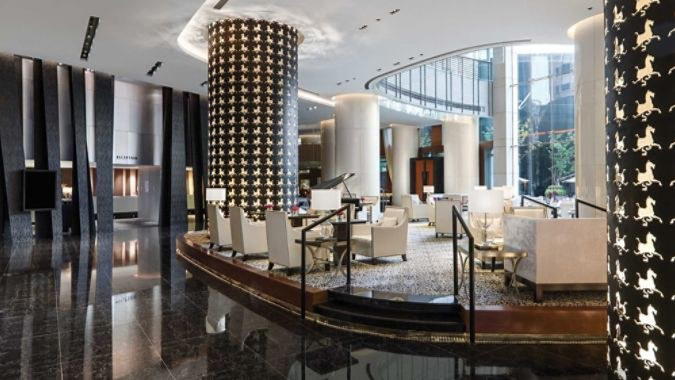
Elegant Shanghai-style with warm lighting, moody ornate interiors blending classical and modern elements for a refined, intimate atmosphere.