
Waki Shun holds consecutive Michelin Plate recognition (2024 and 2025) for its Japanese cooking in Nihonbashihoncho, one of central Tokyo's oldest mercantile districts. Positioned at the mid-premium tier, it draws a local professional crowd rather than the international reservation circuit that surrounds the neighbourhood's higher-bracketed peers. The address, a second-floor room in a modest commercial building on Chome 1-4-15, sets the tone before the first course arrives.
Pearl is the En Primeur Club membership app — saves, bookings, and concierge access live there. Same editors, same standards.
- Address
- Japan, 〒103-0023 Tokyo, Chuo City, Nihonbashihoncho, 1 Chome−4−15 日本橋大勝軒ビル201
- Phone
- +81 3-6281-9929
- Directions
- Get directions
 Saves & bookings on Pearl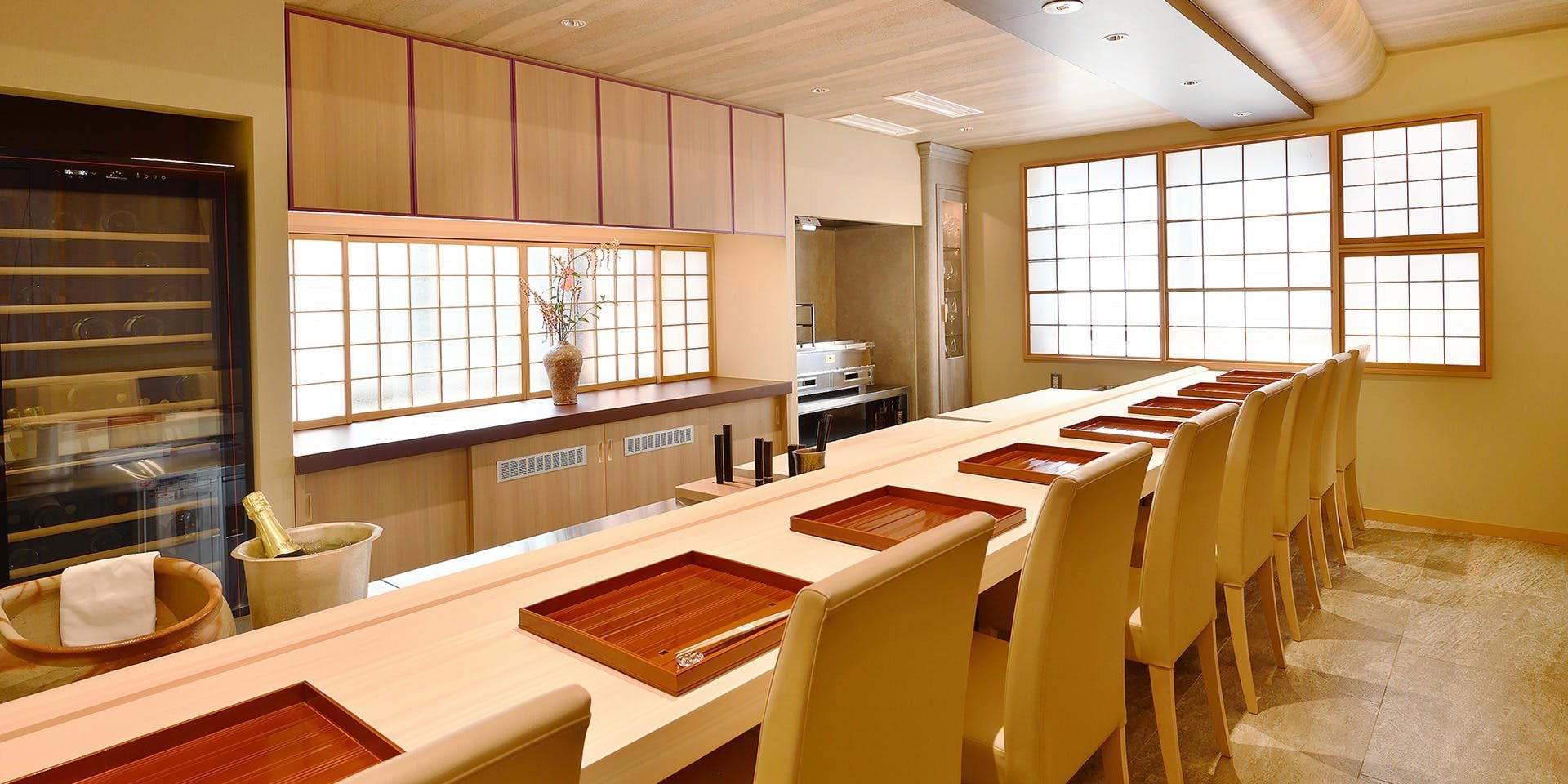
A Second-Floor Room in Nihonbashi
In a district better known for financial institutions and long-standing wholesale traders than for destination dining, the second-floor placement of Waki Shun tells you something about its register. Nihonbashihoncho sits inside Chuo City, the commercial heart of old Edo, where the grid of streets has not changed much since the Meiji era. Restaurants here tend to serve the professional class rather than tourists or out-of-town visitors working through a list. The room, accessed via a building that announces nothing about what lies inside, belongs to that tradition of deliberate restraint, a format where the meal does the signalling rather than the facade.
That positioning matters when reading Waki Shun against Tokyo's broader Japanese-cuisine spectrum. The city supports an extraordinary range of formats, from the ¥¥¥¥ kaiseki counters at places like Kagurazaka Ishikawa or Azabu Kadowaki down through neighbourhood specialists with no international profile at all. Waki Shun sits at ¥¥¥, a mid-premium bracket that in Tokyo usually signals serious craft. Two consecutive Michelin Plate recognitions, awarded in both 2024 and 2025, confirm that the kitchen is cooking at a level the guide's inspectors consider worth noting.
What the Michelin Plate Signals in Tokyo Context
The Michelin Plate designation is an important form of recognition in Tokyo. The city's guide covers more restaurants than any other edition globally, and the Plate signals that inspectors found the cooking good enough to include in the publication at all, a meaningful filter in a city where the competition density is extraordinary. For Japanese cuisine specifically, the Plate tier often contains establishments that are technically accomplished and consistent but operate without the front-of-house apparatus, wine program depth, or seating scale that typically supports a star. Two consecutive years of that recognition, in 2024 and 2025, indicate stability rather than a single strong performance at inspection time.
Restaurants earning repeated Plate recognition in Tokyo's central wards, Chuo, Chiyoda, Minato, frequently hold a loyal local clientele before any external recognition arrives. The Nihonbashihoncho address reinforces that reading: this is not a location chosen for foot traffic or proximity to hotel concierge circuits. It is the kind of address a cook chooses when the audience already exists in the surrounding office buildings and will find the room without signage help.
The Sensory Register of Nihonbashihoncho
Japanese dining in this corner of Chuo City carries a particular atmospheric quality that distinguishes it from the more theatrical settings of Ginza or the self-conscious refinement of certain Roppongi addresses. The streets around Nihonbashihoncho retain a working character, delivery routes, narrow lanes between older commercial blocks, the faint industrial undertone of a district that has always been about trade rather than leisure. Arriving for dinner means moving through that texture before stepping into the controlled quiet of the restaurant environment above street level.
That contrast, the utilitarian approach, the sudden stillness of a second-floor room, is a format that recurs across serious Japanese cooking spaces. The transition itself functions as a kind of sensory preparation, separating the noise of the city from the attention the meal requires. It is an architectural logic found in many of the establishments that populate our full Tokyo restaurants guide, particularly those operating at the mid-premium tier where the room's atmosphere does real work without the expense of a signature interior design commission.
The cuisine is Modern Japanese Kaiseki Omakase. In Tokyo's restaurant vocabulary, that breadth can mean several things: a kaiseki-adjacent format, a specialty in one regional tradition, or a contemporary interpretation of washoku principles.
How Waki Shun Fits Tokyo's Mid-Premium Japanese Scene
The ¥¥¥ bracket in Tokyo's Japanese-cuisine category is genuinely crowded, and restaurants at this level compete less on price than on specificity. A guest choosing between the restaurant and a comparable address in Ginza or Minato is usually weighing atmosphere, accessibility, and the particular style of cooking on offer rather than cost alone. Nihonbashihoncho gives the restaurant a neighbourhood identity that several of its peers lack, a genuine working-district context that shapes who is in the room and how the service operates.
For a broader view of how this tier interacts with the rest of Tokyo's Japanese dining offer, the starred end of the spectrum, Myojaku, Ginza Fukuju, Jingumae Higuchi, often operates on longer booking windows and a more internationally composed guest list.
Japanese cuisine at this level of execution exists across the country: Gion Sasaki in Kyoto and Kashiwaya Osaka Senriyama in Osaka represent how the same culinary tradition plays out in different cities with different cultural registers. Isshisoden Nakamura in Kyoto anchors another variation of the form. The restaurant's contribution is placing that tradition inside Nihonbashi's commercial character, an environment with its own long history of feeding the people who run the city's trade.
Elsewhere in Japan, HAJIME in Osaka, akordu in Nara, Goh in Fukuoka, 1000 in Yokohama, and 6 in Okinawa cover the wider national spread for those moving beyond Tokyo.
Know Before You Go
- Address: 〒103-0023 Tokyo, Chuo City, Nihonbashihoncho, 1 Chome-4-15, Nihonbashi Taishogun Building 201
- Cuisine: Japanese
- Price range: ¥¥¥
- Awards: Michelin Plate 2024; Michelin Plate 2025 0 (7 reviews)
- Getting there: Nihonbashihoncho sits within walking distance of Shin-Nihonbashi Station (JR) and Mitsukoshimae Station (Tokyo Metro Ginza and Hanzomon lines)
- Booking: Booking method not confirmed, contact directly or check current reservation platforms
- Hours: Mon: 6-9 PM; Tue: 6-9 PM; Wed: 12-9 PM; Thu: 6-9 PM; Fri: 12-9 PM; Sat: 6-9 PM; Sun: 12-1 PM
Comparable Venues
Comparable venues nearby, for context on price, style, and recognition.
| Venue | Cuisine | Price | Awards | Notes |
|---|---|---|---|---|
| Waki ShunThis venue — the venue you are viewing | Modern Japanese Kaiseki Omakase | $$$ | Michelin Plate | Not listed |
| Hakozakicho Sumito | Edomae Sushi | $$$ | Michelin Plate | Chūō |
| Aoyama Ototo | Seasonal Japanese Kaiseki with Charcoal-Grilled Seafood | $$$ | Michelin Plate | Shibuya |
| Daikanyama Issai Kassai | Modern Japanese Izakaya | $$$ | Michelin Plate | Shibuya |
| Bunon | Modern Japanese Izakaya with Natural Wines | $$$ | Not listed | Minato |
| Kioicho Mitani | Modern Sushi Omakase with Wine Pairing | $$$$ | Not listed | Chiyoda |
Recognition history
Dated appearances from independent guides and award organizations, with the underlying list record or original source where available.
Michelin Plate
Michelin
Michelin Plate
Michelin








At a Glance
- Elegant
- Intimate
- Modern
- Sophisticated
- Minimalist
- Date Night
- Solo
- Special Occasion
- Chefs Counter
- Sake Program
Current opening hours
- Monday
- 6–9 PM
- Tuesday
- 6–9 PM
- Wednesday
- 12–9 PM
- Thursday
- 6–9 PM
- Friday
- 12–9 PM
- Saturday
- 6–9 PM
- Sunday
- 12–1 PM
Hours can change for holidays and private events. Last verified .
Refined and tranquil space with blue and wisteria hues evoking serenity and Nihonbashi's historic charm.