Michelin Plate · Star Wine List
Our verdict
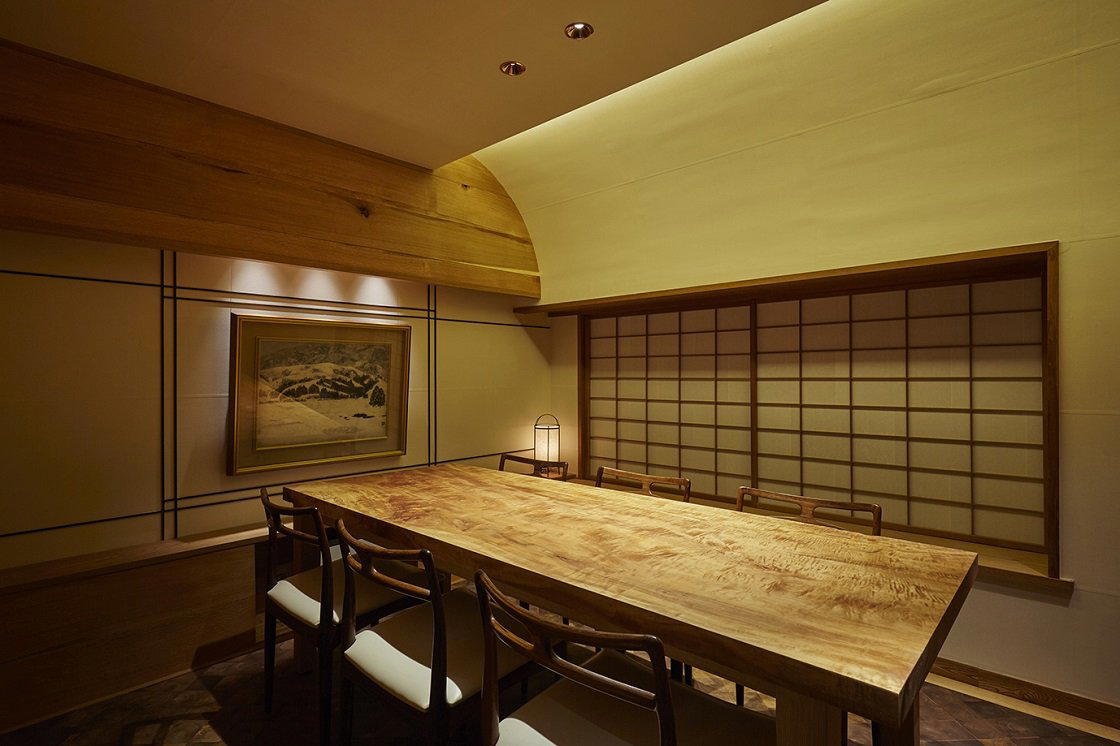
Chef Gaku Imagawa's kitchen pairs seasonal fish with fruit, sweetfish with peach, barracuda with persimmon, while the front-of-house curates an organic wine list calibrated course by course. The restaurant sits beside Utsubo Park, Osaka's largest green space in the city centre.

Pearl is the En Primeur Club membership app, where members save venues, book tables and use the concierge.
The menu
What to order
- Barracuda with persimmon
- Sweetfish with peach
- Spanish mackerel with apple
- Wagyu rump steak
Kappo in Context: Where Gaku Sits in Osaka's Michelin Middle Tier
Osaka's one-star tier is more contested than it appears from the outside. The city's dining infrastructure runs deep, from three-star kaiseki like Kashiwaya Osaka Senriyama at the upper register to the innovative French houses of HAJIME and La Cime operating at ¥¥¥¥, well above the mid-range. Between those extremes sits a cluster of ¥¥¥ Japanese restaurants where Utsubohommachi Gaku competes directly: counter-led, chef-driven, kappo in spirit even when omakase in format. Miyamoto and Oimatsu Hisano occupy the same price tier, and the distinctions between these houses come down to creative register, how adventurous the kitchen is prepared to be within a tradition that rewards precision above invention.
Gaku's answer is a creative flair that remains anchored in classical kappo fundamentals. The kitchen pairs seasonal fish with fruit, sweetfish against peach, barracuda against persimmon, Spanish mackerel against apple, combinations that read as unconventional until you consider how deeply fruit acids have always played in Japanese cookery as a counterpoint to oily or strong fish. These pairings are not novelty. They are a re-reading of kappo logic through a chef who has spent time in both Naniwa kappo kitchens and more casual bistro environments. That dual formation produces a house that is technically grounded and socially relaxed, which is a difficult balance to maintain at starred level.
The Room and the Address
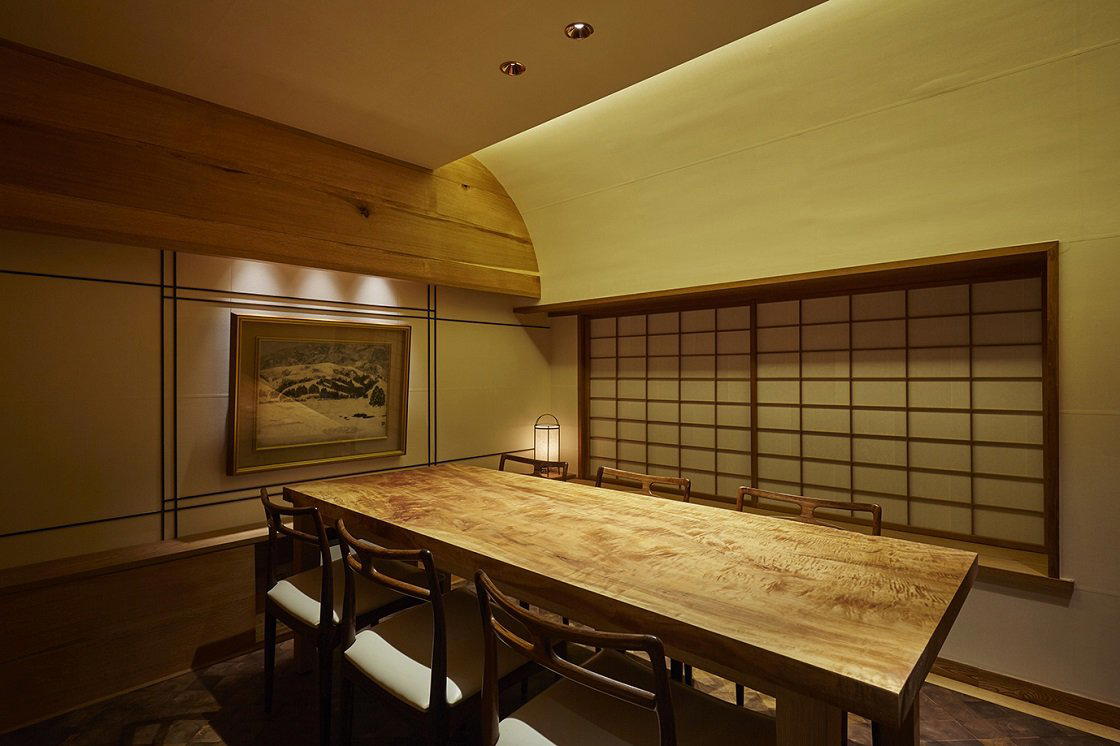
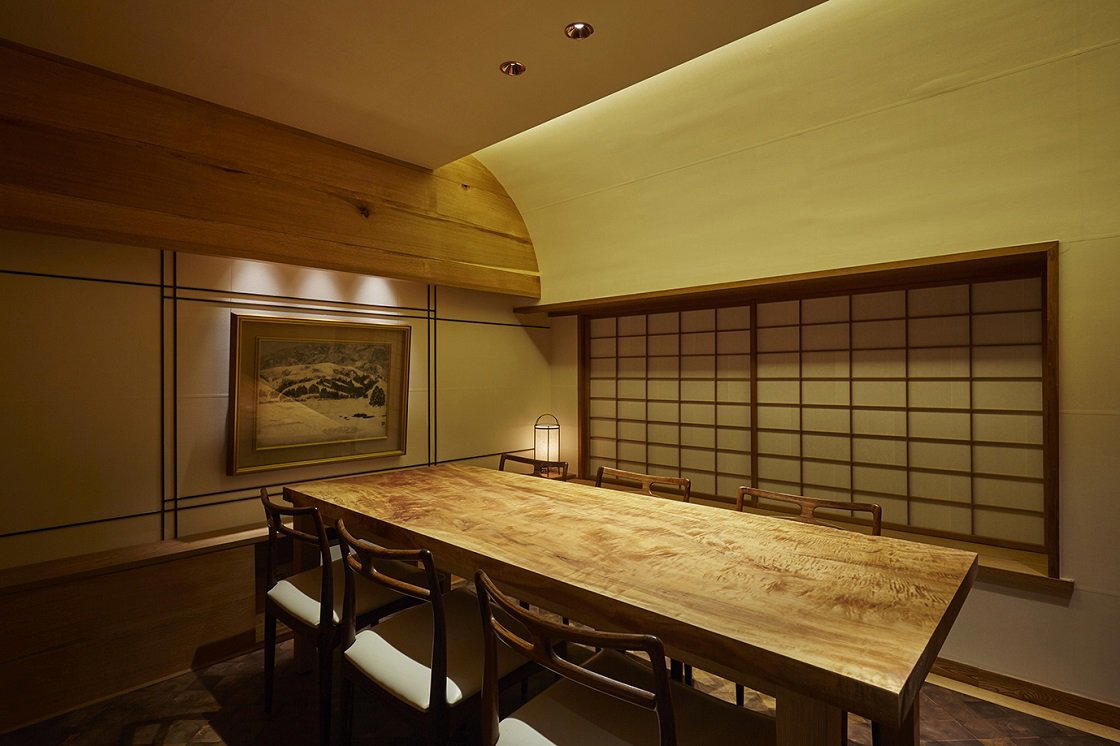
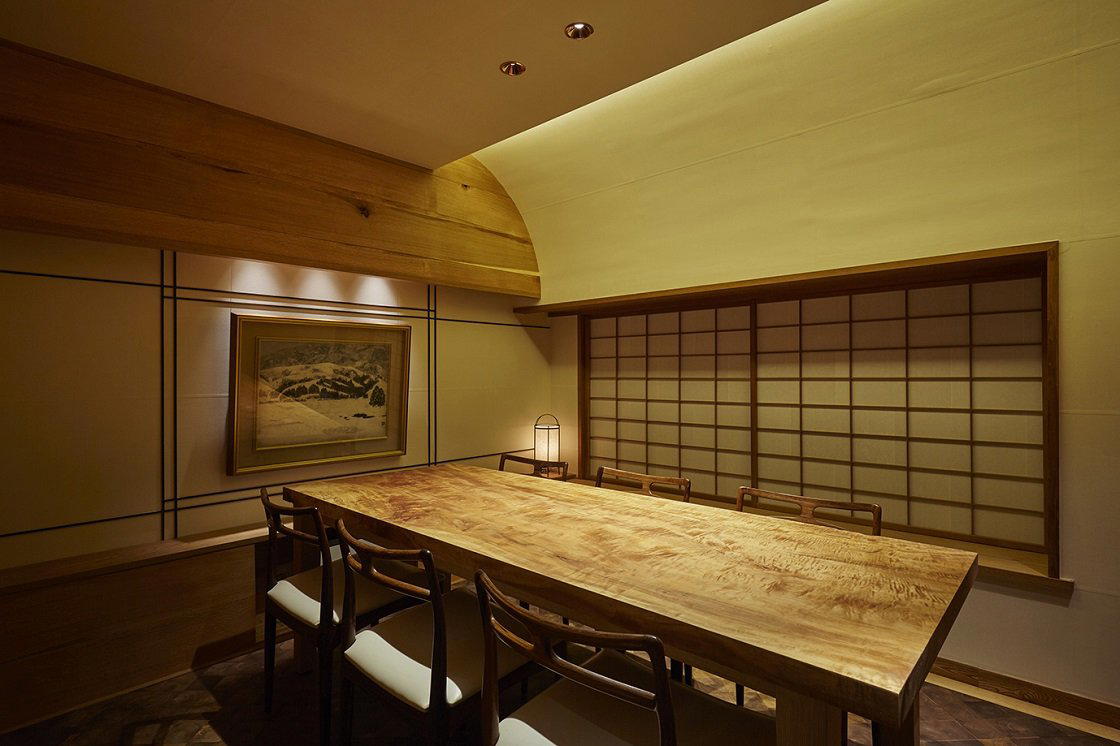
The restaurant occupies a unit in the Hommachi Queen Building on Utsubohonmachi, a street in Osaka's Nishi Ward where low-rise commercial buildings back against the perimeter of Utsubo Park. The park itself, the largest green space in central Osaka, shapes the character of the neighbourhood: quieter than Shinsaibashi to the south, less corporate than the Honmachi business district two blocks east. Arriving in daylight, the park visible from the approach, gives the visit a different register than the underground corridors that feed so many of Osaka's dining rooms.
The address also separates Gaku from the concentration of kappo and kaiseki houses along Kitashinchi and Fukushima, which remain Osaka's most densely starred corridors. Operating outside that cluster is a positioning choice as much as a practical one: it draws guests who are looking specifically for the restaurant rather than those browsing a dining strip, which in turn shapes the room's energy. For comparable neighbourhood-anchored Japanese dining in the Kansai region, Gion Sasaki in Kyoto provides a useful reference point, a restaurant defined as much by its street-level context as by its cooking.
How the Format Works: Omakase and À La Carte Under One Roof
Kappo restaurants traditionally operate with more flexibility than kaiseki, a chef cooking in front of guests, responsive to the table, able to adjust across a sitting. Gaku retains this in its format: guests may follow an omakase set menu or order à la carte within the kappo framework. This dual availability is less common at starred level, where most kitchens consolidate around a single service format to control quality and pacing. The decision to maintain both suggests a front-of-house philosophy built around accessibility rather than theatre.
That ethos is most visible in the wine program. Organic wines selected for affinity with each course constitute a formal part of the dining experience here, not an afterthought, but a parallel editorial layer running alongside the food. In Japanese starred restaurants, wine programs at this price point often remain underdeveloped or lean heavily on sake for pairing logic. Gaku's organic wine selection signals a front-of-house team operating with genuine conviction about how western wines read against fruit-forward Japanese pairings. The specific relationship between fermentation-forward, lower-intervention wines and the acidity of fruit-paired fish dishes is not accidental: both vocabularies emphasise freshness, restraint, and a refusal to over-engineer.
This is where the collaboration between kitchen and front-of-house becomes the defining feature of the experience. The chef's combinations create a tasting map; the sommelier's organic selections trace a parallel route. At houses where those two tracks operate independently, the meal is good food with good wine. At Gaku, the premise appears to be that they should arrive at the same place by different means. For a comparable study in how organic wine programs are being integrated into Japanese fine dining beyond Osaka, the approach at Tenjimbashi Aoki offers a different angle on the same problem.
The Creative Register: Fruit, Fish, and the Logic Behind the Pairings
The ingredient pairings that define Gaku's kitchen are worth reading closely. Sweetfish, ayu in Japanese, a river fish with a distinctly bitter, almost herbaceous quality, paired with peach addresses a specific flavour problem: the bitterness needs something sweet and aromatic, not just acidic. Peach does that work where citrus would flatten it. Barracuda against persimmon works along a different axis: the fish's oiliness meeting the tannin-adjacent astringency of underripe persimmon, or the full sweetness of a ripe one changing the dish entirely depending on seasonal timing. Spanish mackerel against apple is the most classically European of the three combinations, and arguably the most legible to guests arriving from western fine dining traditions.
What these pairings share is a reliance on the chef's read of seasonal availability rather than a fixed recipe. They only make sense when the fish and the fruit arrive at the same moment in the calendar, which means the menu is effectively rewritten by the market each week. This is kappo's original logic: the counter as a live environment, the chef working with what came in that day. The Michelin distinction, a star in 2024, a Plate recognition maintained into 2025, affirms that the creative range is operating at a consistent level, not merely an occasional one.
Comparable creative registers in Japanese fine dining across other cities include Goh in Fukuoka and Harutaka in Tokyo, both of which move through the tension between technical rigour and creative latitude at starred level. Within Osaka itself, Yugen offers another reference point for how the city's serious Japanese kitchens are balancing tradition and experimentation. For a broader survey of where Osaka's dining sits nationally, see our full Osaka restaurants guide.
How Gaku Compares Within Its Price Tier
The distinction between Gaku and its same-tier peers is primarily one of creative ambition: Taian leans more formally into kaiseki structure, while Gaku's kappo framing allows a looser, more improvisational service dynamic. Neither approach is superior as a category; they address different expectations about formality and interaction at the counter.
For guests whose itinerary extends beyond Osaka, akordu in Nara represents a different model entirely, European technique applied to Nara's local produce, while Japanese-rooted fine dining in Tokyo can be tracked through Myojaku and Azabu Kadowaki. For those interested in the broader Kansai region, 1000 in Yokohama and 6 in Okinawa extend the picture of how Japan's regional fine dining is developing outside the Tokyo-Osaka axis.
Planning Your Visit
Utsubohommachi Gaku is located at 1 Chome-14-15 Utsubohonmachi, Nishi Ward, Osaka (Hommachi Queen Building). The nearest access is via Hommachi Station on the Midosuji, Chuo, and Yotsubashi lines, with the park approach taking roughly eight minutes on foot. Cuisine: Japanese, kappo with omakase or à la carte options. Price range: ¥¥¥. Reservations: Advance booking is recommended given the scale of operation and starred status; contact method not listed, check current platforms for availability. Wine: Organic wine program curated to pair with each course. For further context on where to stay and what else to explore during your Osaka visit, see our full Osaka hotels guide, our full Osaka bars guide, our full Osaka wineries guide, and our full Osaka experiences guide.
Frequently asked questions
What part of town is Utsubohommachi Gaku in?
Utsubohommachi Gaku is located at Japan, 〒550-0004 Osaka, Nishi Ward, Utsubohonmachi, 1 Chome−14−15 本町クイーバービル, Osaka.
Is Utsubohommachi Gaku award-winning?
You can find Omakase style set menus or à la carte, Kappou style. Chef Gaku Imagaw...; The chef cultivated his free-rangin….
What's the signature dish at Utsubohommachi Gaku?
Gaku does not anchor its menu around a single fixed dish. The kitchen is defined instead by a recurring creative logic: seasonal fish paired with fruit, such as sweetfish with peach, barracuda with persimmon, and Spanish mackerel with apple. These combinations shift with what is available, so the pairings themselves are the signature rather than any individual plate. The approach holds across both the omakase set menu and the à la carte kappo format.
What cuisine category does Utsubohommachi Gaku fall under?
What price level is Utsubohommachi Gaku?
Pricing at Utsubohommachi Gaku is listed as ¥¥¥.
Compact Comparison
| Venue | Cuisine | Price | Awards | Notes |
|---|---|---|---|---|
| Utsubohommachi GakuThis venue (the venue you are viewing) | Modern Kappo | $150–200 | Michelin Plate · Star Wine List | Not listed |
| HAJIME | Avant-Garde Japanese Fine Dining | $300–500 | 3 Michelin Stars · World's 50 Best #83 | French, Innovative |
| La Cime | Modern French with Japanese Ingredients | $150–200 | 2 Michelin Stars · World's 50 Best #13 | French |
| Kashiwaya Osaka Senriyama | Seasonal Kaiseki Omakase | $200–300 | 3 Michelin Stars · La Liste Top Restaurants | Japanese |
| Taian | Traditional Japanese Kaiseki Omakase | $150–200 | 3 Michelin Stars · La Liste Top Restaurants | Kaiseki, Japanese |
| Fujiya 1935 | Modern Japanese with European influences | $100–150 | 2 Michelin Stars · La Liste Top Restaurants | Innovative |
Recognition history
Dated appearances from independent guides and award organizations, with the underlying list record or original source where available.
Michelin Plate
Michelin
Star Wine List
Star Wine List
Full recognition history (3 entries)
Michelin Plate
Michelin