
1 Michelin Star
Our verdict
A tempura kaiseki counter in Osaka's Chuo Ward where the meal opens with sprinkled water and incense, then progresses through wanmono, sashimi, and individually fried tempura pieces, each one timed to the season. Ma-kombu kelp dashi anchors the savoury courses; handmade sweets and tea close the sequence. The ¥¥¥ price tier places it among Osaka's serious mid-to-upper kaiseki options.

Pearl is the En Primeur Club membership app, where members save venues, book tables and use the concierge.
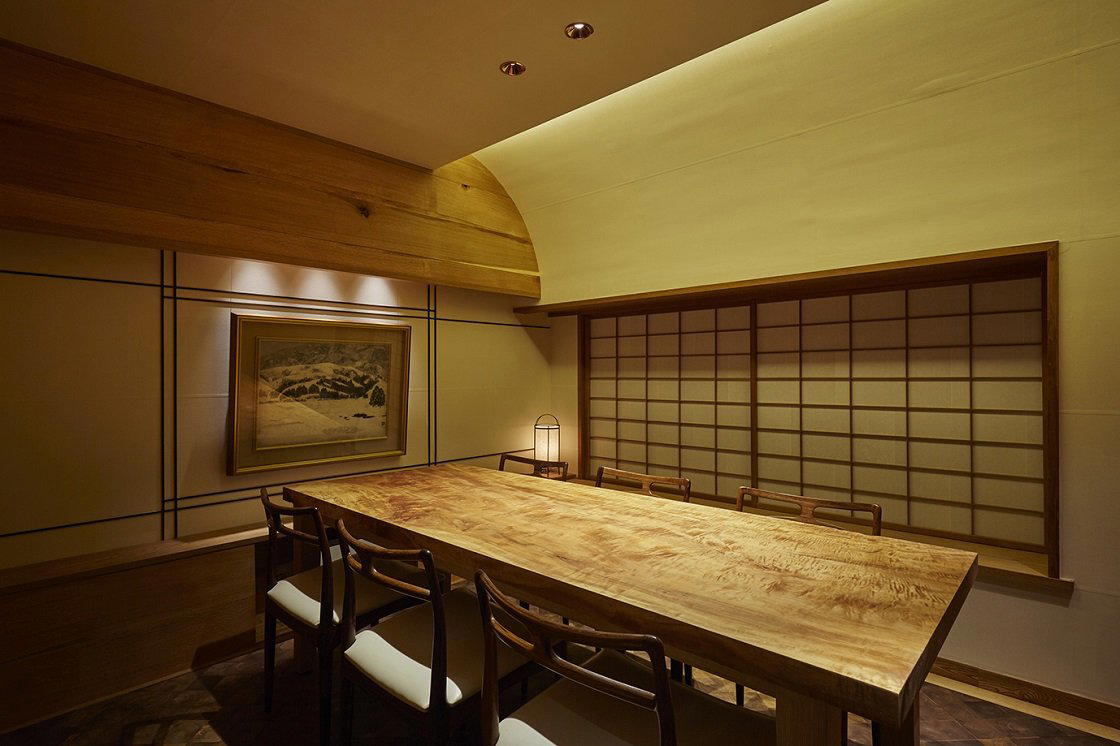
Water, Incense, and the Ritual Opening
Before a single dish appears at Konoha, the room is prepared. Staff sprinkle water at the entrance to banish defilement and light incense to purify the space, a pre-meal ritual rooted in Shinto custom that signals, immediately, the register of formality you are entering. In kaiseki dining, the ceremony of arrival is considered part of the meal itself, not a preamble to it. The serving vessels are chosen to mirror the current season; the ingredients follow the same logic. What you are about to eat has been calibrated to a specific moment in the calendar, and the opening ritual is designed to tune your attention to exactly that.
Konoha sits in Minamihonmachi, a commercial district in Chuo Ward that operates at a different pace from Osaka's more tourist-facing dining zones. The address, a first-floor unit in a low-rise building on a working block, is not the kind of setting that announces itself. That understated entry is consistent with the kaiseki tradition it houses: the drama belongs inside, distributed across courses rather than front-loaded in a theatrical space.
How the Meal Is Sequenced
The progression at Konoha follows orthodox kaiseki structure, with tempura positioned as its defining departure from convention. The sequence opens with appetisers, moves through wanmono (the soup course), and arrives at sashimi, all three prepared with traditional Japanese technique and plated against serving vessels that register the season as clearly as the ingredients themselves. Leaves, glazes, lacquerwork: everything is chosen to reflect where the calendar sits.
The soup stock that connects these early courses is ma-kombu kelp dashi, one of the foundational bases of Japanese cuisine. Kombu dashi runs lighter and more mineral than bonito-forward stocks; it lets the primary ingredient carry the course rather than competing with it. In kaiseki meals where subtlety is the point, the choice of dashi is as consequential as the choice of ingredient.
Then the tempura arrives. It is coated thinly and fried one piece at a time, served directly from the oil in the sequence the kitchen has planned, no platter of simultaneous pieces, no reheating. The batter is reinforced with extra egg yolk, producing a coating that is slightly richer and more cohesive than standard tempura preparation, but the guiding principle is restraint: the ingredient inside the batter should read first. This is a kitchen working at the intersection of two demanding disciplines, kaiseki and tempura, and the format asks the diner to pay attention to the order of delivery as much as to each individual piece.
The meal closes with handmade sweets and tea. In kaiseki, the wagashi course is neither an afterthought nor a dessert in the Western sense. The confections are calibrated to the same seasonal logic that opened the meal, and tea provides the palate reset that draws the entire arc to a natural conclusion.
Where Konoha Sits in Osaka's Kaiseki Tier
Osaka's serious kaiseki options occupy a defined set of price brackets and stylistic positions. At the three-Michelin-star level, Kashiwaya Osaka Senriyama represents the most formally recognised kaiseki available in the city. Konoha operates at the ¥¥¥ tier, the same price range as Kashiwaya, but its identity is built around the tempura-kaiseki hybrid format rather than pure kaiseki orthodoxy. That hybrid format is relatively rare at formal meal length and positions the kitchen in a distinct niche within the category.
For context on what ¥¥¥¥ kaiseki-adjacent dining looks like in Osaka, the French-informed Innovative end of the market includes Michelin three-star Hajime and two-star La Cime, menus that draw on seasonal Japanese sourcing but filter it through European structure. Konoha moves in the opposite direction: it is rooted in Japanese form and uses tempura as its technical signature, not as a departure from tradition. Miyamoto, Oimatsu Hisano, and Tenjimbashi Aoki each represent other points on Osaka's Japanese fine-dining map, with Yugen offering a further reference for the city's range. See our full Osaka restaurants guide for the complete picture.
Across Japan, the tempura-kaiseki combination appears at different levels of formality and ambition. Harutaka in Tokyo represents the capital's top-end seafood omakase tradition; Gion Sasaki in Kyoto sits within Kyoto's kaiseki lineage. Myojaku and Azabu Kadowaki, both in Tokyo, offer further reference points for Japanese fine dining that treats seasonality as the primary organising principle. Beyond the Kansai region, akordu in Nara, Goh in Fukuoka, 1000 in Yokohama, and 6 in Okinawa map the range of ambition in Japanese fine dining across the country.
The Seasonal Logic Behind the Format
The name Konoha means leaf in Japanese, and the operational philosophy draws directly on that reference: serving vessels and ingredients change throughout the year in the way leaves change, marking transitions rather than simply reflecting them. This is not decoration. In kaiseki, seasonal alignment between vessel, garnish, and ingredient is considered a form of culinary argument, the meal makes a case for a particular moment in the year, and every component either supports or undermines that case.
The use of extra egg yolk in the tempura batter is a specific technical choice, not a marketing distinction. It affects the texture and cohesion of the coating, producing a result that holds together through the transition from oil to plate to palate without losing the lightness that defines good tempura. The fact that pieces are fried and served individually means the kitchen controls the timing of each course in the tempura sequence with the same precision it applies to the wanmono and sashimi that precede it.
At this scale of operation, a rating that concentrated is a reasonable signal of kitchen consistency and front-of-house attentiveness across multiple visits.
Know Before You Go
- Cuisine: Tempura kaiseki, orthodox kaiseki structure with individually fried tempura as the central course
- Price tier: ¥¥¥
- Address: Minamihonmachi 2-6-22, Premiere Minamihonmachi 1F, Chuo Ward, Osaka
- Booking: Booking method not confirmed, contact the restaurant directly or check current reservation platforms
- Hours: Not confirmed, verify before visiting
- Dress code: Not specified, but the ritual formality of the opening suggests smart attire is appropriate
For broader planning in Osaka, see our full Osaka hotels guide, our full Osaka bars guide, our full Osaka wineries guide, and our full Osaka experiences guide.
Frequently asked questions
What does dinner at Konoha typically cost?
Pricing at Konoha is listed as ¥¥¥.
Is Konoha Michelin-listed?
Konoha has received recognition including: Staff welcome guests with sprinkled water to banish defilement and with incense to purify the space. The restaurant serves tempura kaiseki featuring bounty of land and sea. Wanmono and sashimi are prepared with orthodox Japanese cuisine in ….
What's the signature dish at Konoha?
Konoha does not anchor its menu around a single dish. The defining element is tempura fried one piece at a time with a thin batter enriched by extra egg yolk, served within a full kaiseki progression that includes wanmono, sashimi, handmade sweets, and tea. Seasonality governs everything: ingredients and serving vessels shift through the year, so the tempura course reads differently depending on when you visit.
Where is Konoha located?
Konoha is located at Japan, 〒541-0054 Osaka, Chuo Ward, Minamihonmachi, 2 Chome−6−22 プルミエール南本町 1F, Osaka.
Price Lens
| Venue | Cuisine | Price | Awards | Notes |
|---|---|---|---|---|
| KonohaThis venue (the venue you are viewing) | Traditional Tempura Kaiseki | $150–200 | 1 Michelin Star | Not listed |
| HAJIME | Avant-Garde Japanese Fine Dining | $300–500 | 3 Michelin Stars · World's 50 Best #83 | French, Innovative |
| La Cime | Modern French with Japanese Ingredients | $150–200 | 2 Michelin Stars · World's 50 Best #13 | French |
| Kashiwaya Osaka Senriyama | Seasonal Kaiseki Omakase | $200–300 | 3 Michelin Stars · La Liste Top Restaurants | Japanese |
| Taian | Traditional Japanese Kaiseki Omakase | $150–200 | 3 Michelin Stars · La Liste Top Restaurants | Kaiseki, Japanese |
| Fujiya 1935 | Modern Japanese with European influences | $100–150 | 2 Michelin Stars · La Liste Top Restaurants | Innovative |
Recognition history
Dated appearances from independent guides and award organizations, with the underlying list record or original source where available.
Michelin 1 Star
Michelin
Full recognition history (2 entries)
Michelin 1 Star
Michelin
Continue exploring
More in Osaka
Restaurants in Osaka
All restaurants in Osaka →



Bars in Osaka
All bars in Osaka →
Hotels in Osaka
All hotels in Osaka →

Wineries in Osaka
Browse all →
Details
- Elegant
- Cozy
- Intimate
- Sophisticated
- Business Dinner
- Special Occasion
- Chefs Counter
- Private Dining
- Sake Program
- Counter Dining
Current opening hours
- Monday
- 5:30–10 PM
- Tuesday
- 5:30–10 PM
- Wednesday
- 5:30–10 PM
- Thursday
- 5:30–10 PM
- Friday
- 5:30–10 PM
- Saturday
- 11:30 AM–2 PM, 5:30–10 PM
- Sunday
- Closed
Hours can change for holidays and private events. Hours as of .
Warm and relaxing ambiance centered around the main counter where guests enjoy the chef's elegant movements.