
1 Michelin Star
Our verdict
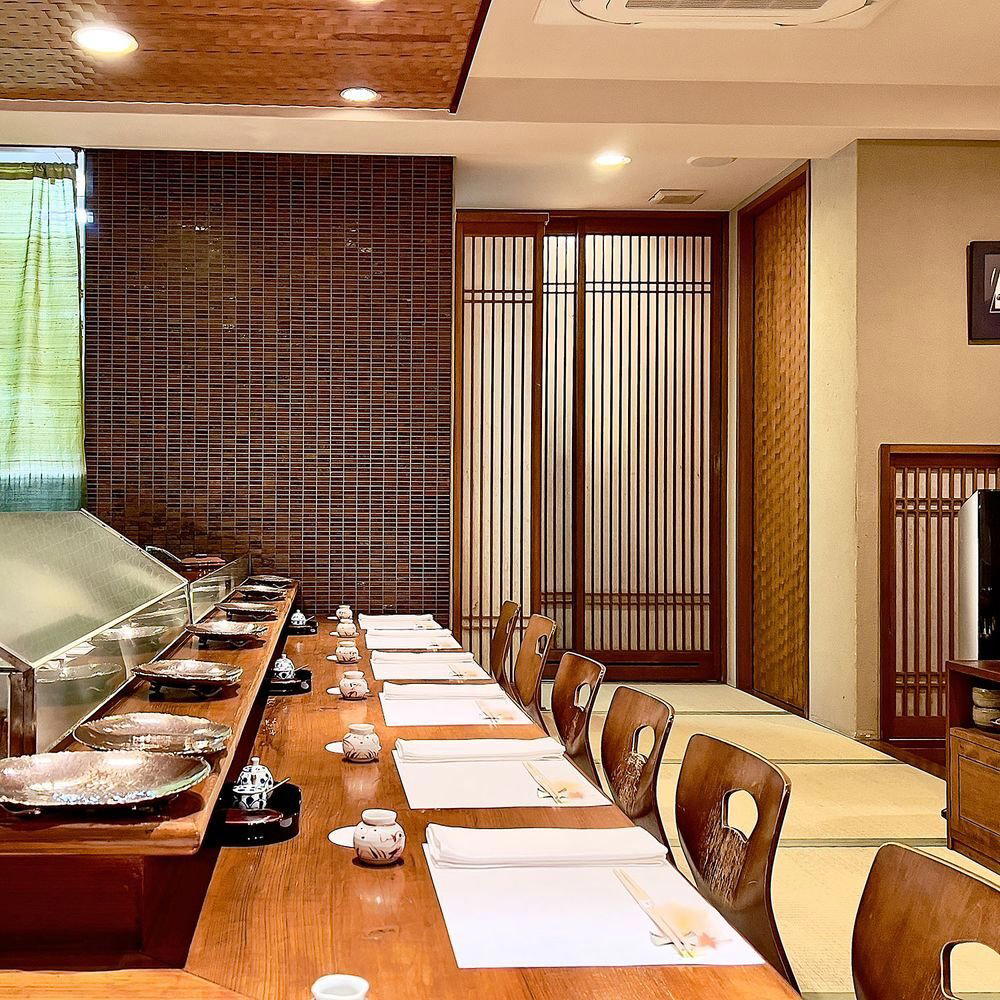
In Osaka's Sonezaki Shinchi district, Yoshiko occupies a counter space inherited from a former sushi shop, now dedicated to wild-caught tora fugu sourced from Shimonoseki. The second-generation chef trained at both a wholesaler and a ryotei before committing to pufferfish as a singular focus. Botan-zukuri sashimi on celadon, chirinabe hotpot, and house-aged ponzu define a menu built on classical technique and whole-fish discipline.

Pearl is the En Primeur Club membership app, where members save venues, book tables and use the concierge.
The menu
What to order
- Fugu sashimi botan-zukuri
- Stone-grilled fugu
- Chirinabe hotpot
The Counter, the Curtain, and the Craft of Fugu
Sonezaki Shinchi is the kind of neighbourhood that rewards those who know where to look. Osaka's western drinking and dining quarter runs on proximity: small counters, inherited spaces, and the accumulated weight of operators who have worked the same block for decades. Yoshiko fits that pattern precisely. The counter itself is a relic of the building's previous incarnation as a sushi shop, its worn timber surface now the stage for a very different discipline. Fugu restaurants of this kind occupy a specific niche in Osaka's dining culture, specialist, counter-led, and structured around a single ingredient that demands as much licensing knowledge as it does culinary skill.
Why Tora Fugu from Shimonoseki Changes the Equation
Japan's fugu tradition rests on a supply chain that most diners never see, and the sourcing decision is where a restaurant's philosophy becomes legible. Tora fugu, the tiger pufferfish, is the species most prized for its clean flavour and texture, and the Shimonoseki market in Yamaguchi Prefecture has functioned as the country's primary fugu trading hub since the late nineteenth century. Wild-caught fish from that market carry a different profile than farmed alternatives: firmer flesh, a more mineral finish to the sashimi, and fat distribution that responds differently to heat. Yoshiko works exclusively with wild-caught tora fugu from Shimonoseki, which places it in the more demanding and more expensive tier of Osaka's fugu restaurants, where sourcing provenance is not incidental but central to the offer.
That sourcing decision also sets the terms for everything that follows. When the raw material is this specific, the kitchen's job is to use it completely and honestly. The whole-fish philosophy here is not a marketing position but a structural one: different preparations across a single sitting make the case that every part of the fish has a role, and that role shifts depending on technique.
Botan-Zukuri, Chirinabe, and the Logic of Full-Fish Cookery
The sashimi course arrives as botan-zukuri, a presentation style in which translucent slices of tora fugu are arranged in the shape of a peony flower across a celadon plate. The visual discipline of this preparation is also functional: the thin slicing technique, which requires a long, flexible fugu knife called a yanagiba, draws out the fish's subtle sweetness while maintaining the characteristic firm chew that distinguishes tora fugu from other white-fleshed sashimi. Celadon's pale green glaze is a considered pairing, its cool tone makes the near-translucent flesh read more clearly against the plate.
The progression from sashimi to chirinabe is a structural argument about the fish. Where botan-zukuri shows the flesh at its purest, chirinabe, a clear-broth hotpot cooked at the table, draws out collagen from the bones and the skin, producing a stock that is the accumulated essence of the whole animal rather than a single cut. The sequence concludes with zosui, a rice gruel cooked in the remaining hotpot broth, which is both a practical use of the liquid and the clearest expression of the no-waste logic that underpins this style of cooking. Prepared by the book, in the phrase used to describe Yoshiko's approach, means adhering to the classical sequence without abbreviation.
Beyond the core progression, the kitchen applies the philosophy to appetisers built from fugu skin and jellied fugu, preparations that would be discarded at a less disciplined counter. Stone-grilled fugu extends the technique range further, using radiant heat to develop a different textural register from the same fish that appeared raw and then poached earlier in the meal. The house-aged ponzu, made in-house and matured over time rather than served fresh, functions as a seasoning that accumulates complexity in the same way the meal does: incrementally, with patience, without shortcuts.
The Credentials Behind the Counter
Osaka's specialist restaurant culture has long been shaped by inherited counters and operators who trained across multiple formats before settling into a single discipline. The second-generation chef at Yoshiko followed a path that moves through a fugu wholesaler and then a ryotei, a progression that covers the supply chain before the formal kitchen, which is unusual and practically useful for a chef working with an ingredient where procurement decisions directly affect what can be cooked. Ryotei training, associated with kaiseki discipline and hospitality formality, shapes the service register as much as the cooking. That combination of supply-side and formal kitchen experience is visible in how the counter operates: technically rigorous, classically sequenced, without the improvisational looseness of younger or more trend-adjacent venues.
Among Osaka's premium restaurants at the ¥¥¥¥ tier, which includes French and innovative formats like HAJIME, La Cime, and Fujiya 1935, Yoshiko represents a different axis entirely: Japanese specialist, single-ingredient focused, and structured around a culinary tradition with licensing requirements that limit who can operate at this level. The comparison with kaiseki-oriented venues like Taian and Kashiwaya Osaka Senriyama is instructive in terms of price tier, but the dining logic differs substantially. Fugu restaurants answer to a different set of traditions, and Yoshiko's counter format sits closer to a specialist ryotei in its sequencing than to a kaiseki multi-course.
For comparison with fugu specialists elsewhere in Japan, Fugu Club Miyawaki Bettei in Tokyo represents the Tokyo market's approach to the same ingredient. Internationally, Kumsu Bokguk in Busan offers a Korean interpretation of pufferfish preparation that reads very differently from the Japanese classical tradition. The broader Kansai region context connects to Gion Sasaki in Kyoto and akordu in Nara, while Japan's wider dining geography extends to Harutaka in Tokyo, Goh in Fukuoka, 1000 in Yokohama, and 6 in Okinawa.
Planning Your Visit
Yoshiko is located at 1 Chome-8-5 Sonezakishinchi, Kita Ward, Osaka (Yoshimitsu Building).Budget: ¥¥¥¥, consistent with the Shimonoseki wild-catch sourcing and the full classical fugu sequence. Reservations: Advance booking is advisable given the counter format and the specialised nature of the menu; contact via the venue directly or through concierge services. Getting there: Sonezaki Shinchi is accessible from Osaka-Umeda station, placing it within the broader Kita Ward dining cluster. For a wider view of Osaka's dining options across cuisines and price tiers, see our full Osaka restaurants guide, as well as our Osaka hotels guide, our Osaka bars guide, our Osaka wineries guide, and our Osaka experiences guide.
Frequently asked questions
What do people recommend at Yoshiko?
Reviews point consistently to the fugu sashimi served as botan-zukuri on celadon plates, the chirinabe hotpot, and the house-aged ponzu sauce as the elements that distinguish the experience. The zosui rice gruel at the close of the hotpot course is noted as a quietly satisfying finish. Appetisers using fugu skin and jellied fugu, alongside stone-grilled preparations, extend the range of textures across the sitting. The sourcing of wild-caught tora fugu from Shimonoseki is a detail that appears in reviews as a marker of quality for guests already familiar with the category.
Similar Picks
| Venue | Cuisine | Price | Awards | Notes |
|---|---|---|---|---|
| YoshikoThis venue (the venue you are viewing) | Fugu Fine Dining | $200–300 | 1 Michelin Star | Not listed |
| HAJIME | Avant-Garde Japanese Fine Dining | $300–500 | 3 Michelin Stars · World's 50 Best #83 | French, Innovative |
| La Cime | Modern French with Japanese Ingredients | $150–200 | 2 Michelin Stars · World's 50 Best #13 | French |
| Kashiwaya Osaka Senriyama | Seasonal Kaiseki Omakase | $200–300 | 3 Michelin Stars · La Liste Top Restaurants | Japanese |
| Taian | Traditional Japanese Kaiseki Omakase | $150–200 | 3 Michelin Stars · La Liste Top Restaurants | Kaiseki, Japanese |
| Fujiya 1935 | Modern Japanese with European influences | $100–150 | 2 Michelin Stars · La Liste Top Restaurants | Innovative |
Recognition history
Dated appearances from independent guides and award organizations, with the underlying list record or original source where available.
Michelin 1 Star
Michelin
Full recognition history (2 entries)
Michelin 1 Star
Michelin
Continue exploring
More in Osaka
Restaurants in Osaka
All restaurants in Osaka →



Bars in Osaka
All bars in Osaka →
Hotels in Osaka
All hotels in Osaka →


Wineries in Osaka
Browse all →
Details
- Elegant
- Sophisticated
- Intimate
- Special Occasion
- Date Night
- Chefs Counter
- Sake Program
- Counter Dining
Current opening hours
- Monday
- 6–10 PM
- Tuesday
- 6–10 PM
- Wednesday
- 6–10 PM
- Thursday
- 6–10 PM
- Friday
- 6–10 PM
- Saturday
- 6–10 PM
- Sunday
- Closed
Hours can change for holidays and private events. Hours as of .
Intimate counter dining with traditional Japanese elegance and focus on the chef's precise fugu preparations.