

1 Michelin Star · Tabelog Bronze #536
Our verdict
A Michelin-starred kaiseki counter in Nishitenma, Osaka, Zeshin has held the Tabelog Bronze Award every year since 2018 and earned a place in the Tabelog 100 for Japanese cuisine in the West three times. Dinner runs JPY 20,000–29,999, lunch JPY 10,000–14,999. Reservations accepted by phone; cash only on the day.

Pearl is the En Primeur Club membership app, where members save venues, book tables and use the concierge.
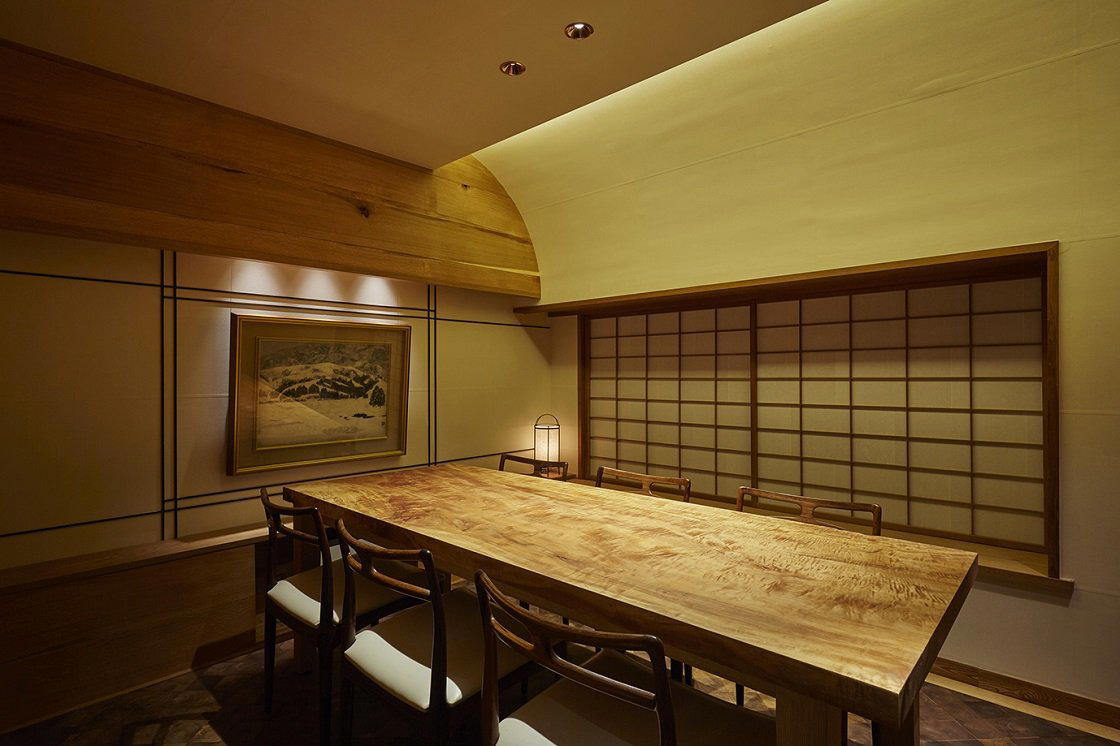
Basement Level, Nishitenma: How Osaka Eats When It Gets Serious
The lower ground floor of a mid-rise office building in Nishitenma is an unlikely address for one of Osaka's most decorated Japanese restaurants, and that, in itself, says something true about the city. Osaka's serious dining culture has never prioritised street presence or hotel lobbies. It gravitates toward basements, narrow staircases, and addresses that require a phone call to locate. Zeshin, in the B1F of Nishitenma Royal Building, occupies that tradition with complete confidence. Approaching via the business district streets between Kitashinchi Station and the Nakanoshima waterfront, the walk is short but the shift in register is immediate once you descend.
Seasonal Kaiseki and the Lunisolar Frame
Kitchen's stated orientation is seasonal and drawn from Japan's old lunisolar calendar, a framework that splits the year into finer gradations than the four-season model most Western dining uses. In practice this means ingredients appear and recede according to agricultural and oceanic cycles that pre-date industrial supply chains, and the progression of dishes through a meal encodes those shifts explicitly. Fish receives particular emphasis; it is flagged as a point of differentiation in the kitchen's own profile, placing Zeshin in a tradition that prizes seafood provenance and preparation quality above general protein diversity.
The Ritual of the Meal: Pacing, Format, and What the Counter Tells You
25-seat room divides into four configurations: an 11-seat main counter, 12 seats at tables, a 2-seat tea room, and a 5-seat counter on the first floor. The counter is the most direct way to read the kitchen's priorities. Counter service in Japanese cuisine functions as a kind of performed transparency, you are closer to preparation, the pacing of each course is calibrated to the room rather than a fixed timer, and sake selections can be discussed as the meal progresses.
Pacing of kaiseki itself carries its own etiquette. Courses arrive in a sequence that moves from lighter, cleaner preparations toward richer and more substantial ones, with soup courses providing structural punctuation. Each transition between courses is a signal, and experienced diners read those signals as much as the food itself. The tea room at Zeshin gestures toward the chado tradition that sits behind kaiseki's formal architecture, tea ceremony and kaiseki developed in parallel historical relationship, and venues that maintain a dedicated tea-room space are placing themselves inside that lineage rather than treating kaiseki purely as a restaurant format.
Sake is the primary beverage consideration here. The restaurant signals a particular focus on nihonshu, and the drink selection includes shochu and wine as secondary options. The choice to organise beverages around sake rather than offering a European-led wine program by default is a statement about how the meal should be read: as a Japanese culinary experience first, without apology or hybrid accommodation. This is consistent with a broader pattern in Osaka's kaiseki tier, where the most confident rooms set their own terms rather than mirroring what Tokyo or international fine dining considers standard.
The name Zeshin abbreviates a phrase meaning, roughly, "believe in your path and follow it wholeheartedly, always asking whether a thing is right or wrong." That framing is less a marketing line than a position statement about the kind of restaurant this is: one that has chosen a clear lane, seasonal Japanese cuisine through the lunisolar lens, fish-forward, sake-led, and held it through eight consecutive years of Tabelog recognition rather than pivoting toward contemporary fusion or tasting-menu theatre.
Nishitenma and the Wider Osaka Dining Context
Nishitenma sits between the business density of Umeda and the cultural concentration of Nakanoshima. It is not a neighbourhood defined by restaurant rows or food tourism infrastructure; it functions more as an after-work and specialist-destination district for Osaka's professional class. The five-minute walk from Kitashinchi Station (JR Tozai Line) and seven-minute walk from Yodoyabashi Station (Midosuji Subway Line) make the logistics direct for anyone staying or working in the city's northern zone.
For visitors building an Osaka itinerary around Japanese cuisine at this level, the ¥¥¥ bracket offers meaningful variety: Oimatsu Hisano and Yugen are relevant comparators. Those planning regional Japan dining around a Kansai circuit can reference Gion Sasaki in Kyoto and akordu in Nara for adjacent-city options, while the broader national tier of similar award-level Japanese restaurants is represented by venues such as Harutaka in Tokyo, Myojaku and Azabu Kadowaki in Tokyo, Goh in Fukuoka, 1000 in Yokohama, and 6 in Okinawa.
For the full picture of what Osaka offers across food, drink, and lodging, see our full Osaka restaurants guide, our full Osaka hotels guide, our full Osaka bars guide, our full Osaka wineries guide, and our full Osaka experiences guide.
Planning Your Visit
Reservations: By phone only (06-6364-0118); reservations must be made by 10 PM the day before. Cancellations and allergy notifications by 6 PM the day before. Payment: Cash or invoice only, credit cards, electronic money, and QR payments are not accepted. Overseas visitors should arrive with sufficient yen. Budget: Dinner JPY 20,000–29,999; lunch JPY 10,000–14,999, plus a 10% service charge. Hours: Monday, Wednesday, Friday dinner only (17:30–22:00, food last order 20:00); Tuesday, Thursday, Saturday lunch (11:30–14:00, food last order 12:00) and dinner (17:30–22:00, food last order 20:00); Sunday closed. Seating: 25 seats across counter, table, tea room, and first-floor counter configurations; semi-private table seating and a tea room are available though fully private rooms are not. Private hire available for up to 20 people. Smoking: Non-smoking inside; permitted outside. Accessibility: No on-site parking; coin parking available nearby. Getting there: 5-minute walk from Kitashinchi Station (JR Tozai Line); 7-minute walk from Yodoyabashi Station (Midosuji Subway Line).
Frequently asked questions
at Zeshin?
Zeshin does not operate an à la carte menu in the conventional sense; the format is kaiseki, meaning the kitchen sets the progression. The kitchen's stated focus on fish and seasonal produce tracked to the lunisolar calendar means the most distinctive courses will reflect whatever seafood and vegetables are at their precise moment of readiness. The sake pairing is the clearest way to engage with what the room does well, given the explicit emphasis on nihonshu selection. For counter seats specifically, the interaction with the preparation process is part of what makes the meal coherent, booking a counter seat rather than a table seat gives the most direct access to that dimension of the experience. See also our coverage of comparable kaiseki counters at [Kashiwaya Osaka Senriyama](https://www.enprimeurclub.com/restaurants/kashiwaya-osaka-senriyama-osaka-restaurant) and [Tenjimbashi Aoki](https://www.enprimeurclub.com/restaurants/tenjimbashi-aoki-osaka-restaurant).
Cost and Credentials
Comparable venues nearby, for context on price, style, and recognition.
| Venue | Cuisine | Price | Awards | Notes |
|---|---|---|---|---|
| ZeshinThis venue (the venue you are viewing) | Seasonal Kaiseki Omakase | $150–200 | 1 Michelin Star · Tabelog Bronze #536 | Not listed |
| Naniwakappo NOBORU | Naniwa Kappo | $100–150 | Michelin Plate | Kita, Naniwa Kappo |
| Oimatsu Kitagawa | Traditional Kaiseki Omakase | $150–200 | 1 Michelin Star | Kita, Traditional Kaiseki Omakase |
| Oryori Yamada | Japanese Kappo Omakase | $200–300 | 1 Michelin Star | Kita, Japanese Kappo Omakase |
| Matsuzushi | Edomae Sushi Omakase | $150–200 | 1 Michelin Star · Tabelog 100 #86 | Abeno, Edomae Sushi Omakase |
| Sushi Murakami Jiro | Michelin 1-Star Omakase Sushi | $300–500 | 1 Michelin Star · Tabelog Bronze #294 | Kita, Michelin 1-Star Omakase Sushi |
Recognition history
Dated appearances from independent guides and award organizations, with the underlying list record or original source where available.
Michelin 1 Star
Michelin
Tabelog Bronze #536
Tabelog
Full recognition history (5 entries)
Tabelog Bronze
Tabelog
Tabelog 100 #2 · No. 2
Tabelog · Tabelog 100 - Japanese cuisine - WEST - 2025
Michelin 1 Star
Michelin
Continue exploring
More in Osaka
Restaurants in Osaka
All restaurants in Osaka →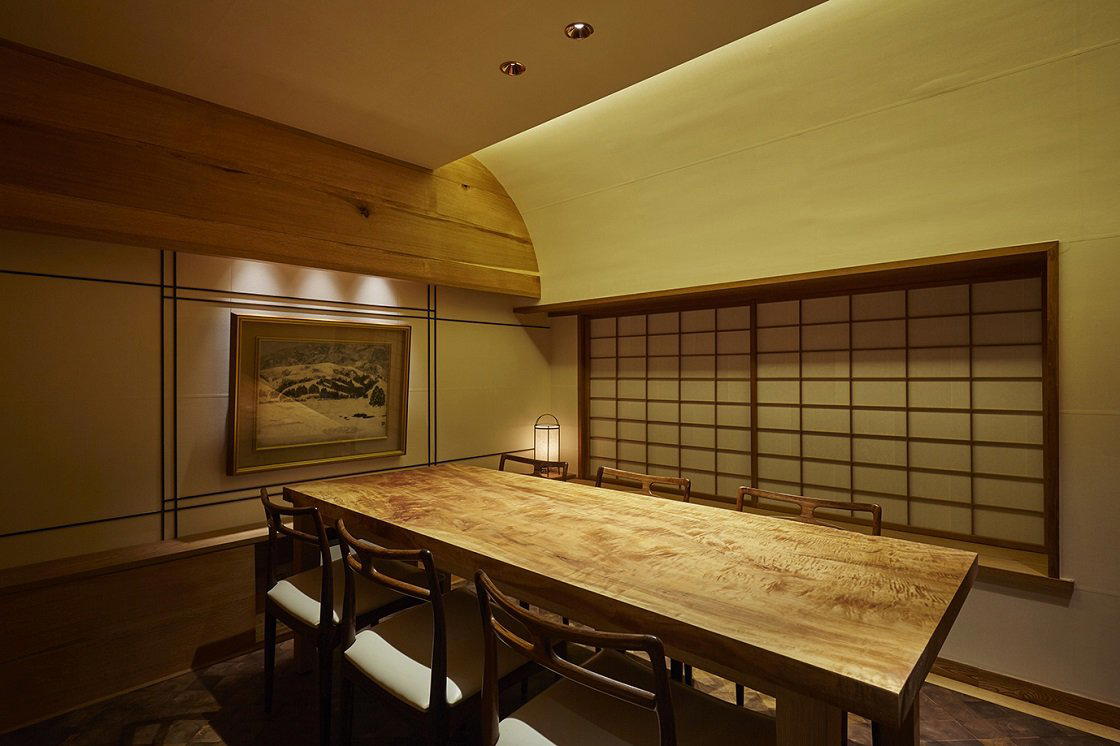


Bars in Osaka
All bars in Osaka →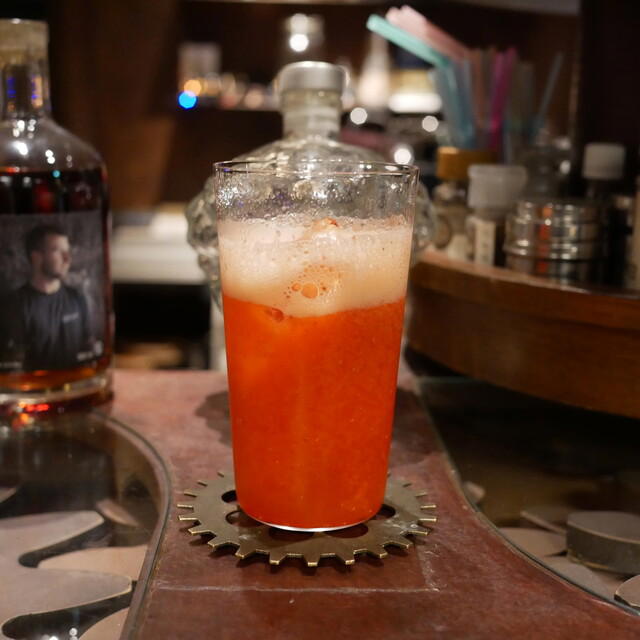



Hotels in Osaka
All hotels in Osaka →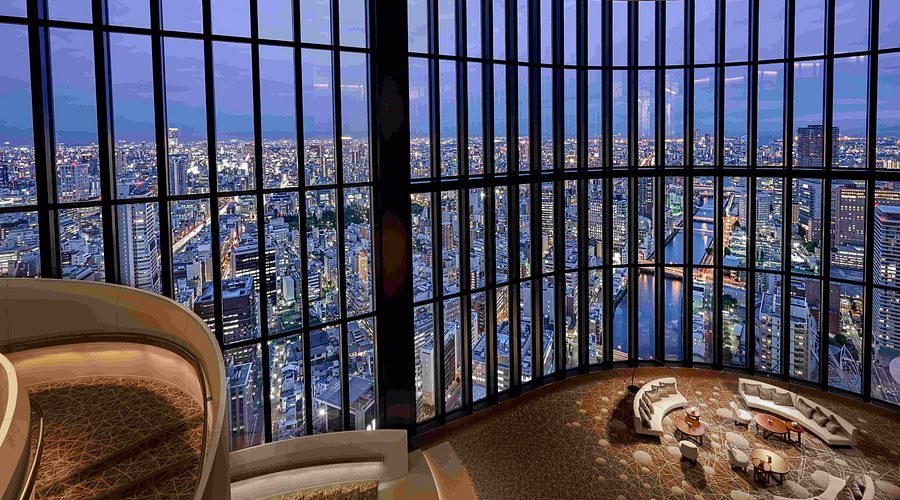



Wineries in Osaka
Browse all →
Details
- Elegant
- Intimate
- Quiet
- Sophisticated
- Classic
- Special Occasion
- Date Night
- Business Dinner
- Chefs Counter
- Open Kitchen
- Private Dining
- Historic Building
- Sake Program
- Sommelier Led
- Local Sourcing
- Omakase
- Counter Dining
- Tasting Menu
- Sake
- Shochu
- Wine
- Allergy Accommodating
Current opening hours
- Monday
- 5:30–10 PM
- Tuesday
- 11:30 AM–2 PM, 5:30–10 PM
- Wednesday
- 5:30–10 PM
- Thursday
- 11:30 AM–2 PM, 5:30–10 PM
- Friday
- 5:30–10 PM
- Saturday
- 11:30 AM–2 PM, 5:30–10 PM
- Sunday
- Closed
Hours can change for holidays and private events. Hours as of .
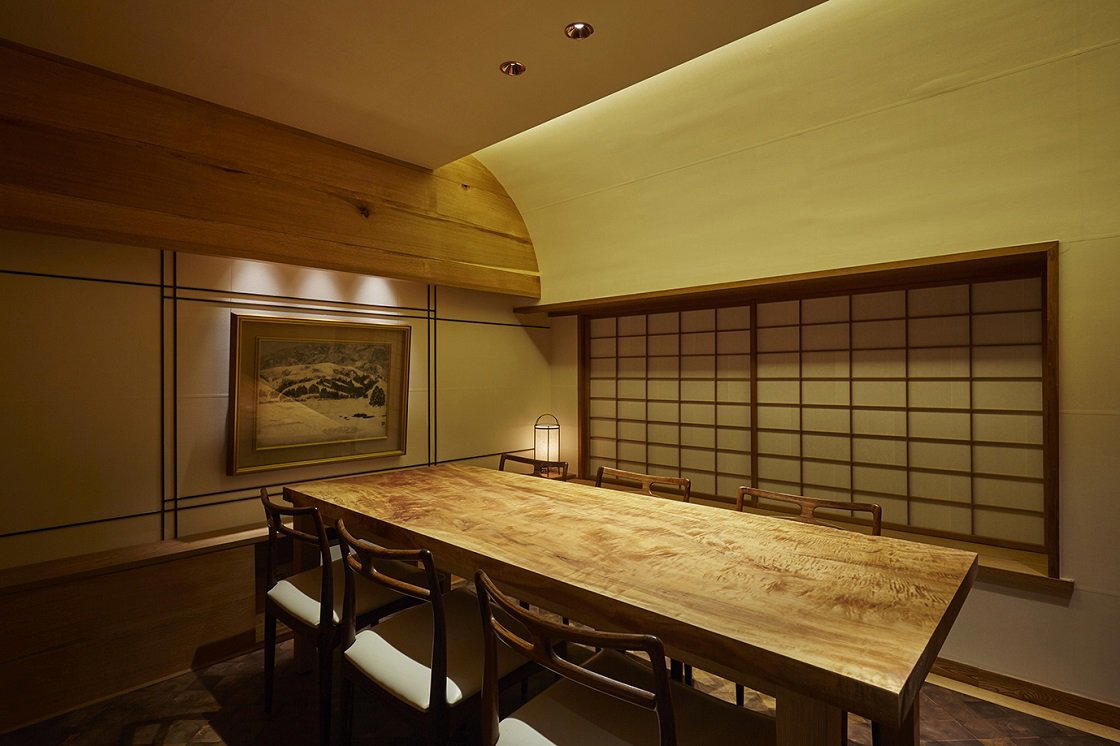
Serene and refined basement setting adorned with traditional Japanese design elements, pebbled gardens, a small pool, and tatami rooms creating a house-like atmosphere that evokes wabi-sabi aesthetics.