Our verdict
Tsunahashi Shinjuku occupies a longstanding address in one of Tokyo's most commercially dense districts, where the category of traditional Japanese dining has undergone significant compression and reinvention over the past two decades. The restaurant sits within a neighbourhood that rewards those who look past the neon-lit main corridors toward the residential streets of Shinjuku 3-chome.

Pearl is the En Primeur Club membership app, where members save venues, book tables and use the concierge.
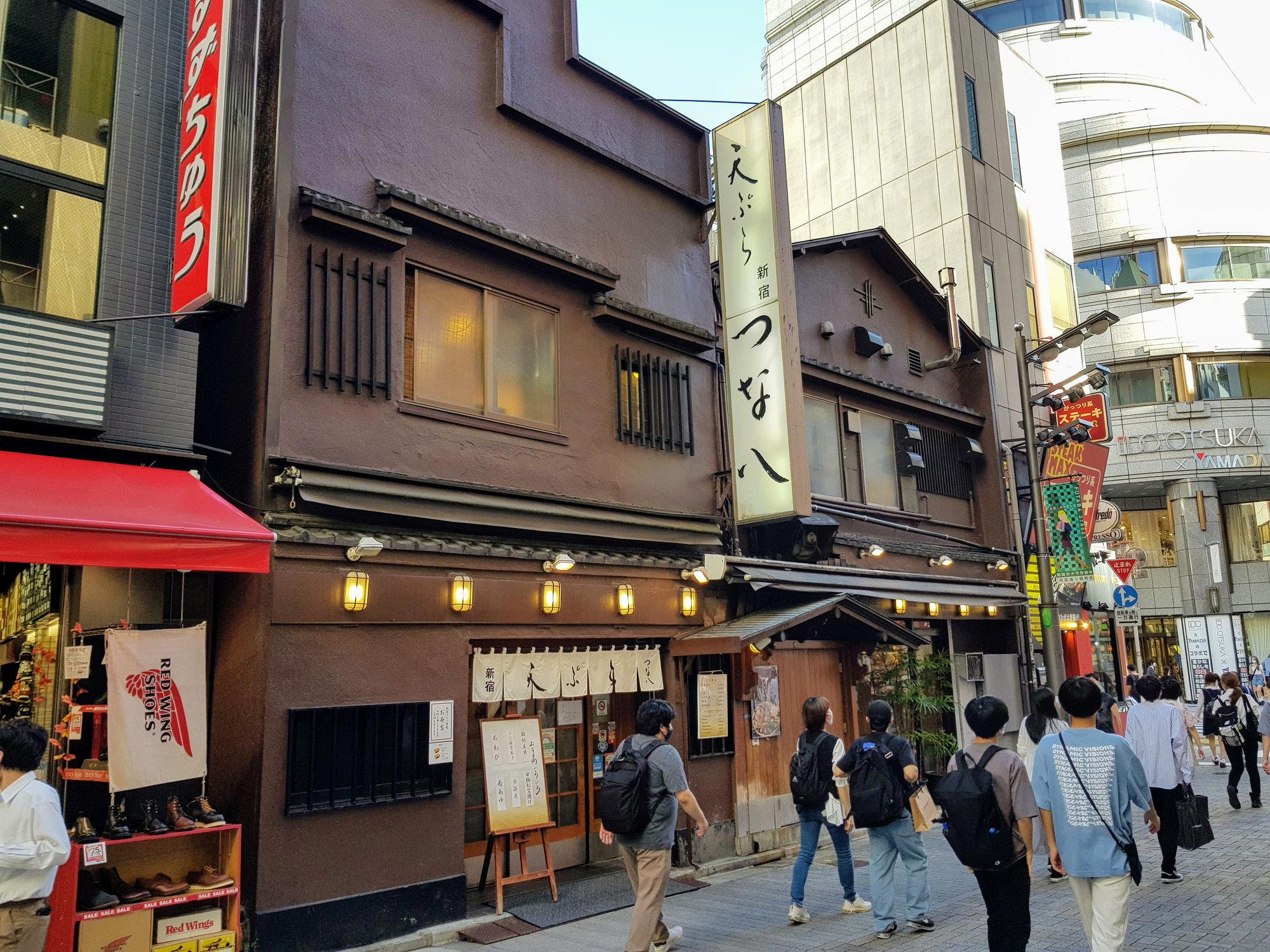
A Shinjuku Address in a Shifting Dining Category
Shinjuku has never been a district defined by restraint. It is Tokyo's largest rail hub, a commercial engine, and a district where dining ranges from standing ramen at midnight to multi-course kaiseki behind unmarked doors. Within that range, the traditional Japanese restaurant occupies a position that has changed considerably since the early 2000s. Rising real estate, thinning apprenticeship pipelines, and a shift in international visitor expectations have pushed many long-established formats to either contract, reposition, or close entirely. Tsunahashi Shinjuku, located at 3 Chome-31-8 Shinjuku, sits inside that broader story, a name that has persisted in a neighbourhood category under consistent pressure.
That persistence is itself a form of editorial evidence. In a district where restaurant turnover accelerates at every price tier, addresses that carry generational memory do so because they have adapted, not merely survived. Understanding Tsunahashi Shinjuku means understanding the trajectory of the category it represents, and the specific pressures that have reshaped traditional dining in this part of the city.
The Shinjuku 3-chome Context
The block around Shinjuku 3-chome sits east of the station's main commercial axis, where the density of chain restaurants and department store food halls gives way to narrower streets with longer-tenured independents. This is the part of Shinjuku where neighbourhood regulars and deliberate out-of-district visitors overlap, a different crowd from the tourist-facing corridors near Kabukicho or the salaryman blocks closer to the south exit. Traditional Japanese dining formats, shabu-shabu, sukiyaki, and their near neighbours, found footing here because the streets support repeat business rather than one-time footfall.
For comparison, Harutaka in Ginza and RyuGin in Roppongi operate in districts where the premium dining tier is actively concentrated, where being in the right neighbourhood reinforces a positioning signal. Shinjuku works differently. Here, an address earns recognition by sustaining quality over time in a context that does not automatically reward it.
How the Category Has Evolved Around It
The broader category of traditional hot-pot dining, shabu-shabu and sukiyaki in particular, has split over the past fifteen years in ways that matter for any serious visitor. At the leading end, a small number of operators have moved toward premium wagyu sourcing, single-origin dashi, and smaller seating formats that price against omakase counters rather than mid-market dining. At the other end, high-volume chains have consolidated the casual tier, making it harder for mid-range independents to hold their position without a distinct point of differentiation.
This dynamic plays out across Tokyo, not just in Shinjuku. L'Effervescence and Sézanne represent one end of Tokyo's current fine-dining bifurcation, formats that have sharpened their identity and priced accordingly. Crony represents a newer wave of technically inventive cooking that draws from multiple traditions. Traditional Japanese specialists face a different calculus: the expectation of fidelity to a format, while also demonstrating that the format has kept pace with a more demanding and better-informed dining public.
Restaurants in other Japanese cities have navigated similar pressures in their own ways. Gion Sasaki in Kyoto and HAJIME in Osaka both reflect how tradition and reinvention can coexist under different regional conditions. In Fukuoka, Goh has built a format that draws national attention to a city not automatically associated with fine dining. Each of these examples reflects a different answer to the same underlying question: how does a Japanese restaurant with a defined format evolve without abandoning what made it worth seeking out in the first place.
Evolution as Operational Strategy
The editorial angle that matters most when assessing Tsunahashi Shinjuku is not what it was at founding, but what it has become through successive adjustments. Long-tenured Tokyo restaurants in this category have generally made changes in one of three directions: narrowing the menu to fewer, higher-quality preparations; expanding into private dining formats that serve corporate entertainment demand; or investing in sourcing credentials that allow premium pricing in a category otherwise defined by mid-market expectations. Which direction any individual operator has taken is visible in how the room is configured, how the service is structured, and where the ingredient sourcing is positioned on the menu.
Venues like akordu in Nara show that deliberate positioning, even in a smaller city with less footfall, can generate sustained recognition when the format is executed with discipline. The same principle applies in Shinjuku, where the competitive noise is louder but the reward for clarity of purpose is proportionally larger.
Placing Tsunahashi in the Wider Network
For visitors constructing a Tokyo dining itinerary, the decision about where Tsunahashi Shinjuku fits depends on what the rest of the trip covers. If the visit already includes a counter-format sushi experience or a kaiseki progression, a traditional hot-pot specialist offers a different register, more convivial, less performance-driven, oriented around the table rather than the chef. That contrast has value in a city where the premium dining tier can feel relentlessly chef-forward.
It is worth noting that Tokyo's broader restaurant network extends well beyond the capital's highest-profile addresses. Restaurants in Nanao, Sapporo, Takashima, and Nishikawa Machi each represent formats that reward visitors willing to travel beyond the obvious nodes. But for those based in Tokyo, Shinjuku's central position, accessible from virtually every train line, makes it a practical anchor for an evening that does not require crossing the city.
International comparisons are instructive but limited. Le Bernardin in New York and Atomix both demonstrate how long-tenured restaurants in competitive cities maintain relevance through different forms of discipline, consistency in one case, continuous reinvention in the other. Traditional Japanese dining in Tokyo tends to weight the consistency end of that spectrum, with reinvention happening incrementally rather than through visible pivots. See our full Tokyo restaurants guide for the broader context across neighbourhoods and price tiers.
Planning a Visit
Tsunahashi Shinjuku is located at 3 Chome-31-8 Shinjuku, Shinjuku City, Tokyo 160-0022. The address places it within walking distance of Shinjuku-Sanchome Station, which is served by the Marunouchi, Shinjuku, and Fukutoshin lines, a more practical entry point than the main Shinjuku Station if arriving from central or eastern Tokyo. Reservation practice, current hours, and pricing should be confirmed directly with the venue, as these details are not available through this listing. For visitors building around other confirmed bookings, Bistro Ange in Toyohashi and Birdland in Sakai reflect how regional operators outside the major cities have developed distinct identities, a useful reference point when assessing what makes a Tokyo address worth the specific effort of a booking.
Frequently asked questions
How do I find Tsunahashi Shinjuku?
Tsunahashi Shinjuku is located at 3 Chome-31-8 Shinjuku, Shinjuku City, Tokyo 160-0022, Japan, Tokyo.
Is Tsunahashi Shinjuku a good option for a traditional Japanese dining experience in central Tokyo?
For visitors prioritising format authenticity over chef-driven novelty, the traditional hot-pot category that Tsunahashi Shinjuku represents is one of the more direct ways to engage with a style of Japanese restaurant dining that predates the kaiseki and omakase formats now dominant in international press coverage. Its location at 3 Chome-31-8 Shinjuku, east of the station's main commercial axis, sits in a denser concentration of established Japanese dining specialists rather than the department store food hall circuit. That positioning makes it a practical anchor for a Tokyo itinerary that is already covering contemporary formats elsewhere.
What dish is Tsunahashi Shinjuku famous for?
Tsunahashi Shinjuku sits within the traditional Japanese hot-pot category, with sukiyaki and shabu-shabu as its primary preparations. Both formats centre on high-quality beef cooked tableside, though each follows a distinct method: sukiyaki uses a shallow pan with a sweet soy-based sauce, while shabu-shabu involves a light dashi broth. The address at 3 Chome-31-8 Shinjuku places it in a sub-district where this style of dining has a long operational history among Tokyo's specialist restaurants.
How hard is it to get a table at Tsunahashi Shinjuku?
Shinjuku 3-chome draws a consistent mix of local regulars, business entertaining, and international visitors, which means traditional specialists in the area tend to see sustained demand across the week rather than just weekend peaks. Reservations made in advance are the safer approach, particularly for dinner. The proximity to Shinjuku-Sanchome station increases foot traffic and walk-in competition, so pre-booking from abroad is advisable for visitors with fixed itineraries.
Cost Snapshot
Comparable venues nearby, for context on price, style, and recognition.
| Venue | Cuisine | Price | Awards | Notes |
|---|---|---|---|---|
| Tsunahashi ShinjukuThis venue (the venue you are viewing) | Traditional Japanese Tempura | $20–30 | Not listed | Not listed |
| CENTRE THE BAKERY Aoyama ten | Shibuya, Japanese shokupan bakery | $10–20 | Tabelog 100 #75 | Not listed |
| 虎白 | Modern Japanese Kaiseki | $300–500 | 2 Michelin Stars · La Liste Top Restaurants | Shinjuku, Traditional Japanese Kaiseki |
| Akasaka Musashi | Japanese Shabu-shabu & Sukiyaki | $30–50 | Tabelog 100 #21 | Minato, Japanese Shabu-shabu & Sukiyaki |
| 暗闇坂 宮下 | Kyoto Izakaya | Not listed | Not listed | Minato, Kyoto Izakaya |
| Shake Kojima Honten | Salmon-focused Japanese Izakaya | $20–30 | Tabelog 100 #60 | Suginami, Salmon-focused Japanese Izakaya |
Continue exploring
More in Tokyo
Restaurants in Tokyo
All restaurants in Tokyo →


Bars in Tokyo
All bars in Tokyo →




Details
- Cozy
- Classic
- Casual Hangout
- Open Kitchen
- Sake Program
- A La Carte
- Counter Dining
Current opening hours
- Monday
- 11 AM–10 PM
- Tuesday
- 11 AM–10 PM
- Wednesday
- 11 AM–10 PM
- Thursday
- 11 AM–10 PM
- Friday
- 11 AM–10 PM
- Saturday
- 11 AM–10 PM
- Sunday
- 11 AM–10 PM
Hours can change for holidays and private events. Hours as of .
Cozy atmosphere with counter seating overlooking the open kitchen where chefs prepare hot, airy tempura right before guests' eyes.