Our verdict
暗闇坂 宮下 serves Kyoto Izakaya in Motoazabu, at Japan, 〒106-0046 Tokyo, Minato City, Motoazabu, 3 Chome−12−1 アベストコート B1, with casual service, quiet rooms, and a dinner focus.

Pearl is the En Primeur Club membership app, where members save venues, book tables and use the concierge.
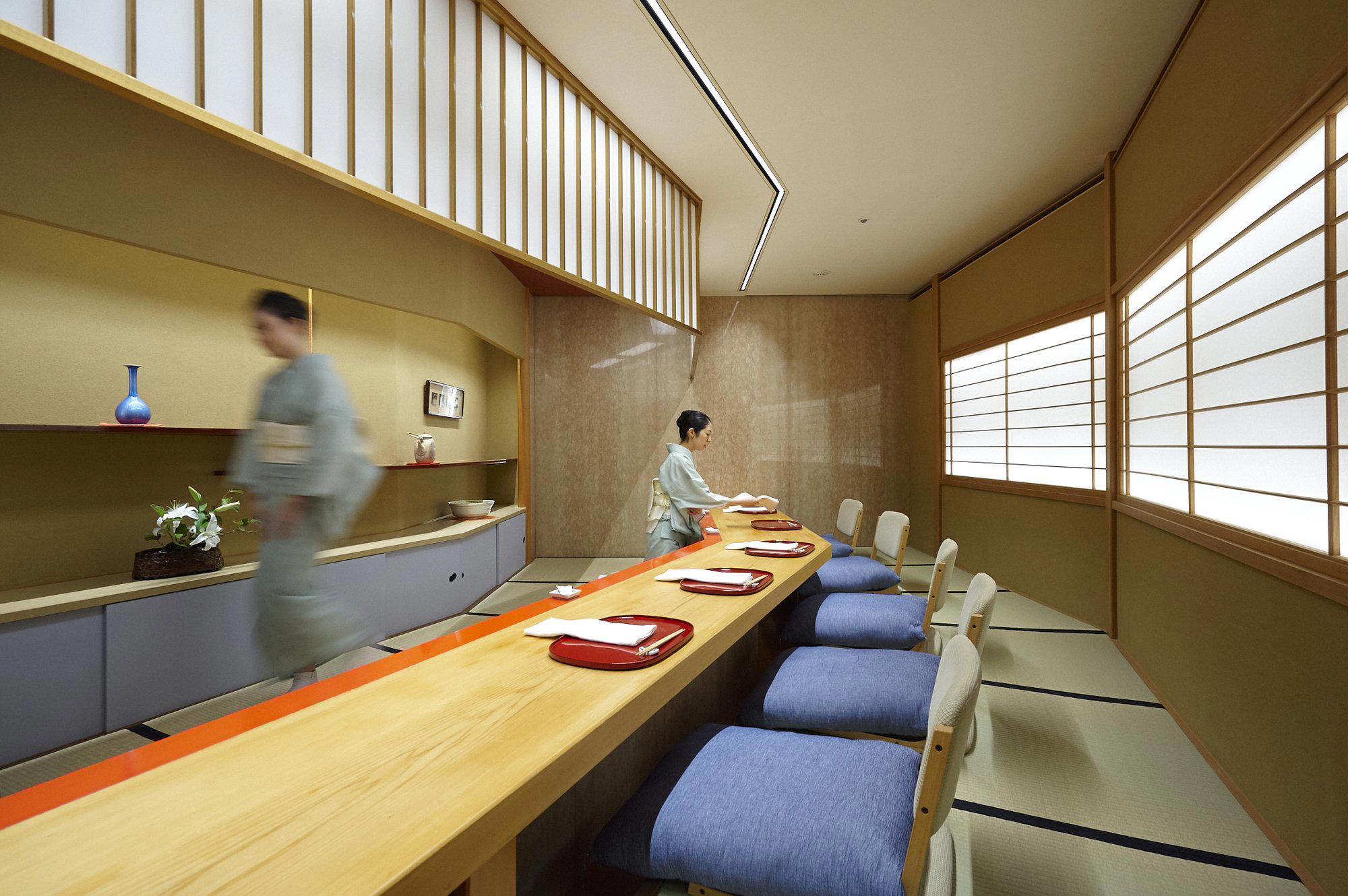
Motoazabu After Dark: The B1 Address That Defines Tokyo's Precision Dining Tier
Descend the stairs at the Motoazabu address and the shift is immediate. The street-level noise of Minato City drops away. What replaces it is the kind of considered quiet that high-end Tokyo kitchens cultivate deliberately: low light, controlled temperature, surfaces that absorb rather than reflect. This basement format, coded as B1 in the building directory at 3-12-1 Motosabu, belongs to a specific Tokyo tradition of dining rooms that hide their ambition behind unmarked doors and understated entryways. The theatrics, when they arrive, come through the food and the pacing, not the facade.
Motoazabu itself sits in the upper tier of Tokyo neighbourhoods for serious dining. The ward stretches between Azabu-Juban and Hiroo, attracting a resident and visiting demographic that supports long, expensive tasting menus on weeknights. The area hosts several ¥¥¥¥-bracket rooms across different cuisine categories, and??? (the venue's Japanese name, rendered in kanji as æéå å®®ä¸) positions within that cohort. To understand what a reservation here means, it helps to map it against the surrounding competitive field: L'Effervescence and Sézanne operate in the French-leaning register, while RyuGin anchors the kaiseki tradition at comparable price ceilings. The Motoazabu address adds a distinct data point to that map.
Ethical Sourcing and the Sustainability Architecture of Tokyo Fine Dining
Tokyo's leading dining tier has moved steadily toward transparency about where ingredients come from, how they are handled, and what happens to the parts of an animal or vegetable that don't reach the plate. This isn't a recent marketing trend: Japanese culinary philosophy has long operated on principles of mottainai, a cultural concept built around eliminating waste and respecting the full value of a material. In the rarefied B1 rooms of Minato City, that philosophy gets applied with technical precision.
The broader pattern across Japan's premium restaurants is instructive. HAJIME in Osaka has built an internationally documented sustainability programme into its kitchen operations. Gion Sasaki in Kyoto sources within seasonal windows that reflect centuries of regional agricultural rhythm. akordu in Nara draws directly on the biodiversity of the Kinki region. What links these addresses is a shared rejection of the import-heavy, all-season supply model that dominated Japanese fine dining through the 1990s. Goh in Fukuoka applies similar logic to Kyushu's coastal producers. These restaurants treat their supply chains as editorial decisions, not logistical necessities, and the dining rooms in Motoazabu operate within that same cultural current.
This shift matters for readers who care about where their meal comes from. Tokyo's top-tier kaiseki and tasting-menu rooms now compete partly on producer relationships and traceability, not only on technical execution. A basement address in Minato City does not guarantee a sustainable sourcing model, but the neighbourhood context and the category of dining it represents place it within a scene where those commitments have become standard expectations rather than optional extras. Comparable smaller-format rooms across Japan, including 一本杉川嶋 in Nanao and 湖稜庵 in Takashima, demonstrate how strongly regional sourcing has become a marker of seriousness in the upper-tier Japanese dining room.
The Tasting-Menu Format and What It Demands of the Diner
Japan's high-end dining structure is unusual globally in how fully it has committed to the tasting-menu model. Unlike Paris or New York, where à la carte options persist at starred addresses, Tokyo's serious rooms almost universally operate on fixed courses set by the kitchen. This concentrates creative control, reduces waste through predictable ingredient volumes, and allows the kitchen to build a narrative across ten to fifteen courses that an à la carte card cannot achieve. Crony and Harutaka both operate within this fixed-course structure, as do the comparison rooms cited above.
For the diner, this means committing time as well as money. A full tasting menu at a Minato City address typically runs two to three hours. The pacing is controlled by the kitchen, not the table, which is itself a form of hospitality: the room takes responsibility for the experience so the guest can abandon the decision-making that dominates restaurant meals elsewhere. The format also enables the zero-waste sourcing commitments described above, because the kitchen can plan ingredient use across the full volume of a service rather than responding to unpredictable à la carte orders.
Internationally comparable rooms at this tier, including Le Bernardin in New York City and Atomix in New York City, show that the tasting-menu format as a vehicle for ingredient-led cooking is not exclusively Japanese, but Tokyo has executed it with a consistency and depth that makes the city the reference point for the model globally. Bistro Ange in Toyohashi and Birdland in Sakai demonstrate that the format extends well beyond Tokyo's ward boundaries, forming a national infrastructure for serious eating.
Reading the Neighbourhood: Motoazabu as a Dining District
Motoazabu rewards the visitor who approaches it on foot in the late afternoon. The streets between the Azabu-Juban subway exit and the higher residential blocks are dense with embassies, small grocers supplying a cosmopolitan residential community, and a scattering of wine importers that serve the neighbourhood's dining rooms. This geography has consequences for the dining rooms it supports: a cosmopolitan local population creates a demand for technical precision across multiple culinary traditions, which is why the area hosts serious addresses in French, Japanese, and hybrid categories simultaneously.
The B1 address format that places this venue below street level is partly pragmatic (Tokyo real estate economics make basement rooms cost-effective) and partly atmospheric. A kitchen operating underground has natural insulation from temperature variation, consistent humidity, and freedom from the noise that street-level rooms manage. For a kitchen committed to product quality and controlled preparation environments, the basement is not a limitation but a resource. 夕日丘山乃 in Sapporo and 奥羽庵 in Nishikawa Machi both operate in environments where geography and built space become part of the dining proposition, not incidental to it.
For a broader orientation to what Tokyo's restaurant scene offers across neighbourhoods and price tiers, the EP Club Tokyo restaurants guide maps the full range from entry-level izakaya to ¥¥¥¥ tasting-menu rooms.
Know Before You Go
Address: 3-12-1 Motoazabu, Minato City, Tokyo 106-0046 (Building B1)
Nearest transit: Azabu-Juban Station (Namboku and Oedo lines) is the closest subway access point for the Motoazabu district.
Format: Fixed-course tasting menu format standard for this category of Tokyo dining room.
Booking lead time: Minato City rooms at this tier typically require advance reservations of four to eight weeks minimum; high-demand periods around Golden Week (late April to early May) and year-end warrant booking further ahead.
Dress code: Smart dress is standard expectation for basement tasting-menu rooms in this price tier and neighbourhood.
Price tier:
Frequently asked questions
What is the standout dish at æéå å®®ä¸?
How far ahead should I plan a reservation at æéå å®®ä¸?
Is æéå å®®ä¸ in Tokyo connected to a broader Japanese culinary tradition?
Reputation First
| Venue | Cuisine | Price | Awards | Notes |
|---|---|---|---|---|
| æéå å®®ä¸This venue (the venue you are viewing) | Kyoto Izakaya | Not listed | Not listed | Not listed |
| Harutaka | Edo-Style Omakase Sushi | $200–300 | 3 Michelin Stars · World's 50 Best #76 | Sushi |
| L'Effervescence | Modern French with Japanese Influences | $200–300 | 3 Michelin Stars · World's 50 Best #69 | French |
| RyuGin | Modern Kaiseki | $500+ | 3 Michelin Stars · World's 50 Best #41 | Kaiseki, Japanese |
| Crony | Modern French with Japanese Influences | $150–200 | 2 Michelin Stars · World's 50 Best #34 | Innovative, French |
| Florilège | Modern French-Japanese Plant-Based Fine Dining | $50–100 | 2 Michelin Stars · World's 50 Best #31 | French |
Continue exploring
More in Tokyo
Restaurants in Tokyo
All restaurants in Tokyo →

Bars in Tokyo
All bars in Tokyo →



Details
Traditional Japanese