Our verdict
トランク キッチン occupies a quietly significant address in Jingumae, Shibuya, sitting within the broader Omotesando dining corridor where neighbourhood-rooted concepts compete alongside high-profile destination restaurants. With sparse public data and a low promotional footprint, the restaurant draws on local credibility rather than international visibility, making it a reference point for Tokyo's less-amplified dining tier.

Pearl is the En Primeur Club membership app — saves, bookings, and concierge access live there. Same editors, same standards.
- Address
- 5 Chome-31-32 Jingumae, Shibuya, Tokyo 150-0001, Japan
- Phone
- +81 3-5766-3202
- Hours
- Mon–Sat 7 AM–11 PMSun 7 AM–10 PM
- Website
- catstreet.trunk-hotel.com
- Directions
- Get directions
- Booking
- Book on TableCheck
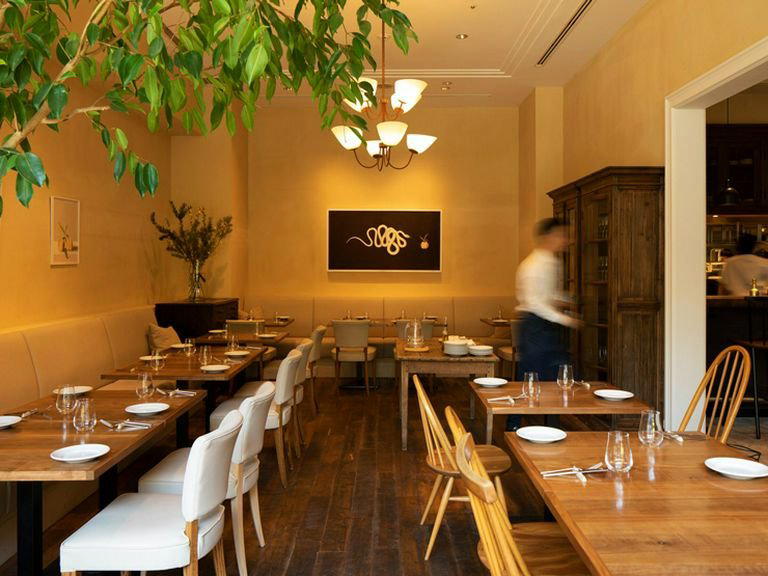
Jingumae's Quieter Register: What the Address Tells You Before You Arrive
Shibuya's Jingumae district runs a wide spectrum. The stretch around Omotesando draws the international press: Michelin-flagged counters, French-trained chefs, tasting menus priced against Sézanne and L'Effervescence on the other side of the ward. But 5-chome Jingumae operates at a different register. The block sits close enough to the neighbourhood's commercial spine to benefit from foot traffic and residential density, yet far enough from the Omotesando flagships that the restaurants here tend to succeed or fail on repeat local custom rather than international bookings. It is exactly the kind of address where a restaurant named トランク キッチン (Trunk Kitchen) would locate itself if the intention were neighbourhood integration over destination billing.
That geographic positioning matters editorially because it shapes how a menu gets structured. Restaurants that rely on tourists and destination diners tend toward fixed multicourse formats with clearly communicable narrative arcs. Neighbourhood restaurants in districts like this one more often build around flexibility: accessible pricing tiers, a la carte options alongside set menus, and a format that accommodates the working lunch as readily as the celebratory dinner. The distinction is not a hierarchy of quality but a difference in commercial logic, one that runs through the entire design of a room and its kitchen output.
Menu Architecture as Neighbourhood Contract
Tokyo's most instructive dining tier is not the three-Michelin-star bracket, where venues like RyuGin or Harutaka operate under broadly understood prestige formats. The more revealing tier sits one or two steps below that ceiling, where restaurants must make active decisions about what kind of flexibility to offer and at what cost to coherence. This is the tier in which Trunk Kitchen operates, and menu architecture is where those decisions become visible.
A restaurant in this position in Jingumae faces a structural tension: the surrounding neighbourhood has high ambient taste levels (the residential population here skews professional and internationally travelled) but also genuine price sensitivity compared to the Omotesando fine dining corridor. Menus that resolve this tension well tend to share certain characteristics. They usually maintain a clear backbone, a central idea about cuisine type or sourcing philosophy, without locking every diner into a single price point or format. Lunch and dinner often diverge substantially, with lunch acting as a lower-friction entry to the kitchen's output. This is a pattern visible across comparable Shibuya neighbourhood restaurants that have built durable reputations without Michelin recognition: they earn loyalty through consistency at accessible price points before asking regulars to trade up to more committed dinner formats.
For reference, the ¥¥¥ tier in Tokyo's Shibuya and Minato wards typically spans roughly ¥3,000–¥8,000 per person at lunch and ¥8,000–¥20,000 at dinner, with ¥¥¥¥ properties like Crony pushing past that ceiling on tasting menu formats. Trunk Kitchen's positioning in Jingumae's 5-chome places it within the neighbourhood-integrated middle of that range, though specific pricing should be confirmed directly with the venue before visiting.
The Jingumae Dining Context: Competitors and Comparisons
Understanding where Trunk Kitchen fits requires mapping the broader Omotesando-Jingumae dining corridor. At one end, French-influenced tasting menus, some with Michelin hardware, some without, anchor the high end of the neighbourhood's ambition. At the other, casual format-driven operations near Harajuku serve price-led volume. The middle segment, neighbourhood restaurants with serious kitchen intentions but accessible formats, is where Tokyo's most interesting generational dining story is playing out right now.
Japan's regional fine dining has expanded the reference pool significantly over the past decade. Destinations like HAJIME in Osaka, Gion Sasaki in Kyoto, and Goh in Fukuoka have demonstrated that serious cooking does not require a Tokyo postcode, which has subtly shifted the pressure on Tokyo neighbourhood restaurants. They now compete not just with the Omotesando flagships above them but with the credibility of regional alternatives that draw food-focused travellers away from the capital entirely. Restaurants in Nara like akordu, and more remote destinations such as 三本木 布川製 in Nanao or 湖畔庵 in Takashima, attract the same audience that a Jingumae neighbourhood restaurant might otherwise expect.
Within Tokyo itself, the competitive framing is tighter. Venues like Birdland and Bistro Ange illustrate how format specificity, a restaurant that commits hard to a single cuisine type or service mode, creates a different kind of loyalty than format flexibility does. Trunk Kitchen's name suggests a kitchen-forward rather than service-forward identity, which in the Jingumae context implies a menu that leads with produce or technique rather than ceremony.
Planning a Visit: Practical Framing
Public information about Trunk Kitchen is sparse. No booking platform, hours, or price data are available through standard channels at time of writing, which itself signals something about the venue's approach to external visibility. Restaurants in Tokyo that maintain a low public data footprint typically rely on direct contact, local word of mouth, or neighbourhood walk-in culture, all of which reward the diner who arrives with local knowledge rather than international research.
For context on how this venue compares logistically against better-documented Jingumae-area and Tokyo peers, see the table below.
| Venue | Neighbourhood | Price Tier | Format | Booking Ease |
|---|---|---|---|---|
| トランク キッチン | Jingumae, Shibuya | Not confirmed | Not confirmed | Low public data; direct contact advised |
| Crony | Minami-Aoyama | ¥¥¥¥ | Tasting menu | Books ahead; reservation-only |
| L'Effervescence | Nishi-Azabu | ¥¥¥¥ | Tasting menu | Books weeks ahead |
| Sézanne | Marunouchi | ¥¥¥¥ | Tasting menu | Competitive; books months out |
Given the low volume of public data, visitors should treat a visit to Trunk Kitchen as a walk-in or direct-contact exercise rather than a bookable destination. This is not unusual for smaller Jingumae operations; it is the norm for restaurants whose local reputation precedes their digital footprint. For a fuller picture of the Tokyo dining map across price tiers and formats, see our full Tokyo restaurants guide.
Frequently asked questions
Where do I go for トランク キッチン?
トランク キッチン is located at 5 Chome-31-32 Jingumae, Shibuya, Tokyo 150-0001, Japan, Tokyo.
What do people recommend at Trunk Kitchen?
Public menu documentation for Trunk Kitchen is sparse — no tasting notes or signature dishes appear through standard channels at time of writing. Given its address in Jingumae's quieter 5-chome, away from the Omotesando press circuit, the venue appears to operate without the promotional infrastructure of nearby flagged counters. Recommendations circulate primarily through word of mouth rather than review platforms or press coverage.
How hard is it to get a table at トランク キッチン?
Reservations are recommended for トランク キッチン in Tokyo. Confirm current policy via the venue's official channels.
What is トランク キッチン known for?
トランク キッチン is best approached by focusing on the core concept and signature offerings.