Our verdict
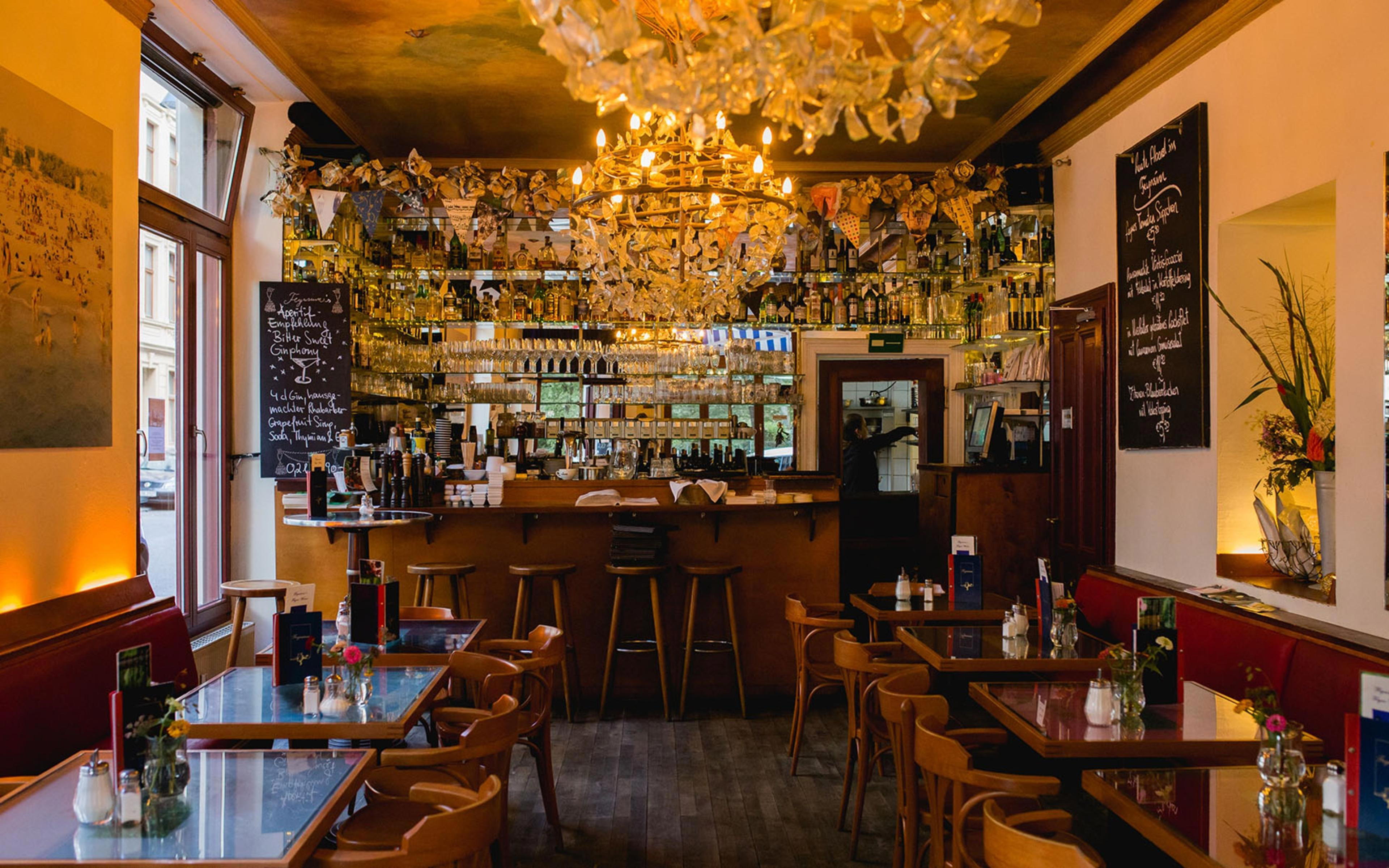
Tigermilch sits on Brüsseler Strasse in Cologne's Belgian Quarter, a stretch that has become one of the city's more serious addresses for drink-led dining. The room draws a crowd that arrives for the wine as much as the food, placing it in a category that Cologne's broader restaurant scene has only recently started to develop with any depth.

Pearl is the En Primeur Club membership app, where members save venues, book tables and use the concierge.

The menu
What to order
- Ceviche classico
- Ceviche chifa
- Tiradito
The Belgian Quarter and Its Drinking Culture
Brüsseler Strasse cuts through the heart of Cologne's Belgian Quarter, a neighbourhood that over the past decade has shifted from bohemian afterthought to one of the city's most concentrated strips of considered hospitality. The street's rhythm is different from the Rhine-facing tourist corridor or the formal dining rooms clustered around the cathedral district. Here, rooms tend to be smaller, the pace more deliberate, and the relationship between food and drink more openly reciprocal. Tigermilch, at number 12, sits inside that pattern.
The Belgian Quarter's dining identity is worth understanding before you arrive. It does not operate on the same logic as Cologne's established fine-dining addresses, several of which carry Michelin recognition and price accordingly. What this neighbourhood has built instead is a culture of mid-evening commitment: guests who arrive with time, who treat the wine list as a reason for the visit rather than an accompaniment, and who expect the room itself to hold their attention across multiple hours. Tigermilch reads as part of that tradition.
How Cologne Positions Its Wine-Led Rooms
Germany's wine culture tends to be discussed through its producing regions, and rightly so: the Mosel, the Rheingau, the Nahe, and the Pfalz each command serious international attention. But the conversation about where that wine is actually drunk, and how, tends to happen inside a narrower set of rooms in a handful of cities. Cologne has historically been overshadowed by Hamburg, Munich, and Berlin in this respect, but the Belgian Quarter represents a genuine shift in what the city expects from its wine-focused venues.
It is closer to the model that operates across northern Europe's mid-tier wine bars: a list built with genuine curatorial intent, a room that supports conversation, and food that earns its place without competing for leading billing. La Société operates nearby in a comparable register, and the presence of multiple such addresses within a few blocks suggests that this part of Cologne has developed a coherent identity rather than a scattering of independent bets.
For context on what serious German restaurant wine programs look like at the higher end, operations such as Vendôme in Bergisch Gladbach and Waldhotel Sonnora in Dreis maintain deep cellars that lean heavily on Burgundy and domestic Riesling. What distinguishes a neighbourhood wine room from those formal programs is accessibility of format: no fixed menu obligation, no dress code implied by the room's architecture, and a list that rewards browsing rather than demanding prior study.
The Wine Angle: Curation in a Neighbourhood Room
The editorial angle that matters most for a room on Brüsseler Strasse is what the list is actually doing. Cologne sits at a geographic crossroads that gives its buyers natural access to French Alsace and Moselle producers directly across the border, to the German producing regions within a two-hour radius, and to the established import channels that supply the rest of the country. A venue operating at the mid-tier of this neighbourhood has both the opportunity and the pressure to make choices that reflect a point of view rather than a standard distributor catalogue.
Wine-led rooms in Germany's second-tier cities have increasingly split between two approaches: the all-natural, low-intervention list that reads as a statement of ideology, and the more classically structured list that includes regional producers alongside French and Italian benchmarks. Neither is inherently superior, but they signal different things about who the room thinks its guest is. The Belgian Quarter's general drift has been toward the former, with an emphasis on smaller producers and minimal-intervention farming, which aligns with the neighbourhood's broader aesthetic.
For guests accustomed to the sommelier-driven programs at rooms like Restaurant Haerlin in Hamburg or the structured pairing menus at Schanz in Piesport, the format here is deliberately less formal. That informality is the point. The room functions as a place to drink well without the scaffolding of a tasting menu evening.
Situating Tigermilch in Cologne's Broader Scene
Cologne's restaurant scene is wider and more layered than its international reputation suggests. The city's French-influenced rooms, including Le Moissonnier Bistro, reflect decades of proximity to France and a local appetite for that register. The newer wave of modern cuisine addresses, represented by maiBeck, has pulled the city's dining conversation toward a more produce-driven, technique-conscious middle ground. Tigermilch sits in a different part of the map: the evening-first, drink-led room that treats food as serious without anchoring the experience to a kitchen-driven narrative.
This category of venue has gained ground across German cities in recent years. Berlin's CODA Dessert Dining represents one extreme of format experimentation, while rooms like the subject here occupy a more legible middle position. The growth of this type across Cologne specifically reflects a guest base that has become more wine-literate and less reliant on the fixed-menu format to signal that an evening out is serious.
For reference points beyond Germany, the trajectory of wine-bar dining in cities like New York, where rooms such as Le Bernardin and Atomix have defined different poles of the fine-dining spectrum, shows that the most durable version of this format tends to be the one where the list and the food reinforce each other without either overwhelming the other. That balance is the standard against which any wine-led neighbourhood room is ultimately measured. See our full Cologne restaurants guide for broader context on where this address fits within the city's current scene.
What is the standout thing about Tigermilch?
Its location places it at the centre of what has become Cologne's most developed strip for wine-led, drink-first hospitality. In a city where the formal dining conversation tends to orbit Michelin-tracked rooms elsewhere in the centre, Brüsseler Strasse represents a distinct alternative: a neighbourhood that has built a coherent identity around informal but considered drinking. Tigermilch operates within that identity rather than against it.
Is Tigermilch a good option for guests visiting from outside Cologne who want to understand the city's wine scene?
The Belgian Quarter is one of the more instructive neighbourhoods for visitors trying to read where Cologne's hospitality culture is heading, and a room like Tigermilch offers a format that is less common in the city's tourist-facing centre. For guests arriving with an interest in how German cities are developing wine-bar culture outside the formal tasting-menu model, this part of Cologne provides useful reference. That said, because confirmed operational details are limited, visitors should verify hours and reservation options directly before building an evening around the address.
Frequently asked questions
How do I find Tigermilch?
Tigermilch is located at Brüsseler Str. 12, 50674 Köln, Germany, Cologne.
Is Tigermilch a good starting point for exploring Cologne's Belgian Quarter wine scene?
Brüsseler Str. 12 puts Tigermilch at the geographic heart of the Quarter, making it a practical first stop for anyone mapping Cologne's wine-bar circuit. The neighbourhood has developed a density of drink-first venues that is difficult to match elsewhere in the city. Cologne's position as a crossroads between German producing regions and French border influence shapes what gets poured in rooms like this one.
How hard is it to get a table at Tigermilch?
Brüsseler Strasse runs at high capacity on Thursday through Saturday evenings, and smaller rooms in the Belgian Quarter frequently fill without advance contact. Tigermilch sits at Brüsseler Str. 12, a stretch that draws both locals and visitors to the neighbourhood's drink-first venues. Arriving early or reaching out ahead on busier nights is the practical approach.
What's the standout thing about Tigermilch?
Its address places it at the operational centre of what has become Cologne's most developed corridor for wine-led hospitality. The Belgian Quarter, particularly along Brüsseler Strasse, has shifted over the past decade from bohemian afterthought to a strip where drink curation is taken seriously. Few rooms in Cologne sit more squarely inside that shift.
What It’s Closest To
Comparable venues nearby, for context on price, style, and recognition.
| Venue | Cuisine | Price | Notes |
|---|---|---|---|
| TigermilchThis venue (the venue you are viewing) | Modern Peruvian-Japanese Fusion | $30–50 | Not listed |
| El Inca Restaurant | Authentic Peruvian | $20–30 | Neustadt/Süd |
| Augustin | Modern German-French Brasserie | $50–100 | Altstadt/Nord |
| Kaizen | Modern Japanese Fusion Sushi | $30–50 | Neustadt/Süd |
| Wein Bisto L'escalier | French Bistro with Local Seasonal Cuisine | Not listed | Neustadt/Süd |
| Crusty Slices | Croissant Pizza | Not listed | Altstadt/Nord |