

1 Michelin Star · Falstaff Wine Bar - 91 Falstaff Points
Our verdict
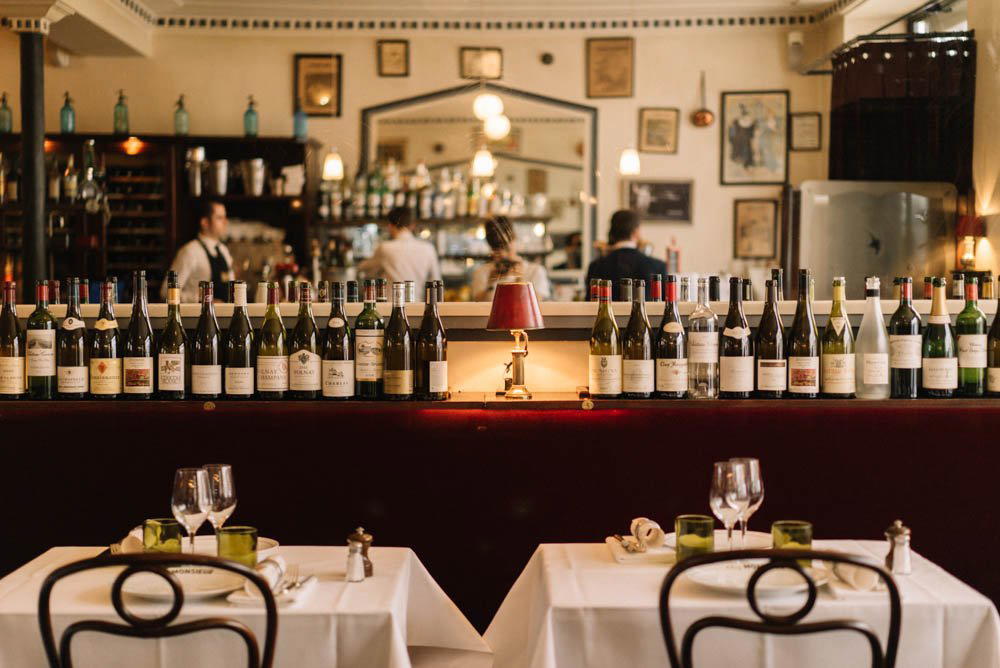
Le Moissonneur Bistro holds a Michelin star in 2024 and 2025 under chef David Guitton, placing French bistro cooking inside a Cologne neighbourhood better known for Rhine-side tourism than serious dining. At the €€€ price tier, it occupies a distinct position between the city's entry-level brasseries and its €€€€ tasting-menu houses.

Pearl is the En Primeur Club membership app, where members save venues, book tables and use the concierge.
The menu
What to order
- Le Pâté de viandes en croûte
- Tartare de filet de veau Façon Brasserie
- Fish soup
French Bistro Cooking on Krefelder Strasse
Krefelder Strasse sits in Cologne's Neustadt-Nord district, a stretch of the city that runs northwest from the old town toward the ring roads, lined with residential blocks and the kind of neighbourhood institutions that rarely make international press. It is not the address you would map if you were building a fine-dining itinerary from scratch. That tension between address and ambition is exactly what defines the Le Moissonnier experience before you have ordered a single course. The restaurant occupies a position that Cologne's dining scene produces more often than Paris or Hamburg might: serious French technique applied at a scale and price point that keeps the room full of people who actually live nearby, not only of visitors making a pilgrimage.
The neighbourhood context matters because it shapes what Le Moissonnier is competing against and what it is trying to be. Cologne's established fine-dining addresses tend to cluster around the old town and the Rhine embankment, where tourism supports the higher price floors required for €€€€ tasting menus. Ox & Klee, La Cuisine Rademacher, and maximilian lorenz all operate at the €€€€ tier, where the format commits diners to a full evening and a substantial spend before they have read the menu. Le Moissonnier pitches at €€€, which in practical terms means it can be a considered Tuesday dinner rather than a planned occasion. That accessibility, priced one tier below its starred peers but still within a Michelin frame, is a deliberate market position.
What a Michelin Star in Consecutive Years Signals
Retaining a Michelin star across two consecutive guide cycles, as Le Moissonnier has done with its 2024 and 2025 awards under chef David Guitton, carries a different weight than a debut recognition. A first star can reflect an exceptional year, a compelling new voice, or a well-timed inspector visit. A second consecutive star is a consistency signal. The inspectors have returned, the kitchen has not drifted, and the format has held under the pressures that cause many debut-starred rooms to slip: staff turnover, the distraction of publicity, the temptation to over-engineer a menu that was working precisely because it was not over-engineered.
France's bistro tradition, from which Le Moissonnier draws its vocabulary, has historically resisted Michelin recognition at the higher tiers because the format's strengths, directness, recognisable dishes, an absence of ceremony, sit in tension with what starred dining traditionally rewarded. That tension has eased considerably since the 2010s, as the guide began acknowledging that technical precision and ingredient sourcing can exist inside informal room formats. Le Moissonnier's position in that evolved category aligns it with a pattern visible across France and, increasingly, in French-leaning rooms in German cities: the starred bistro that makes no apologies for its genre. For a broader view of how this fits into Cologne's dining scene, see our full Cologne restaurants guide.
The Bistro Register in a German City
German cities have a complicated relationship with classical French cooking. The postwar culinary prestige hierarchy assigned French technique to the best of the register, and for decades the most ambitious German kitchens imported not only methods but also vocabulary, room design, and service choreography wholesale. What has shifted in the last fifteen years is a growing confidence among German diners in demanding that French-trained kitchens adapt to local expectations around directness and portion scale rather than performing French formality as theatre.
Cologne fits this pattern. The city's food culture is grounded in direct pleasure: the Rhineland has never been a fussy-eating town. The local comparison set for Le Moissonnier includes La Société and maiBeck, both of which operate in a French or French-adjacent register at the mid-to-upper tier without Michelin recognition. The star distinguishes Le Moissonnier from those peers, but the €€€ price point keeps it within the same conversation rather than elevating it out of regular-use range. That is a meaningful calibration in a city where the dining public is price-aware and the tourist trade, while present around the cathedral and the Rhine, does not distort the economics of a room fifteen minutes north by foot.
Chef David Guitton's name carries the French lineage that the restaurant's identity requires, but the relevant editorial point is structural rather than biographical: in the German bistro-with-a-star category, the kitchen's ability to sustain French technique without French price tags is the harder achievement. Comparable starred French rooms elsewhere in Germany, including JAN in Munich and the heavier-artillery end represented by Vendôme in Bergisch Gladbach, give a sense of the range this category spans. Le Moissonnier sits closer to the accessible end of that spectrum by design.
What the Numbers Suggest About the Room
A 4.7 with 228 data points suggests that the kitchen performs reliably across service types and that the front-of-house manages expectations without drama. It is the kind of rating that accrues when a room does exactly what it says it is and does it consistently.
For context, Cologne's starred restaurants as a group tend to score in the 4.5 to 4.8 range on Google, where the rating reflects satisfaction relative to expectations rather than absolute quality. Le Moissonnier at 4.7 is performing at the upper end of that local distribution, which aligns with its two consecutive Michelin retentions. German diners are not temperamentally inclined to leave five-star reviews unless the experience merited it.
Planning a Visit: Address, Access, and Timing
Le Moissonnier sits at Krefelder Strasse 25, 50670 Cologne, in a district that is walkable from Cologne's central train station in under twenty minutes or reachable in a short taxi or tram ride. The address is a residential-commercial mixed block, which means there is no dramatic arrival sequence and no valet theatre. You find the door, you go in.
A room at this price tier with two consecutive Michelin stars in a city of Cologne's size will fill a week or more out on desirable evenings, particularly Thursday through Saturday. Planning three to four weeks ahead is a reasonable baseline. If Cologne is part of a broader German dining trip that includes other starred rooms, the logistics are covered in the Schwarzwaldstube in Baiersbronn, Aqua in Wolfsburg, ES:SENZ in Grassau, and CODA Dessert Dining in Berlin entries within the EP Club network, as well as in our guides to Cologne hotels, Cologne bars, Cologne wineries, and Cologne experiences.
For comparison with French kitchens operating at comparable or higher tiers internationally, Hotel de Ville Crissier in Crissier and Sézanne in Tokyo represent the upper register of the tradition Le Moissonnier works within, offering useful calibration for where the Cologne room sits in the global French dining picture.
Frequently asked questions
How do I find Le Moissonnier Bistro?
Le Moissonnier Bistro is located at Krefelder Str. 25, 50670 Köln, Germany, Cologne.
Is Le Moissonnier Bistro award-winning?
Le Moissonnier Bistro has received recognition including: Michelin 1 Star (2025); Michelin 1 Star (2024).
What do regulars order at Le Moissonnier Bistro?
What the 2024 and 2025 Michelin stars do confirm is that the kitchen under David Guitton operates at a level of consistency that rewards repeat visits, the kind of track record that tends to generate regulars in the first place. For current menu details, the address is Krefelder Strasse 25, and arriving with an open question about the day's options is often how classical French bistros prefer to be approached.
What should I budget for a meal at Le Moissonnier Bistro?
Pricing at Le Moissonnier Bistro is listed as €€€.
Who is the chef at Le Moissonnier Bistro?
The chef associated with Le Moissonnier Bistro is David Guitton.
How hard is it to get a table at Le Moissonnier Bistro?
Holding a Michelin star across consecutive guide cycles in a city without an oversupply of French fine dining puts real pressure on covers. Cologne's Neustadt-Nord is not a high-traffic tourist corridor, which means most of that demand comes from local regulars and visiting diners who have done their research.
What It’s Closest To
| Venue | Cuisine | Price | Awards | Notes |
|---|---|---|---|---|
| Le Moissonnier BistroThis venue (the venue you are viewing) | French Bistro | Not listed | 1 Michelin Star · Falstaff Wine Bar - 91 Falstaff Points | Not listed |
| maximilian lorenz | Modern German Fine Dining | $200–300 | 1 Michelin Star | French Brasserie, Modern Cuisine |
| NeoBiota | Modern European Fine Dining | Not listed | 1 Michelin Star | Modern German, Modern Cuisine |
| ZEN Japanese Restaurant | Modern Japanese Omakase & Sushi | $30–50 | Michelin Plate | Not listed |
| Ox & Klee | Modern European Fine Dining with Six-Sense Concept | $200–300 | 2 Michelin Stars · La Liste Top Restaurants | Modern Cuisine |
| La Cuisine Rademacher | Modern French Fine Dining | $150–200 | 1 Michelin Star | Modern French |
Recognition history
Dated appearances from independent guides and award organizations, with the underlying list record or original source where available.
Michelin 1 Star
Michelin
Falstaff Wine Bar - 91 Falstaff Points
Falstaff
Full recognition history (4 entries)
Michelin 1 Star
Michelin
Michelin 1 Star
Michelin
Continue exploring
More in Cologne
Restaurants in Cologne
All restaurants in Cologne →
Bars in Cologne
All bars in Cologne →

Details
- Classic
- Cozy
- Elegant
- Intimate
- Date Night
- Special Occasion
- Extensive Wine List
- A La Carte
Current opening hours
- Monday
- Closed
- Tuesday
- 12–4:30 PM
- Wednesday
- 12–4:30 PM
- Thursday
- 12–4:30 PM
- Friday
- 12–4:30 PM, 7 PM–12 AM
- Saturday
- 12–5:30 PM
- Sunday
- Closed
Hours can change for holidays and private events. Hours as of .
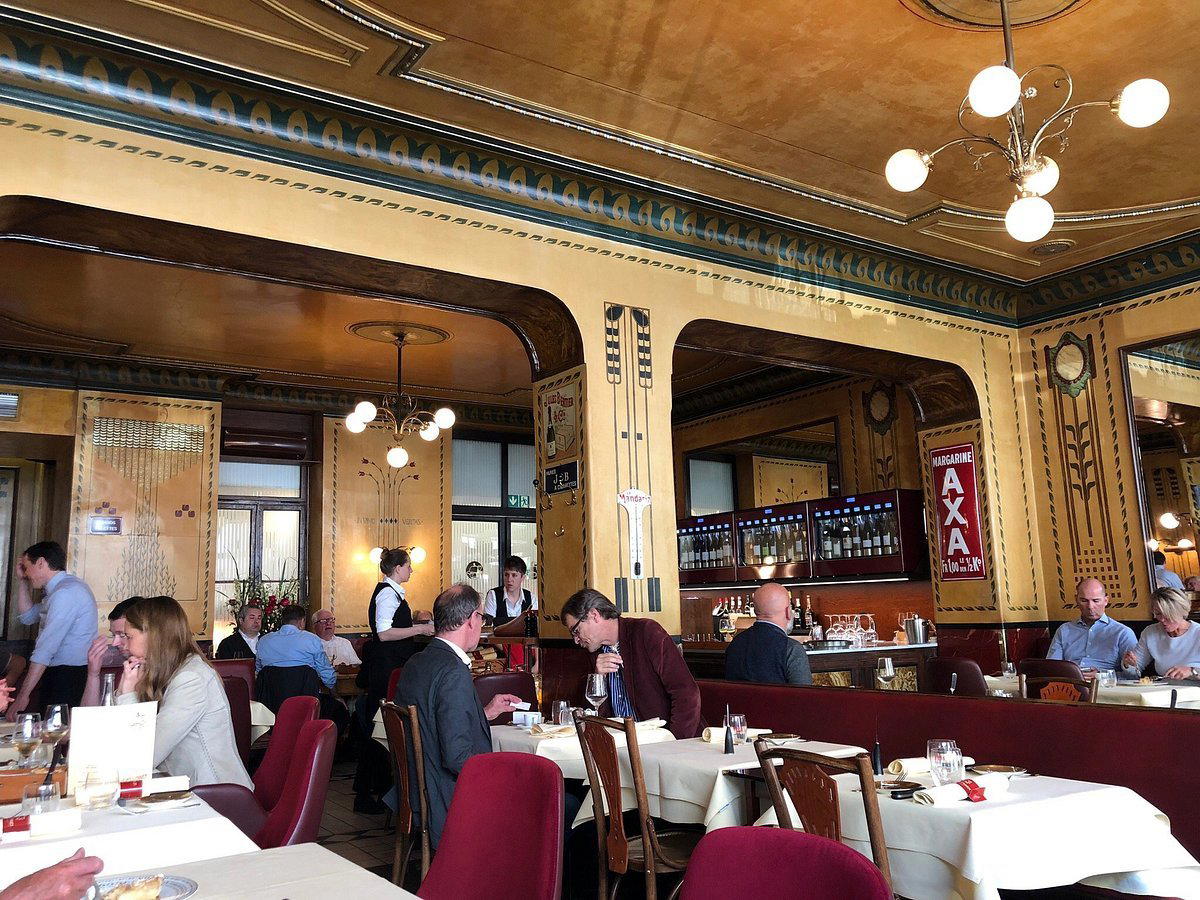
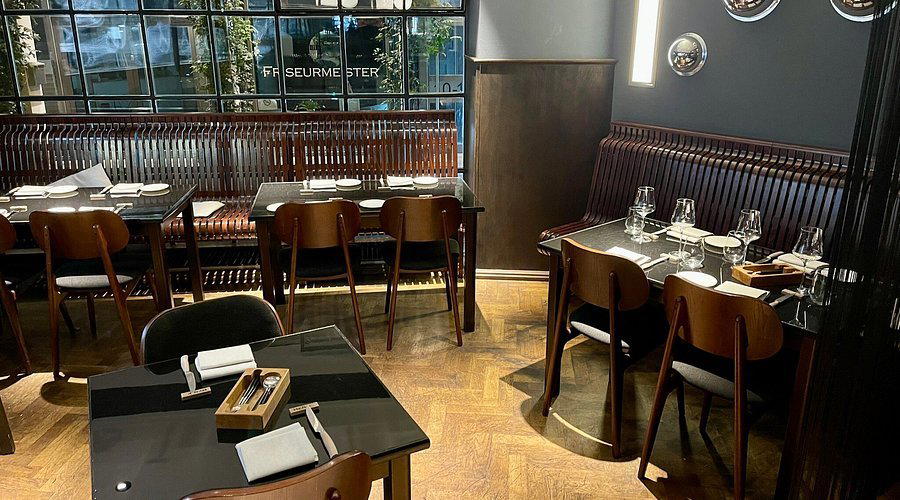
Lovely bustling interior with charming Art Nouveau features, timeless French bistro patina, casual and relaxed atmosphere.