Kaizen occupies a address on Lindenstraße in Cologne's Belgisches Viertel, a neighbourhood where the city's appetite for serious, ingredient-led cooking has steadily deepened over the past decade. The name signals a philosophy of continuous refinement rather than static menus, placing it within a small cohort of Cologne restaurants that treat sourcing as the editorial spine of every plate. For visitors tracking Germany's mid-tier fine dining evolution, it belongs on the same circuit as the city's most considered kitchens.
Pearl is the En Primeur Club membership app — saves, bookings, and concierge access live there. Same editors, same standards.
- Address
- Lindenstraße 67, 50674 Köln, Germany
- Phone
- +4915153571922
- Website
- restaurantkaizen.de
- Directions
- Get directions
 Saves & bookings on Pearl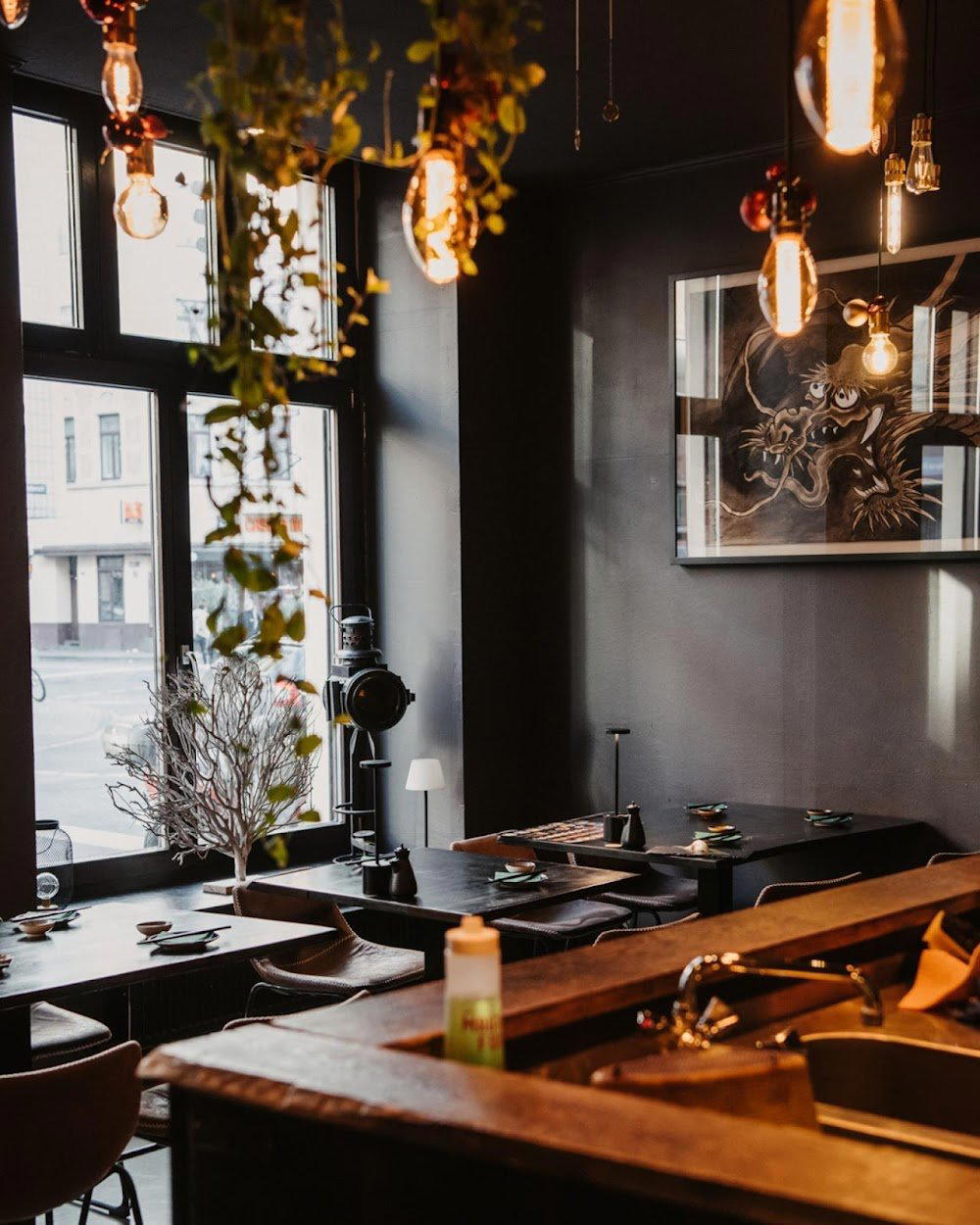
Lindenstraße and the Belgisches Viertel's Quiet Seriousness
Kaizen is a restaurant in Cologne, Germany, serving modern Japanese fusion sushi at a price point around $40 per person. There is a particular kind of street in European cities where the cafés thin out and the restaurants become quieter, more deliberate, less interested in foot traffic. Lindenstraße 67 sits on one such stretch in Cologne's Belgisches Viertel, a district that has spent the better part of two decades shifting from student-bar density toward something more curated. The neighbourhood now carries a concentration of independently run dining rooms that operate outside the Altstadt's tourist current, and Kaizen is part of that quieter gravitational pull. Approaching the address on a weekday evening, the street reads as residential before it reads as gastronomic, which is precisely the social contract this part of Cologne has made with serious diners.
The Sourcing Question: Where the Food Comes From and Why It Shapes the Plate
One meaningful shift over the past fifteen years has not been stylistic, it has been logistical. The kitchens that have pulled away from the field are, almost without exception, the ones that rebuilt their supply chains from the ground up: direct relationships with farmers, controlled provenance, shorter distances between field and pass. This is the tradition Kaizen fits into. The name itself, drawn from Japanese management philosophy, meaning incremental improvement through sustained attention, signals a kitchen orientation that treats sourcing not as a branding exercise but as the structural grammar of the menu. A dish changes when the ingredient changes. The menu follows the supply, not the other way around.
This approach is more demanding operationally than it appears from the dining room. It requires the kitchen to rebuild its thinking seasonally, sometimes weekly, rather than running a stable creative concept across months. The result, when executed well, is a menu that reads as honest rather than performed, produce at the right moment rather than produce forced to perform outside its window. Across Germany's contemporary fine dining tier, from the Mosel valley to Cologne's own competitive cluster, the restaurants that have attracted sustained critical attention tend to share this orientation. Schanz in Piesport built its reputation on exactly this kind of seasonal fidelity, and ES:SENZ in Grassau operates on similar provenance logic in a different regional context.
Kaizen Inside Cologne's Modern Dining Tier
Cologne does not carry the same international fine dining profile as Munich or Hamburg, but the city's independent kitchen scene has developed real depth over the past decade. The relevant comparison set for a restaurant at Kaizen's address and orientation is a group of Cologne rooms that take modern Japanese fusion sushi seriously without defaulting to either French classicism or German rustic register. Ox & Klee, which holds Michelin recognition, operates at the upper end of that spectrum. maiBeck has built a following through consistent, market-driven cooking that avoids theatrical excess. La Société and Le Moissonnier Bistro each occupy a French-leaning position in the same broader tier. La Cuisine Rademacher brings modern French precision to the mix. Kaizen's position within this cluster is defined by the sourcing-first approach rather than by cuisine nationality, a distinction that matters increasingly to diners who are choosing between rooms on the basis of kitchen philosophy rather than flag.
Across Germany more broadly, the ingredient-led restaurant category has produced some of the country's most discussed tables. Aqua in Wolfsburg and Vendôme in Bergisch Gladbach, the latter sitting close enough to Cologne to function almost as a regional reference point, demonstrate what sustained sourcing discipline looks like at the highest awarded level. Waldhotel Sonnora in Dreis represents the same philosophy in a more rural key. Even internationally, the kitchens that have made provenance the centre of their editorial identity, Le Bernardin in New York City with its seafood sourcing rigour, Atomix in New York City with its Korean ingredient traceability, demonstrate that sourcing-led thinking is neither a regional fashion nor a passing trend but a durable competitive orientation. CODA Dessert Dining in Berlin applies comparable ingredient logic to the dessert format specifically, which shows how broadly the approach has distributed itself across German dining.
The Kaizen Format and What to Expect in the Room
The Belgisches Viertel's dining rooms tend to run at intimate scale, and Kaizen follows that neighbourhood pattern. The physical environment on Lindenstraße 67 is consistent with the area's general aesthetic: functional, not showy, designed to keep attention on the table rather than the room. This is a neighbourhood where restaurants compete on what arrives on the plate rather than on the drama of the space, and the cooking at venues in this register tends to reflect that priorities order. Germany's most considered contemporary kitchens, including JAN in Munich and Schwarzwaldstube in Baiersbronn, have also maintained a preference for rooms where service and cooking carry more weight than interior spectacle. Restaurant Haerlin in Hamburg is an exception to that rule, operating in a grand hotel context, but it confirms the pattern by contrast: the ingredient-led rooms tend to strip the room back.
Planning Your Visit
Kaizen is located at Lindenstraße 67, 50674 Köln, in the Belgisches Viertel. The neighbourhood is accessible on foot from the city's inner ring tram network, and the street has limited evening parking. Booking in advance is advisable for any independently run Cologne room of this type, the smaller the kitchen, the narrower the margin for walk-in accommodation.
Quick Comparison
Comparable venues nearby, for context on price, style, and recognition.
| Venue | Cuisine | Price | Notes |
|---|---|---|---|
| KaizenThis venue — the venue you are viewing | Modern Japanese Fusion Sushi | $$$ | Not listed |
| Tanoshii | Japanese Sushi with Vietnamese Fusion | $$$ | Neustadt/Nord |
| Takumi | Authentic Japanese Ramen | $$ | Altstadt/Süd |
| Takumi 3 | Japanese Ramen | $$ | Nippes |
| Ramen Kagetsu | Japanese Ramen | $$ | Altstadt/Süd |
| L'Imprimerie | French Bistro | $$$ | Bayenthal |
Continue exploring
More in Cologne
Restaurants in Cologne
Browse all →
Bars in Cologne
Browse all →
Hotels in Cologne
Browse all →

At a Glance
- Modern
- Trendy
- Intimate
- Date Night
- Special Occasion
- Open Kitchen
- Sake Program
Current opening hours
- Monday
- 12–2:30 PM, 5–10 PM
- Tuesday
- 12–2:30 PM, 5–10 PM
- Wednesday
- 12–2:30 PM, 5–10 PM
- Thursday
- 12–2:30 PM, 5–10 PM
- Friday
- 12–2:30 PM, 5–11 PM
- Saturday
- 12–2:30 PM, 5–11 PM
- Sunday
- 12–2:30 PM, 5–10 PM
Hours can change for holidays and private events. Last verified .
Modern and masculine atmosphere with an easygoing izakaya feel and young, energetic vibe.