
Carrying Michelin Selected status for 2025, 25hours Hotel The Circle occupies a converted building in Cologne's Gereonsviertel with the brand's signature irreverent design approach. The property sits in the mid-to-upper design-hotel tier, where personality and spatial experience count for more than square footage. It rewards guests who want character over convention in one of Germany's most historically layered cities.
Pearl is the En Primeur Club membership app — saves, bookings, and concierge access live there. Same editors, same standards.
- Address
- Im Klapperhof 22-24, 50670 Köln, Germany
- Phone
- +49 221 162530
- Website
- 25hours-hotels.com
- Directions
- Get directions
 Saves & bookings on Pearl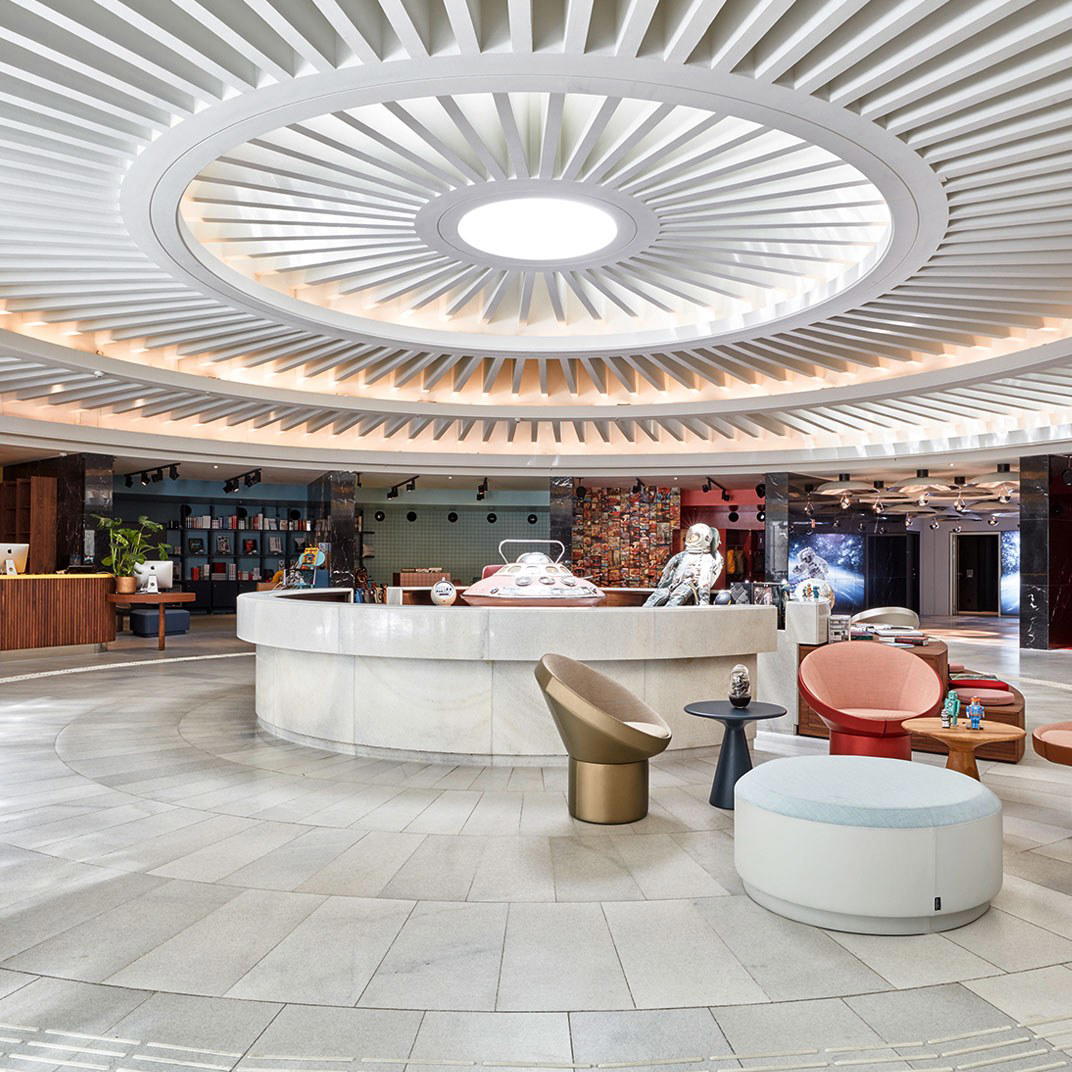
A Cologne Building That Earns Its Address
Cologne's hotel market has split cleanly along two axes in the past decade: grand historic properties anchored to the cathedral and Rhine waterfront, and a newer tier of design-led conversions pushing into the city's older residential and commercial quarters. Im Klapperhof, in the Gereonsviertel district north of the old town, belongs firmly to the second category. The street is neither postcard Cologne nor tourist throughfare, it sits in the kind of mid-city grid where former industrial and ecclesiastical architecture survive in close proximity, and where a building can carry genuine visual weight without competing with the Dom's silhouette.
25hours Hotel The Circle arrived into that context as part of a brand that has made a consistent practice of occupying spaces with architectural character rather than purpose-built hotel shells. The Circle's location at Im Klapperhof 22-24 reflects that approach.
The 25hours Design Playbook, Applied to Cologne
The 25hours brand operates across a growing number of European cities, Hamburg, Vienna, Paris, Berlin among them, and has developed a recognisable design language without producing identical properties. The strategy is to commission distinct interiors for each location that reference the specific city and building, while maintaining a consistent attitude: dense visual programming and an absence of corporate neutrality. The result is a series of related spaces with a shared design language.
At The Circle, that sensibility is filtered through Cologne's particular cultural register: a city with deep roots in carnival, ecclesiastical art, Roman history, and a contemporary art scene anchored by institutions like Museum Ludwig. Design hotels in this tier, where the spatial experience is the primary product, tend to operate as a commentary on their location rather than a retreat from it. Whether the interior references Cologne's medieval guild culture, its Roman street grid, or its more recent identity as a trade-fair city, the physical space at The Circle is doing interpretive work that a generic four-star would not attempt.
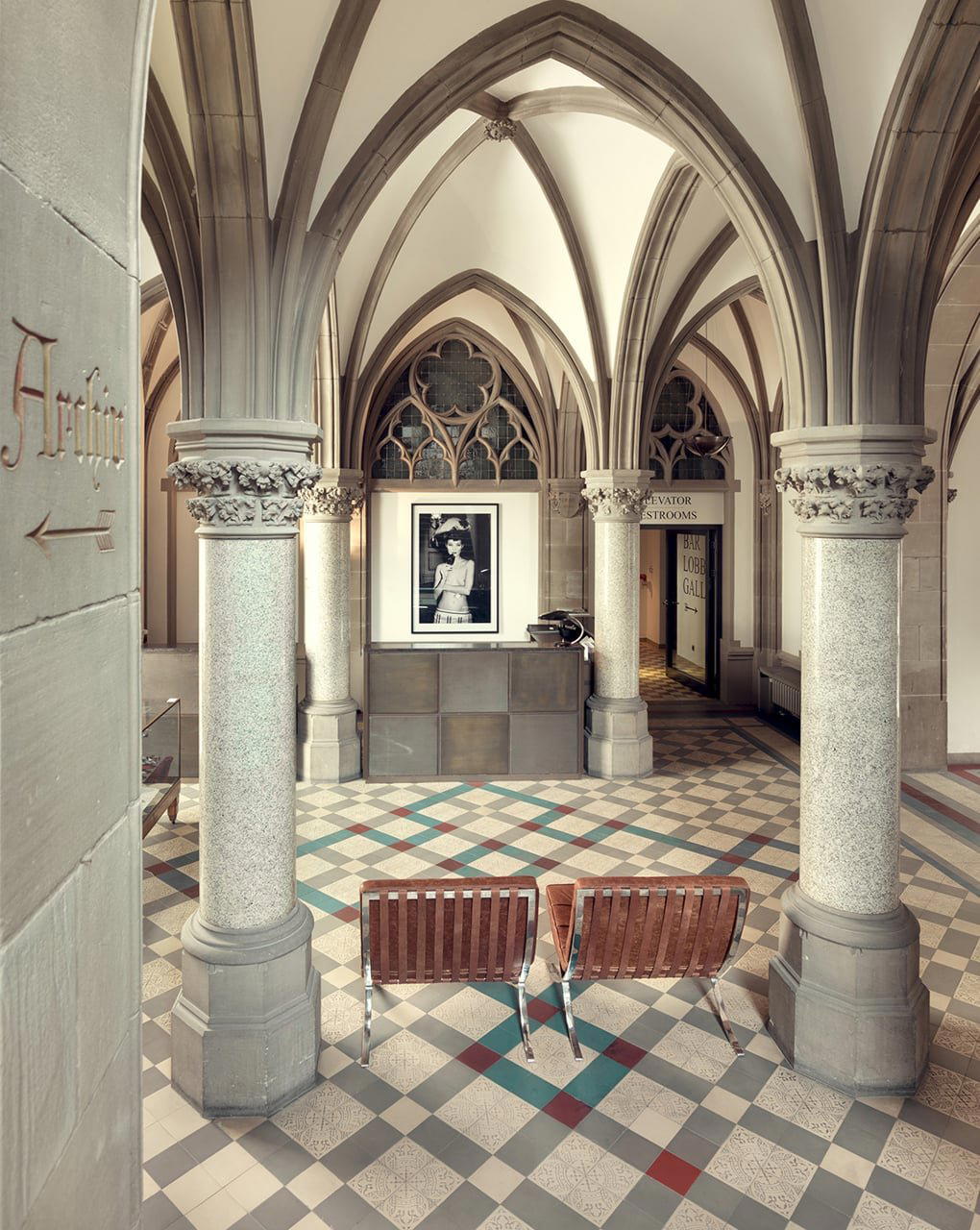
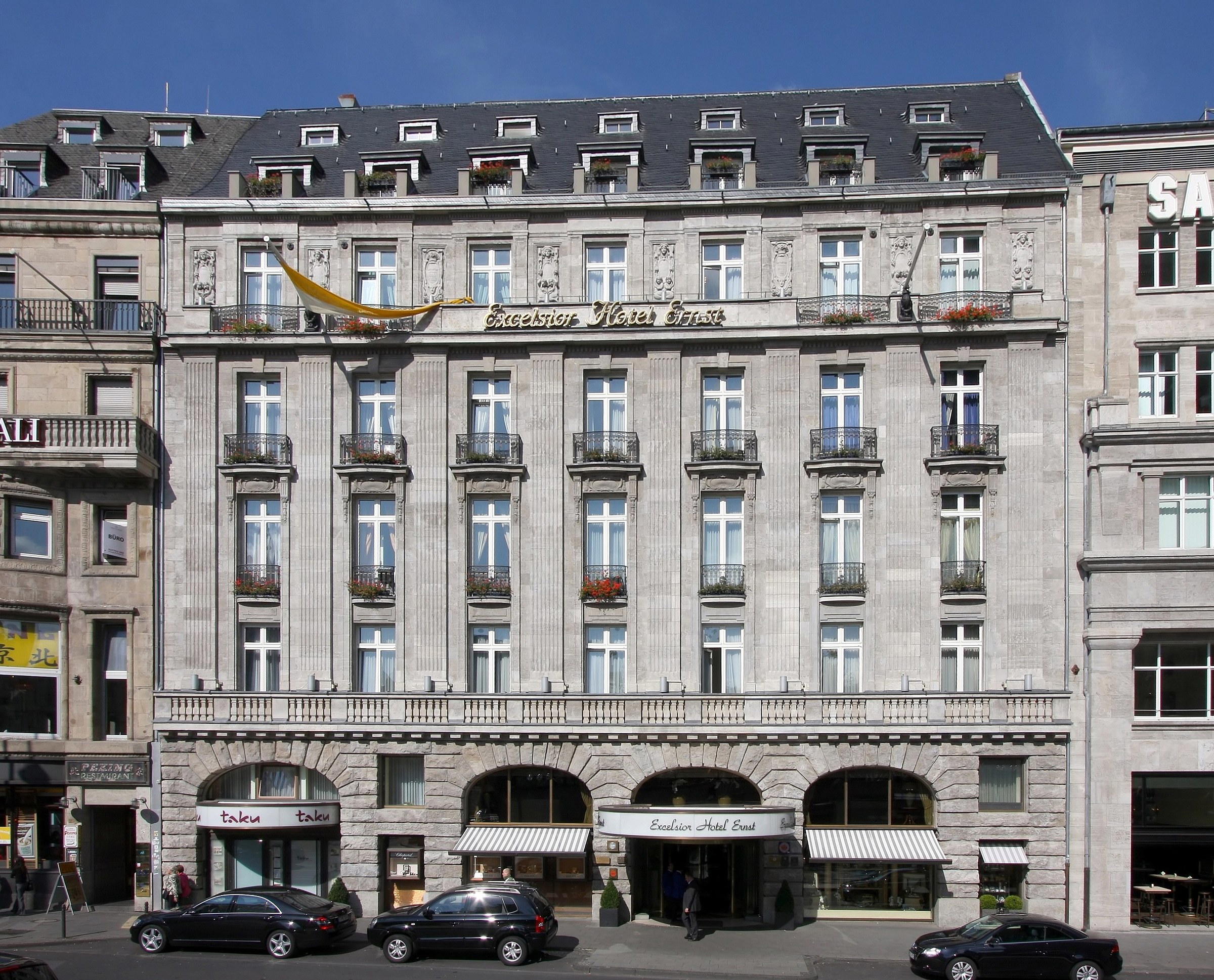
That approach places The Circle in a specific competitive tier within Cologne's accommodation market. At one end sits the Excelsior Hotel Ernst, which operates on a grand-hotel register directly opposite the cathedral, with the kind of institutional weight that comes from decades of hosting state guests and business delegations. At the other end of the design-hotel spectrum, THE QVEST and its sibling property The Qvest Hideaway occupy a different niche: boutique-scale, heavily curated, with a collection-hotel sensibility that appeals to a specific kind of architecture and design traveller. The Wasserturm Hotel Cologne, a converted 19th-century water tower in the Friesenplatz area, brings its own structural drama to the conversation. The Circle sits among these as the brand-backed design option: more consistent in its programming than an independent boutique, more character-driven than a conventional chain.
Michelin Selected in 2025: What the Credential Means Here
The Michelin Selected Hotels designation, which The Circle carries for 2025, functions as a quality floor rather than a ceiling. It signals that Michelin's inspectors found the property to meet baseline standards across comfort, maintenance, and overall guest experience. It places The Circle within a curated subset of Cologne hotels that Michelin considers worth recommending to readers of its guides.
For context, Michelin's hotel programme evaluates properties on hospitality, cleanliness, and the coherence of the overall experience rather than purely on luxury tier or price point. A Michelin Selected hotel in a mid-range design category is being measured on how well it executes its own concept, a different test than one applied to a five-star grand hotel. The Circle's inclusion suggests the execution is consistent with what the brand's design ambition promises.
Across Germany, the Michelin hotel selection covers a wide range of property types, from lakeside resorts like Althoff Seehotel Überfahrt in Rottach-Egern and destination retreats like Schloss Elmau in Elmau, to city properties such as the Fairmont Hotel Vier Jahreszeiten in Hamburg and Sofitel Frankfurt Opera. The inclusion of a 25hours property confirms that the brand's design-led approach produces guest experiences that hold up under inspection, not just under Instagram.
Gereonsviertel and Getting Around Cologne
The Gereonsviertel sits within walking distance of Cologne's primary cultural and commercial infrastructure. The Dom and the main train station are reachable on foot in under fifteen minutes, while the city's tram network provides connections to the museum quarter, the Belgian Quarter's independent bar and restaurant scene, and the Ehrenfeld neighbourhood, which has become the centre of Cologne's more contemporary food and nightlife activity. For a design hotel that positions itself as an entry point into city culture rather than a sealed retreat, the location works with that brief.
Cologne Bonn Airport connects the city to major European hubs, with transit options into the city centre running at roughly thirty to forty minutes by regional train. The hotel's address in a quieter residential-commercial zone means arrival by taxi or ride-share is direct. Booking through the 25hours website or major hotel platforms gives access to the property's current rate structure, which places it at roughly $140 per night.
For readers planning longer stays in Germany, the design-hotel conversation extends well beyond Cologne. Properties like Hotel Traube Tonbach in Baiersbronn, Breidenbacher Hof in Düsseldorf, and Villa Contessa in Bad Saarow each offer distinct registers for what German hospitality looks like at the considered end of the spectrum. Further afield, Badrutt's Palace in St. Moritz and Hôtel de Paris Monte-Carlo represent the institutional grand-hotel tradition that The Circle is explicitly not trying to replicate, which is, in its way, a position worth taking.
Comparable Venues
Comparable venues nearby, for context on price, style, and recognition.
| Venue | Cuisine | Price | Awards | Notes |
|---|---|---|---|---|
| 25hours Hotel The CircleThis venue — the venue you are viewing | Repurposed historic Brutalist rotunda with retro-futuristic interiors | $$$ | 4-Star | Not listed |
| Wasserturm Hotel Cologne, Curio Collection by Hilton | Industrial heritage conversion with contemporary luxury positioning; a repurposed 19th-century water tower transformed into a design-forward boutique hotel. | $$$ | 4-Star | Altstadt/Süd |
| Legend Hotel, Cologne | Contemporary boutique blending modern architecture with historic Cologne context | $$$ | 4-Star | Altstadt/Nord |
| Urban Loft Cologne | Urban loft-style hotel with artist-inspired design and central location near Cologne Cathedral. | $$$ | 4-Star | Altstadt/Nord |
| THE QVEST | Neo-Gothic heritage boutique with contemporary design integration | $$$$ | 4-Star | Altstadt/Nord |
| Hyatt Regency Köln | Contemporary luxury with modern elegance; established 1988, renovated 2011-2012 with Hirsch Bedner Associates design. | $$$$ | 5-Star | Deutz |
Recognition history
Dated appearances from independent guides and award organizations, with the underlying list record or original source where available.
Michelin Selected
Michelin
Continue exploring
More in Cologne
Hotels in Cologne
Browse all →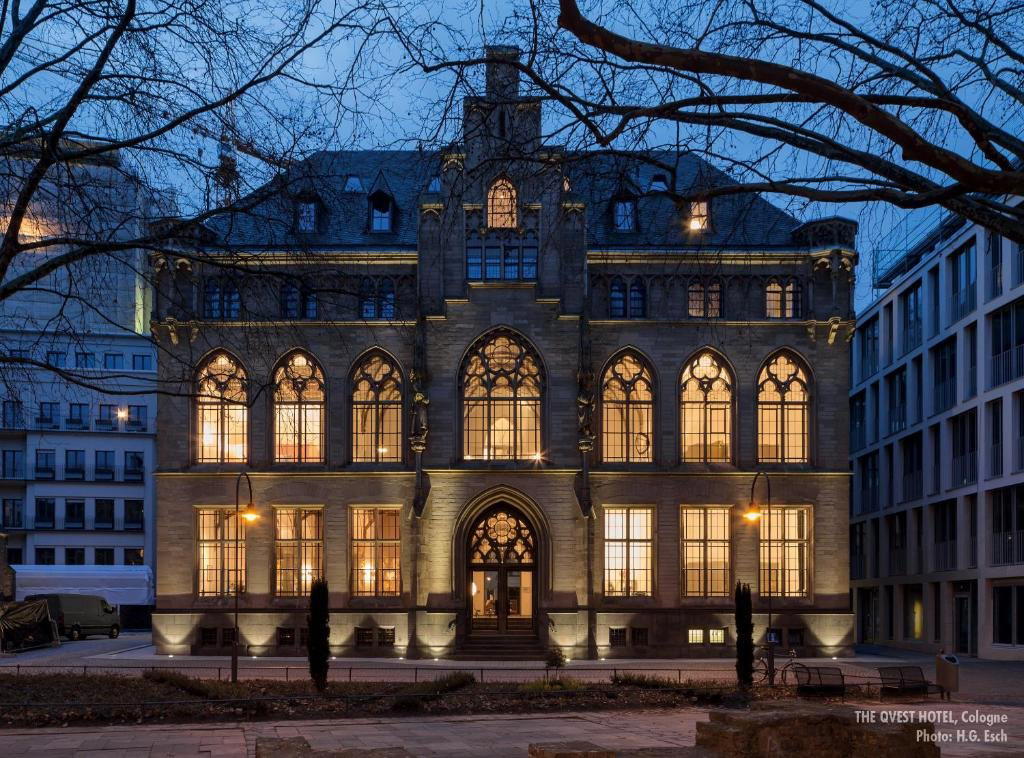
Bars in Cologne
Browse all →

Restaurants in Cologne
Browse all →

At a Glance
- Modern
- Trendy
- Industrial
- Minimalist
- Business Trip
- Weekend Escape
- Rooftop Pool
- Historic Building
- Design Destination
- Panoramic View
- Wi Fi
- Sauna
- Bicycle Rental
- Restaurant
- Fitness Center
- Business Center
- EV Charging
- Skyline
- Wi Fi
- Sauna
- Bicycle Rental
- Restaurant
- Fitness Center
- Business Center
- EV Charging
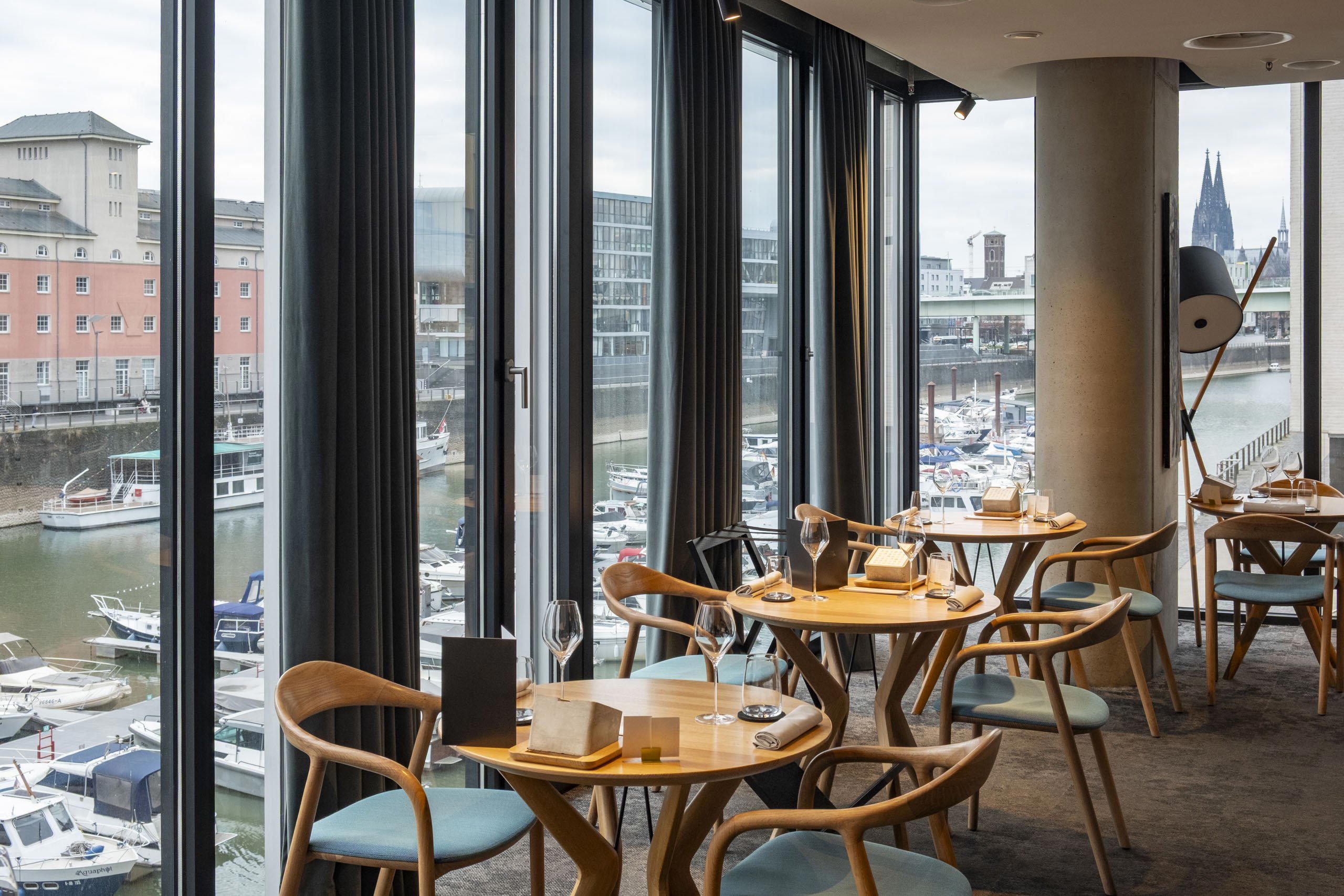
Retro-futuristic atmosphere blending pastel colors, rounded forms, industrial concrete, and playful 1950s-60s German economic miracle motifs.