







Restaurant Haerlin holds three Michelin stars and a 95-point La Liste ranking inside Hamburg's Vier Jahreszeiten hotel on Neuer Jungfernstieg, making it the city's most formally decorated dining address. Chef Christoph Rüffer works within a Creative French framework, and the room's grand-hotel setting positions it alongside Germany's most serious fine-dining tables rather than Hamburg's newer chef-driven formats.
Pearl is the En Primeur Club membership app — saves, bookings, and concierge access live there. Same editors, same standards.
- Address
- Neuer Jungfernstieg 9-14, 20354 Hamburg, Germany
- Phone
- (49) 40-3494-0
- Website
- hvj.de
- Directions
- Get directions
 Saves & bookings on Pearl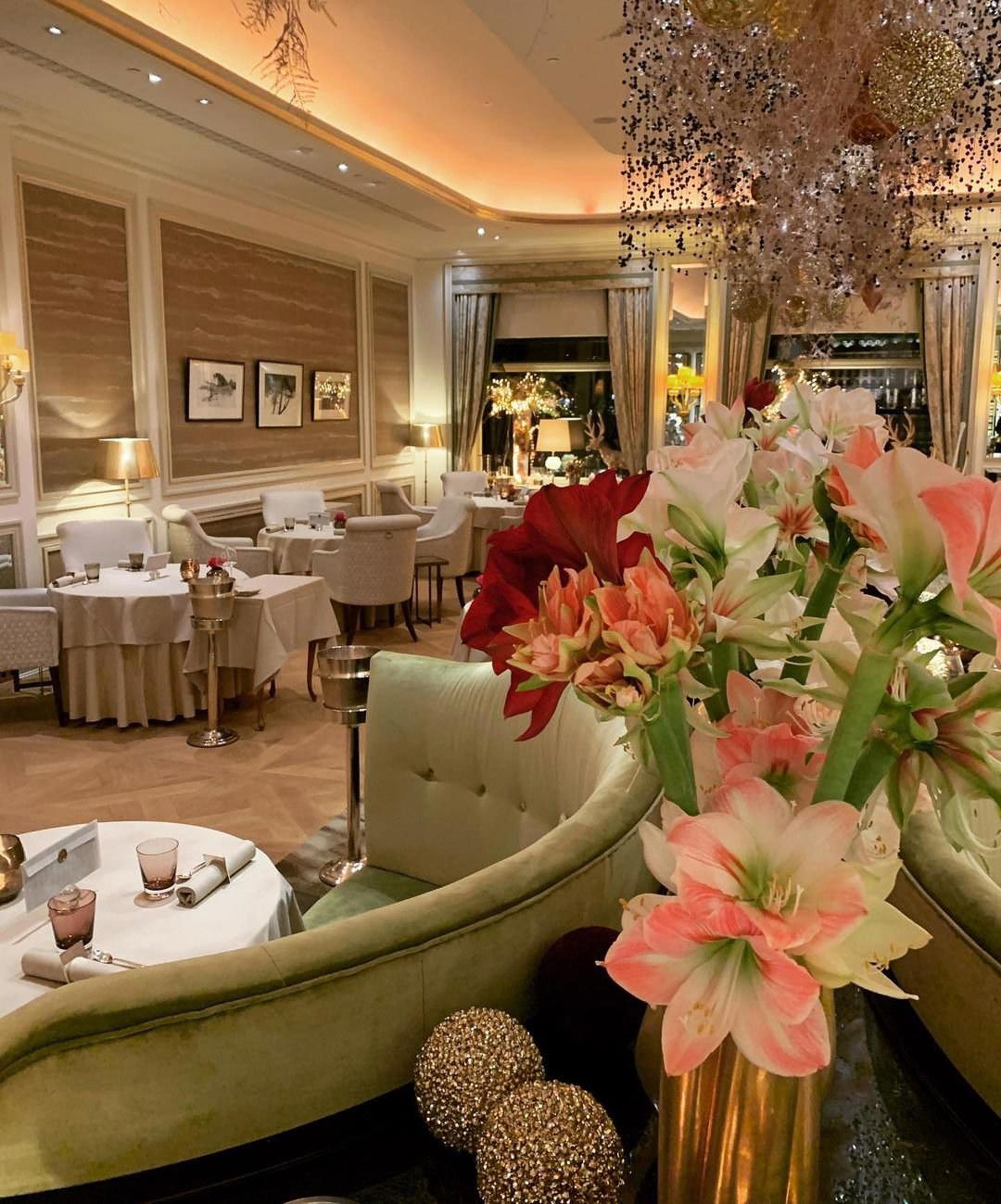
Grand Hotel Dining and What It Demands
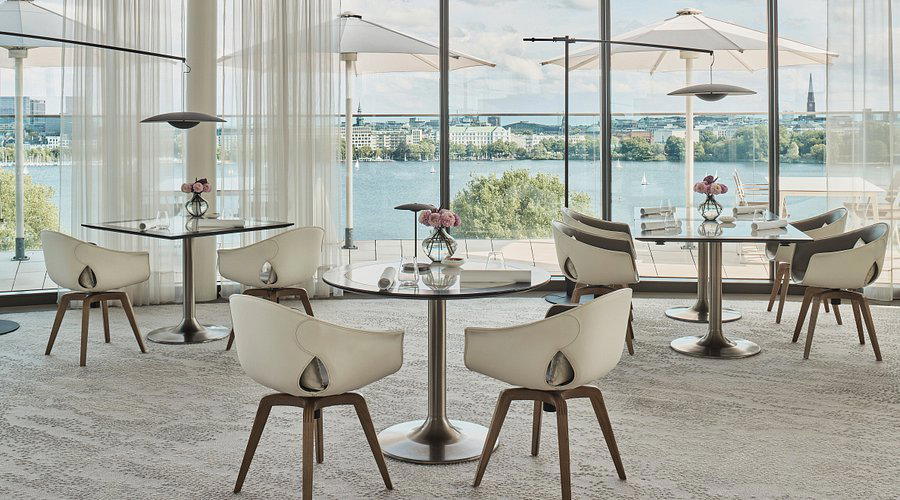
The Alster waterfront has long anchored Hamburg's most formal hospitality, and the Vier Jahreszeiten hotel on Neuer Jungfernstieg represents that tradition at its most concentrated. Inside it, Restaurant Haerlin occupies the kind of room that reminds you why the grand hotel dining format survived the casualisation of European fine dining: high ceilings, precise service choreography, and a sense that the occasion matters before anyone has poured a glass of water. Hamburg's fine-dining tier splits broadly between the classical hotel-anchored model Haerlin represents and a newer generation of chef-driven, architecturally minimal rooms. Understanding where Haerlin sits in that split is the starting point for understanding what an evening there actually delivers.
Where the Ingredients Come From, and Why That Shapes the Menu
Creative French cuisine at the three-Michelin-star level is, in practice, a sourcing argument as much as a cooking argument. The designation signals that a kitchen is working classical French technique as its structural grammar while building vocabulary from wherever produce quality is highest, often crossing regional and national lines in ways that a strictly French kitchen would not. For Hamburg specifically, this matters because the city sits at the intersection of several strong supply networks: North Sea and Baltic coastlines with their cold-water fish and shellfish, the agricultural hinterland of Schleswig-Holstein to the north, and the broader northern European premium produce circuit that connects Hamburg kitchens to Danish coastal farms, Dutch greenhouse operations, and Scandinavian foragers.
The Les Grandes Tables du Monde membership Haerlin holds is, among other things, a sourcing credential. The association's standards address provenance as a condition of membership, placing the kitchen in a peer group that includes particularly ingredient-focused addresses in Europe. At this level, the menu's seasonal rhythm is not a marketing posture but a practical consequence of working with produce that has a genuine peak window. Eating at Haerlin in late autumn, when North Sea turbot is at its densest and northern German game seasons are open, is a different set of decisions than arriving in April when the kitchen pivots toward early-season coastal and garden produce. The calendar shapes the plate.
Chef Christoph Rüffer has held the kitchen at Haerlin long enough that the sourcing relationships the restaurant maintains are not transactional but iterative, built over years with specific suppliers whose output the kitchen knows in detail. That kind of tenure, uncommon in a sector with high turnover, tends to produce a particular quality of consistency: the same ingredient arriving from the same source across many seasons creates a depth of familiarity that shows in technique. It is the opposite of the seasonal-menu refresh that many restaurants treat as a marketing event.
Three Stars in Context: What the Awards Actually Say
Haerlin's award profile is strong enough to warrant unpacking. Three Michelin stars place it at the summit of the German guide's hierarchy, a designation shared by a small number of addresses nationally. The La Liste score of 95 points positions it inside the global top tier of that ranking's methodology, which aggregates critical assessments from multiple international sources and weights them against user feedback. The Opinionated About Dining Classical ranking at number 380 in Europe (2025) adds a third data point from a source that specifically tracks classical cooking traditions, distinguishing Haerlin from more experimental or conceptually driven tables.
Together, these signals describe a kitchen that is consistently performing at a high level across different evaluative frameworks, not just optimised for one particular critical methodology. For the reader deciding between Hamburg's leading tables, the comparison set is instructive. The Table Kevin Fehling operates in the same price tier with three stars but through a more theatrical, experiential format. bianc works a Mediterranean register at the same price point. Lakeside and the Atlantic Restaurant each represent different approaches to formal dining in Hamburg's hotel and waterfront context. Haerlin's distinction within that group is the depth of its classical French grounding combined with its hotel-format permanence, a combination that makes it the natural choice when the occasion calls for something with institutional weight behind it rather than the personality-forward energy of a chef's own room.
8 across 283 reviews adds a consistency signal that is worth noting at this tier, where a single poor service experience can destabilise a score. The spread of reviews across what is a relatively modest total count for a hotel restaurant of this age suggests a clientele that engages with the meal as an event rather than a routine dining choice.
The Vier Jahreszeiten Setting as a Factor in the Experience
Eating inside a grand hotel like the Vier Jahreszeiten is a different proposition from eating in a standalone restaurant, and the difference goes beyond aesthetics. Hotel restaurants of this calibre maintain service infrastructure that most standalone rooms cannot sustain: deeper sommelier teams, more extensive back-of-house staffing ratios, and the kind of facility investment that keeps a dining room feeling immaculate across decades rather than years. The Vier Jahreszeiten property has been one of Hamburg's anchoring addresses since the nineteenth century, and the dining room carries that continuity in a way that newer venues cannot replicate through design alone.
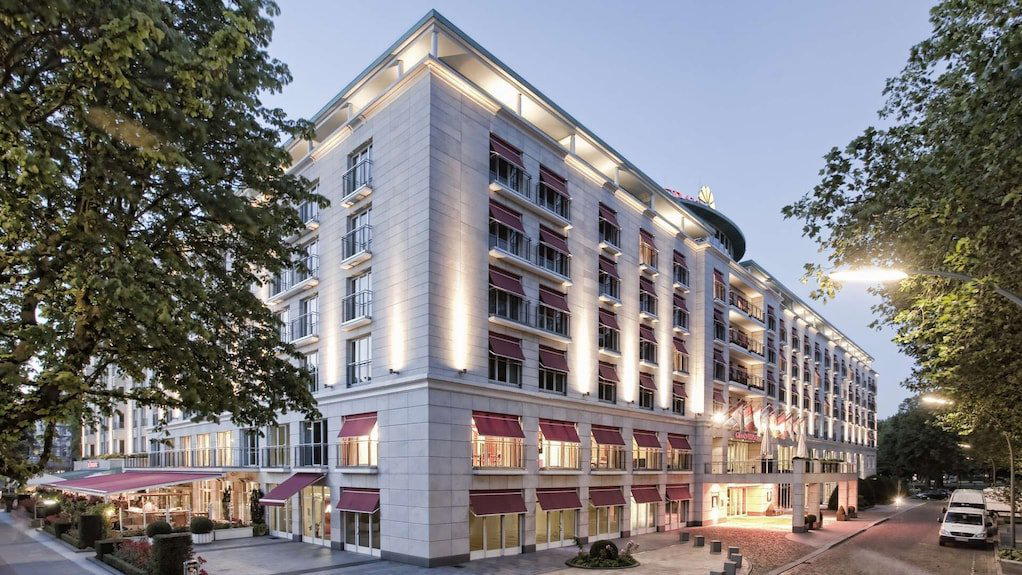
The address on Neuer Jungfernstieg places the restaurant on Hamburg's Binnenalster lakefront, one of the city's most formally composed urban settings. Arriving for dinner in late autumn or winter, when the Alster is dark and the hotel facade is lit, is a particular kind of Hamburg experience that the city's chef-driven rooms, located in Eimsbüttel, Eppendorf, or the port area, do not offer. The setting is not incidental to the experience: it conditions the pace of the evening, the register of the service, and the sense of occasion that the meal is designed to deliver.
Haerlin Within the Broader German Fine-Dining Circuit
Germany's three-star addresses are more geographically distributed than France's, spread across cities, resort towns, and rural Black Forest and Alpine locations rather than concentrated in a single capital. Haerlin sits within a small group of northern German fine-dining addresses, with most of the country's highest-rated tables located further south. Comparisons to Schwarzwaldstube in Baiersbronn, Aqua in Wolfsburg, or Vendôme in Bergisch Gladbach illustrate the range of contexts in which German three-star cooking operates. In the Creative French niche specifically, Gourmetrestaurant Dichter in Rottach-Egern and Ophelia in Constance are closer stylistic reference points than, say, the dessert-focused format of CODA Dessert Dining in Berlin or the conceptual direction of ES:SENZ in Grassau.
Within Hamburg itself, the Creative French positioning also separates Haerlin from the more northern European flavour profiles that characterise some of the city's other serious tables. Hamburg's position as a port city with long Scandinavian and British trading connections has historically pulled its restaurant culture toward the North Sea and the Baltic rather than toward French classical traditions, which makes the sustained rigour of a French-rooted kitchen at this level something of a counterstatement about what the city's formal dining can sustain. The 100/200 Kitchen represents the city's more contemporary, produce-driven strand; Haerlin represents the argument that classical structure and formal hotel dining are not anachronisms but a live and demanding tradition.
Planning a Visit
Restaurant Haerlin is located within the Vier Jahreszeiten hotel at Neuer Jungfernstieg 9-14, Hamburg. At the €€€€ price tier with three Michelin stars, reservations should be made well in advance, particularly for weekend evenings and the late-autumn and winter period when the hotel setting and seasonal northern produce combine most effectively. The Les Grandes Tables du Monde membership and the formality of the hotel context mean that dress expectations lean toward smart formal rather than smart casual; this is a room where the occasion is part of the offer. For travellers moving through Germany's wider fine-dining circuit, JAN in Munich is a useful southern counterpart at a similar seriousness of ambition.
Nearby-ish Comparables
Comparable venues nearby, for context on price, style, and recognition.
| Venue | Cuisine | Price | Notes |
|---|---|---|---|
| Restaurant HaerlinThis venue — the venue you are viewing | Modern French Fine Dining | $$$$ | Not listed |
| The Table Kevin Fehling | Avant-Garde Fusion Fine Dining | $$$$ | HafenCity |
| 100/200 Kitchen | Modern Creative Seasonal Cuisine | $$$$ | Elbbrucken |
| bianc | Modern Mediterranean Fine Dining | $$$$ | HafenCity |
| Lakeside | Modern European Fine Dining | $$$$ | Rotherbaum |
| Landhaus Scherrer | Michelin-Starred North German Fine Dining | $$$$ | Neumuehlen |
Recognition history
Dated appearances from independent guides and award organizations, with the underlying list record or original source where available.
La Liste Top Restaurants
La Liste
Les Grandes Tables du Monde Member
Les Grandes Tables du Monde
Michelin 3 Stars
Michelin
Star Wine List
Star Wine List
Wine Spectator Best of Award of Excellence
Wine Spectator
La Liste Top Restaurants
La Liste
Michelin 3 Stars
Michelin
Opinionated About Dining Classical in Europe Ranked #380
Opinionated About Dining
The Best Chef One Knife
The Best Chef
World Culinary Awards Germany's Best Hotel Restaurant 2025 #1
World Culinary Awards
Continue exploring
More in Hamburg
Restaurants in Hamburg
Browse all →
Bars in Hamburg
Browse all →

Hotels in Hamburg
Browse all →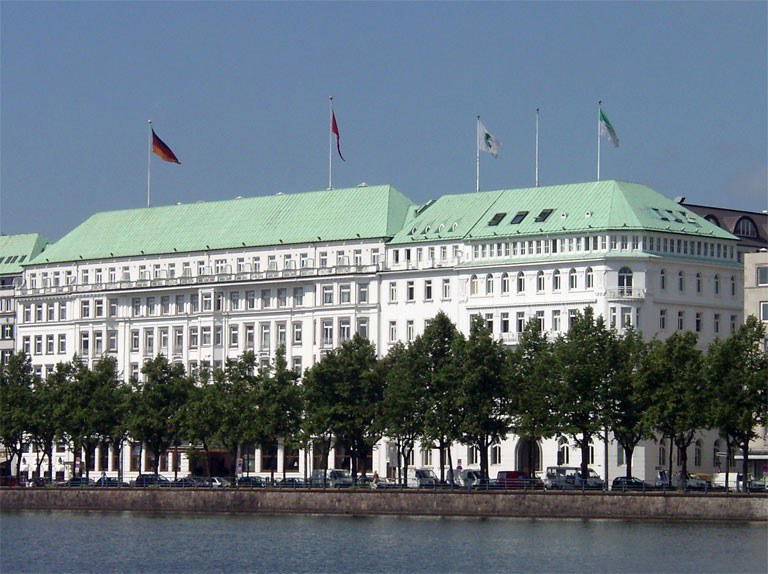
Wineries in Hamburg
Browse all →
At a Glance
- Elegant
- Sophisticated
- Classic
- Intimate
- Special Occasion
- Date Night
- Business Dinner
- Celebration
- Hotel Restaurant
- Historic Building
- Extensive Wine List
- Sommelier Led
- Local Sourcing
- Waterfront
Current opening hours
- Monday
- Closed
- Tuesday
- 6:30 PM–12 AM
- Wednesday
- 6:30 PM–12 AM
- Thursday
- 6:30 PM–12 AM
- Friday
- 6:30 PM–12 AM
- Saturday
- 6:30 PM–12 AM
- Sunday
- Closed
Hours can change for holidays and private events. Last verified .
Stylish, elegant, and calm with comfortable seating and a refined, unobtrusive atmosphere.