

In Tokyo's former fish-market district of Tsukiji, Tempura Nakagawa holds a Michelin Plate rating and a philosophy that reframes the entire technique: tempura as a drying process, not a frying one. Ingredients are steamed and grilled within their batter to concentrate flavour. The approach is methodical, rooted in classical lineage, and firmly positioned in the mid-to-upper tier of the city's serious tempura counter circuit.
Pearl is the En Primeur Club membership app — saves, bookings, and concierge access live there. Same editors, same standards.
- Address
- 2 Chome-14-2 Tsukiji, Chuo City, Tokyo 104-0045, Japan
- Phone
- +81 3-3546-7335
- Website
- tabelog.com
- Directions
- Get directions
 Saves & bookings on Pearl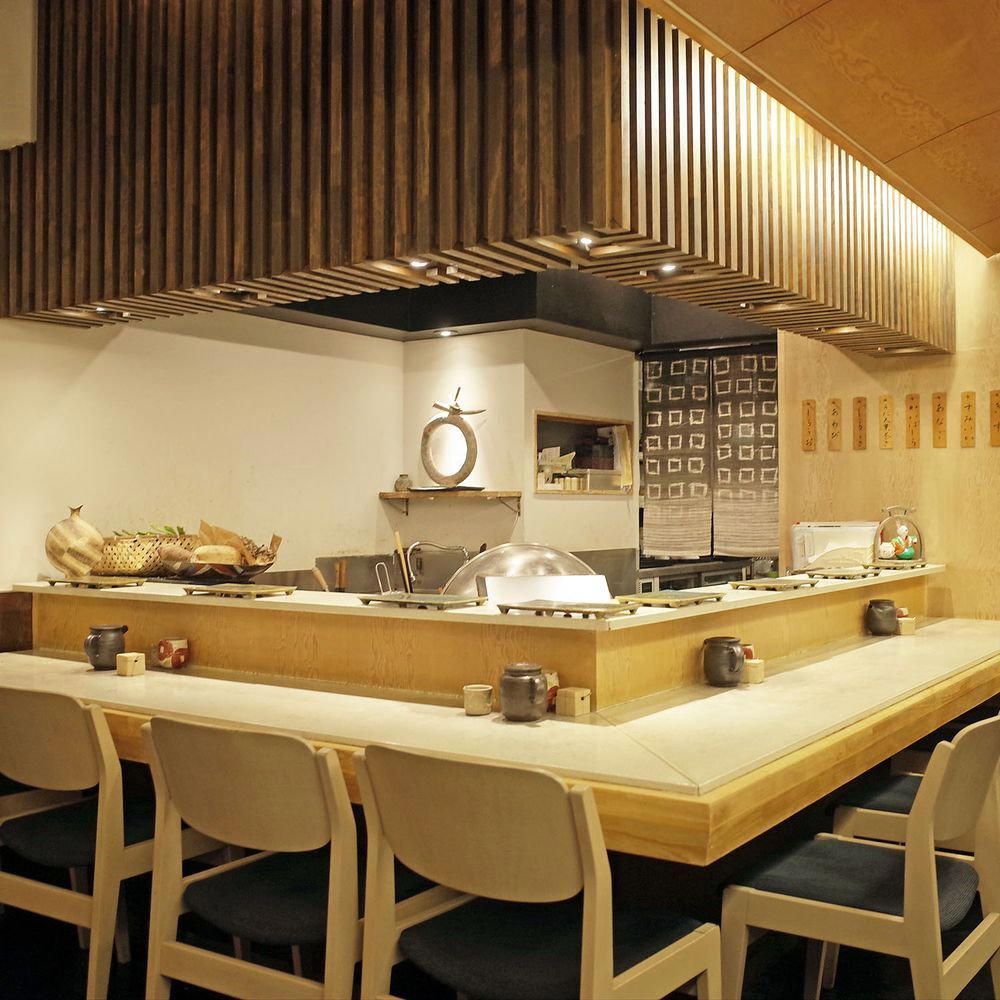
Tsukiji's Tempura Counter and What the Street Implies
Tsukiji is no longer Tokyo's wholesale fish market, that function moved to Toyosu in 2018, but the district's culinary identity did not follow the trucks east. The narrow streets around 2-chome still concentrate some of the city's most practised seafood cooking, operating at a register that predates Instagram menus and omakase tourism. Tempura Nakagawa is a restaurant in Tokyo's Tsukiji district serving Edomae Tempura at a mid-range price point. It is a neighbourhood where a particular set of technical traditions has been maintained block by block for decades, and where outside recognition reads as confirmation of standing rather than a launch announcement.
For context on where Tsukiji-area tempura sits in Tokyo's broader counter circuit: the city supports a wide range of specialist tempura restaurants, from the higher-priced, lower-seat operations in Ginza and Minami-Azabu that price against three-star peers, down through competent neighbourhood counters where the technique is sound but the sourcing is less deliberate. Tempura Nakagawa operates in the tier between those poles, with pricing around $75 per person. Comparable counters in a similar register include Tempura Ginya and Fukamachi, while the more trophy-level end of Tokyo's tempura circuit is represented by Tempura Kondo and Tempura Motoyoshi.
A Theory About Heat, Moisture, and What Frying Actually Does
The intellectual spine of the cooking here is a single articulated position: that tempura is fundamentally a process of drying-out. This is not a casual metaphor. The approach holds that ingredients, encased in their batter, are simultaneously steamed and grilled, moisture drawn out, flavour concentrated, the batter acting less as a coating and more as a controlled environment for what happens to the ingredient inside it. That framing distinguishes Nakagawa's method from the dominant narrative around Japanese tempura, which tends to emphasise the quality of the oil, the temperature of the batter, and the lightness of the final crust. Those things matter here too, but they are in service of a deeper structural claim about what heat does to an ingredient over time.
The tiger prawn sequence is the clearest demonstration of this philosophy in practice. The first prawn is fried at a heat calibrated to release its aromatic compounds, the Maillard chemistry that produces the characteristic sweetness and depth of a well-fried crustacean. The second prawn arrives rare, a deliberate contrast, allowing the ingredient's uncooked sweetness to register against the memory of the first. The sequencing is pedagogical: two pieces, one ingredient, two entirely different arguments about what the same heat can do.
Conger eel is fried with minimum sesame oil, a choice that keeps the fat profile clean and lets the eel's own character carry the piece rather than the oil's nuttiness. This kind of restraint runs through the session. The training behind the cooking traces to an older lineage, and that lineage is visible less in ceremony than in the precision of small decisions: the heat calibration, the oil selection, the sequencing logic.
Tempura in Tokyo's Specialist Counter Circuit
Tokyo's specialist tempura scene has not consolidated the way sushi has. There is no single dominant counter lineage that produces the majority of serious practitioners, in the way that Saito or Jiro-school training shapes the sushi tier. Tempura masters have tended to operate more independently, which produces a wider range of philosophies at similar price points. The result is a category where the gap between a technically precise Michelin Plate operation and a three-star counter is partly one of degree and partly one of sourcing access and room design rather than fundamental technical difference.
Nakagawa's position in this circuit is as a practitioner who has formalised a theoretical framework around the technique, the drying-out thesis, and built a consistent execution around it. That kind of explicit methodology is less common in the tempura world than in kaiseki, where the seasonal logic is always announced, or in sushi, where the aging and temperature variables are discussed openly at counters like Edomae Shinsaku. The fact that the philosophy here is named and practised consistently is itself a signal of how the restaurant positions itself within its category.
For those planning a broader circuit of Japan's serious restaurants, the comparison points extend beyond Tokyo: HAJIME in Osaka, Gion Sasaki in Kyoto, and akordu in Nara each represent their own city's high-end approach to Japanese and European technique. Closer to Tokyo, 1000 in Yokohama and Goh in Fukuoka offer additional anchors for trip planning. For tempura beyond Japan, Mudan Tempura in Taipei and Numata in Osaka show how the technique travels and adapts. And for a different register of Osaka dining, 6 in Okinawa rounds out a Japan itinerary with a distinct southern character.
Planning a Visit: Tsukiji, Booking, and Timing
The restaurant's address, 2 Chome-14-2 Tsukiji, Chuo City, places it within easy reach of the outer Tsukiji market area, where vendors and supplementary food shops still operate most mornings. The surrounding streets are functional rather than touristic, which suits the register of the cooking. This is not a destination designed for pre-dinner photo opportunities; it is a working food district where the meal is the point.
At a ¥¥¥ price point in Tokyo's counter circuit, Tempura Nakagawa occupies a tier where advance booking is standard practice. Reservations are recommended, and confirming availability directly is the practical approach.
Cuisine and Awards Snapshot
Comparable venues nearby, for context on price, style, and recognition.
| Venue | Cuisine | Price | Awards | Notes |
|---|---|---|---|---|
| Tempura NakagawaThis venue — the venue you are viewing | Edomae Tempura | $$$ | Michelin Plate | Not listed |
| Daikanyama Issai Kassai | Modern Japanese Izakaya | $$$ | Michelin Plate | Shibuya |
| Sato Burian | Premium Yakiniku with Chateaubriand | $$$ | Not listed | Suginami |
| Jubei | Yakiniku (Japanese BBQ) | $$$ | Not listed | Shinjuku |
| Shokudo Uyuki | Seasonal Japanese Omakase | $$$ | Michelin Plate | Taitō |
| Sushi Ikki | Authentic Edo-mae Sushi Omakase | $$$ | Michelin Plate | Setagaya |
Recognition history
Dated appearances from independent guides and award organizations, with the underlying list record or original source where available.
Michelin Plate
Michelin
Michelin Plate
Michelin
Tabelog 100 #17 · No. 17
Tabelog · Tabelog 100 - Tempura - 2025
Michelin Plate
Michelin











At a Glance
- Cozy
- Intimate
- Elegant
- Special Occasion
- Chefs Counter
- Open Kitchen
- Sake Program
Current opening hours
- Monday
- Closed
- Tuesday
- 11:30 AM–1:30 PM, 5–9:30 PM
- Wednesday
- 11:30 AM–1:30 PM, 5–9:30 PM
- Thursday
- 11:30 AM–1:30 PM, 5–9:30 PM
- Friday
- 11:30 AM–1:30 PM, 5–9:30 PM
- Saturday
- 11:30 AM–1:30 PM, 5–9:30 PM
- Sunday
- 11:30 AM–1:30 PM, 5–9:30 PM
Hours can change for holidays and private events. Last verified .
Cozy and relaxing counter seating atmosphere focused on watching the chef's skilled frying process.