


Michelin Plate · Tabelog Silver #8
Our verdict
Opened in September 2022 on the sixth floor of a Nihonbashi office building, Tempura Asanuma holds Tabelog Silver Awards for 2025 and 2026, a Tabelog score of 4.46, and consecutive selection for the Tabelog Tempura 100. The eight-seat counter runs lunch and dinner six days a week, with dinner averaging JPY 20,000–29,999 per person. Reservations are handled exclusively via Instagram message or voicemail.

Pearl is the En Primeur Club membership app, where members save venues, book tables and use the concierge.
Nihonbashi and the Economics of the Eight-Seat Tempura Counter
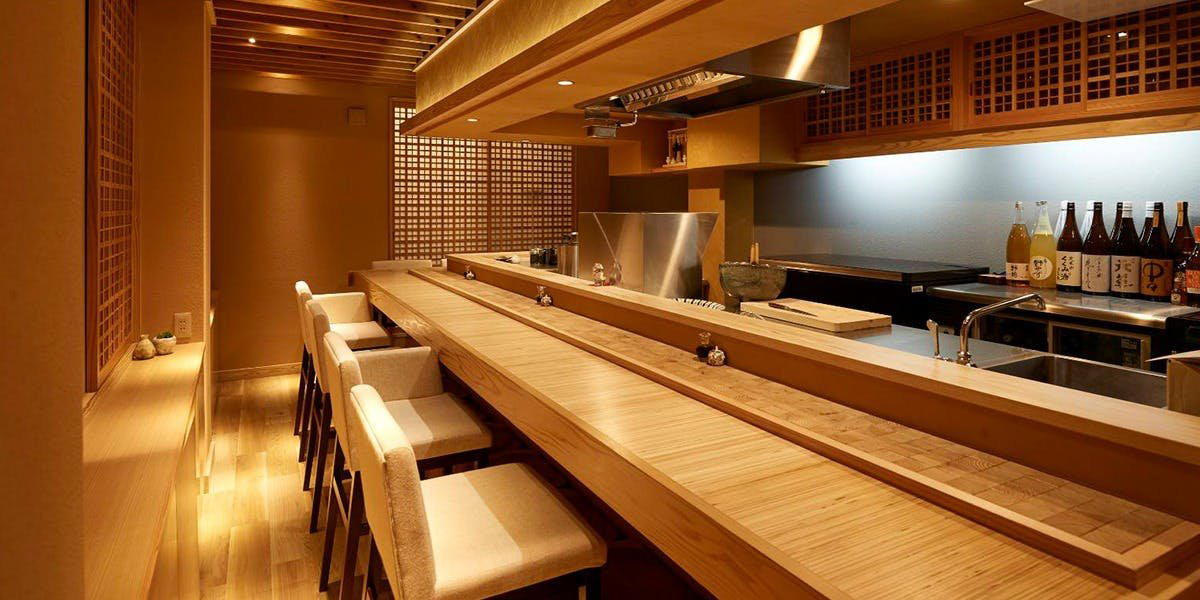
When Tempura Asanuma opened in September 2022, it joined a quiet but consistent trend in Tokyo's premium tempura circuit: counters that seat fewer than ten, price at the ¥¥¥ tier, and accumulate recognition quickly enough to make advance planning essential. Nihonbashi, a business and financial district that has spent much of the past decade repositioning itself as a serious dining address, is exactly the kind of neighbourhood that incubates this format. The district sits one minute on foot from Nihonbashi Station on the Tokyo Metro Ginza and Tozai lines, and the density of office workers willing to spend on a proper weekday lunch has made it viable for counters that might otherwise only survive in Ginza or Minami-Aoyama.
The restaurant occupies the sixth floor of the Ordin Nihonbashi Building at 2-10-11 Nihonbashi, Chuo Ward. That address detail matters logistically: sixth-floor restaurants in mixed-use office towers are easy to miss at street level, and first-time visitors should confirm the building entrance before arrival rather than counting on signage.
What the Awards Signal About Its Position
In the Tabelog ranking hierarchy, Silver is the second tier below Gold, awarded to restaurants that sustain scores above a threshold across a meaningful review sample. Tempura Asanuma holds a Tabelog score of 4.46 and earned Silver consecutively in both 2025 and 2026, which removes any question of a single-year anomaly. It was also selected for the Tabelog Tempura 100 in both 2023 and 2025, a list that cuts across score tiers to identify the most notable tempura specialists in Japan. The Michelin Plate recognition in both 2024 and 2025 adds a separate credentialing layer: the Plate designation indicates quality cooking without asserting the full star criteria, functioning as a signal that the guide's inspectors have visited and found the kitchen operating at a consistent level.
The Opinionated About Dining ranking places Asanuma at number 202 among leading restaurants in Japan in 2025. OAD rankings are assembled from votes by frequent fine-dining travellers rather than professional inspectors, which makes the number a useful proxy for how the restaurant registers among repeat visitors to the Tokyo dining circuit. For a counter that has been open under three years, appearing in that list at all is a meaningful indicator of how quickly it has established itself.
Those are the reference points the informed visitor should have in mind when calibrating expectations, not mid-market tempura chains or department-store tenku counters.
The Booking Problem, and How to Actually Secure a Seat
The editorial angle on Tempura Asanuma is, practically speaking, the booking problem. The counter seats eight people. The maximum party size is seven, which means even a full buyout leaves one seat at the chef's discretion. Six dining sessions run per week across lunch and dinner, with Wednesday closed and additional unscheduled closures possible. At eight covers per session, the restaurant serves a maximum of around 96 people weekly under ideal conditions, far fewer in practice once closures are factored in.
Practical approach: identify the restaurant's Instagram account before travel, send an inquiry message in Japanese if possible (machine translation is widely understood), and allow at least four to six weeks of lead time for a weekend seat. The restaurant does accept credit cards, which simplifies payment logistics at a price point where a dinner for two can reach JPY 40,000–60,000 including the service charge.
BYO drinks are permitted, which is notable at this tier. The restaurant also lists sake, shochu, wine, and cocktails, with a particular emphasis on wine. For guests who want to bring a specific bottle for a special occasion, the BYO policy removes the common constraint of having to choose from a house list.
The Format: Counter Tempura at the ¥¥¥ Price Point
Counter tempura as a format has a specific set of expectations built into it. The chef fries each piece individually and passes it directly across the counter, which means the dining rhythm is set by the kitchen rather than the diner. The Tabelog listing describes the kitchen's focus as a harmony of ingredients and batter, with a particular emphasis on fish sourcing. The restaurant flags that fish selection is handled with care, which in a tempura context generally means the seafood components of the omakase are given equivalent weight to the vegetable and shellfish courses rather than treated as secondary items.
Chef Tsutomu Asanuma leads the kitchen. The Tabelog framing identifies him as a young chef, which in the context of an eight-seat counter with a 4.46 score and back-to-back Silver awards represents a significant early-career achievement.
Lunch and dinner run the same hours format: 12:00–15:00 and 18:00–21:00. Both sessions price identically at JPY 15,000–19,999 listed, with actual per-person spend based on reviews averaging JPY 20,000–29,999. That review-average figure is the more useful planning number, as it reflects what guests are actually paying once the service charge and drink spend are included.
Nihonbashi in Context
Nihonbashi is not the neighbourhood most international visitors associate with Tokyo's fine-dining scene, which tends to be framed around Ginza, Azabu-Juban, or Shinjuku. That framing is increasingly incomplete. The district's historical identity as Tokyo's commercial centre, combined with significant recent investment in the surrounding area by Mitsui Fudosan and other major developers, has made it a viable address for specialist counters that prioritise proximity to a well-resourced local clientele over tourist foot traffic.
For the visitor building a broader Tokyo itinerary, pairing a meal at Asanuma with other nearby Nihonbashi or Chuo Ward dining is direct. Edomae Shinsaku represents a complementary booking in the area for those interested in traditional Edo-style fish preparation. For a wider view of what the city offers across all categories, our full Tokyo restaurants guide maps the field by cuisine and price tier. Visitors extending their Japan itinerary beyond Tokyo can reference our coverage of HAJIME in Osaka, Gion Sasaki in Kyoto, akordu in Nara, Goh in Fukuoka, 1000 in Yokohama, and 6 in Okinawa. For tempura specifically outside Japan, see Mudan Tempura in Taipei and Numata in Osaka. Tokyo's broader hospitality picture is covered in our guides to hotels, bars, wineries, and experiences.
Planning Reference
Tempura Asanuma seats eight, accepts a maximum party of seven, and operates lunch (12:00–15:00) and dinner (18:00–21:00) Monday, Tuesday, Thursday, Friday, Saturday, Sunday, and Public Holidays. Wednesday is closed; additional unscheduled closures apply. Dinner and lunch are priced equivalently at JPY 15,000–19,999 listed, with actual spend averaging JPY 20,000–29,999 per person based on guest reviews. Credit cards accepted; electronic money and QR payments not accepted. BYO drinks permitted. Reservations via Instagram message or voicemail only. Address: Ordin Nihonbashi Building 6F, 2-10-11 Nihonbashi, Chuo Ward, Tokyo. Nearest station: Nihonbashi (Tokyo Metro Ginza Line, Tozai Line; Toei Subway Asakusa Line), approximately one minute on foot.
FAQ: What is the signature dish at Tempura Asanuma?
No single dish is named as a signature in the available record. The kitchen describes its approach as a harmony of ingredients and batter, with a noted emphasis on fish sourcing. In the counter-tempura format, the menu is omakase-style, meaning the chef determines the sequence based on seasonal availability. The restaurant's consistent selection for the Tabelog Tempura 100 in 2023 and 2025, alongside a Tabelog score of 4.46 and Silver Awards from the same platform, reflects sustained recognition for the overall programme rather than any single item. Chef Tsutomu Asanuma leads the kitchen.
Price Lens
Comparable venues nearby, for context on price, style, and recognition.
| Venue | Cuisine | Price | Awards | Notes |
|---|---|---|---|---|
| Tempura AsanumaThis venue (the venue you are viewing) | Modern Tempura Omakase | $100–150 | Michelin Plate · Tabelog Silver #8 | Not listed |
| Edosoba Hosokawa | Traditional Edo Soba | $30–50 | Michelin Bib Gourmand · Tabelog 100 #41 | Sumida, Traditional Edo Soba |
| Osobano Kouga | Authentic Handmade Soba | $50–100 | Michelin Bib Gourmand · Tabelog 100 #87 | Minato, Authentic Handmade Soba |
| Jubei | Yakiniku (Japanese BBQ) | $50–100 | La Liste Top Restaurants · Tabelog Silver #49 | Shinjuku, Yakiniku (Japanese BBQ) |
| Sudachi | Creative Japanese Kappo | $50–100 | Michelin Plate | Minato, Creative Japanese Kappo |
| 124. KAGURAZAKA | Yakitori Omakase | $200–300 | Michelin Plate | Shinjuku, Yakitori Omakase |
Recognition history
Dated appearances from independent guides and award organizations, with the underlying list record or original source where available.
Michelin Plate
Michelin
Opinionated About Dining Top Restaurants in Japan Ranked #142
Opinionated About Dining
Tabelog Silver #8
Tabelog
Full recognition history (7 entries)
Opinionated About Dining Top Restaurants in Japan Ranked #202
Opinionated About Dining
Tabelog 100 #6 · No. 6
Tabelog · Tabelog 100 - Tempura - 2025
Tabelog Silver
Tabelog
Michelin Plate
Michelin
Continue exploring
More in Tokyo
Restaurants in Tokyo
All restaurants in Tokyo →

Bars in Tokyo
All bars in Tokyo →


Hotels in Tokyo
All hotels in Tokyo →

Details
- Modern
- Cozy
- Intimate
- Solo
- Special Occasion
- Chefs Counter
- Sake Program
- Omakase
- Counter Dining
Current opening hours
- Monday
- 12–3 PM, 6–9 PM
- Tuesday
- 12–3 PM, 6–9 PM
- Wednesday
- Closed
- Thursday
- 12–3 PM, 6–9 PM
- Friday
- 12–3 PM, 6–9 PM
- Saturday
- 12–3 PM, 6–9 PM
- Sunday
- 12–3 PM, 6–9 PM
Hours can change for holidays and private events. Last verified .
Clean, new cedar wood interior with natural light, cozy counter seating for 8, youthful and welcoming atmosphere.