Our verdict
Tee Tea Thé on Goltzstraße sits in Schöneberg, one of Berlin's most neighbourhood-committed corners, where the tea house format occupies a quieter tier than the city's headline dining scene. As Berlin's premium restaurant circuit trends toward tasting menus and Michelin recognition, this address represents a different register: the kind of deliberate, low-key space that the city's western districts have historically sheltered.

Pearl is the En Primeur Club membership app — saves, bookings, and concierge access live there. Same editors, same standards.
- Address
- Goltzstraße 2, 10781 Berlin, Germany
- Phone
- +493021752240
- Hours
- Daily 10 AM–7 PM
- Website
- teeteathe.de
- Directions
- Get directions
- Booking
- Book on OpenTable
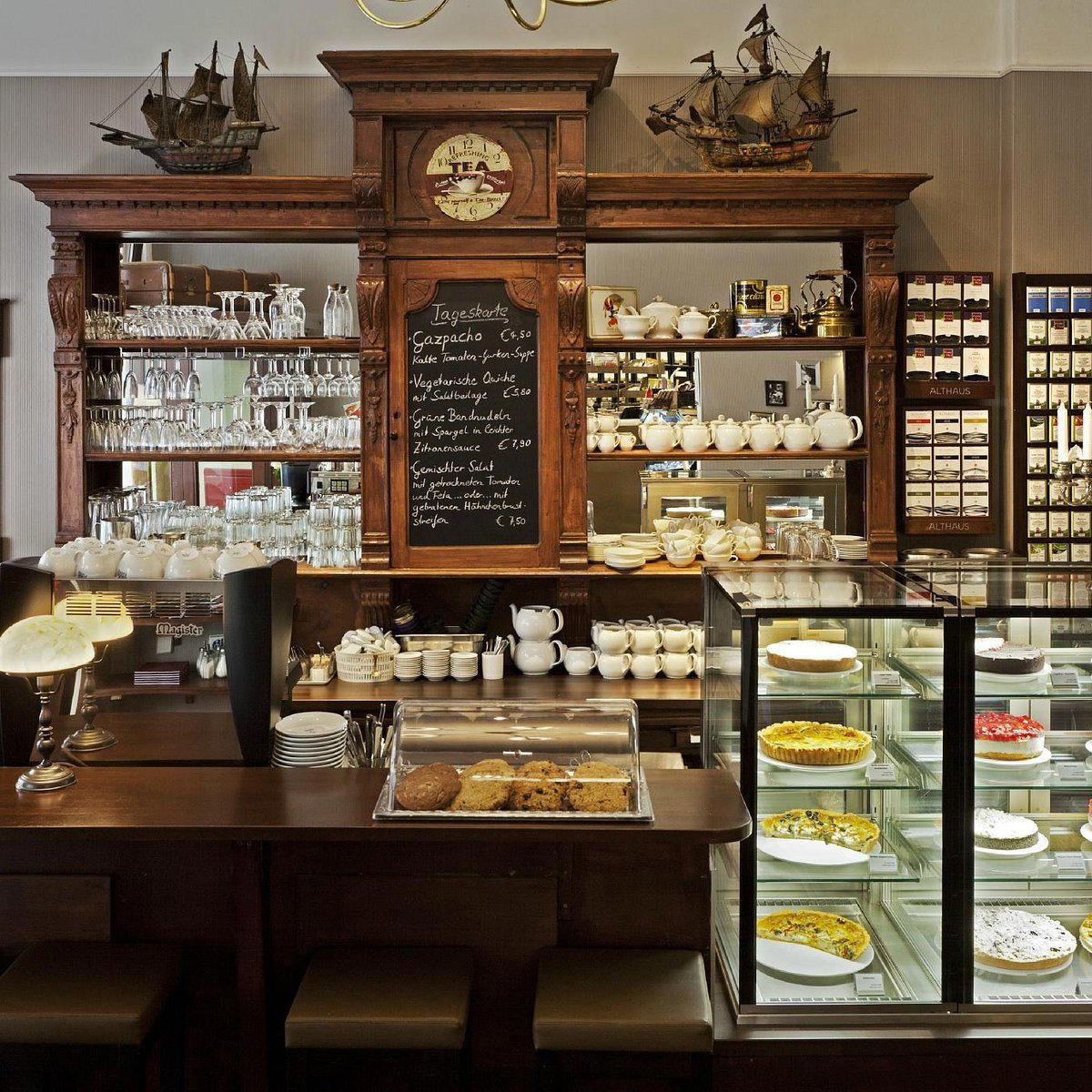
The menu
What to order
- Afternoon Tea
- Scones with clotted cream
- Vegan breakfast set
Schöneberg and the Quieter Register of Berlin Drinking Culture
Berlin's drinking and café culture has always operated on two speeds. The first is loud and documented: the cocktail bars of Mitte, the natural-wine rooms of Neukölln, the destination coffee roasters that cycle through international press lists. The second is slower, more residential, and concentrated in districts like Schöneberg, where Goltzstraße 2 puts Tee Tea Thé in a neighbourhood that has long supported the kind of space where staying two hours over a pot is the expected behaviour, not an imposition. In a city where the dining conversation is dominated by addresses like Nobelhart & Schmutzig, Rutz, and FACIL, all operating at the €€€€ tier with tasting menus and Michelin credentials, a specialist tea house occupies a structurally different category: low-stakes entry, high return on attention.
Schöneberg itself deserves the framing before the venue does. The district sits west of Potsdamer Platz and south of the Ku'damm corridor, and it retains a pedestrian density that many of Berlin's trendier neighbourhoods have traded away. Goltzstraße cuts through a grid of late-nineteenth-century apartment buildings, and the street-level mix runs toward independent bakeries, wine shops, and the kind of café that doesn't redesign itself every eighteen months. For a tea house, the address is less accident than logic: the neighbourhood's demographic skews toward long-term residents who use the street as a daily circuit rather than a destination crawl.
Where Tea Houses Sit in Berlin's Beverage Scene
Germany's tea culture is older and more serious than most international visitors assume. The northern port cities, particularly Hamburg and Bremen, developed substantial tea-trading traditions through the nineteenth century, and the ritual of loose-leaf preparation never fully gave way to the bag-and-mug convenience that displaced it elsewhere in Europe. Berlin sits at some remove from that northern tradition geographically, but the city's appetite for specialist beverage formats has grown steadily alongside its broader hospitality sophistication. The same decade that produced Michelin-starred dessert innovation at CODA Dessert Dining and the refined Chinese-influenced cooking at Restaurant Tim Raue also deepened the market for non-alcoholic specialty formats. Tea, particularly single-origin and ceremony-adjacent presentations, fits that pattern: it rewards knowledge, scales with attention, and offers a quieter but equally rigorous form of connoisseurship.
Across Germany's broader fine-dining circuit, the emphasis on product provenance and preparation precision runs through addresses as different in scale and geography as Aqua in Wolfsburg, Schwarzwaldstube in Baiersbronn, and Waldhotel Sonnora in Dreis. That same underlying value — that the sourcing and handling of an ingredient matters more than its presentation dressing — transfers directly to a serious tea operation. The leading tea houses in European cities are not tea-themed cafés. They are product-led spaces where water temperature, steeping time, and origin transparency are the variables that determine quality, in the same way that a sommelier's wine list communicates a point of view through selection and service rather than spectacle.
The Goltzstraße Address in Practice
The Schöneberg positioning carries practical implications for how Tee Tea Thé functions relative to Berlin's more prominent hospitality addresses. Unlike the tasting-menu restaurants that anchor the city's Michelin tier, or the internationally referenced cocktail bars that draw visitors from beyond the city, a neighbourhood tea house on Goltzstraße is primarily a local institution. Its rhythms are set by the district rather than by the restaurant-week calendar or the awards cycle. That is not a limitation; it is a different kind of credential. Spaces that survive on neighbourhood loyalty in Berlin's competitive hospitality environment do so because they are genuinely useful to people who could easily choose something else.
For visitors approaching Berlin's western districts from the tasting-menu circuit, the comparative frame shifts. It is the quieter tier of specialist beverage destinations that sit outside the awards infrastructure entirely but serve a distinct and considered function in how a city's food and drink culture actually operates day to day.
Schöneberg's position between the tourist-heavy zones of the centre and the self-consciously hip areas further east means that Goltzstraße operates with less performance pressure than comparable streets in Prenzlauer Berg or Friedrichshain. That pressure differential shapes the experience: the expectation is presence and quality, not theatre.
Planning a Visit
For those building an itinerary around Berlin's broader food and drink scene, Tee Tea Thé sits most naturally as a slower midpoint in a day that might otherwise move between the higher-intensity addresses documented in our full Berlin restaurants guide. The Schöneberg location connects reasonably to the U-Bahn grid, and Goltzstraße itself is walkable from several of the district's main intersections. Visitors interested in Germany's broader fine-dining geography might also note that the country's most decorated addresses, from Restaurant Haerlin in Hamburg to Schanz in Piesport and ES:SENZ in Grassau, tend to require advance reservation windows of several weeks to months. A neighbourhood tea house operates on a different booking logic, but confirming availability in advance remains sensible practice.
For international reference points on what specialist beverage-adjacent hospitality looks like at its most considered, the precision-driven service cultures at addresses like Le Bernardin in New York City and the tightly structured progression at Atomix illustrate how attention to product and format can define an experience independently of cuisine category. The format is different; the underlying principle of sourcing and preparation discipline is shared. Similarly, Bagatelle in Trier demonstrates how a regional German address can build a distinct identity through focus rather than scale. Tee Tea Thé, in its Schöneberg context, operates within that same logic of deliberate specialisation.
Quick reference: Tee Tea Thé, Goltzstraße 2, 10781 Berlin.
Frequently asked questions
What's Tee Tea Thé's location?
Tee Tea Thé is located at Goltzstraße 2, 10781 Berlin, Germany, Berlin.
How does Tee Tea Thé fit into Berlin's tea culture, and is it different from a standard café?
Germany has a longer and more geographically specific tea tradition than most visitors expect, rooted particularly in the northern port cities, and Berlin's tea houses draw on that heritage rather than the coffee-bar model that dominates most European city centres. Tee Tea Thé in Schöneberg operates within that quieter register, prioritising tea as the central offering rather than treating it as a secondary menu item. The Goltzstraße location, away from the more tourist-facing café strips of Berlin, reinforces that positioning.
What's the must-try dish at Tee Tea Thé?
The focus at Tee Tea Thé is tea rather than a food menu, so the drink selection is where the visit is built. The Goltzstraße address places it within Schöneberg's slower, more deliberate café culture rather than the high-turnover beverage bars of central Berlin.
Can I walk in to Tee Tea Thé?
Tee Tea Thé sits on Goltzstraße 2 in Schöneberg, a neighbourhood that runs at a different pace from the reservation-driven dining addresses of Mitte or Prenzlauer Berg. No booking system or advance reservation policy is publicly documented, which suggests walk-in visits are the standard format. Arriving outside peak afternoon hours will generally improve the odds of a seat.
Compact Comparison
Comparable venues nearby, for context on price, style, and recognition.
| Venue | Cuisine | Price | Notes |
|---|---|---|---|
| Tee Tea ThéThis venue — the venue you are viewing | British Tea Salon & Café | $10–20 | Not listed |
| Café Wintergarten | European Café Classics | $20–30 | Tiergarten, European Café Classics |
| LIU 成都味道面馆 Nudelhaus | Authentic Sichuan Noodle House | $10–20 | Mitte, Authentic Sichuan Noodle House |
| ama Café | Healthy European Café | $10–20 | Mitte, Healthy European Café |
| House of Greens | Healthy Microgreens Café | $10–20 | Charlottenburg, Healthy Microgreens Café |
| Gut Kerkow Bio-Metzgerei | Organic German Butcher Lunch | $10–20 | Mitte, Organic German Butcher Lunch |
Continue exploring
More in Berlin
Restaurants in Berlin
Browse all →
Bars in Berlin
Browse all →
Hotels in Berlin
Browse all →

Details
- Cozy
- Classic
- Quiet
- Elegant
- Casual Hangout
- Brunch
- Solo
- Date Night
- Standalone
- A La Carte
- Set Menu
- Specialty Tea
- Coffee
- Vegetarian Friendly
- Vegan Options
Current opening hours
- Monday
- 10 AM–7 PM
- Tuesday
- 10 AM–7 PM
- Wednesday
- 10 AM–7 PM
- Thursday
- 10 AM–7 PM
- Friday
- 10 AM–7 PM
- Saturday
- 10 AM–7 PM
- Sunday
- 10 AM–7 PM
Hours can change for holidays and private events. Last verified .
Stylish and inviting atmosphere with separate rooms designed for peaceful tea enjoyment, combining traditional tea culture with modern café comfort.