

1 Michelin Star · World's 50 Best #36
Our verdict
Bagatelle sits on the Moselle riverbank at Zurlaubener Ufer 78, carrying a Michelin star into 2025 and a lineage that once placed it among the world's top 50 restaurants. Chef François-Laurent Apchié works a French Contemporary register that feels pointed rather than decorative, a serious dining address in a city better known for Roman ruins than restaurant culture.

Pearl is the En Primeur Club membership app, where members save venues, book tables and use the concierge.
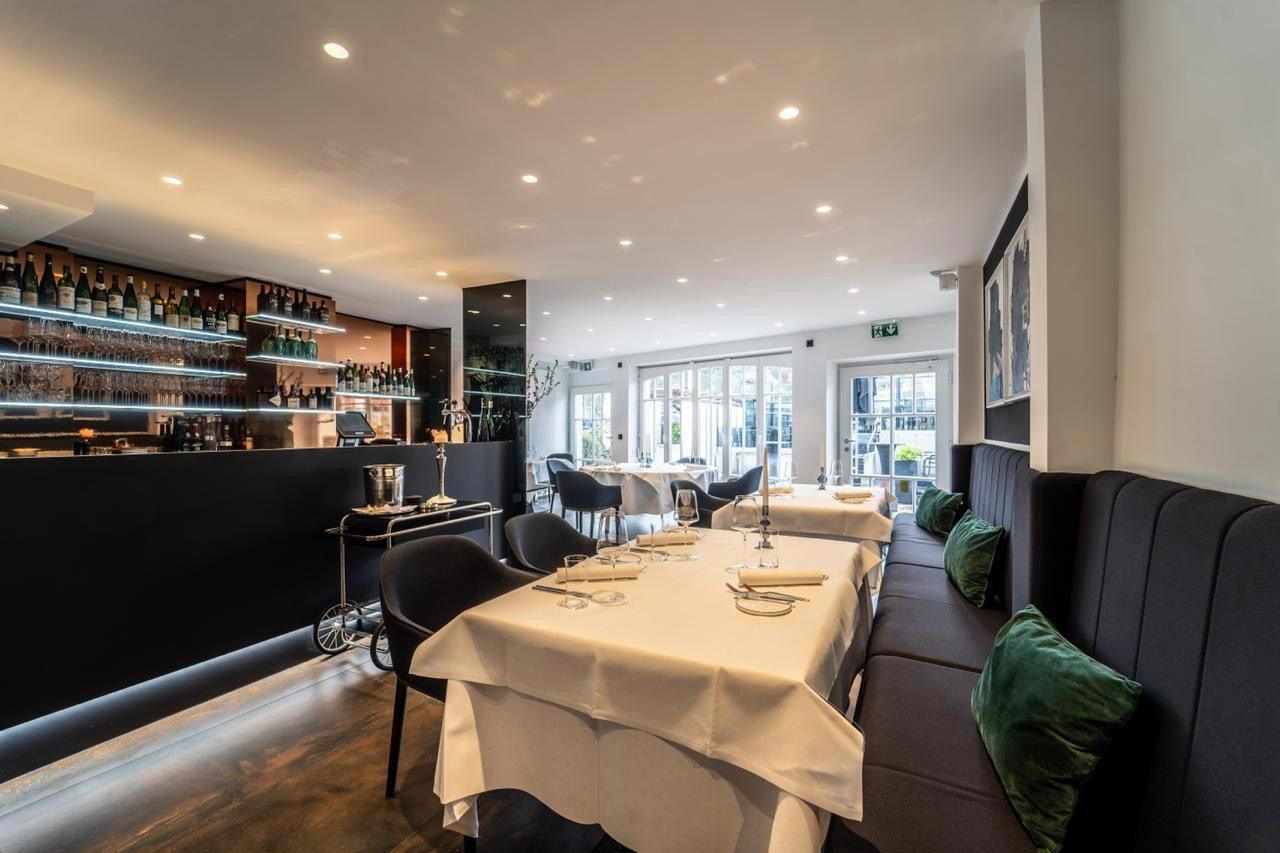
A Riverbank Setting That Earns Its Reputation
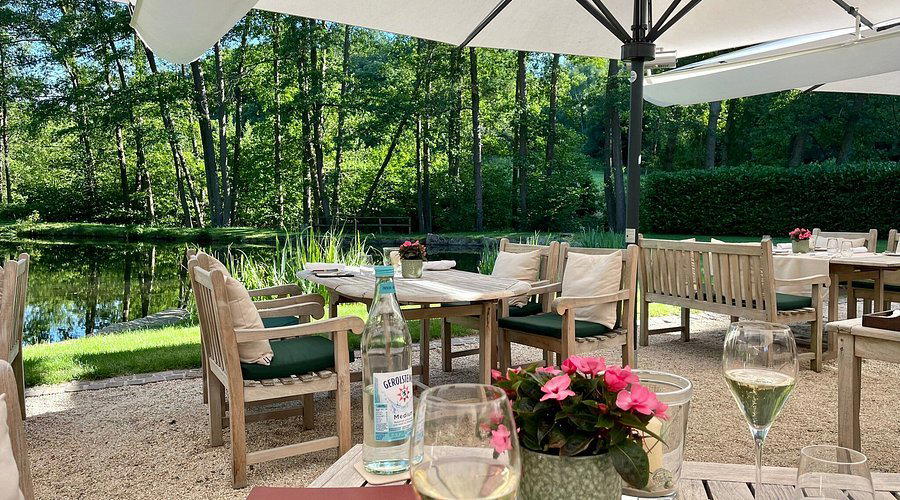
The Zurlaubener Ufer strip runs along the western bank of the Moselle, a short distance from Trier's Roman core, where waterfront terraces and a quieter residential pace replace the tourist-facing bustle of the city centre. It is in this context, unpretentious, river-facing, more neighbourhood than destination strip, that Bagatelle has operated for decades. The setting matters here not as backdrop but as argument: Trier is not a city that announces its fine-dining ambitions loudly, and a restaurant of Bagatelle's calibre on this stretch of riverfront communicates something about restraint, about building a serious programme away from the obvious addresses.
The Moselle itself is inseparable from the culinary identity of the region. Its microclimate shapes the viticulture that runs for miles north and south of the city, producing the Riesling and Spätburgunder that appear on the wine lists of every serious restaurant in the area. A restaurant positioned directly on this river is not simply making an aesthetic choice. It is placing itself inside one of Germany's most compelling food and wine geographies, a region where provenance is built into the land rather than sourced in from elsewhere.
What the Awards Record Actually Tells You
Michelin star Bagatelle holds in both 2024 and 2025 is the current marker of its standing, but the fuller awards history places that star in a more interesting frame. Appearances at number 48 and number 36 on the World's 50 Best Restaurants list in 2002 and 2003 respectively indicate a period when the kitchen was operating at a level that drew international critical attention, competing against peer establishments in major European capitals. That history does not automatically translate to present-day form, any critic would note the distance between early-2000s rankings and a single Michelin star two decades later, but it does explain the institutional weight the restaurant carries in the regional dining conversation.
Among Trier's Michelin-recognised addresses, Bagatelle sits in a specific tier. BECKER'S (Creative) holds a Michelin star at a higher price point (€€€€), making the two restaurants comparable in critical standing but differentiated by cost and culinary register. Schloss Monaise (Classic French) occupies the same €€€ bracket and a related French tradition, while BECKER'S Weinhaus (Classic Cuisine) and Gastraum (Modern Cuisine) operate at lower price points and serve different dining modes.
French Contemporary in a Mosel Context
The French Contemporary category, at its most considered, is less about French nationalism and more about a working method: produce-driven, technique-anchored, with seasonal structure determining the menu rather than fixed signatures. In a border city like Trier, less than 50 kilometres from Luxembourg and within easy reach of the Alsace corridor, the French culinary tradition carries genuine geographic logic. The Mosel Valley is not imitating a foreign cuisine when it hosts French Contemporary restaurants; it is drawing on a cross-border culinary inheritance that predates modern national boundaries.
Chef François-Laurent Apchié works within that tradition. Without specific menu data to draw from, the relevant frame is what French Contemporary at this level typically requires: rigorous sourcing, a kitchen that understands when to intervene and when to leave produce alone, and a wine programme built to match cooking of this seriousness. The Moselle's own vineyards provide the most obvious sourcing anchor. Riesling from the Mosel's steep slate slopes, with its tense acidity and mineral register, pairs with precision cooking in ways that broader-shouldered German reds from further south do not. A restaurant at Bagatelle's standing on the Zurlaubener Ufer should be understood as operating within, not despite, the regional wine geography.
For a comparative read on how French Contemporary translates across different contexts and price tiers, the programmes at Amber, French Contemporary in Hong Kong and Odette, French Contemporary in Singapore are instructive. Both operate at higher formal registers and price points than Bagatelle, but all three share the core logic of French Contemporary: the cooking is rooted in classical structure while remaining responsive to regional provenance.
Where Bagatelle Sits in the German Fine-Dining Conversation
Germany's serious dining scene has developed considerable geographic spread beyond Munich and Berlin, and the Rhineland-Palatinate region is part of that broader distribution. Restaurants like Schwarzwaldstube in Baiersbronn and Vendôme in Bergisch Gladbach demonstrate that the country's most rigorous kitchens are not exclusively metropolitan. Bagatelle fits this pattern: a Michelin-starred French Contemporary address in a mid-sized city with a food culture that punches beyond its population.
Within Germany's wider Michelin landscape, Bagatelle shares a price tier with a number of notable addresses. JAN in Munich, Aqua in Wolfsburg, ES:SENZ in Grassau, and Restaurant Haerlin in Hamburg represent the spread of credentialed fine dining across German cities and regions. CODA Dessert Dining in Berlin sits at the more experimental end of the spectrum, demonstrating the range of formats that Michelin recognition now covers in Germany. Bagatelle's position among these is as one of the longer-established names, with its international recognition period giving it a historical depth that newer entrants cannot replicate.
Planning a Visit
Bagatelle is located at Zurlaubener Ufer 78 in Trier, on the Moselle riverbank north of the city centre. At the €€€ price range, the restaurant is positioned as a formal dining occasion rather than a casual drop-in. The address is direct to reach from Trier's centre by foot or taxi.
For visitors building a broader Trier programme around the meal, the city's dining and drinking options extend across several categories. Our full Trier restaurants guide covers the wider range of options at different price points. For accommodation context, our full Trier hotels guide maps the city's lodging options. Trier's wine culture is substantial and worth pursuing beyond the dinner table: our full Trier wineries guide covers producer visits and cellar-door access across the Mosel region. Additional context on the city's bars and cultural programming is available through our full Trier bars guide and our full Trier experiences guide.
Frequently asked questions
What price level is Bagatelle?
Pricing at Bagatelle is listed as €€€.
What awards or recognition does Bagatelle have?
Bagatelle has received recognition including: Michelin 1 Star (2025); Michelin 1 Star (2024); World's 50 Best Best Restaurants #36 (2003); World's 50 Best Best Restaurants #48 (2002).
What's the best thing to order at Bagatelle?
Bagatelle holds a Michelin star under chef François-Laurent Apchié, working in the French Contemporary register, which means the kitchen structures its menu around technique and produce rather than fixed signature dishes. The approach prioritises what the season and the region supply, so the tasting menu is the format that best reflects the kitchen's priorities at any given time. At the €€€ price point, the tasting menu is also the expected commitment for a one-star dinner on this level in Germany.
What's Bagatelle's location?
Bagatelle is located at Zurlaubener Ufer 78, 54292 Trier, Germany, Trier.
A Quick Peer Check
| Venue | Cuisine | Price | Awards | Notes |
|---|---|---|---|---|
| BagatelleThis venue (the venue you are viewing) | Modern French Fine Dining with Japanese Accents | Not listed | 1 Michelin Star · World's 50 Best #36 | Not listed |
| BECKER'S | Modern German Wine Bar | $30–50 | Michelin Plate | Creative |
| BECKER'S Weinhaus | Classic Cuisine | Not listed | Not listed | Not listed |
| Gastraum | Modern Regional German | $50–100 | Michelin Plate | Modern Cuisine |
| Schloss Monaise | Modern German Fine Dining | Not listed | Michelin Plate | Classic French |
Recognition history
Dated appearances from independent guides and award organizations, with the underlying list record or original source where available.
Michelin 1 Star
Michelin
World's 50 Best Restaurants #36
World's 50 Best
Full recognition history (5 entries)
Michelin 1 Star
Michelin
Michelin 1 Star
Michelin
World's 50 Best Restaurants #48
World's 50 Best
Continue exploring
More in Trier
Restaurants in Trier
All restaurants in Trier →
Hotels in Trier
Browse all →
Details
- Romantic
- Elegant
- Sophisticated
- Intimate
- Date Night
- Special Occasion
- Terrace
- Extensive Wine List
- Sommelier Led
- Local Sourcing
- Waterfront
- Tasting Menu
Current opening hours
- Monday
- Closed
- Tuesday
- Closed
- Wednesday
- 6–10 PM
- Thursday
- 6–10 PM
- Friday
- 12–2:30 PM, 6–10 PM
- Saturday
- 6–10 PM
- Sunday
- 12–3 PM
Hours can change for holidays and private events. Hours as of .
Smart, refined interior with warm, charming, and intimate atmosphere; romantic terrace by the river with candlelight in evenings.