Michelin Plate
Our verdict
A Michelin Plate-recognised Italian trattoria in Osaka's Koraibashi district, TAVERNETTA da KITAYAMA takes its name from the Italian tradition of casual neighbourhood dining and applies it with conviction. The blackboard menu rotates with supply, anchored by hearty northern Italian references: tripe in tomato, herb-crusted marlin, mushroom pappardelle, and slab-grilled meats sized for sharing. Relaxed, generous, and priced at ¥¥.

Pearl is the En Primeur Club membership app, where members save venues, book tables and use the concierge.
The menu
What to order
- Grilled beef, pork, or lamb slabs
- Pappardelle with rabbit ragù
- Bucatini Sicilian style with sardines and fennel
- Stewed tripe and white beans
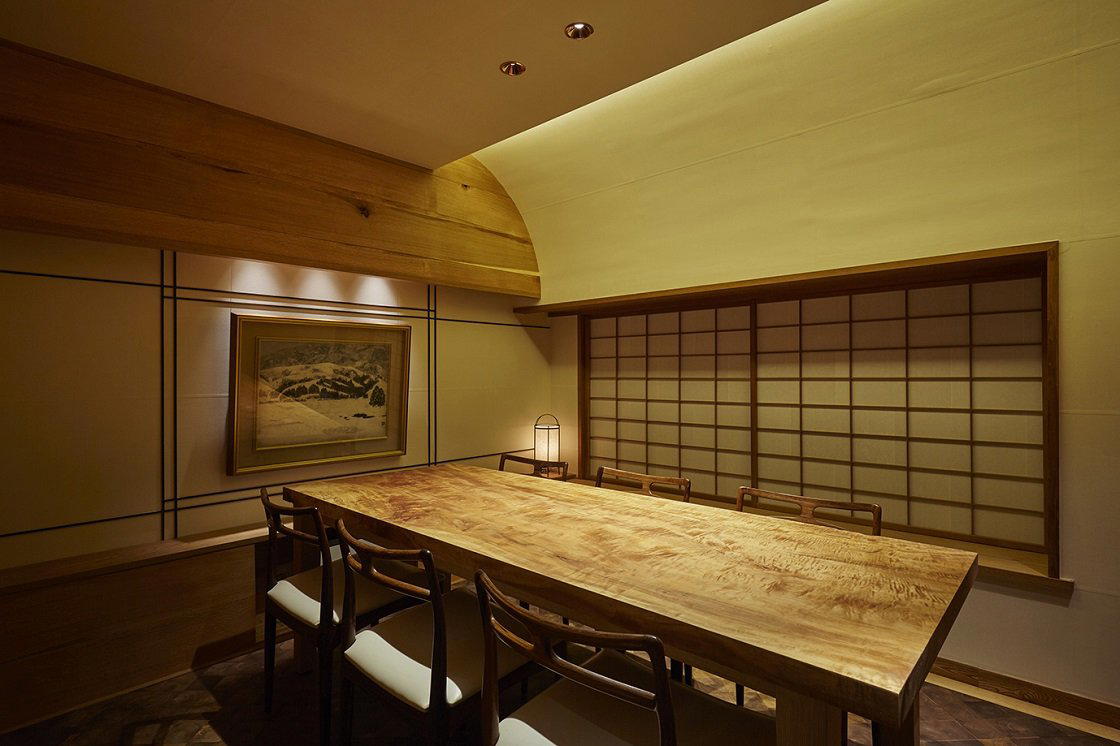
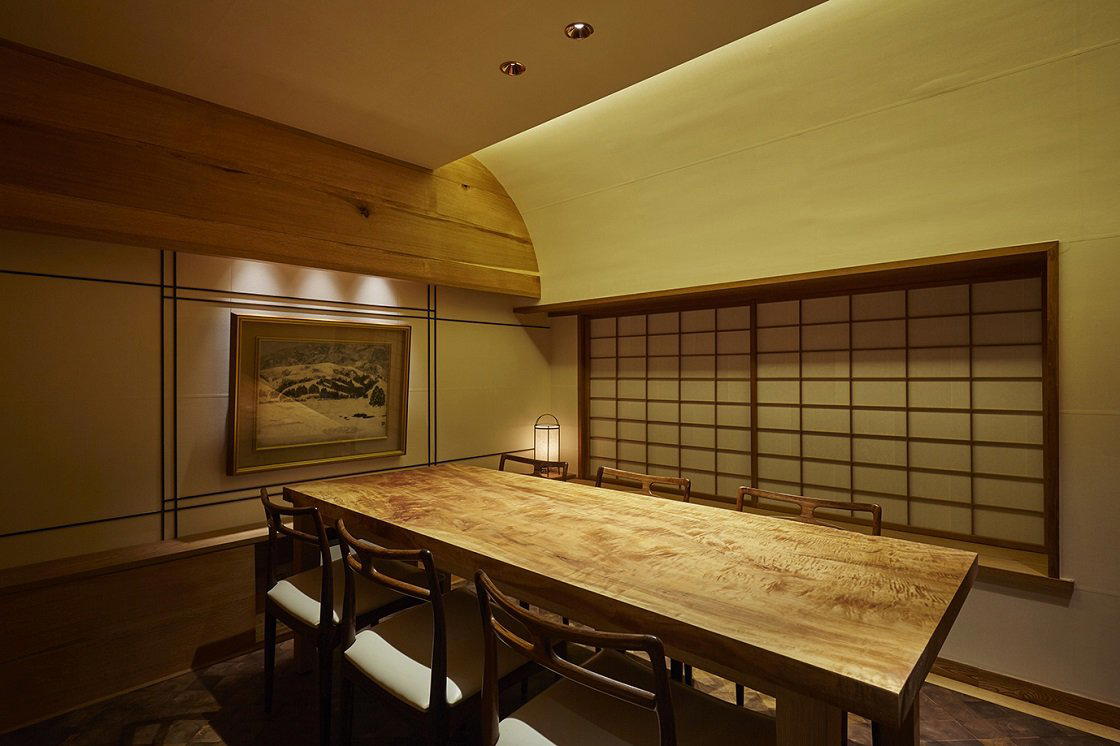
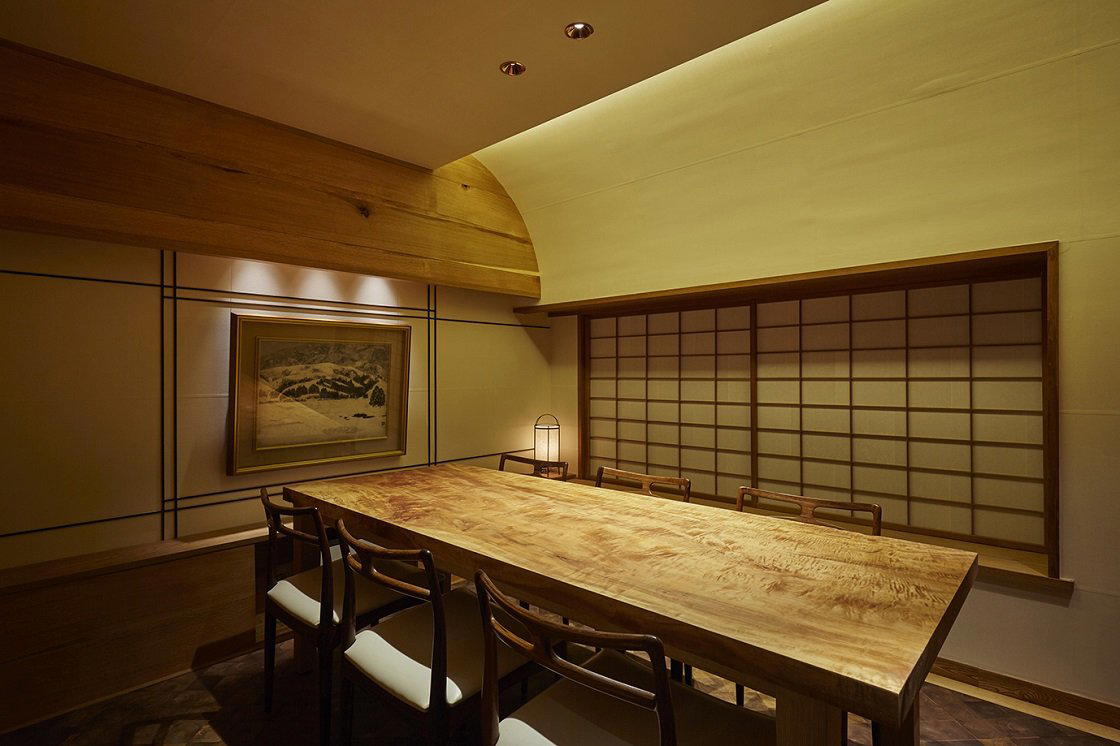
A Basement in Koraibashi, a Room That Reads Like Northern Italy
Descend into the basement level of a commercial building on Koraibashi, and the register shifts. The blackboard on the wall, the informal seating, the portions sized for two, this is what the Italian word tavernetta actually promises: a casual neighbourhood eatery, not a destination restaurant. In Osaka, a city whose restaurant culture has long absorbed foreign cuisines and made them functionally Japanese, that commitment to informality has its own meaning. TAVERNETTA da KITAYAMA holds a Michelin Plate for both 2024 and 2025, a recognition that signals consistent quality without the ceremony of a starred room.
The Italian Trattoria in Japan: A Category Worth Understanding
Italian food in Japan occupies an unusually serious position. Since the 1980s, Japanese chefs have trained in Italy with the same rigour applied to French kitchens, and the resulting domestic Italian scene in cities like Osaka and Tokyo has produced a tier of restaurants that operate with genuine technical literacy. The style at the high end, represented by venues like cenci in Kyoto, applies Italian frameworks through a Japanese sensibility. But TAVERNETTA da KITAYAMA sits at a different point on that spectrum: the trattoria register, where the goal is not refinement but honesty, big plates, traditional preparations, and a menu that moves with what is available rather than what suits a printed card.
That model has genuine precedent in Italy's north. In Piedmont, Lombardy, and the Veneto, a tavernetta or osteria is where the cooking is often more instructive than the fine dining two streets over. The cuts are tougher, the preparations longer, and the food arrives in quantity. Tripe stewed in tomato is not a dish that flatters a kitchen's technique; it is a dish that reveals whether a kitchen understands braising, acidity, and restraint in seasoning. Marlin baked in herb-seasoned breadcrumbs is coastal northern Italian by association, and mushroom pappardelle is the kind of wide-ribboned pasta that exists precisely because it needs something substantial to carry. These are not simplified dishes. They are dishes with specific cultural weight.
The Menu: Supply-Driven, Northern in Character
The format here is a blackboard menu that changes based on supply, a structure that places seasonal and market logic above the consistency of a fixed card. For the diner, this means some dishes appear regularly and others do not; the tripe, the pappardelle, and the herb-crusted marlin are noted reference points, but the operative question on any given visit is what the board says that day.
The signature approach to grilled meat, beef, pork, or lamb presented in slabs, is the kind of preparation that defines a room's identity more than any single ingredient choice. Slab grilling at this scale requires confidence in sourcing and fire management, and the portions are described as large enough to share, which reinforces the trattoria social model: this is food designed to sit at a table for a while.
This supply-driven approach places TAVERNETTA da KITAYAMA in a different category from Osaka's Italian rooms at higher price points. Compared to the city's ¥¥¥¥ French and innovative restaurants, HAJIME, La Cime, Fujiya 1935, this is a different transaction entirely. The Michelin Plate recognition, awarded across two consecutive years, is notable here specifically because it validates the trattoria format rather than a tasting menu.
Other Italian addresses in Osaka at comparable or adjacent price points include il Centrino, La Casa TOM Curiosa, La Lucciola, P greco, and YUNiCO. The breadth of that Italian cohort reflects how firmly the cuisine has established itself in Osaka's dining culture, not as a novelty but as a category with its own internal hierarchy.
Koraibashi and the Address
Koraibashi sits in Chuo Ward, Osaka's central business district, within walking distance of the Semba and Shinsaibashi areas. The neighbourhood is dense with office buildings, long-standing trading firms, and a dining scene that serves both business lunches and evening meals. A basement-level restaurant in this district occupies a specific niche: accessible to the area's working population at lunch or after work, but quiet enough below street level to feel removed from the district's daytime rhythm. The address, B1 of the Toyo Building, 1-5-6 Koraibashi, is direct to find for anyone familiar with Chuo Ward's grid.
For visitors building an itinerary across the Kansai region, Osaka's Italian scene is worth positioning against its neighbours. Gion Sasaki in Kyoto and akordu in Nara represent different approaches to European-influenced cooking in the region. Within Japan more broadly, Harutaka in Tokyo, Goh in Fukuoka, 1000 in Yokohama, and 6 in Okinawa each reflect the distinct way different Japanese cities have absorbed and reinterpreted European culinary traditions. For Italian at the high end of the regional spectrum, 8½ Otto e Mezzo Bombana in Hong Kong represents the formal end of the register that TAVERNETTA da KITAYAMA deliberately steps away from.
Planning Your Visit
Budget: Priced at ¥¥, positioning this as an accessible mid-range option relative to Osaka's broader restaurant market. Location: B1, Toyo Building, 1-5-6 Koraibashi, Chuo Ward, Osaka. Hours: Not confirmed; verify directly before visiting. Format: Blackboard menu, supply-dependent; portions designed for sharing.
For a broader view of dining, drinking, and staying in the city, see our full Osaka restaurants guide, our full Osaka hotels guide, our full Osaka bars guide, our full Osaka wineries guide, and our full Osaka experiences guide.
Frequently asked questions
Is TAVERNETTA da KITAYAMA focused on a specific cuisine style?
What does dinner at TAVERNETTA da KITAYAMA typically cost?
Pricing at TAVERNETTA da KITAYAMA is listed as ¥¥.
What awards or recognition does TAVERNETTA da KITAYAMA have?
TAVERNETTA da KITAYAMA has received recognition including: In Italian, ‘tavernetta’ denotes a casual eatery, so the atmosphere here is informal and relaxing. Traditional Italian fare is listed on a blackboard. Tripe stewed in tomato, marlin baked in herb-seasoned breadcrumbs and mushroom pappardell….
What should I eat at TAVERNETTA da KITAYAMA?
The blackboard menu shifts with supply, so no fixed list applies. Michelin documentation consistently references tripe stewed in tomato, mushroom pappardelle, and marlin baked in herb-seasoned breadcrumbs as representative dishes. The grilled slabs of beef, pork, or lamb are the signature format, portioned large enough to share between two. Order around those and let the board fill in the rest.
Where is TAVERNETTA da KITAYAMA located?
TAVERNETTA da KITAYAMA is located at Japan, 〒541-0043 Osaka, Chuo Ward, Koraibashi, 1 Chome−5−6 東洋ビル B1, Osaka.
Just the Basics
| Venue | Cuisine | Price | Awards | Notes |
|---|---|---|---|---|
| TAVERNETTA da KITAYAMAThis venue (the venue you are viewing) | Northern Italian Trattoria | $100–150 | Michelin Plate | Not listed |
| HAJIME | Avant-Garde Japanese Fine Dining | $300–500 | 3 Michelin Stars · World's 50 Best #83 | French, Innovative |
| La Cime | Modern French with Japanese Ingredients | $150–200 | 2 Michelin Stars · World's 50 Best #13 | French |
| Kashiwaya Osaka Senriyama | Seasonal Kaiseki Omakase | $200–300 | 3 Michelin Stars · La Liste Top Restaurants | Japanese |
| Taian | Traditional Japanese Kaiseki Omakase | $150–200 | 3 Michelin Stars · La Liste Top Restaurants | Kaiseki, Japanese |
| Fujiya 1935 | Modern Japanese with European influences | $100–150 | 2 Michelin Stars · La Liste Top Restaurants | Innovative |
Recognition history
Dated appearances from independent guides and award organizations, with the underlying list record or original source where available.
Michelin Plate
Michelin
Full recognition history (3 entries)
Michelin Plate
Michelin
Michelin Plate
Michelin