

Among Osaka's Michelin-starred Italian restaurants, il Centrino occupies a specific niche: a one-star counter in Chuo Ward where northern Italian technique, particularly handmade pasta rooted in Piedmontese training, meets Japanese seasonal produce. The result is a kitchen that holds dual culinary loyalties seriously rather than decoratively, earning 4.6 on Google across 83 reviews and a 2024 Michelin star.
Pearl is the En Primeur Club membership app — saves, bookings, and concierge access live there. Same editors, same standards.
- Address
- 1 Chome-2-2 Kawarayamachi, Chuo Ward, Osaka, 542-0066, Japan
- Phone
- +81 6-6762-5901
- Website
- il-centrino.com
- Directions
- Get directions
 Saves & bookings on Pearl
Where Osaka's Italian Scene Earns Its Stars
Osaka's restaurant culture is built on precision and loyalty to craft, qualities more associated with its kaiseki and sushi counters than its European kitchens. Yet the city's Italian dining tier has quietly developed its own credibility, with a small group of addresses that treat the genre with the same rigor applied to Japanese traditions. Among those, il Centrino in Kawarayamachi, Chuo Ward, holds a 2024 Michelin star and a positioning that distinguishes it from both the flashier European fine-dining rooms and the casual trattoria circuit. The address at 1 Chome-2-2 Kawarayamachi places it in a central Osaka neighbourhood dense with serious eating, a few minutes from Shinsaibashi and the Dotonbori axis, though the restaurant itself operates at a register removed from that district's noise.
The Dual-Loyalty Kitchen
Italian restaurants in Japan occupy a broad spectrum, from ramen-inflected pasta shops to rigorous fine-dining rooms that treat Italian regionalism as seriously as any Milanese or Roman chef would. The more interesting tier, and the one where critical attention has concentrated, is the group of kitchens that do not simply replicate Italian cuisine in Japan but construct a genuine dialogue between the two culinary traditions. This is the category to which il Centrino belongs. The chef trained at Ristorante Il Centro in Piedmont, one of northern Italy's regional pillars for farm-rooted, produce-led cooking, and the restaurant's name is a direct diminutive of that reference. What returned to Osaka from that apprenticeship was not a replica of Piedmontese technique but a method: how to read seasonal produce honestly and express it in a modern idiom. That method is then applied to Japanese ingredients and Japanese seasonal rhythms, producing a kitchen with two distinct source libraries operating simultaneously.
Handmade pasta is the most direct line from that Piedmontese training, and it functions here as both a technical statement and a narrative thread. Northern Italian pasta traditions, from tajarin to agnolotti, are labour-intensive and highly regional; they do not travel well as concepts unless the practitioner genuinely understands the dough. The fact that this element of the cooking carries specific weight in the kitchen's identity signals a level of seriousness that separates il Centrino from Italian restaurants where pasta is incidental rather than central. For the growing number of Italian chefs and critics who have eaten through Japan's European kitchens, the handmade pasta tier is often the clearest dividing line between competent and committed.
Critical Reception and the Michelin Context
The 2024 Michelin star places il Centrino in a specific tier within Osaka's dining hierarchy. Osaka's Michelin Guide is one of the most competitive in Japan, with three-star addresses including Kashiwaya in Senriyama and Taian for kaiseki, and internationally cited French rooms such as Hajime at three stars and La Cime at two. The Italian bracket is smaller, but it is not without precedent for serious recognition, and il Centrino's single star signals a kitchen that has passed the guide's consistency threshold without yet reaching the experimental or theatrical register that tends to attract multiple stars in Osaka. That is not a criticism; one-star Italian in this city is a precise position, one that implies technical reliability, a defined point of view, and a kitchen that delivers on its own terms rather than chasing a format it has not yet earned.
That pattern is common among Osaka's mid-tier starred rooms, where the clientele is predominantly local and repeat rather than destination-driven.
For comparison within the Italian-in-Japan category, cenci in Kyoto occupies a similar space of Italian technique applied through Japanese seasonal thinking, and 8 1/2 Otto e Mezzo Bombana in Hong Kong represents the higher-ceiling three-star iteration of the same broad genre across Asia. Il Centrino sits between those reference points in both ambition and price, a one-star address at the ¥¥¥ tier rather than the ¥¥¥¥ level where Osaka's most ambitious rooms operate.
Osaka's Italian Tier in Wider Context
The city's Italian dining scene has developed alongside, rather than in imitation of, Tokyo's more established European restaurant culture. Osaka kitchens tend to anchor their Italian cooking in the same producer relationships and seasonal attentiveness that define their Japanese fine-dining counterparts, rather than importing European luxury ingredients for prestige value. Il Centrino's explicit focus on farm produce with deep regional roots fits that Osaka tendency precisely. It is worth reading alongside other Osaka Italian addresses: La Lucciola, P greco, La casa TOM Curiosa, YUNiCO, and a canto each represent distinct takes on the genre, from ingredient-forward to more overtly creative formats. Across that group, the spectrum of approaches illustrates how seriously Osaka has taken Italian cuisine as a category worthy of regional identity rather than generic European category-filling.
Readers interested in how Japan handles European fine dining more broadly can cross-reference Harutaka in Tokyo, Gion Sasaki in Kyoto, akordu in Nara, Goh in Fukuoka, 1000 in Yokohama, and 6 in Okinawa to map how different Japanese cities are handling the relationship between European technique and local seasonal ingredients at the serious end of the market.
Planning Your Visit
Il Centrino sits at the ¥¥¥ price point, which in Osaka's fine-dining context typically implies a tasting menu or structured course format in the range that positions the restaurant clearly above casual Italian but below the ¥¥¥¥ tier of Hajime or Fujiya 1935. The Chuo Ward address in Kawarayamachi is accessible by multiple subway lines, with Shinsaibashi and Nagahoribashi stations both within practical walking distance. Given the Michelin star and the small-scale positioning that starred Italian rooms of this type typically maintain, advance reservations are strongly advisable. Phone and online booking details are not listed in EP Club's current database, so checking directly with the restaurant or through a concierge service is the recommended route for securing a table. For the wider Osaka picture, our full Osaka restaurants guide maps the city's dining tiers and neighbourhoods, while [our Osaka hotels guide](), [bars guide](), [wineries guide](), and experiences guide cover the broader visit.
The Short List
A compact comparison to help you place this venue among nearby peers.
| Venue | Cuisine | Price |
|---|---|---|
| il CentrinoThis venue — the venue you are viewing | Italian | ¥¥¥ |
| HAJIME | French, Innovative | ¥¥¥¥ |
| La Cime | French | ¥¥¥¥ |
| Kashiwaya Osaka Senriyama | Japanese | ¥¥¥ |
| Taian | Kaiseki, Japanese | ¥¥¥ |
| Fujiya 1935 | Innovative | ¥¥¥¥ |
Recognition history
Dated appearances from independent guides and award organizations, with the underlying list record or original source where available.
Michelin 1 Star
Michelin
Tabelog 100 #33 · No. 33
Tabelog · Tabelog 100 - Italian - WEST - 2025
Michelin 1 Star
Michelin
Continue exploring
More in Osaka
Restaurants in Osaka
Browse all →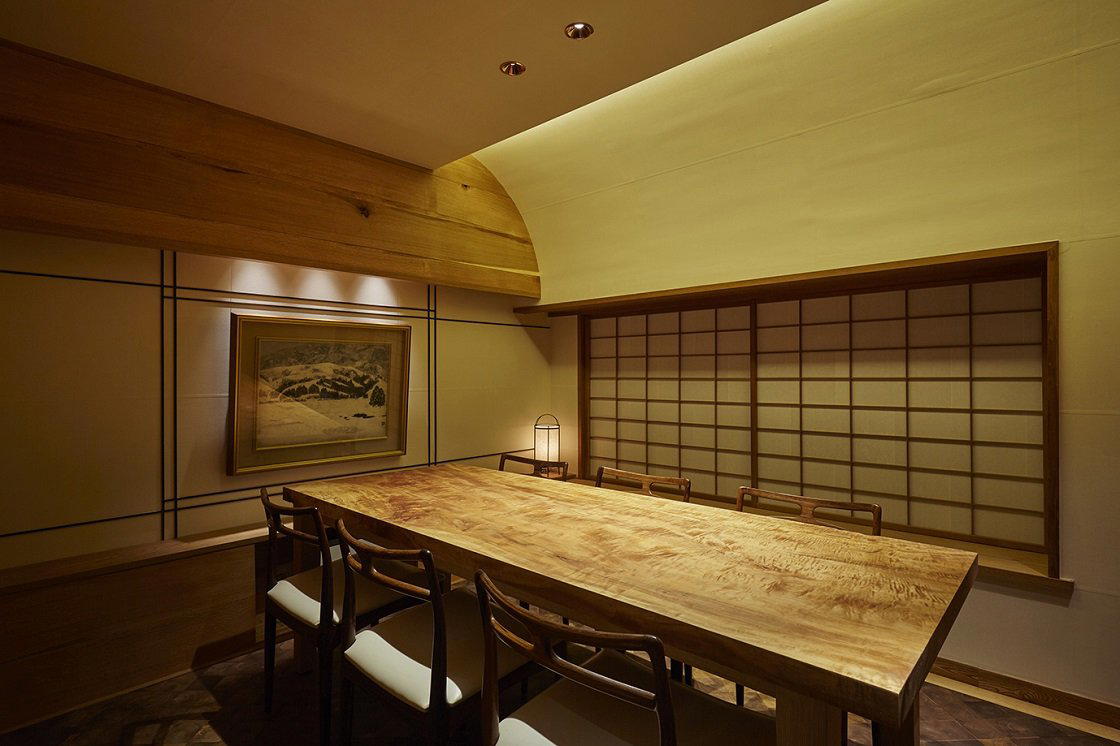

Bars in Osaka
Browse all →

Hotels in Osaka
Browse all →



Wineries in Osaka
Browse all →
At a Glance
- Intimate
- Elegant
- Sophisticated
- Minimalist
- Date Night
- Special Occasion
- Business Dinner
- Chefs Counter
- Open Kitchen
- Historic Building
- Standalone
- Sommelier Led
- Local Sourcing
Current opening hours
- Monday
- 12–3 PM, 5:30–10 PM
- Tuesday
- 12–3 PM, 5:30–10 PM
- Wednesday
- 12–3 PM, 5:30–10 PM
- Thursday
- 12–3 PM, 5:30–10 PM
- Friday
- 12–3 PM, 5:30–10 PM
- Saturday
- 12–3 PM, 5:30–10 PM
- Sunday
- Closed
Hours can change for holidays and private events. Last verified .
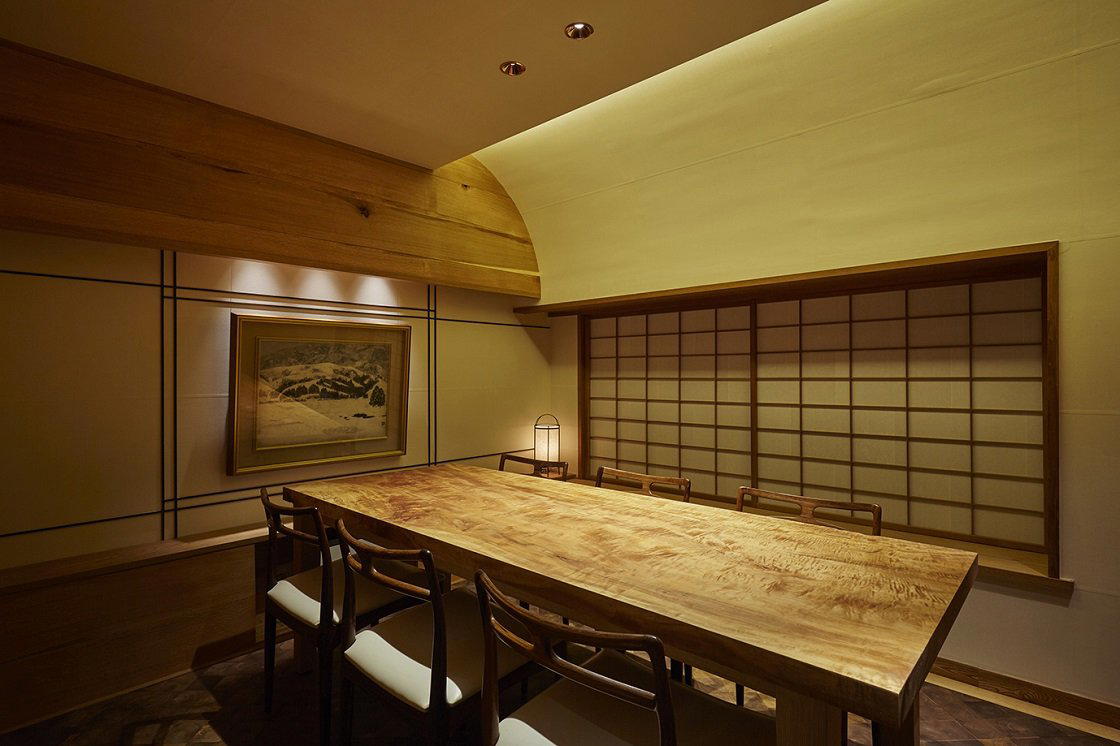
Warm and intimate atmosphere in a renovated old folk house with minimalist yet sophisticated design, creating a refined yet casual dining environment.
Know Before You Go
- Getting there
- 1 Chome-2-2 Kawarayamachi, Chuo Ward, Osaka, 542-0066, Japan