

A Michelin-starred Italian restaurant in Osaka's Fukushima ward where counter seating follows kappo logic, the charcoal grill draws on Japanese techniques, and the chef's kintsugi-repaired tableware signals a sensibility that sits well outside Italy's borders.
Pearl is the En Primeur Club membership app — saves, bookings, and concierge access live there. Same editors, same standards.
- Address
- 5 Chome-7-3 Fukushima, Fukushima Ward, Osaka, 553-0003, Japan
- Phone
- +81 6-6458-0199
- Website
- lucciola.net
- Directions
- Get directions
 Saves & bookings on Pearl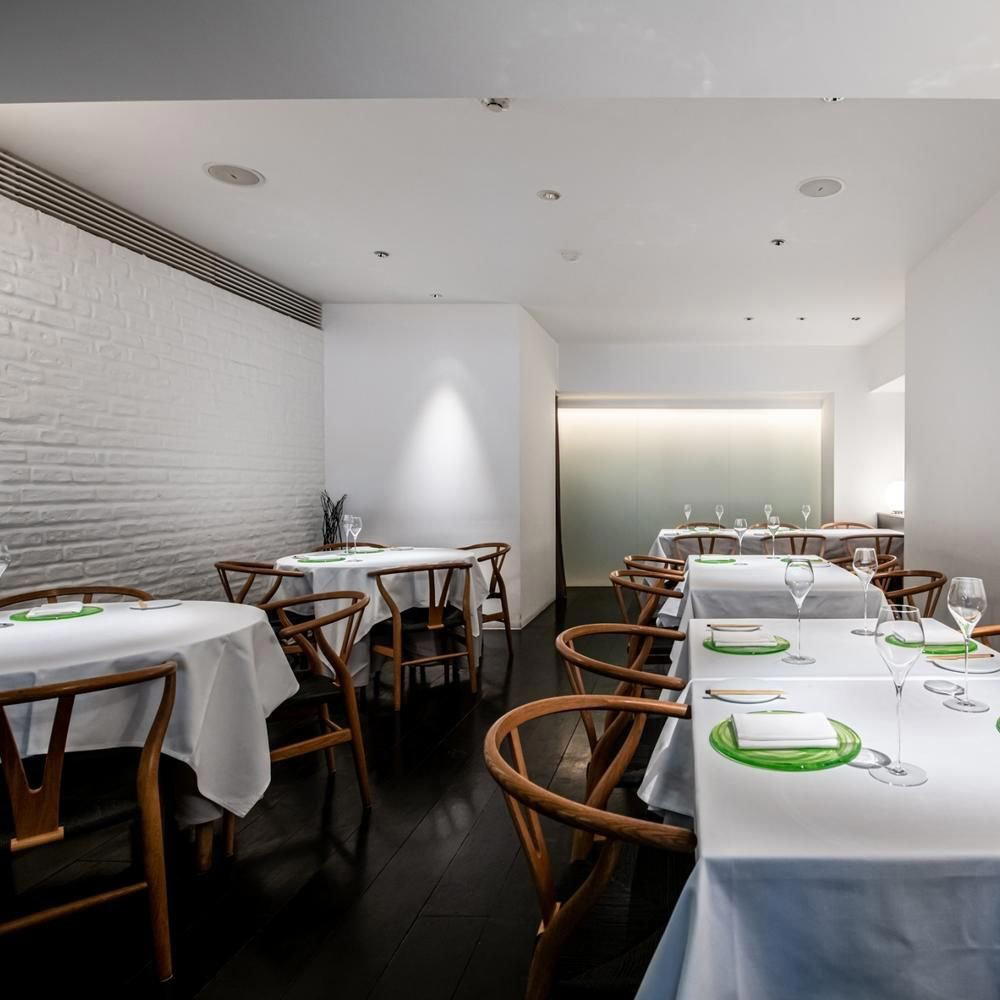
A Back-Alley Light in Fukushima
Osaka's Fukushima ward has become one of the city's more interesting dining corridors: close enough to Umeda to draw serious restaurant-goers, but loose enough in character that small, idiosyncratic rooms can take hold without the pressure of a high-foot-traffic address. It is the kind of neighbourhood where a single illuminated window at the end of an alley functions as its own invitation. La Lucciola operates in exactly that register. The name translates as 'firefly', and the metaphor is apt: a small, warm light that rewards those who seek it out rather than one that announces itself from a main street.
This matters for how you arrive at the meal. Walking to a back-alley counter in Fukushima carries a different expectation than booking a formal dining room on Midosuji. The prelude — the alley, the modest exterior — calibrates the experience before a single dish arrives. In Osaka's dining culture, where rooms like this earn outsized reputations through word of mouth and repeat visits rather than visibility, that calibration is part of the point.
The Structural Logic of the Meal
Italy and Japan have produced a specific category of cross-cultural restaurant that goes well beyond decorative fusion. The more considered examples use Japanese culinary structure, the sequencing logic of kaiseki or kappo, the discipline of the counter, the reverence for ingredient, as the architecture onto which Italian flavour and technique are grafted. La Lucciola belongs to that category. The counter seating is explicitly kappo-influenced, meaning the progression of courses follows a rhythm familiar to anyone who has sat before a Japanese chef at work: courses arrive in a sequence that reflects what is seasonal, what is prepared to order, and what benefits from being watched as it is made.
That sequencing matters enormously to how a meal here reads. In a conventional Italian tasting menu, the arc moves from antipasto through primi and secondi toward dessert, with wine pairings designed to match the escalating weight of dishes. At a kappo-influenced counter, the arc is more granular: smaller courses, more frequent transitions, a pace set by the chef rather than by a fixed menu format. The effect is that the Italian source material, pasta, cured meats, dairy-forward preparations, arrives in a form that Japanese diners, trained on multi-stage counter meals, find structurally intuitive. For international visitors familiar with kaiseki at places like Gion Sasaki in Kyoto, the sequencing logic will feel recognisable even as the flavours shift register entirely.
The charcoal grill is the other structural anchor. Live-fire cooking is not foreign to Italian tradition, but in a Japanese context it carries specific weight: binchotan charcoal, precise temperature management, the kind of patience with heat that marks grilling as a craft rather than a technique. The combination of kappo counter logic and charcoal fire places La Lucciola in a lineage of Japanese restaurants that treat European cuisine as a set of flavours to be expressed through Japanese method, rather than Italian restaurants that happen to use Japanese ingredients.
The Tableware as Editorial Statement
One of the more telling details in the restaurant's Michelin citation is the mention of kintsugi. The practice of repairing broken ceramics with gold or lacquer rather than discarding them is deeply embedded in Japanese craft philosophy: the repair becomes part of the object's history rather than something to be hidden. A chef who repairs his own pottery and serves on it is making a specific statement about material culture and the relationship between vessel and food. It also places the tableware in dialogue with the food itself: Japanese and Western serving pieces used according to what suits each dish, with no single aesthetic logic dominating.
This kind of attention to the container is common in Japanese fine dining, where the choice of plate, bowl, or lacquer piece is considered as carefully as the preparation of what sits on it. It is less common in Italian restaurant contexts, where the tableware tends toward uniformity and neutral presentation. La Lucciola's approach aligns it with peer rooms at the intersection of both traditions, such as cenci in Kyoto, where Italian-influenced cooking is presented through Japanese material sensibility.
Where La Lucciola Sits in Osaka's Italian Scene
Osaka carries a reputation as Japan's most food-serious city, but the city's Italian restaurant tier is less discussed than its Japanese fine dining or its raucous street food culture. The Michelin guide's recognition of multiple Italian rooms in Osaka reflects something real: a local appetite for European cuisine filtered through Japanese craft values. La Lucciola holds one Michelin star, placing it in a specific tier alongside other city addresses. Comparisons within Osaka's Italian category include il Centrino, La casa TOM Curiosa, P greco, YUNiCO, and a canto, each of which approaches the Italian-Japanese dialogue with a different set of emphases.
At the ¥¥¥ price point, La Lucciola occupies a tier shared with serious Japanese fine dining addresses in the city, including three-Michelin-starred kaiseki rooms. That pricing context is significant: guests are not choosing between Italian and French or Italian and casual; they are placing La Lucciola in a field that includes some of the most technically demanding cooking in Japan. Osaka's broader starred landscape also includes YUNiCO and, at the higher price tier, HAJIME (three Michelin stars, ¥¥¥¥) and La Cime (two Michelin stars, ¥¥¥¥). La Lucciola's one-star status at ¥¥¥ positions it as a more accessible point of entry into Osaka's serious counter-dining culture without the full financial commitment of the city's leading tables.
Visitors building a wider Kansai itinerary might cross-reference akordu in Nara for a different reading of European cuisine in a Japanese context, or look further afield to Harutaka in Tokyo and Goh in Fukuoka for a sense of how the country's counter-dining culture operates across different cities. For those interested specifically in the Italian-Japanese intersection at a regional level, 8 1/2 Otto e Mezzo Bombana in Hong Kong offers a useful counterpoint of how Italian fine dining anchors itself in a different Asian city context.
The Repeat-Visit Economy
Counter restaurants in Japan tend to generate a specific kind of loyalty. The format is inherently relational: the same seats, the same chef in view, the same rhythm of courses, with seasonal variation providing enough change to sustain regular visits without the disorientation of a constantly rotating concept. La Lucciola's Michelin recognition notes that many customers return specifically for the presence of the chef, which points to something beyond food quality as the driver of repeat business. In Osaka's dining culture, where certain rooms are effectively private clubs for their regulars, that dynamic has practical implications for first-time visitors.
This is consistent with the back-alley location and the absence of a prominent web presence. It also means that the room, when you are in it, is likely to contain people who know the chef and the format well, which adds a social texture that affects the atmosphere in ways a larger or more tourist-facing restaurant cannot replicate.
Know Before You Go
- Location: 5 Chome-7-3 Fukushima, Fukushima Ward, Osaka 553-0003
- Price range: ¥¥¥ (comparable to serious kaiseki and French counter rooms in the same tier)
- Awards: Michelin 1 Star (2024); Michelin Plate (2025)
- Format: Counter seating, kappo-influenced progression, charcoal grill
- Booking: Hours and booking method are not published online; contact via direct inquiry is advisable well in advance, particularly for weekend sittings
- Getting there: Fukushima Station (JR Osaka Loop Line) is the closest rail access to the ward; the restaurant's back-alley address rewards looking up the precise location before you travel
Further Reading
For a fuller picture of where La Lucciola fits in Osaka's dining scene, see our full Osaka restaurants guide. Osaka's hotel, bar, winery, and experience options are covered in our dedicated city guides: Osaka hotels, Osaka bars, Osaka wineries, and Osaka experiences. Beyond the Kansai region, 1000 in Yokohama and 6 in Okinawa represent other points in Japan's counter-dining geography worth considering alongside a trip to Osaka.
Cuisine and Credentials
A quick snapshot of similar venues for side-by-side context.
| Venue | Cuisine | Price | Awards |
|---|---|---|---|
| La LucciolaThis venue — the venue you are viewing | Italian | ¥¥¥ | Michelin 1 Star |
| HAJIME | French, Innovative | ¥¥¥¥ | Michelin 3 Star |
| La Cime | French | ¥¥¥¥ | Michelin 2 Star |
| Kashiwaya Osaka Senriyama | Japanese | ¥¥¥ | Michelin 3 Star |
| Taian | Kaiseki, Japanese | ¥¥¥ | Michelin 3 Star |
| Fujiya 1935 | Innovative | ¥¥¥¥ | Michelin 2 Star |
Recognition history
Dated appearances from independent guides and award organizations, with the underlying list record or original source where available.
Michelin Plate
Michelin
Michelin Plate
Michelin
Tabelog 100 #66 · No. 66
Tabelog · Tabelog 100 - Italian - WEST - 2025
Michelin 1 Star
Michelin
Continue exploring
More in Osaka
Restaurants in Osaka
Browse all →




Bars in Osaka
Browse all →




Hotels in Osaka
Browse all →




Wineries in Osaka
Browse all →
At a Glance
- Cozy
- Intimate
- Elegant
- Date Night
- Special Occasion
- Open Kitchen
Current opening hours
- Monday
- 6 PM–12 AM
- Tuesday
- Closed
- Wednesday
- 6 PM–12 AM
- Thursday
- 6 PM–12 AM
- Friday
- 6 PM–12 AM
- Saturday
- 6 PM–12 AM
- Sunday
- 6 PM–12 AM
Hours can change for holidays and private events. Last verified .
Warm, inviting atmosphere reminiscent of a renovated townhouse with a cozy, relaxing space featuring counter seating for intimate chef interaction.
Know Before You Go
- Getting there
- 5 Chome-7-3 Fukushima, Fukushima Ward, Osaka, 553-0003, Japan