Tachigui Sushi Yusho operates within Kanazawa's standing-sushi tradition, a format that strips the dining experience down to counter, fish, and rice — with none of the ceremonial distance that formal omakase imposes. In a city already recognized for the quality of its seafood supply from the Sea of Japan, the tachigui model compresses what matters into each piece. A practical entry point for serious sushi in one of Japan's most food-serious cities.
Pearl is the En Primeur Club membership app — saves, bookings, and concierge access live there. Same editors, same standards.
- Address
- 無量寺町ヲ52-番地, 金沢市, 石川県, 920-0332
- Directions
- Get directions
 Saves & bookings on Pearl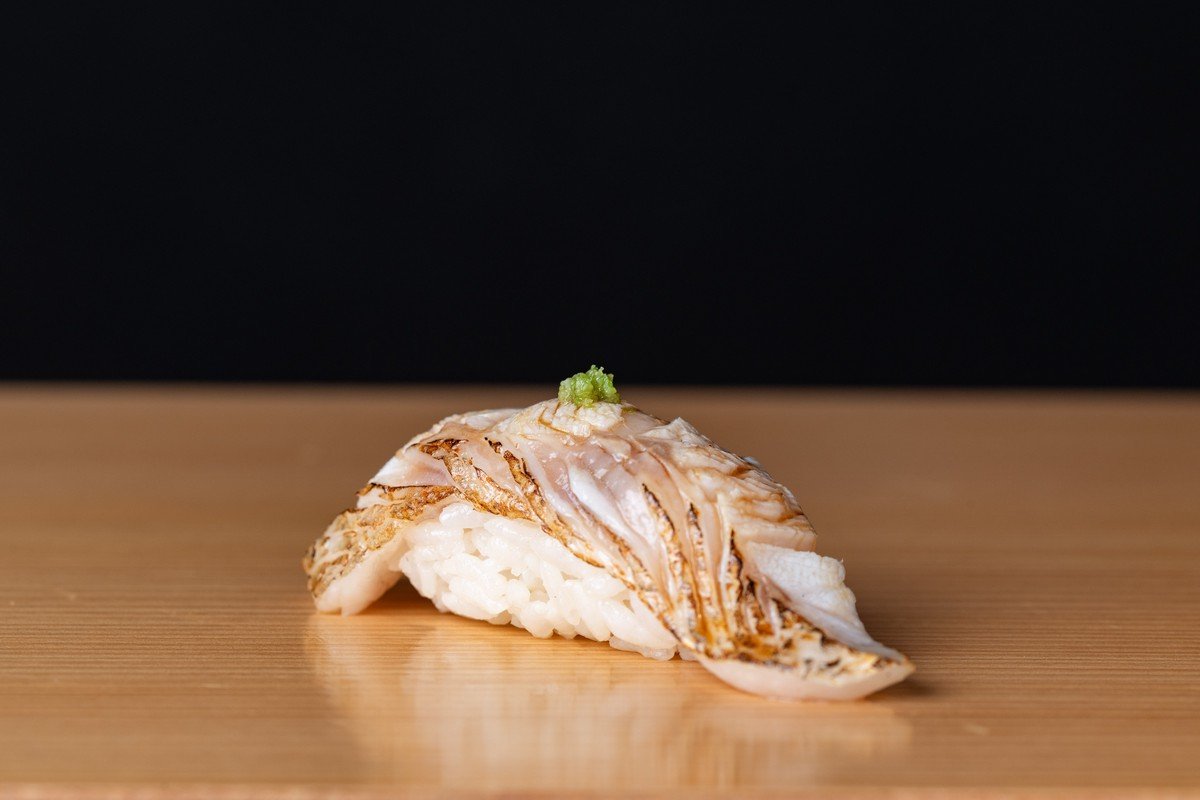
Standing at the Counter: What Tachigui Format Reveals About Sushi
There is a version of sushi dining that requires booking months ahead, a dress code conversation, and a considerable budget outlay before a single piece of fish arrives. Then there is tachigui — the standing-sushi format that predates the formalized omakase counter by decades and, in cities like Kanazawa, carries as much culinary seriousness in a radically compressed form. Tachigui Sushi Yusho occupies that second category, and the format itself tells you most of what you need to know about the restaurant's priorities.
Tachigui, literally "eating while standing," is not a compromise. It is a deliberate structure. The absence of seating removes the social scaffolding that can, in the wrong hands, become a substitute for the food itself. What remains is the sushi and the speed at which a skilled hand produces it. In Kanazawa's broader dining culture — one shaped by proximity to the Sea of Japan's fishing grounds and a long history of kaiseki traditions, this format functions as an honest test of ingredient quality and rice technique, because there is nowhere else to look.
Kanazawa as a Sushi Reference Point
To understand why a tachigui counter in Kanazawa carries weight, it helps to understand what the city's seafood supply actually represents. The Sea of Japan coast delivers cold-water species, snow crab, yellowtail, red snapper, and various white fish, that do not appear on the menus of Tokyo's Ginza counters in the same freshness condition. Kanazawa's Omicho Market, one of the country's most referenced fresh-fish markets, has supplied the city's restaurants for centuries, and proximity to that supply chain is a structural advantage that standing-sushi operations can use as directly as any formal restaurant.
Within Kanazawa's sushi scene, the comparison set for Tachigui Sushi Yusho is not the formal omakase counters, which operate in a different price bracket and booking universe. The relevant peers are the city's other standing and casual sushi operations, venues where the editorial question is whether the quality of the ingredient and the execution of the rice justify the format's stripped-down character. Kanazawa's dining scene more broadly includes kaiseki institutions like Kataori and Zeniya, which represent the formal end of the city's food culture. Tachigui Sushi Yusho sits at the opposite structural pole: same raw material sources, different delivery architecture.
For readers exploring Japan's broader fine-dining network, it is worth noting that the country's most formally recognized sushi sits at counters like Harutaka in Tokyo, while innovative Japanese cooking in other registers can be found at venues like HAJIME in Osaka or Gion Sasaki in Kyoto. The tachigui format is categorically different from all of them, and that difference is the point.
Menu Architecture: Piece by Piece
The structural logic of a tachigui menu is worth examining because it inverts many assumptions about how fine sushi should be sequenced and presented. Where omakase counters build a progression from lighter to richer, from white fish to fatty tuna, from vinegared preparations to grilled or warmed pieces, tachigui allows the diner to direct their own sequence. You point, it arrives, you eat, you move on. The chef's skill shows in execution speed and consistency rather than in dramatic narrative arc.
This is not a lesser form of menu architecture, it is a different one. The discipline required to produce well-seasoned rice and properly rested fish across dozens of rapid, continuous orders differs from the meditative focus of a twelve-seat omakase. Both are demanding. The tachigui model simply makes its demands visible in a different way: there is no ceremony to smooth over a slightly off piece of fish, no sake pairing conversation to redirect attention. The food has to perform immediately and without context.
In cities where the tachigui format has been diluted into convenience-food territory, this transparency can expose weak sourcing. In Kanazawa, where the supply chain is strong enough to support both kaiseki institutions and market-adjacent casual eating, the format rewards rather than punishes directness. Tachigui Sushi Yusho operates in that environment, and the menu's piece-by-piece structure reflects the confidence that implies.
Kanazawa's Wider Food Map
Kanazawa is a city that rewards systematic eating rather than single-destination tourism. Its food culture spans multiple registers: the formal kaiseki of established houses, the market-driven freshness of standing counters, and a broader category of local specialty restaurants that have developed around the region's agricultural and coastal produce. Amanatto Kawamura represents the city's confectionery tradition. Hakuichi reflects the gold-leaf craft culture that defines much of Kanazawa's artisanal identity. The yakitori counter at Hamagurizaka Maekawa approaches grilled skewers with the same ingredient seriousness that the city's sushi counters bring to fish.
At the other end of the register, Go! Go! Curry offers a window into Kanazawa's particular style of curry, the city claims a distinct regional variation that has developed its own national following. Dokkan and Budoonomori Les Tonnelles extend the city's reach into French-influenced cooking. Tachigui Sushi Yusho fits within this broader ecology as the format that makes Kanazawa's seafood supply directly accessible without requiring a formal booking or a kaiseki budget.
For readers building a broader regional itinerary, the Hokuriku and Chubu regions contain additional destinations worth cross-referencing: 一本木 石川製 in nearby Nanao and 湖畔荘 in Takashima represent the regional dining tradition at different scales. Further afield, Goh in Fukuoka and akordu in Nara illustrate how Japan's mid-tier cities have built serious dining identities beyond the Tokyo-Kyoto axis. The full context for Kanazawa's position within this national picture is available in our full Kanazawa restaurants guide.
Planning Your Visit
Specific booking information, current pricing, and operating hours for Tachigui Sushi Yusho are best confirmed directly with the venue, as standing-sushi operations frequently adjust their hours around market supply and seasonal fish availability. The tachigui format generally does not require advance reservations at the level that formal omakase counters do, though popular counters in Kanazawa can fill quickly during peak travel periods, particularly autumn and the snow crab season from November onward. Visiting Omicho Market before or after a standing-sushi meal gives useful context for what you are eating and at what point in the season. For broader comparisons across sushi formats and price tiers in Japan, Atomix in New York City and Le Bernardin in New York City demonstrate how different cities and cuisines approach the question of format discipline at the higher end of the market.
The Essentials
Comparable venues nearby, for context on price, style, and recognition.
| Venue | Cuisine | Price | Notes |
|---|---|---|---|
| Tachigui Sushi YushoThis venue — the venue you are viewing | Kanazawa Port, Standing Sushi | $$$ | Not listed |
| 東山 和今 | Kanazawa, Michelin-Starred Omakase Sushi | $$$ | Not listed |
| Koide | Not listed | $$$ | Kanazawa, Traditional Japanese Izakaya & Sake Bar |
| Dokkan | Not listed | $$$ | Kanazawa, Yakitori (Grilled Chicken Skewers) |
| 鮨 æ¨å ´è°· | Kanazawa, Traditional Kaga Kaiseki | $$$ | Not listed |
| BIRD | Not listed | $$$ | Kanazawa, Yakitori (Grilled Chicken Skewers) |
Continue exploring
More in Kanazawa
Restaurants in Kanazawa
Browse all →
Bars in Kanazawa
Browse all →
Hotels in Kanazawa
Browse all →
Wineries in Kanazawa
Browse all →
At a Glance
- Lively
- Casual
- Casual Hangout
- Solo
- Open Kitchen
- Sake Program
- Local Sourcing
- Sustainable Seafood
Current opening hours
- Monday
- 10 AM–3 PM
- Tuesday
- 10 AM–3 PM
- Wednesday
- Closed
- Thursday
- 10 AM–3 PM
- Friday
- 10 AM–3 PM
- Saturday
- 10 AM–3 PM
- Sunday
- 10 AM–3 PM
Hours can change for holidays and private events. Last verified .
Casual and lively market atmosphere with standing counter service amid fresh seafood bustle.
Know Before You Go
- Getting there
- 無量寺町ヲ52-番地, 金沢市, 石川県, 920-0332