Sushi Sugita occupies a basement counter in Nihonbashi Kakigara-cho, one of Tokyo's quieter addresses for serious omakase. The restaurant holds a reputation built on classical Edomae technique and the kind of unhurried pacing that defines the upper tier of Tokyo's sushi tradition. Advance booking is strongly advised; walk-in access is not realistic at this level of the market.
Pearl is the En Primeur Club membership app — saves, bookings, and concierge access live there. Same editors, same standards.
- Address
- 日本橋蛎殻町1-33-6 (ビューハイツ日本橋 B1F), 中央区, 東京都, 103-0014
 Saves & bookings on Pearl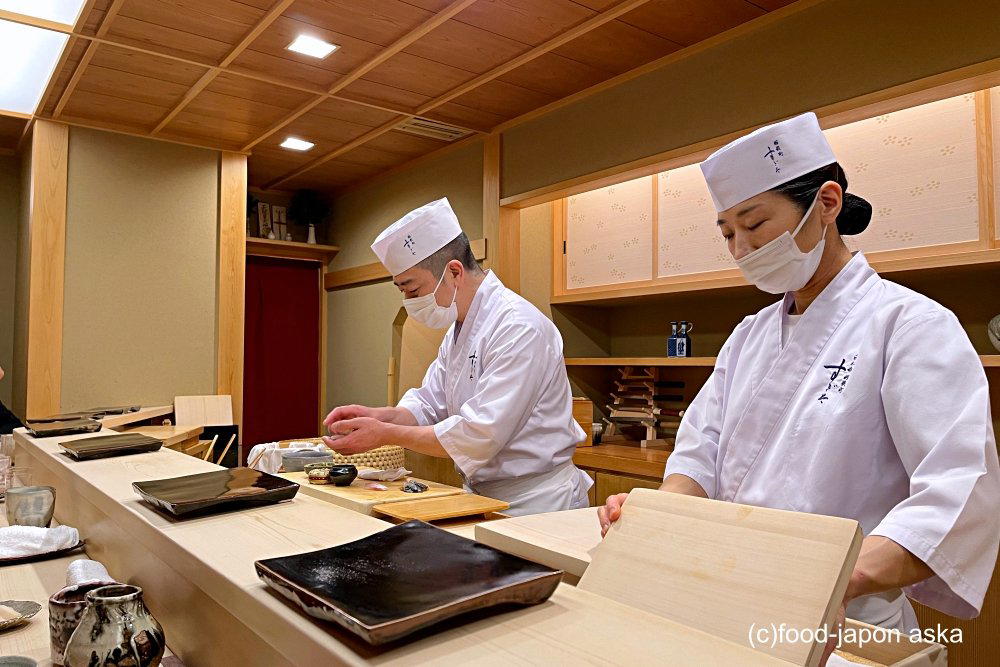
A Basement Counter in Old Edo
Sushi Sugita is a Traditional Edomae Omakase restaurant in Nihonbashi Kakigara-cho, Tokyo, priced at about $300 per person. The approach to Sushi Sugita sets the register before you sit down. Nihonbashi Kakigara-cho is not a dining district in any conventional sense. Finding the entrance to a basement counter here, away from the concentrated attention of Ginza or Minami-Azabu, is itself an act of self-selection that shapes who ends up at the counter.
Over the past decade, a cohort of high-commitment omakase restaurants has migrated or opened away from the traditional Ginza cluster, setting up in locations where rent pressure is lower but the expectation of the clientele remains as exacting. Harutaka in Ginza represents the more conventional geography; Sugita's Kakigara-cho address represents the alternative logic. The trade-off, from the diner's perspective, is a slightly longer journey in exchange for a room that feels insulated from the transactional energy of the city's most tourist-trafficked dining corridors.
The Architecture of an Edomae Meal
Edomae sushi, the tradition that developed in Edo-period Tokyo around preserving and conditioning fish rather than serving it raw and unworked, has a ritual structure that most serious counters in the city maintain with considerable discipline. The meal moves through a sequence of tsumami (small bites, often cooked or cured preparations) before transitioning to nigiri, and the pacing of that transition is one of the primary ways a counter signals its philosophy. Rush the tsumami and you signal efficiency; extend them with care and you signal that the kitchen has something to say before the rice even appears.
At counters like Sugita, the tsumami sequence carries as much technical ambition as the nigiri itself. Kohada (gizzard shad), a fish that functions almost as a litmus test for Edomae skill, requires precise salting and vinegar conditioning to balance its oiliness without erasing its character. Anago (sea eel), served warm rather than at room temperature, tests the kitchen's timing. These are not decorative courses, they are the meal's argument, laid out before the counter moves to rice.
The nigiri sequence at a counter of this standing typically covers a range determined by market availability and the chef's judgment on the day, rather than a fixed menu printed in advance. That improvisational structure within a disciplined framework is one of the defining features of the omakase format at its most serious, and it places the diner in a position of deliberate trust. You are not choosing; you are being guided. That dynamic is as much a part of the meal as the fish itself.
Where Sugita Sits in the Tokyo Sushi Tier
Tokyo's omakase market has stratified significantly over the past fifteen years. The entry tier, once anchored around ¥15,000-¥20,000 counters, now competes with a growing middle band in the ¥30,000-¥40,000 range, while the upper bracket, counters with sustained critical recognition and multi-month booking windows, operates at ¥50,000 and above per head. Sushi Sugita occupies the upper reaches of that structure.
Peer comparison matters here. Harutaka and Sugita share a competitive tier defined by classical Edomae lineage, small counter formats, and demand that consistently outpaces availability. Both operate at price points that position them against the city's most recognised sushi names. The distinction between counters at this level tends to come down to the chef's particular interpretation of Edomae tradition rather than any dramatic departure from it, subtle differences in rice temperature, seasoning ratios, and the sourcing of specific seasonal fish carry the weight that technique differences might carry at a less refined level.
For context on what this tier of Tokyo dining represents internationally, the comparison to a Le Bernardin in New York City is instructive not in cuisine but in structural ambition: both represent the upper bracket of their respective categories, where the format itself is the message. Atomix, also in New York, offers a useful parallel in how a tasting-counter format can become the vehicle for a deeply considered culinary argument.
Within Japan's broader fine dining geography, Sugita belongs to a pattern of Tokyo counters that anchor the national conversation around sushi. HAJIME in Osaka and Gion Sasaki in Kyoto represent parallel levels of seriousness in kaiseki, while Goh in Fukuoka demonstrates how regional cities have developed their own upper-tier dining identities. Sugita's position in Nihonbashi keeps it anchored to Tokyo's oldest culinary geography, which carries its own form of institutional weight.
Counters like Sugita exist alongside French kitchens such as L'Effervescence and Sézanne, kaiseki rooms including RyuGin, and innovative formats like Crony, each occupying a distinct position in a market that has no real international equivalent in terms of density and sustained technical quality.
Planning Your Visit
Nihonbashi Kakigara-cho is accessible from Suitengumae Station on the Hanzomon Line or Ningyocho Station on the Hibiya and Asakusa lines, placing the restaurant within reasonable reach of central Tokyo without being directly on a major tourist corridor. The basement location on Byu Heights Nihonbashi means the entrance requires attention, this is not a venue that announces itself from the street.
Booking at this level of the Tokyo sushi market operates on significant lead times. Counters in the same tier as Sugita typically require reservations placed one to three months in advance, often through a third-party reservation system that handles Japanese-language requests. Same-day or walk-in access is not a realistic expectation. Diners without Japanese language ability are advised to use a hotel concierge or a specialist reservation service familiar with this segment of the market.
Dress code is smart casual. Counter dining etiquette at this level follows standard omakase conventions: the meal proceeds at the chef's pace, conversation with the chef is welcome but should follow their lead, and mobile phones at the counter are generally kept out of sight.
Price and Recognition
Comparable venues nearby, for context on price, style, and recognition.
| Venue | Cuisine | Price | Notes |
|---|---|---|---|
| Sushi Sugita (日本橋 蛎殻町 すぎた)This venue — the venue you are viewing | Nihonbashi, Traditional Edomae Omakase | $$$$ | Not listed |
| Ichiyanagi | Chūō, Edomae Sushi Omakase | $$$$ | Not listed |
| Ginza Komon | Not listed | $$$$ | Chūō, Seasonal Japanese Kaiseki with Sake Focus |
| 福鮨 | Minato, Hokkaido-style Omakase Sushi | $$$$ | Not listed |
| Yugen Tei Shinjuku | Not listed | $$$$ | Shinjuku, High-end Yakiniku (Japanese BBQ) |
| 日本料理 つきぢ田村 | Chūō, Traditional Japanese Kaiseki | $$$$ | Not listed |











At a Glance
- Quiet
- Elegant
- Intimate
- Classic
- Sophisticated
- Special Occasion
- Date Night
- Chefs Counter
- Sake Program
- Sustainable Seafood
Steeped in Edo-esque nostalgia with an intimate nine-seat sushi counter in a quiet corner of Nihonbashi.