1 Michelin Star · Tabelog 100 #36
Our verdict
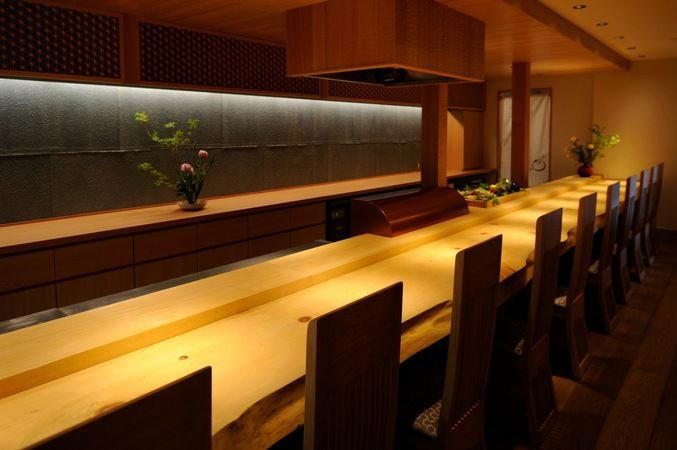
In the heart of Gion, Sushi Matsumoto runs on the logic of Edo-style nigirizushi transplanted into Kyoto's geisha district. The chef trained in Tokyo's tradition, seasons rice with red vinegar and salt rather than sugar, and salts fish to concentrate flavour rather than mask it. Drop-in customers are accepted, which is rare among the neighbourhood's more ceremonial dining rooms.

Pearl is the En Primeur Club membership app, where members save venues, book tables and use the concierge.
The menu
What to order
- Fatty tuna
- Mackerel
- Chawanmushi
- Jellied fugu
Edo Discipline in Kyoto's Geisha District
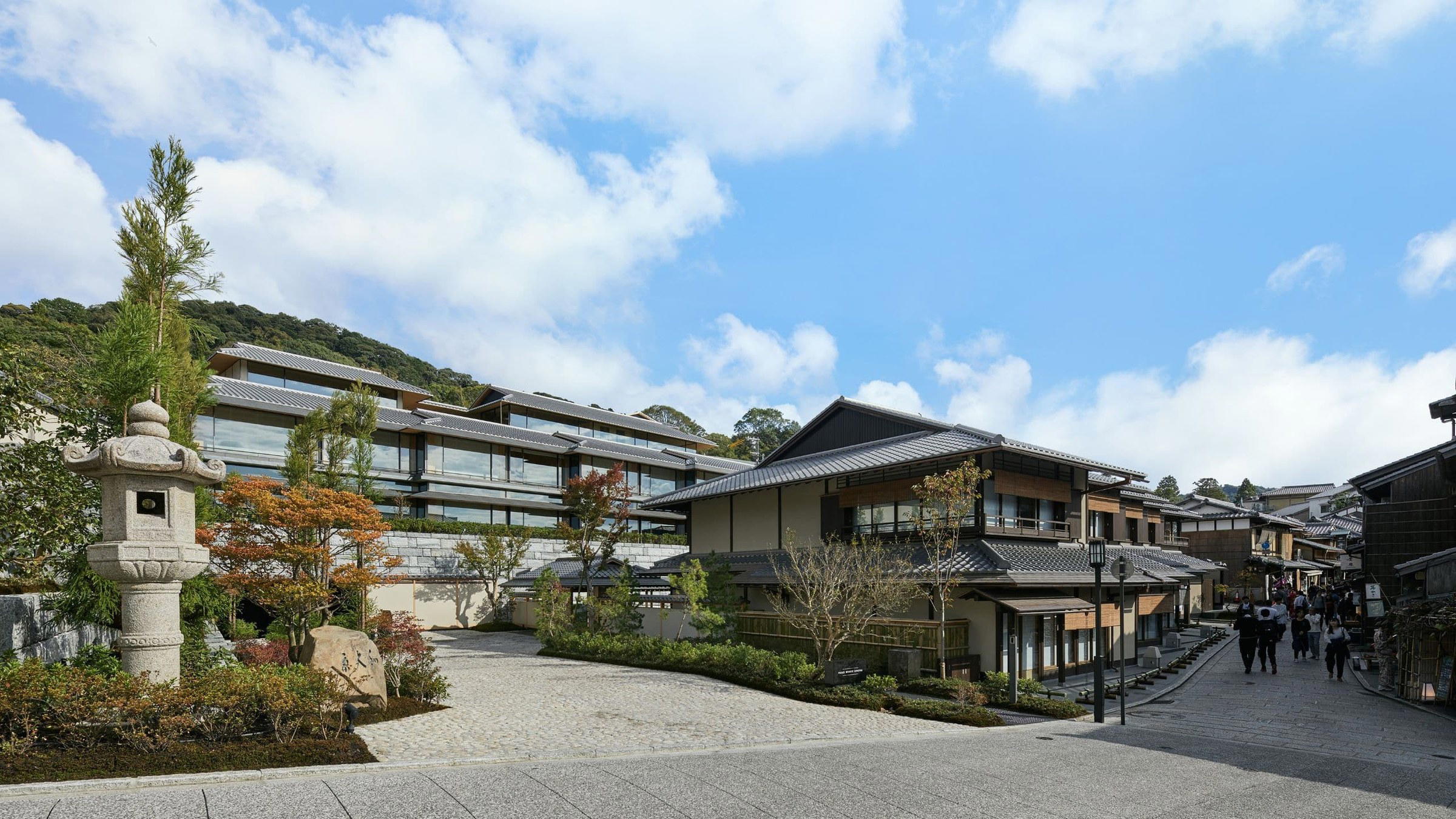
Kyoto's dining identity is so thoroughly dominated by kaiseki that a sushi counter operating on different principles can feel almost confrontational. The city's high-end restaurant rooms, places like Gion Sasaki, Kikunoi Honten, and Mizai, are built around the seasonal course format, refined service protocols, and an expectation that you will have booked weeks or months in advance. Sushi Matsumoto sits in Higashiyama Ward, inside the Gionmachi Minamigawa address that puts it among the city's most architecturally preserved streets, and it operates on a completely different set of rules.
The noren hanging at the entrance carries a single word: sushi. That editorial restraint is itself a statement. In a neighbourhood where many restaurants communicate through layered ceremony and anticipation, the straightforwardness of that one-word curtain signals that the cooking here answers to Tokyo rather than to Kyoto convention. The owner-chef greets guests with a traditional Edo-style irasshaimashi, a loud, direct welcome that traces its lineage back to the working sushi shops of old Edo, now Tokyo. That greeting style marks the counter's affiliation more clearly than any printed menu could.
The Logic of Edo Nigirizushi
Edo-style sushi has a technical rigour that distinguishes it from the broader category. The fundamentals: fish is salted deliberately to draw out and concentrate flavour rather than to preserve it; sushi rice is seasoned with red vinegar (akazu) and salt rather than sugar or white vinegar; and the format centres almost entirely on nigirizushi rather than on rolls or composed plates. This is the older framework, the one that preceded modern sushi's drift toward spectacle and supplementary courses.
At Sushi Matsumoto, those techniques are applied as received from the chef's Tokyo apprenticeship. The red vinegar seasoning produces a rice with more colour and a sharper, more mineral note than the milder white-vinegar preparations that dominate contemporary omakase counters. The salting approach, when executed correctly, changes the texture and intensity of the fish in ways that are immediately legible to anyone who has spent time eating across the spectrum of serious sushi. These are not stylistic flourishes; they are inherited methods that the chef was taught and has chosen not to revise.
For context on how differently Kyoto's dining scene approaches seafood and rice, the comparison is instructive. The kaiseki rooms at Hyotei or Isshisoden Nakamura treat fish as one element within a long, multi-course architecture, where presentation, seasonality, and symbolic weight each carry equal importance. At an Edo-style counter, fish and rice are the architecture. Everything else is peripheral.
Drop-In Access in a Reservation-Led City
One of the more notable characteristics of Sushi Matsumoto within the Gion context is that drop-in customers are accepted. Kyoto's dining culture at the upper end runs almost entirely on reservations, and even mid-range restaurants in Higashiyama Ward frequently require advance booking, particularly during the high seasons of spring cherry blossom and autumn foliage. A counter that accepts walk-ins in this postcode is operating against the prevailing logic of the neighbourhood.
This is consistent with the Edo sushi shop tradition, where counters historically served as efficient, accessible operations rather than destination experiences requiring months of planning. Visitors to Kyoto who are already building itineraries around kaiseki reservations at the kaiseki tier, or considering the broader dining circuit that runs from HAJIME in Osaka to akordu in Nara, can treat Sushi Matsumoto as a counter where a spontaneous meal is genuinely possible, without the weeks-in-advance booking window that governs most serious eating in the Kansai region.
For reference, Tokyo counters working in the same Edo tradition, such as Harutaka, typically operate with stricter booking requirements. The drop-in policy here is a function of the counter's philosophy rather than a sign of availability. It reflects the original spirit of the format: sushi as something you eat at a counter, on your terms, without ceremony.
On the Wine Question
The editorial angle worth addressing directly: Edo-style sushi counters and wine lists do not traditionally overlap. The pairing conventions at a counter like this run toward sake, beer, and, at most, a small selection of Japanese whisky. Red vinegar-seasoned shari and the concentrated, salt-forward profiles of properly prepared nigiri are calibrated against fermented rice beverages, not against cellar programs.
This is a structural point about the format rather than a limitation of the counter. Compare it to how Le Bernardin in New York City approaches wine as a central editorial commitment, or how Atomix builds beverage pairings into the tasting architecture. At a counter working inside the Edo tradition, the beverage program is intentionally minimal, and that restraint is part of the discipline. If sake is available, it will likely be chosen to complement rather than compete with the rice seasoning. That is the correct pairing logic for the format.
Travellers who want to understand the full scope of Kyoto's beverage culture alongside its food scene can consult the Kyoto bars guide and the Kyoto wineries guide for context on where wine sits within the region's broader drinking landscape.
Where Sushi Matsumoto Sits in the Kyoto Dining Picture
The high end of the Kyoto dining market is concentrated in kaiseki at the ¥¥¥¥ tier. Venues like Gion Sasaki and Kikunoi Honten represent the formal, multi-course framework that defines the city's culinary reputation internationally. Sushi Matsumoto does not compete in that tier. It operates as a specialist counter with a distinct format, a specific lineage, and a different set of expectations on both sides of the counter.
That positioning is worth understanding before visiting. This is not a kaiseki alternative or a casual supplement to a kaiseki trip. It is a counter executing a specific Tokyo tradition inside a city that does not otherwise offer it, in a neighbourhood where the contrast between the format and the surroundings is part of the experience. The soul of Edo operating inside Gion is, in that sense, the entire point.
For a fuller orientation to serious eating in Kyoto, the Kyoto restaurants guide maps the city's dining tiers and neighbourhoods. Those building a wider Kansai itinerary can also reference the dining scenes in Fukuoka, Yokohama, and Okinawa for the broader regional picture. For accommodation planning, the Kyoto hotels guide and the Kyoto experiences guide cover the rest of the trip.
Planning Your Visit
Sushi Matsumoto is located at 570-123 Gionmachi Minamigawa in Higashiyama Ward, on the preserved street running through the heart of the geisha district. The counter accepts drop-in customers, which makes advance reservation less critical than at most serious dining addresses in Kyoto. That said, arriving earlier in a service rather than later gives you the most consistent access to the full range of preparation. The Gion area is walkable from central Kyoto and well-served by bus routes along Shijo-dori.
Frequently asked questions
Where is Sushi Matsumoto in Kyoto?
Sushi Matsumoto is located at 570-123 Gionmachi Minamigawa, Higashiyama Ward, Kyoto, 605-0074, Japan, Kyoto.
Does Sushi Matsumoto have a Michelin star or similar recognition?
Sushi Matsumoto has received recognition including: Just one character, ‘sushi’, graces the noren. The owner-chef calls out a hearty ‘Irasshaimashi!’, an Edo-style welcome that proudly reflects where he apprenticed. He salts his fish thoroughly to eliminate moisture, concentrating the flavou….
What's the signature dish at Sushi Matsumoto?
There is no single showpiece piece, the counter is built around nigirizushi across the full range of preparations. The defining technique runs through every piece: fish salted to concentrate flavour, rice seasoned with red vinegar and salt rather than sugar. That discipline, carried directly from the owner-chef's Edo-tradition apprenticeship, is the throughline.
How hard is it to get a table at Sushi Matsumoto?
Easier than almost anything comparable in Gion. The counter accepts drop-in customers, which sets it apart from the heavily booked kaiseki rooms that define dining in this neighbourhood. Arriving early or outside peak meal hours improves your chances, though no reservations policy or hours data is currently confirmed.
Budget and Context
| Venue | Cuisine | Price | Awards | Notes |
|---|---|---|---|---|
| Sushi MatsumotoThis venue (the venue you are viewing) | Traditional Edo-mae Omakase | $100–150 | 1 Michelin Star · Tabelog 100 #36 | Not listed |
| Gion Sasaki | Modern Kaiseki | $300–500 | 3 Michelin Stars · La Liste Top Restaurants | Kaiseki, Japanese |
| cenci | Innovative Italian-Japanese Fusion | $100–150 | 1 Michelin Star · World's 50 Best #76 | Italian |
| Ifuki | Sumibi Kappo Kaiseki | $200–300 | 2 Michelin Stars · La Liste Top Restaurants | Kaiseki |
| Kyokaiseki Kichisen | Kyoto Kaiseki | $200–300 | 2 Michelin Stars · La Liste Top Restaurants | Japanese |
| Kyo Seika | Modern Chinese Fine Dining | $150–200 | 1 Michelin Star · Tabelog Bronze #216 | Chinese |
Recognition history
Dated appearances from independent guides and award organizations, with the underlying list record or original source where available.
Michelin 1 Star
Michelin
Tabelog 100 #36 · No. 36
Tabelog · Tabelog 100 - Sushi - WEST - 2025