
1 Michelin Star
Our verdict
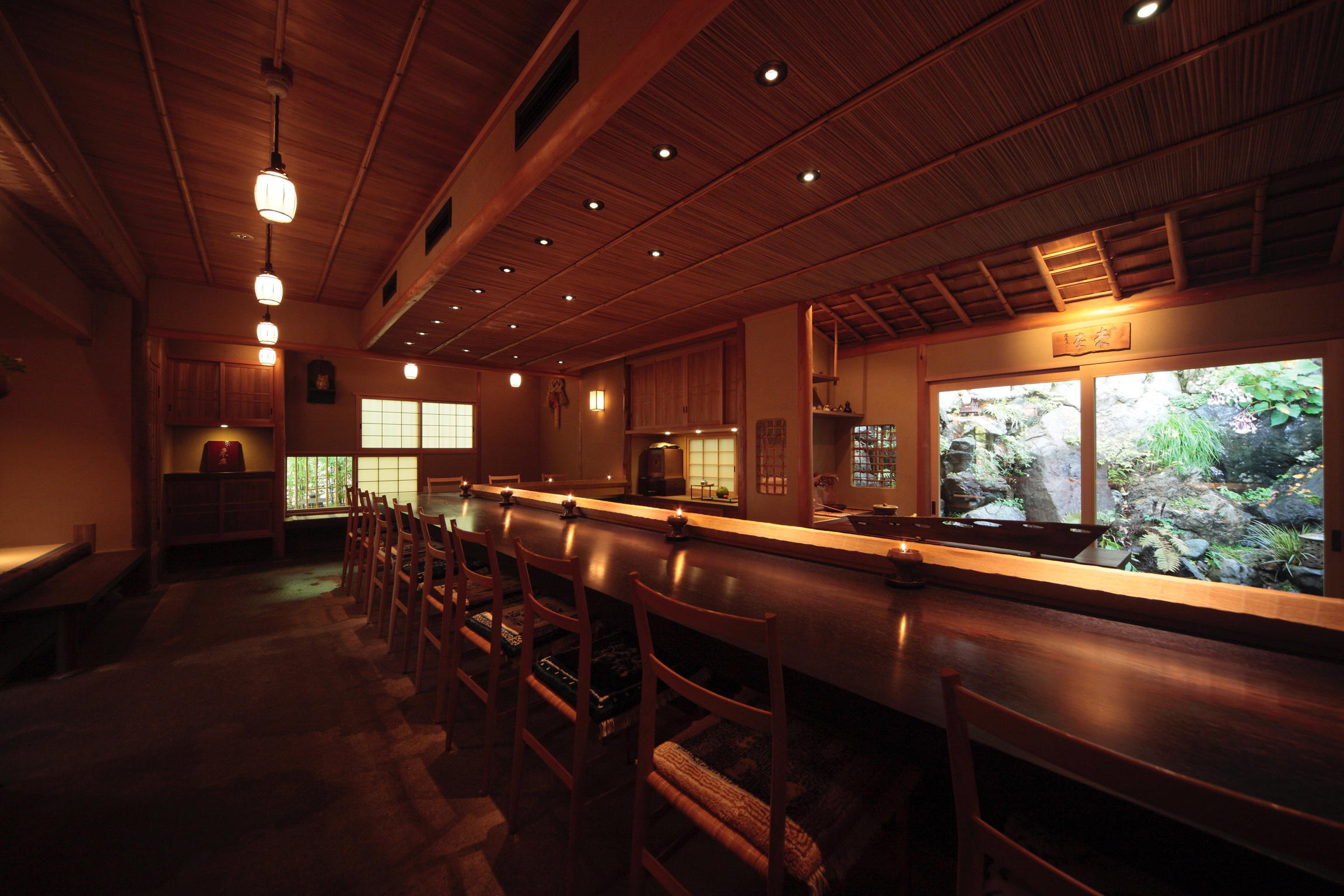
At Kako Okamoto, the art of sake takes center stage in a quietly exquisite setting where each dish arrives as a bespoke companion to the glass in hand. Rather than a single platter, a cadence of freshly prepared appetizers—like a silky, spicy pilchard stew crowned with finely chopped bonito—unfolds course by course, echoing the nuances of each pour. The owner-chef, a devout sake connoisseur, pours from grand isshobin bottles with the tenderness of presenting a cherished heirloom, inviting guests to experience an elegant, exploratory tasting by the cup. For those who prize subtlety, precision, and the rare pleasure of pairings guided by passion, Kako Okamoto offers a deeply personal encounter with Japan’s most storied beverage.

Pearl is the En Primeur Club membership app, where members save venues, book tables and use the concierge.
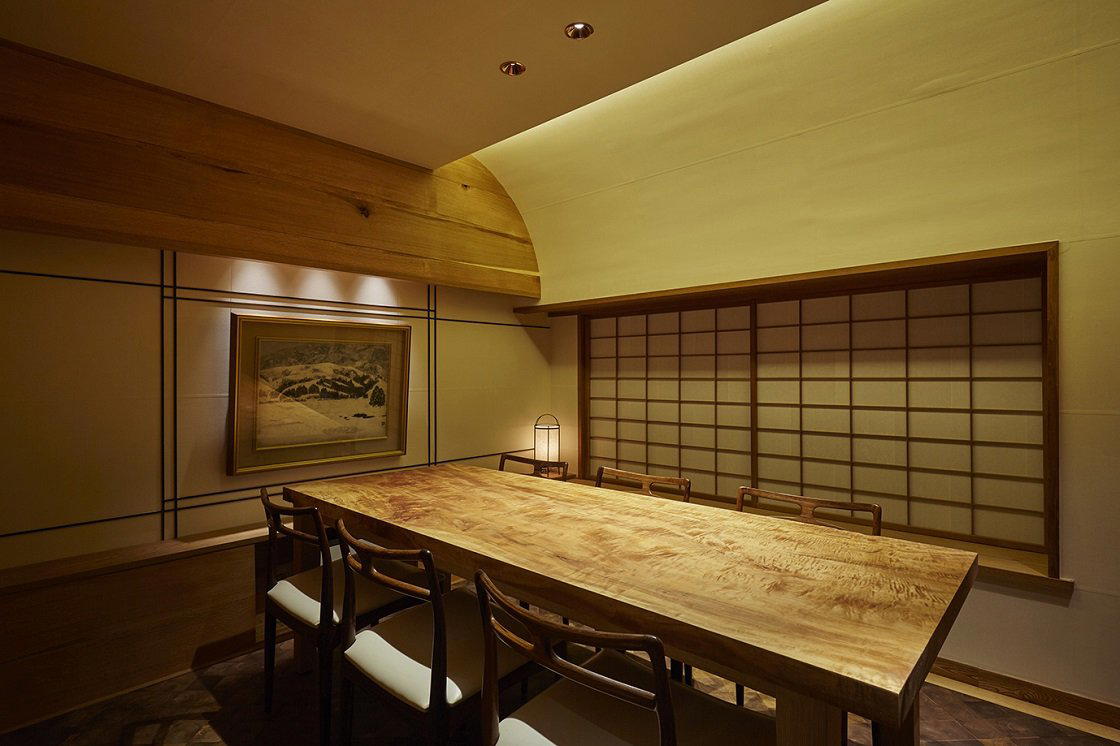
Higashiyama at the Counter: Kappo in Kyoto's Most Layered District
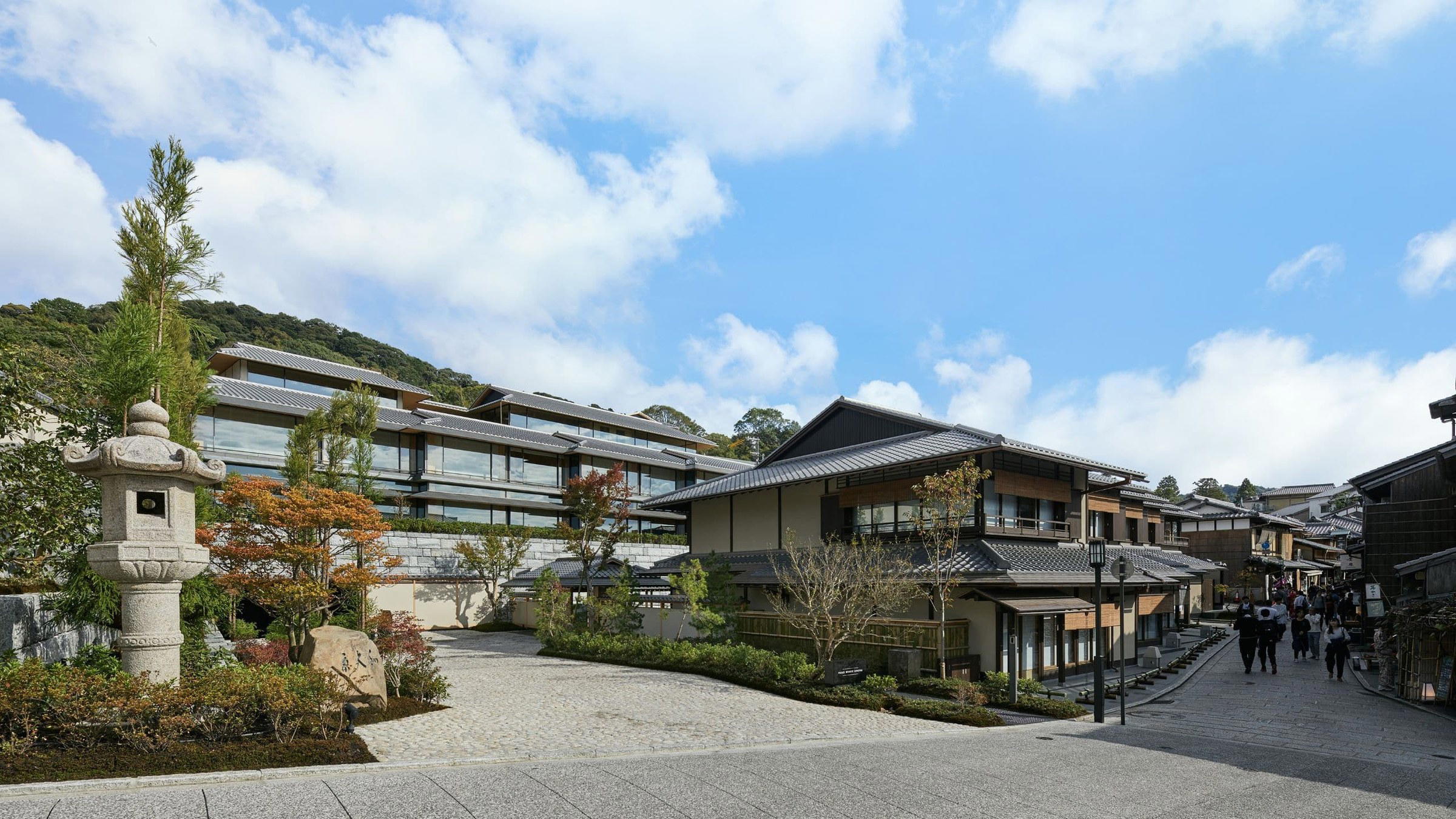
The walk to Kako Okamoto sets a particular tone. Higashiyama Ward, where the address sits along Tokiwacho, is Kyoto's most atmospherically dense neighbourhood: stone-paved lanes, preserved machiya frontages, and a pace that slows almost involuntarily as you move deeper into it. Kappo restaurants in this part of the city don't announce themselves loudly, and Kako Okamoto follows that convention. You arrive at the address, not a destination marketed to you.
Kappo, as a format, sits between the rigid seasonality of kaiseki and the informality of izakaya. The chef cooks in front of guests, dishes arrive in a rhythm set by the kitchen rather than a fixed sequence, and the conversation between cook and counter is part of the meal. In Kyoto, where kaiseki institutions like Gion Matayoshi and Kenninji Gion Maruyama represent one pole of the spectrum, kappo occupies a position that is more fluid and, in the right hands, more intimate.
The Miyazawa Chain and What That Lineage Signals
Kako Okamoto is documented as the original establishment of the Miyazawa chain of kappo restaurants, a detail that carries real weight in how Kyoto's kappo scene is structured. Chain lineage in Japanese fine dining does not function the way a franchise brand operates in Western hospitality. It signals a shared disciplinary tradition: recipe discipline, mise-en-place standards, and a culinary vocabulary that passes between houses. Isshisoden Nakamura is a comparable example of this inherited-house model in Kyoto, where institutional continuity is itself a form of credential.
For the Michelin guide, which awarded Kako Okamoto one star in 2024, that lineage context matters. The guide does not simply reward novelty; it rewards consistency and technical command. A one-star designation at the ¥¥¥ price tier places Kako Okamoto in a competitive set that includes Kikunoi Roan and Kodaiji Jugyuan, venues where the value-per-yen calculation is a meaningful part of the editorial story. At this tier, a star carries more proportional weight than at the ¥¥¥¥ level, where the designation is almost expected.
The Menu: Layered Composition, Citrus Logic, and the Sesame Tofu
The kitchen at Kako Okamoto works within an identifiable framework. Dishes are built across multiple ingredients, with citrus and tart fruits used to cut through and clarify rather than to ornament. This is not the clean-line minimalism that defines some of Kyoto's highest-end kaiseki tables; it is a more complex compositional approach where brightness is a structural element of the dish.
The baked sesame tofu has become the item most associated with the restaurant, accompanied by rice served immediately after cooking. In Japanese culinary culture, freshly cooked rice served at that exact moment is a deliberate statement about timing and priority. It is not a garnish; the pairing with sesame tofu is the point. Soba dishes, crafted with seasonal ingredients, extend the kitchen's commitment to produce that changes with the calendar rather than a fixed menu held across months.
In context, that kind of posting typically demands cooking across a wide range of occasions and audiences, including formal diplomatic dinners where presentation standards are high and the margin for error is narrow. That background surfaces in the layered construction of plates at Kako Okamoto, dishes that carry a density of thought without becoming heavy.
Lunch vs. Dinner: How the Two Services Differ
Kappo restaurants in Kyoto operate differently across the two services, and that distinction matters for how you plan a visit. Lunch at this tier typically offers a more condensed format, often at a lower price point, with the kitchen running a tighter sequence of dishes designed to move at a pace suited to daytime visitors. The mood at lunch leans practical: the light in Higashiyama is at its clearest in the early afternoon, the neighbourhood has not yet shifted into its evening register, and the counter conversation tends to be less extended.
Dinner in kappo is where the format opens up. The kitchen has more latitude to introduce dishes that require longer preparation, and the pace slackens into something more deliberate. For a restaurant like Kako Okamoto, where the complexity of composition is central to the cooking, an evening sitting gives those layered dishes the attention they are designed to receive. The seasonal soba, the baked sesame tofu arriving before rice cooked and served immediately, the citrus-bright courses in between: these are better held at a pace where each has room.
From a value perspective, lunch represents an entry point into the Miyazawa kappo tradition at a lower spend than a full evening sitting. At the ¥¥¥ tier, even dinner remains accessible compared to Kyoto's leading kaiseki rooms, which frequently operate at ¥¥¥¥ and above. Venues like Gion Matayoshi demonstrate the ceiling of that price tier; Kako Okamoto positions itself well below it while holding Michelin recognition.
Kako Okamoto in Kyoto's One-Star Field
Within Kyoto's one-star field at the ¥¥¥ tier, Kako Okamoto occupies a specific position: a Japanese kitchen with documented institutional lineage, a signature dish that has achieved public recognition, and a compositional style that sets it apart from the more austere end of the city's kappo and kaiseki spectrum. Comparable single-star establishments in the region, such as akordu in Nara, operate on similarly concentrated menus with defined signatures, though across entirely different culinary traditions.
For readers building a multi-city Japan itinerary, the broader context is useful. HAJIME in Osaka and Harutaka in Tokyo sit in different genre brackets, as does Myojaku and Azabu Kadowaki in Tokyo. Kako Okamoto is not trying to compete in that register. It is a Kyoto kappo counter with clear identity, a Michelin star, and a price tier that makes it one of the more accessible starred restaurants in the city.
What the Seasonal Timing Means Here
Kyoto's ingredient seasons are sharp. Spring brings bamboo shoots and mountain vegetables; autumn shifts the kitchen toward mushrooms, yuzu, and root preparations. The documented use of seasonal ingredients in the soba and across the broader menu means the experience changes meaningfully with the calendar. Visiting in a shoulder season, when Higashiyama is less crowded but Kyoto's produce markets are still running full lines, gives the leading combination of neighbourhood atmosphere and menu quality. Late autumn, from October through mid-November, is typically when the most complex seasonal produce is available and the area around Tokiwacho is at its least congested.
For broader planning across the city, see our full Kyoto restaurants guide, as well as our guides to Kyoto hotels, Kyoto bars, Kyoto wineries, and Kyoto experiences. For restaurants further afield, Goh in Fukuoka, 1000 in Yokohama, and 6 in Okinawa each represent distinct regional expressions of Japanese fine dining worth considering alongside a Kyoto itinerary.
Know Before You Go
- Address: 470-4 Tokiwacho, Higashiyama Ward, Kyoto, 605-0874, Japan
- Cuisine: Japanese (Kappo)
- Price tier: ¥¥¥
- Awards: Michelin 1 Star (2024)
- Lineage: Original establishment of the Miyazawa kappo chain
- Booking:
- Can I walk in to Kako Okamoto?
- At a Michelin-starred kappo counter in Higashiyama, walk-in availability is possible at quieter periods but not reliably so.
- What has Kako Okamoto built its reputation on?
- Three things, in combination: its position as the founding house of the Miyazawa kappo chain, a Michelin star awarded in 2024, and a menu approach that is distinctive within the ¥¥¥ tier of Kyoto dining. The baked sesame tofu has become a signature understood outside the restaurant's immediate following, and the chef's documented experience at an ambassador's residence has shaped a compositionally dense cooking style that differs from the cleaner minimalism of many Kyoto kappo and kaiseki tables. At this price point, that combination of lineage, recognition, and defined culinary identity gives the restaurant a clear place in the city's fine dining structure.
Frequently asked questions
Where exactly is Kako Okamoto?
Kako Okamoto is located at 470-4 Tokiwacho, Higashiyama Ward, Kyoto, 605-0874, Japan, Kyoto.
What kind of recognition has Kako Okamoto received?
Kako Okamoto has received recognition including: The original establishment of the Miyazawa chain of kappo restaurants. Jiki Miyazawa is best known for its famous baked sesame tofu, accompanied by rice served at its freshest, right after cooking. Other menu items are conceived by the chef….
What do regulars order at Kako Okamoto?
The baked sesame tofu is the dish most closely associated with Kako Okamoto, documented as the signature of the Miyazawa kappo chain of which this is the original establishment. Beyond that, the kitchen builds seasonal plates across multiple ingredients, using citrus and tart fruits to lift compositions, alongside soba crafted from seasonal produce.
What's the price range at Kako Okamoto?
Pricing at Kako Okamoto is listed as ¥¥¥.
Can I walk in to Kako Okamoto?
Kappo restaurants at the Michelin one-star level in Kyoto almost universally require advance reservations, and Kako Okamoto's position as the founding house of the Miyazawa chain makes it a sought-after seat. No walk-in policy is documented; contacting the restaurant directly before travel is advisable.
What has Kako Okamoto built its reputation on?
Two things: institutional lineage and a legible culinary framework. As the original Miyazawa kappo establishment, it carries the chain's founding identity. Its 2024 Michelin star reflects a kitchen that layers dishes across numerous ingredients, using citrus brightness and fruit tartness as structural tools rather than garnish, with a menu philosophy shaped by the chef's experience at the ambassador's residence in Poland.
Similar Picks
| Venue | Cuisine | Price | Awards | Notes |
|---|---|---|---|---|
| Kako OkamotoThis venue (the venue you are viewing) | Kaiseki with Sake Pairing | $100–150 | 1 Michelin Star | Not listed |
| Gion Sasaki | Modern Kaiseki | $300–500 | 3 Michelin Stars · La Liste Top Restaurants | Kaiseki, Japanese |
| cenci | Innovative Italian-Japanese Fusion | $100–150 | 1 Michelin Star · World's 50 Best #76 | Italian |
| Ifuki | Sumibi Kappo Kaiseki | $200–300 | 2 Michelin Stars · La Liste Top Restaurants | Kaiseki |
| Kyokaiseki Kichisen | Kyoto Kaiseki | $200–300 | 2 Michelin Stars · La Liste Top Restaurants | Japanese |
| Kyo Seika | Modern Chinese Fine Dining | $150–200 | 1 Michelin Star · Tabelog Bronze #216 | Chinese |
Recognition history
Dated appearances from independent guides and award organizations, with the underlying list record or original source where available.
Michelin 1 Star
Michelin
Full recognition history (2 entries)
Michelin 1 Star
Michelin
Continue exploring
More in Kyoto
Restaurants in Kyoto
All restaurants in Kyoto →

Bars in Kyoto
All bars in Kyoto →


Hotels in Kyoto
All hotels in Kyoto →
Wineries in Kyoto
Browse all →
Details
- Intimate
- Elegant
- Sophisticated
- Special Occasion
- Date Night
- Chefs Counter
- Sake Program
- Counter Dining
- Sake
Current opening hours
- Monday
- Closed
- Tuesday
- 5:30–10 PM
- Wednesday
- 5:30–10 PM
- Thursday
- 5:30–10 PM
- Friday
- 5:30–10 PM
- Saturday
- 5:30–10 PM
- Sunday
- 5:30–10 PM
Hours can change for holidays and private events. Hours as of .
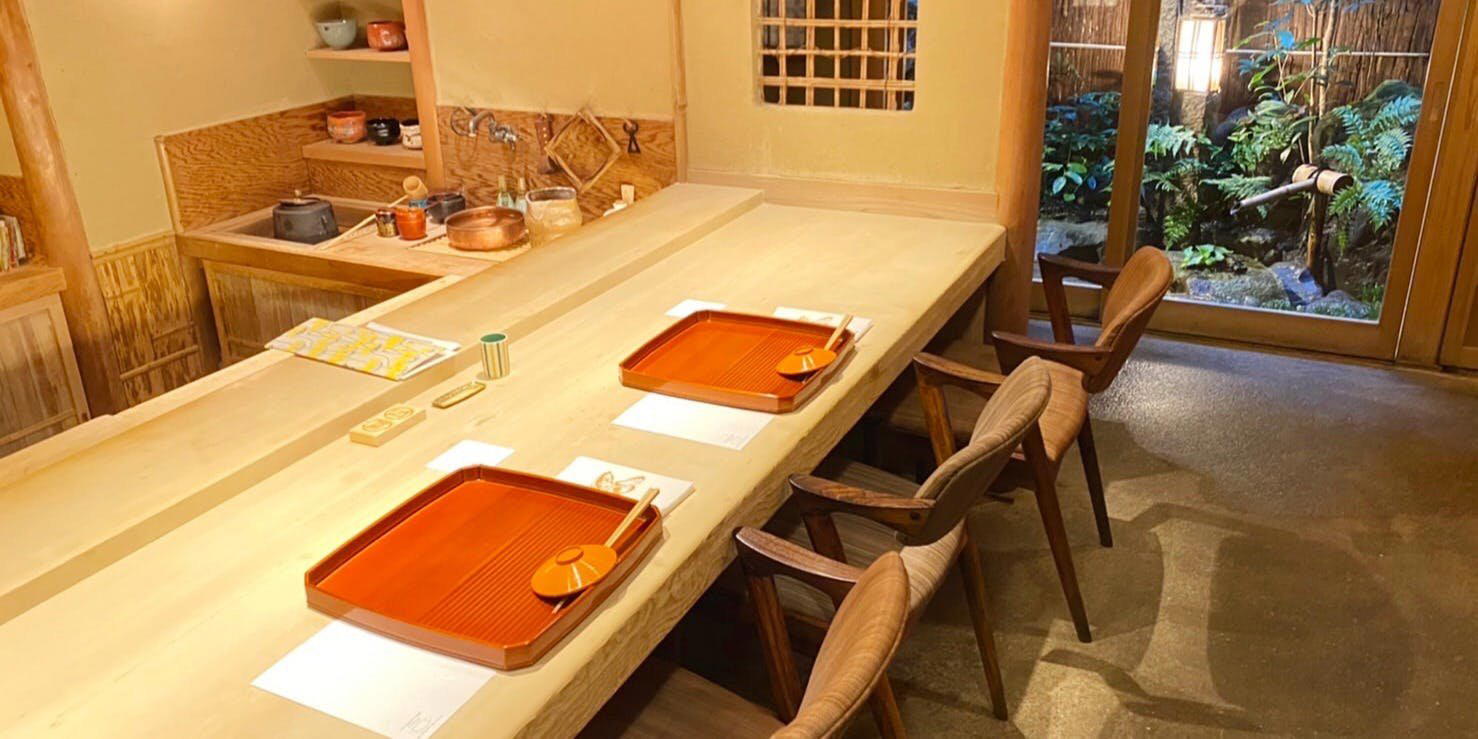
Serene and refined counter seating with a focus on intimate, unhurried interactions and the chef's craftsmanship.