
Among Osaka's mid-tier omakase counters, Sushi Ichiei in Kita Ward operates with the methodical discipline of traditional Edomae sushi while drawing on the regional produce that defines Kansai dining.
Pearl is the En Primeur Club membership app — saves, bookings, and concierge access live there. Same editors, same standards.
- Address
- Japan, 〒530-0037 Osaka, Kita Ward, Matsugaecho, 2−1 隆勝ビル
- Phone
- +81 6-6357-5489
- Directions
- Get directions
 Saves & bookings on Pearl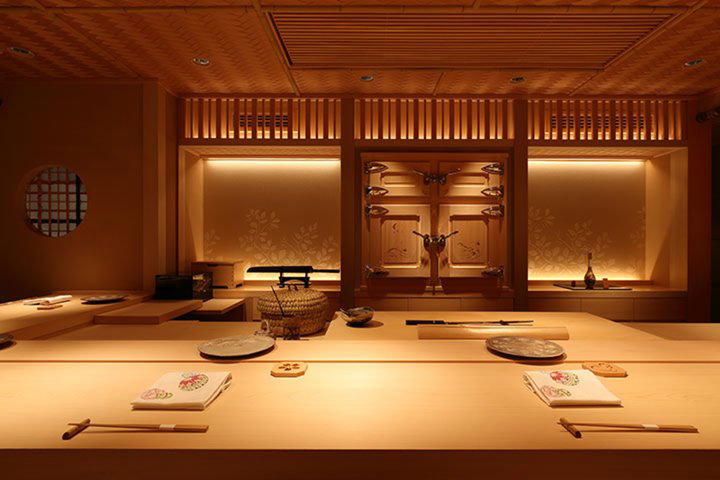
The Counter Format in Osaka's Omakase Tier
Osaka's sushi scene occupies an interesting position relative to Tokyo's. Where Ginza and Shimbashi remain the reference points for Edomae orthodoxy at the highest price tier, Osaka's mid-range omakase counters, priced at ¥¥¥ rather than ¥¥¥¥, have developed a quieter but consistent identity built around Kansai produce and traditional craft. In Kita Ward, several of these counters have earned Michelin recognition not for reinvention but for the opposite: reliable, well-executed sushi that prioritises ingredient quality and technique over spectacle. Its price point places it alongside Sushi Harasho, Matsuzushi, and Sushi Hoshiyama in a competitive set that competes on craft and sourcing rather than destination-dining theatre.
Local Ingredients Inside an Orthodox Framework
The editorial angle here is worth examining carefully. Osaka's proximity to the fishing ports of the Seto Inland Sea, the markets of Kuromon Ichiba, and the broader Kansai agricultural region creates a natural advantage for any counter that commits to local sourcing. The question, at a mid-tier omakase, is how those ingredients are handled: whether they are folded into a loosely contemporary format or held inside the structural discipline of Edomae sushi, which has its own logic around ageing, temperature, and rice seasoning imported from Tokyo's tradition.
At Sushi Ichiei, the framing is orthodox. The sequence follows the conventional omakase structure, moving from appetiser courses through to nigiri, with the transition marked by the arrival of ginger wrapped in nori, a small ritual that functions as a palate reset between the two phases. This kind of structural signalling is characteristic of counters trained in or deeply influenced by Edomae method, where the progression of a meal carries its own grammar. The fact that it persists here, at a neighbourhood-level Kita Ward counter, says something about the depth of that tradition's reach beyond Tokyo.
The local ingredient that defines the menu is botan shrimp, served as tsukuri, the signature item and, by the counter's own reckoning, the piece that most clearly states its identity. Botan shrimp, prized for their sweetness and the richness of their roe, are native to the Sea of Japan and the waters around western Honshu, which makes them a natural fit for a counter operating in this part of the country. Serving them as tsukuri, in a raw preparation that preserves their texture and flavour without the mediation of ageing or curing, is a choice that foregrounds the ingredient over technique. That tension, imported structural discipline, local raw material at its centre, is precisely what defines the intersection of Edomae method and Kansai produce at this tier.
Technique as Evidence, Not Decoration
In traditional sushi assessment, the rolled omelette (tamagoyaki) functions as a test piece. It requires a different skill set from nigiri, patience, heat control, and consistency across multiple layers, and its presence at the end of a counter sequence has long been read as a measure of the chef's overall discipline. At Sushi Ichiei, the thick rolled omelette is cited specifically as a demonstration of technical assurance, which aligns with the broader Michelin Plate framing: this is a counter recognised for doing foundational things well, not for conceptual ambition.
The nigiri themselves are described as orthodox, with the sweet shrimp selection introducing a regional note that keeps the sequence from reading as a purely Tokyo-style programme. This is a common and intelligent approach at Osaka's mid-tier sushi counters: retain the structural logic of Edomae, but let local ingredients carry the local identity. It avoids the risk of producing sushi that could have been made anywhere, while staying within a framework that a broad international audience already understands and values. For comparison, counters at the Tokyo end of the spectrum, such as Harutaka in Tokyo, tend to maintain stricter Edomae orthodoxy throughout. The Osaka tier reads differently, and Sushi Ichiei is a clear example of why.
The contrast with kaiseki formats is instructive. Counters like Gion Sasaki in Kyoto represent the seasonal, multi-course kaiseki approach, which draws on overlapping produce but operates through a completely different compositional logic. Sushi's rigour is sequential and rapid; kaiseki is architectural and cumulative. Both traditions converge on similar regional ingredients and reach similar levels of technical discipline, but the eating experience is structurally distinct.
The Kita Ward Context
Kita Ward, which includes the Umeda and Namba-adjacent northern districts, functions as Osaka's commercial and transit core. Counter restaurants at the ¥¥¥ tier in this area attract both local regulars and visitors passing through the city, which shapes their character: less intimate than some of the smaller neighbourhood counters in Minami or Fukushima, but often more technically consistent due to the higher volume of knowledgeable diners keeping standards visible. The address on Matsugaecho, within walking distance of major transport hubs, confirms the practical accessibility of the counter.
Compared with the higher-priced tier of Osaka dining, where Sushi Murakami Jiro and the ¥¥¥¥ French and innovative formats such as Hajime and La Cime operate, the restaurant occupies a more accessible register without operating in a discount mode. The ¥¥¥ designation in Japan's restaurant tier system still implies a meaningful spend per head, particularly at an omakase counter where the meal price is fixed and inclusive. For regional reference beyond Osaka, Sushi Shikon in Hong Kong and Shoukouwa in Singapore offer useful benchmarks for how Japanese sushi technique travels at the premium tier across Asia. Other Osaka sushi options worth considering in the same tier include Sushi Sanshin. For further dining across the region, akordu in Nara and Goh in Fukuoka represent distinct approaches to premium dining in the broader Kansai and Kyushu circuits. Those exploring coastal Japanese cooking further afield may also find 6 in Okinawa and 1000 in Yokohama worth examining for the contrast they offer.
The Essentials
Comparable venues nearby, for context on price, style, and recognition.
| Venue | Cuisine | Price |
|---|---|---|
| Sushi IchieiThis venue — the venue you are viewing | Kita, Edomae-style Omakase Sushi | $$$$ |
| Sushi Enishi | Kita, Edomae Sushi Omakase | $$$$ |
| Shunten Shin | Tennōji, Modern Tempura Omakase | $$$$ |
| Sushidokoro Hirokawa | Jōtō, Edomae Omakase Sushi | $$$$ |
| Shokudo Uchino | Kita, Modern Japanese Omakase | $$$ |
| Kitashinchi Okurano | Kita, Seasonal Kaiseki | $$$$ |
Recognition history
Dated appearances from independent guides and award organizations, with the underlying list record or original source where available.
Michelin Plate
Michelin
Michelin Plate
Michelin
Michelin Plate
Michelin
Continue exploring
More in Osaka
Restaurants in Osaka
Browse all →




Bars in Osaka
Browse all →

Hotels in Osaka
Browse all →




Wineries in Osaka
Browse all →
At a Glance
- Elegant
- Intimate
- Sophisticated
- Date Night
- Solo
- Special Occasion
- Chefs Counter
- Sake Program
Current opening hours
- Monday
- 6–10:30 PM
- Tuesday
- 6–10:30 PM
- Wednesday
- 6–10:30 PM
- Thursday
- 6–10:30 PM
- Friday
- 6–10:30 PM
- Saturday
- 6–10:30 PM
- Sunday
- Closed
Hours can change for holidays and private events. Last verified .
Elegant basement space with pristine hinoki wood counter over 150 years old, creating a tranquil oasis from Namba's bustle with relaxing, sophisticated atmosphere.