
A Michelin-starred omakase counter in Osaka's Kita Ward, Sushi Hoshiyama follows the structural logic of Edo-style nigirizushi with Osaka precision: kombu-marinated sea bream, red-vinegar rice served warm, tuna delivered in three successive pieces, and simmered conger eel closing the sequence as tradition demands. The riverside address adds a rare layer of setting to a format where technique is everything.
Pearl is the En Primeur Club membership app — saves, bookings, and concierge access live there. Same editors, same standards.
- Address
- Japan, 〒530-0046 Osaka, Kita Ward, Sugaharacho, 1−16 Tillit’s Hus, 1階
- Phone
- +81 6-6361-1622
- Website
- sushi-hoshiyama.com
- Directions
- Get directions
 Saves & bookings on Pearl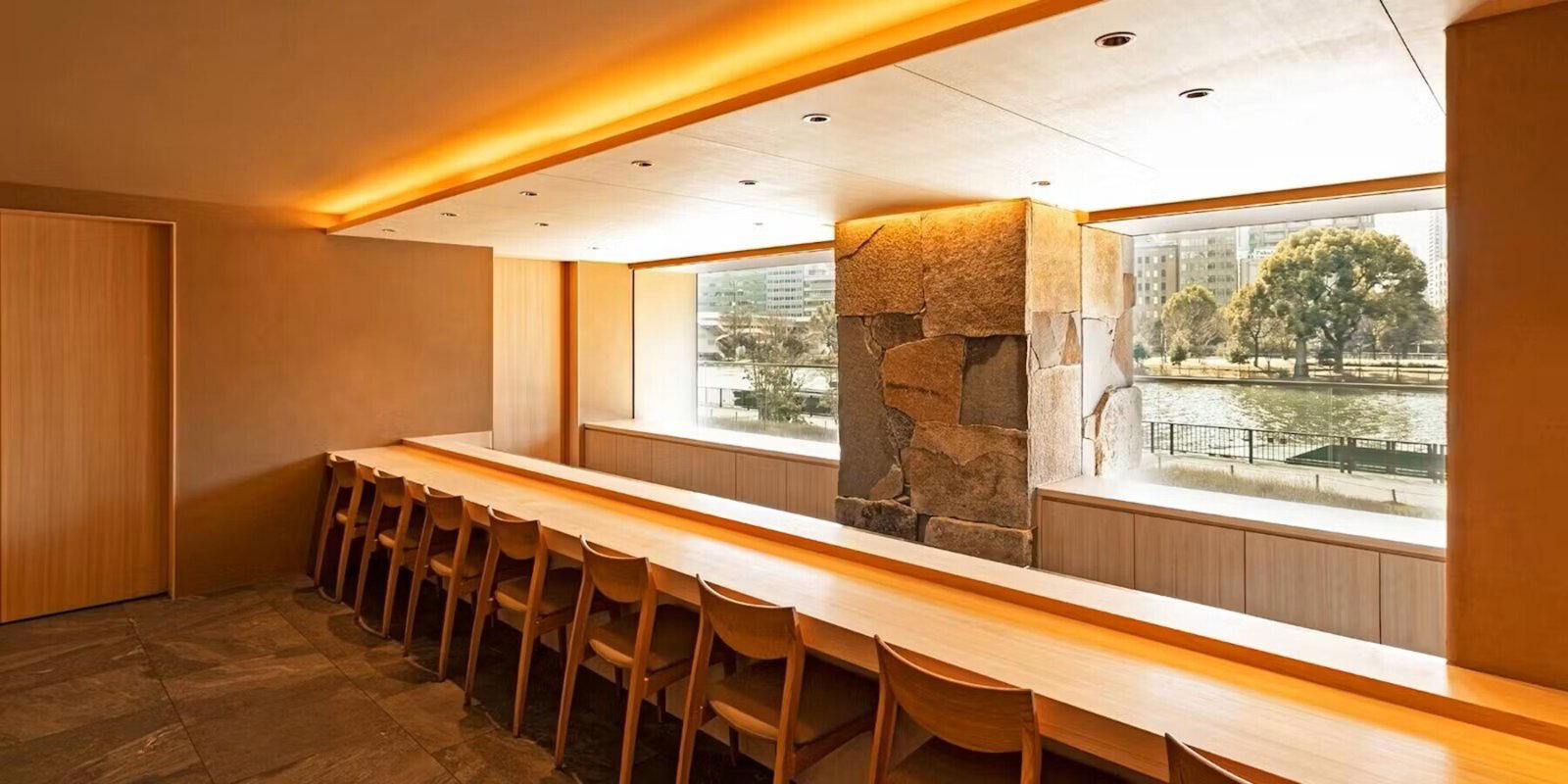
Where the River Meets the Rice
Osaka's premium sushi scene occupies a narrower band than Tokyo's, but that compression sharpens the competition. The city's Michelin-starred omakase counters operate within a culinary tradition that borrows Edo-style nigirizushi structure while inflecting it with the Osaka palate: greater emphasis on marination, a more pronounced use of vinegar, and a preference for fish preparations that arrive at the table already carrying their seasoning. Sushi Hoshiyama, a one-Michelin-star counter in Kita Ward, sits precisely in that tradition. Its address inside Tillit's Hus on the Sugaharacho riverfront places it at the edge of the Kita district, where the Okawa tributary offers a visual counterpoint to the focused quiet of the meal inside.
The building's riverside position is not incidental. Counter sushi at this level is typically sealed from the city, its atmosphere generated entirely from within: the wood grain, the precision of movement, the temperature of the rice. Here, the boats on the water are visible through the window as the meal progresses, providing one of the few concessions to exterior environment in a format that is otherwise entirely inward-facing. It is a compositional choice that works without undermining the seriousness of the meal.
The Architecture of the Meal
The sequence at Sushi Hoshiyama follows a logic that mirrors traditional Edo-style omakase in its arc while incorporating Osaka-specific preparation discipline. The meal opens with pale white-flesh fish, a conventional choice in high-end nigirizushi that allows the sushi rice to register before the heavier proteins arrive. This early stage is where the red-vinegar seasoning of the rice first asserts itself. Red vinegar, made from sake lees, produces a deeper, more mineral quality than the white rice vinegar common in more accessible counters. Combined with salt rather than sugar, it creates rice that frames the fish without sweetening it.
Kombu marination applied to sea bream reflects a preparation technique with deep roots in Osaka cooking. Kombu-jime, where fish is pressed between sheets of kelp for a controlled period, draws moisture from the flesh while transferring glutamates from the kombu into the fish. The result is firmer texture and concentrated savour, distinct from the cleaner presentation of the same fish served raw without intervention. Gizzard shad, meanwhile, receives vinegar curing, which serves both preservative and flavour functions, softening the more assertive oiliness of the fish while adding acidity that plays against the warm rice beneath it.
Tuna is the structural centrepiece, delivered in three successive pieces rather than as a single nigiri. This sequencing is a statement about the protein itself: the three pieces likely represent different cuts from the same fish, moving through the tonal range that tuna's fat distribution creates. Whether leaner akami, medium chutoro, or fatty otoro, each piece at this level is served on rice held at body temperature, a deliberate technique to draw the fish oil toward the surface as warmth meets fat. The difference between warm-rice and room-temperature sushi rice is subtle but cumulative across a full omakase sequence: fish oil reads as richness rather than grease, and the overall impression of the meal shifts accordingly.
The closing piece is simmered conger eel, prepared anago-style rather than the grilled unagi more common in inland Japanese cooking. Anago done well is a technically demanding finish: the eel must be simmered to a point where it gives completely under pressure while retaining enough structure to stay on the rice. The cooking liquid, typically a reduction of soy, mirin, and the eel's own gelatin, is reduced into a glaze. Ending on simmered conger is explicitly described as being done here in the old manner, a signal that the kitchen is working within a defined historical lineage rather than imposing contemporary revision on the form.
Osaka's Omakase Tier
At the ¥¥¥¥ price point, Sushi Hoshiyama occupies the upper band of Osaka dining, where it sits alongside French and innovative restaurants like Hajime and Fujiya 1935, as well as kaiseki formats such as Taian. Within the sushi-specific comparable set, other Osaka counters worth contextualising against include Sushi Harasho, Matsuzushi, Sushi Murakami Jiro, Sushi Sanshin, and Sushi Yuden. The Michelin recognition Hoshiyama received in 2024 places it in a clearly validated tier, and the.
For readers building a broader Japan itinerary around serious omakase, the Kansai region offers a meaningful alternative to Tokyo's density. Gion Sasaki in Kyoto and akordu in Nara represent the broader Kansai fine-dining map, while Harutaka in Tokyo offers a direct Edo-style sushi comparison. Outside Japan, Sushi Shikon in Hong Kong and Shoukouwa in Singapore carry the same formal tradition into different city contexts.
The Training Behind the Sequence
Omakase at this level is inseparable from apprenticeship lineage. The meal's precision reflects inherited discipline rather than personal invention. This is a meaningful distinction in Japanese sushi culture, where the vocabulary of the counter, including which preparations appear in which order, at what temperature, and with what marinade logic, is transmitted through years of direct instruction rather than codified in recipe form. The meal you eat at a well-trained omakase counter is, in part, a record of that transmission.
This is also why the structural choices described above carry weight beyond technique. Ending on anago, opening on white-flesh fish, sequencing tuna in three pieces: none of these are arbitrary, and all of them signal a kitchen working within a coherent tradition rather than building a personal menu from scratch. At Hoshiyama, the river view may be the one element that sits outside that inherited form.
Planning Your Visit
The restaurant is located in Kita Ward, Osaka's commercial and transport core. Advance reservation is required. The ¥¥¥¥ designation places the meal in the upper bracket of Osaka dining expenditure.
For broader Japan context, Goh in Fukuoka, 1000 in Yokohama, and 6 in Okinawa extend the map considerably.
Style and Standing
Comparable venues nearby, for context on price, style, and recognition.
| Venue | Cuisine | Price | Awards | Notes |
|---|---|---|---|---|
| Sushi HoshiyamaThis venue — the venue you are viewing | Edomae-Style Omakase Sushi | $$$$ | Michelin 1 Star | Not listed |
| Ajikitcho Horieten | Traditional Kaiseki | $$$$ | Michelin 1 Star | Nishi |
| Oimatsu Kitagawa | Traditional Kaiseki Omakase | $$$$ | Michelin 1 Star | Kita |
| Hiraishi | Michelin-Starred Tempura Omakase | $$$$ | Michelin 1 Star | Kita |
| P greco | Contemporary Italian with Japanese Seasonal Ingredients | $$$$ | Michelin 1 Star | Kita |
| Naniwakappo NOBORU | Naniwa Kappo | $$$$ | Michelin 1 Star | Kita |
Recognition history
Dated appearances from independent guides and award organizations, with the underlying list record or original source where available.
Michelin 1 Star
Michelin
Michelin 1 Star
Michelin
Continue exploring
More in Osaka
Restaurants in Osaka
Browse all →




Bars in Osaka
Browse all →




Hotels in Osaka
Browse all →




Wineries in Osaka
Browse all →
At a Glance
- Intimate
- Elegant
- Sophisticated
- Date Night
- Special Occasion
- Chefs Counter
- Sake Program
Current opening hours
- Monday
- 5:30–11 PM
- Tuesday
- Closed
- Wednesday
- 5:30–11 PM
- Thursday
- 5:30–11 PM
- Friday
- 5:30–11 PM
- Saturday
- 5:30–11 PM
- Sunday
- 5:30–11 PM
Hours can change for holidays and private events. Last verified .
Intimate counter seating for 8 guests with a cautious, focused atmosphere centered on the chef's precise sushi preparation.