
Michelin Plate
Our verdict
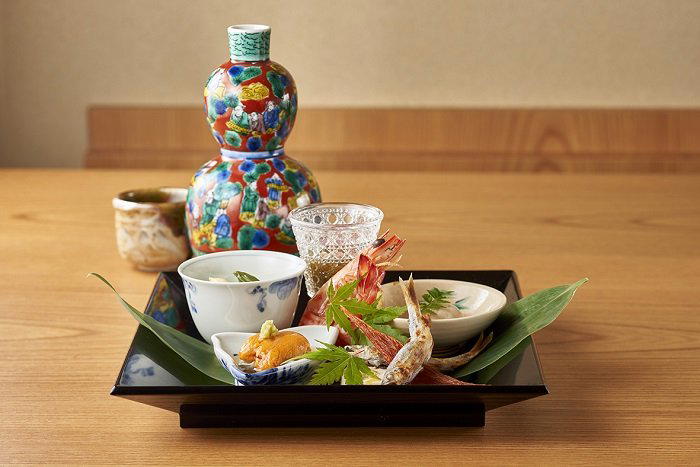
The chef draws ingredient combinations from both sea and mountain traditions, using kombu and bonito dashi as structural anchors and techniques that reference classical preparations like Yawatamaki roll. The result is calculated flavour architecture rather than improvisation.

Pearl is the En Primeur Club membership app, where members save venues, book tables and use the concierge.
Senba's Quiet Register
Chuo Ward's Senba district occupies a middle ground in Osaka's dining hierarchy: not the tourist-facing density of Dotonbori, not the rarefied remove of Senriyama where Kashiwaya Osaka Senriyama sits. Senba is a working commercial neighbourhood, the kind where the restaurant frontage is modest and the signal-to-noise ratio at street level gives little away. Sugimachi occupies the ground floor of Grande Maison Senba on Azuchimachi, and the address itself frames the expectation: this is not a venue that performs arrival. What happens inside is the point.
That restraint in presentation is consistent with a broader pattern in Osaka's mid-to-upper Japanese dining tier. At the ¥¥¥ price point, the city's kaiseki-adjacent restaurants compete less on spectacle and more on technical depth and ingredient sourcing.
The Architecture of the Meal
The dining ritual at Sugimachi follows a logic that is common to serious Japanese kitchens but applied here with a particular emphasis on calculated combination. The Michelin inspector's note for the 2025 Plate award uses the phrase "ingenious tastes are calculated to create flavours", language that describes intention rather than accident, a kitchen working from a considered flavour map rather than seasonal improvisation alone.
That map has a clear structural grammar. Kombu kelp, dried tuna, and bonito flakes form the dashi base, which is one of the most fundamental technical decisions a Japanese kitchen makes. Dashi is not background; it is the flavour infrastructure through which everything else is read. A kitchen that builds from kombu-and-bonito stock is making a classical commitment, and everything that follows is either a confirmation or a deliberate departure from that baseline.
The departures here are specific. Unseasoned grilled eel paired with stir-fried great burdock draws its reference from Yawatamaki, the traditional rolled preparation that combines eel with burdock root. Taking that pairing apart, stripping the seasoning, and presenting the components as a grilled and stir-fried dish is a technique-led reading of a classical idea: the flavour logic stays intact while the form changes. This is the kind of move that rewards guests who know the reference, but the dish still functions without the footnote.
Hot pot preparations at this level of Japanese dining carry their own ritual weight. The inclusion of tomato in the hot pot is a less common addition in traditional kaiseki contexts, and it signals a kitchen willing to introduce acidity and sweetness from a non-standard source. Tomato in dashi-based broth changes the flavour register significantly: it adds brightness without the sharpness of citrus, and it positions the dish in a recognisably modern Japanese idiom without abandoning classical structure.
The takikomi-gohan, rice cooked with ingredients and chicken dashi stock, typically closes the savoury sequence in this format. It functions as a ritual anchor, the moment the meal returns to its most elemental form: grain, stock, heat. At restaurants where the preceding courses have been technically complex, the rice course carries a specific satisfaction, it settles the palate and signals completion. The use of chicken dashi rather than the more standard kombu or bonito base here is a small but deliberate variation, one that gives the rice a different depth of savour.
Where Sugimachi Sits in Osaka's Japanese Dining Tier
Osaka's Japanese restaurant tier at ¥¥¥ is more competitive than it appears from the outside. The city has a concentration of technically serious kitchens at this price point: Miyamoto, Oimatsu Hisano, and Tenjimbashi Aoki occupy overlapping territory. The step up to ¥¥¥¥ brings restaurants like Hajime, La Cime, and Fujiya 1935 into view, French and innovative formats that operate in a different competitive register entirely. Sugimachi holds its ¥¥¥ position with Michelin recognition and strong review consistency, which at this tier is a more meaningful signal than media coverage.
The Michelin Plate, awarded in 2025, is not a star but it is not a neutral designation either. It indicates a kitchen that the Michelin inspectors regard as serving good food: technically competent, consistent, worth seeking out. In a city where the starred list at the ¥¥¥ tier includes Yugen and others with longer records, the Plate positions Sugimachi as a kitchen still accumulating its case.
For wider context across the Kansai region, Gion Sasaki in Kyoto and akordu in Nara represent different but adjacent traditions. In Tokyo, kitchens like Myojaku and Azabu Kadowaki work within comparable Japanese frameworks, as does Harutaka in Tokyo at a different price point. Further afield, Goh in Fukuoka, 1000 in Yokohama, and 6 in Okinawa illustrate how Japan's serious dining tier distributes across cities rather than concentrating in Tokyo alone.
Planning Your Visit
Sugimachi is located at 1 Chome-6-22 Azuchimachi, Chuo Ward, Osaka, on the ground floor of Grande Maison Senba. The ¥¥¥ price range places it in the mid-to-upper tier of Osaka's Japanese restaurants. No online booking platform or direct website is listed in available data; reservation method should be confirmed through current local sources before travel.
| Venue | Cuisine | Price | Michelin | |
|---|---|---|---|---|
| Sugimachi | Japanese | ¥¥¥ | Plate (2025) | |
| Kashiwaya Osaka Senriyama | Japanese | ¥¥¥ | ||
| Taian | Kaiseki, Japanese | ¥¥¥ | ||
| Hajime | French, Innovative | ¥¥¥¥ | ||
| La Cime | French | ¥¥¥¥ |
For broader Osaka planning, see our full Osaka restaurants guide, our full Osaka hotels guide, our full Osaka bars guide, our full Osaka wineries guide, and our full Osaka experiences guide.
Frequently asked questions
What do regulars order at Sugimachi?
The dishes that appear most prominently in Michelin's own citation are the unseasoned grilled eel with stir-fried great burdock, the tomato hot pot built on dashi stock, and the takikomi-gohan finished with chicken dashi. These preparations form the backbone of the menu as documented in award records: the eel-burdock dish for its technique-led reinterpretation of a classical preparation, the hot pot for its unconventional use of tomato within a traditional format, and the rice course as the ritual close. Guests familiar with kaiseki pacing will recognise the sequence; the individual dishes are where Sugimachi's specific approach comes through.
Reputation First
A small set of peers for context, based on recorded venue fields.
| Venue | Cuisine | Price | Awards | Notes |
|---|---|---|---|---|
| SugimachiThis venue (the venue you are viewing) | Modern Kaiseki | Not listed | Michelin Plate | Not listed |
| HAJIME | Avant-Garde Japanese Fine Dining | $300–500 | 3 Michelin Stars · World's 50 Best #83 | French, Innovative |
| La Cime | Modern French with Japanese Ingredients | $150–200 | 2 Michelin Stars · World's 50 Best #13 | French |
| Kashiwaya Osaka Senriyama | Seasonal Kaiseki Omakase | $200–300 | 3 Michelin Stars · La Liste Top Restaurants | Japanese |
| Taian | Traditional Japanese Kaiseki Omakase | $150–200 | 3 Michelin Stars · La Liste Top Restaurants | Kaiseki, Japanese |
| Fujiya 1935 | Modern Japanese with European influences | $100–150 | 2 Michelin Stars · La Liste Top Restaurants | Innovative |
Recognition history
Dated appearances from independent guides and award organizations, with the underlying list record or original source where available.
Michelin Plate
Michelin
Full recognition history (3 entries)
Michelin Plate
Michelin
Michelin Plate
Michelin
Continue exploring
More in Osaka
Restaurants in Osaka
All restaurants in Osaka →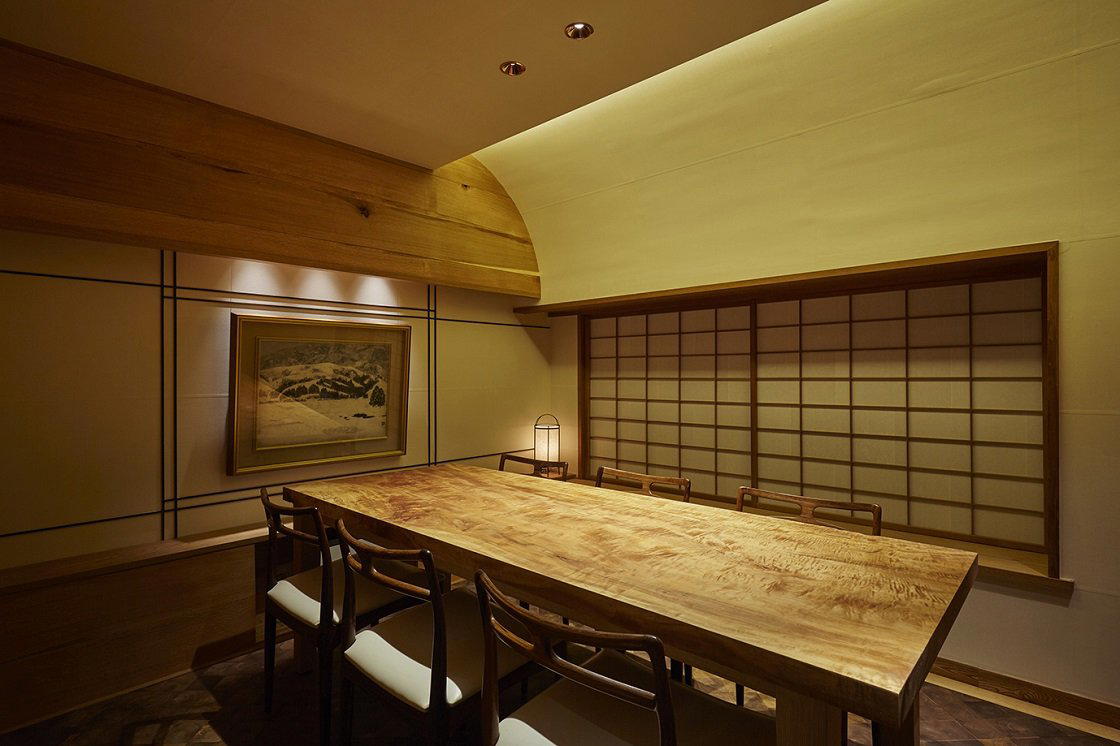




Bars in Osaka
All bars in Osaka →

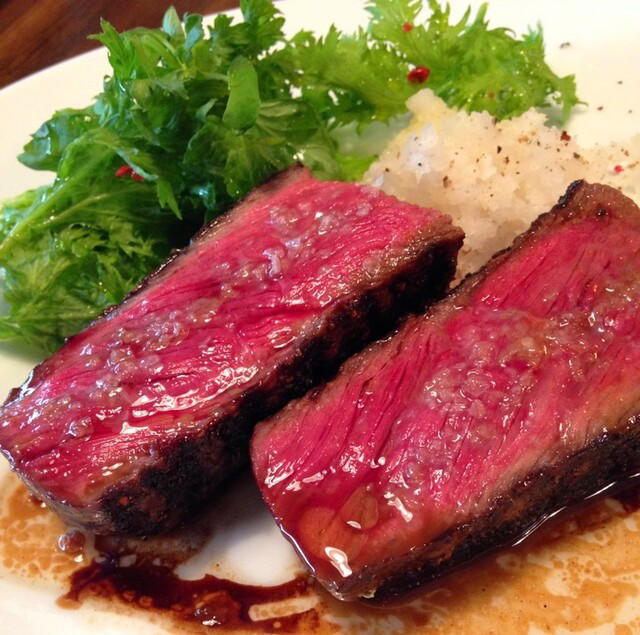

Hotels in Osaka
All hotels in Osaka →


Wineries in Osaka
Browse all →
Details
- Elegant
- Sophisticated
- Intimate
- Quiet
- Special Occasion
- Date Night
- Sake Program
- Local Sourcing
- Sake
Current opening hours
- Monday
- 5:30–11 PM
- Tuesday
- 5:30–11 PM
- Wednesday
- 5:30–11 PM
- Thursday
- 5:30–11 PM
- Friday
- 5:30–11 PM
- Saturday
- 5:30–11 PM
- Sunday
- 5:30–11 PM
Hours can change for holidays and private events. Hours as of .
Serene sanctuary of refined simplicity with meticulous presentation and contemplative pacing.