Sinne

1 Michelin Star
Our verdict
Sinne in Amsterdam’s De Pijp distills East-meets-West finesse into a Michelin-starred experience, featuring chef-presented smoked celeriac and a smart, sommelier-led wine program in an intimate, open-kitchen setting.

Pearl is the En Primeur Club membership app, where members save venues, book tables and use the concierge.
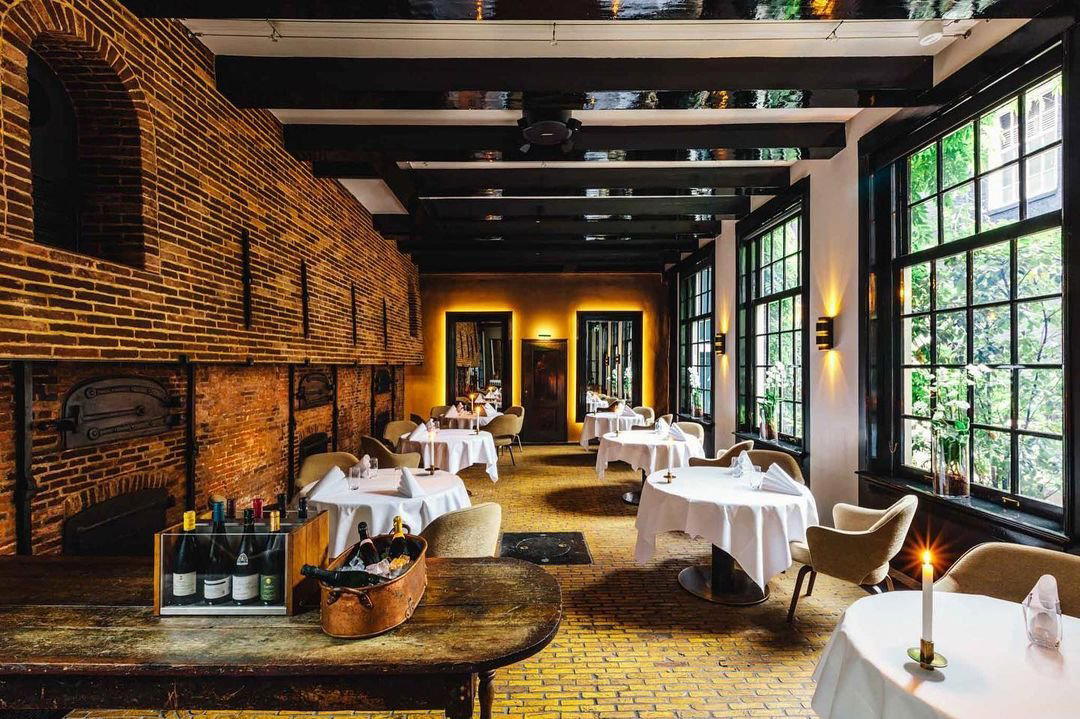
A Neighbourhood Address That Earned Its Star
Ceintuurbaan runs through the De Pijp district like a spine, lined with neighbourhood cafes, independent shops, and the kind of foot traffic that belongs to daily Amsterdam life rather than the tourist circuit. A Michelin star on this street says something specific: that serious cooking does not require the Oud-Zuid address or the canal-side dining room to earn institutional recognition. Sinne sits on that block and holds that position, a single star since 2024, at a price tier (€€€) that places it below the city's leading creative tables, Ciel Bleu (€€€€ · Creative), Flore (€€€€ · Contemporary), and Spectrum (€€€€ · Creative), but in a different category of ambition from the neighbourhood bistro it superficially resembles.
The Register of the Room
The open kitchen sits at the rear, and that placement is a design statement as much as a practical one. Guests at the front of the room read the evening by sound and movement before a single dish arrives: the rhythm of the pass, the controlled tempo of the brigade. In a city where the dining room theatrical gesture has sometimes overtaken the plate, this format positions the cooking itself as the primary spectacle.
De Pijp has always attracted a younger, more mobile dining public than Amsterdam's canal-ring belt. Restaurants here face a different test than those in the nine streets: the clientele arrives with expectation calibrated to a neighbourhood, not a postcode premium. That context makes the star meaningful in a different way than it might be at a more obviously prestigious address. It signals that the food itself is doing the work.
East-West, Acid, and the Art of Not Overcooking the Concept
The creative line at Sinne runs along a specific axis: European technique applied to Asian seasonings and acidity structures. This is not a new idea in Amsterdam or in European fine dining broadly. What separates restaurants that execute it from those that merely describe it is the question of integration: do the exotic notes function as flavour scaffolding, or as decorative touches applied to an otherwise conventional plate? The Michelin assessment for Sinne reads that Chef Alexander Ioannou "spices up familiar flavours with subtle touches of acidity and an interplay of exotic seasonings" and that "for all the complexity of its flavours, it is very easy to enjoy." That phrase, easy to enjoy, is the harder technical achievement of the two.
Ioannou's cooking sits in a broader evolution visible across the €€€ tier of Amsterdam dining. The city's modern cuisine restaurants have gradually moved away from the Dutch-ingredients-first framing that defined the post-Noma wave and toward more globally synthetic approaches. Senses and Bistro Féline occupy adjacent parts of this spectrum. The question for any restaurant working this register is where the personal culinary logic ends and the trend begins. At Sinne, the signature celeriac dish has become a reference point specific enough to function as an anchor rather than a sample: smoke from the barbecue, celeriac cream, a runny egg, hollandaise, a garlic cream, and shaved black truffle. That is a dish with a clear structural point of view, not a collection of currently fashionable elements.
How the Format Has Settled
The editorial angle here is evolution. Sinne opened as a neighbourhood restaurant and has, over time, sharpened into something that reads from the outside as a stable, defined identity. The star formalises a trajectory. In Amsterdam's €€€ tier, that kind of consolidation is not automatic: the city's dining scene cycles through ambitious openings quickly, and the restaurants that persist and sharpen tend to do so by narrowing their register rather than expanding it. Sinne's limited operating hours illustrate this discipline. The kitchen runs Thursday through Sunday evenings, with lunch added on Saturday and Sunday. Midweek closure is a resource decision, and in this context it functions as a quality-consistency signal: fewer services, tighter execution. For restaurants at this level, the calendar is part of the product.
The sommelier service appears as a deliberate feature in the Michelin write-up, described as enthusiastic and engaged with the wine list. At the €€€ level, wine pairing quality is often the differentiator between an adequate fine-dining experience and one that justifies the full spend. A dedicated sommelier willing to guide guests through a non-obvious list is a practical asset that separates Sinne from restaurants where the wine programme runs on autopilot.
Where Sinne Sits in the Wider Dutch Scene
Amsterdam's Michelin-starred tier is more concentrated than it appears from the outside. The €€€€ bracket from which Ciel Bleu and Flore operate represents a different spending commitment and a different guest profile. Sinne's position between the neighbourhood bistro and the full tasting-menu flagship is the space where a particular kind of Amsterdam diner has always wanted a home.
Across the Netherlands, the one-star bracket includes restaurants with very different aesthetics and geographies: Aan de Poel in Amstelveen, De Bokkedoorns in Overveen, and further afield, De Lindehof in Nuenen and De Lindenhof in Giethoorn. At the higher end of the Dutch spectrum, De Librije in Zwolle operates at three stars. De Groene Lantaarn in Staphorst and De Swarte Ruijter in Holten represent the regional end of the same constellation. Sinne's value in this mapping is its urban density: it delivers starred cooking inside a neighbourhood that does not require a special occasion to visit.
For comparison at a similar price tier and creative orientation in another European city, Borkonyha Winekitchen in Budapest operates at the same €€€ price point and holds its own Michelin recognition, offering a data point on how the one-star neighbourhood format travels across markets.
Planning the Visit
Sinne operates at Ceintuurbaan 342 in De Pijp, a district well-served by Amsterdam's tram network. The operating window is narrow by design: Thursday, Friday, and Sunday evenings run from 6 PM to 10 PM; Saturday extends to both lunch (noon to 4 PM) and dinner (6 PM to 10 PM). Monday through Wednesday the kitchen is closed. Booking ahead is not optional, the Michelin assessment closes with an explicit note that the restaurant has a strong following and reservations are necessary. With a small room and a compressed weekly calendar, available slots go quickly, particularly on weekend evenings. Those planning a Saturday visit have the option of the lunch sitting, which offers the same kitchen at a potentially less pressured pace.
Ioannou comes to the table to present the celeriac dish himself, a detail worth noting for guests who prefer a more interactive service and a useful signal about the tone of the room overall. This is not a kitchen that operates behind glass.
For a full picture of where Sinne sits within Amsterdam's wider dining options, see our full Amsterdam restaurants guide. If you're planning a broader stay, our Amsterdam hotels guide covers the city's accommodation options, and our Amsterdam bars guide maps the drinking scene. For wine and experience programming, our Amsterdam wineries guide and our Amsterdam experiences guide complete the picture.
What Should I Eat at Sinne?
The celeriac dish is the reference point. According to the Michelin assessment, Chef Alexander Ioannou presents it personally: thin slices of celeriac smoked on the barbecue, combined with celeriac cream, a runny egg, hollandaise, a creamy garlic sauce, and shaved black truffle. It is the clearest single expression of the kitchen's approach, smoke and acid working together, classic French structure carrying non-European seasoning logic. The broader menu operates on the same east-west axis, where familiar European flavours are adjusted through acidity and exotic seasonings rather than replaced by them. Michelin's 2024 one-star recognition confirms that the execution lands consistently enough to warrant the formal designation. The sommelier is an active presence rather than a formality, and engaging with the wine pairing is worth the commitment on a full evening sitting.
Cuisine Context
| Venue | Cuisine | Price | Awards | Notes |
|---|---|---|---|---|
| SinneThis venue (the venue you are viewing) | Modern Mediterranean Fine Dining | $100–150 | 1 Michelin Star | Not listed |
| Ciel Bleu | Modern French Fine Dining | $200–300 | 2 Michelin Stars · La Liste Top Restaurants | Creative |
| Bolenius | Modern Dutch Farm-to-Table | $100–150 | 1 Michelin Star · We're Smart World Top 100 #18 | Modern Dutch, Creative |
| De Kas | Seasonal Farm-to-Table Fine Dining | $50–100 | 1 Michelin Star · Star Wine List | Organic |
| Wils | Michelin-Starred Fire-Cooked Modern European | $100–150 | 1 Michelin Star · We're Smart World 4 Radishes | World Cuisine |
| Gebr. Hartering | Modern Fusion Bistro | $50–100 | Michelin Plate · Star Wine List | Not listed |
Recognition history
Dated appearances from independent guides and award organizations, with the underlying list record or original source where available.
Michelin 1 Star
Michelin
Full recognition history (2 entries)
Michelin 1 Star
Michelin
Continue exploring
More in Amsterdam
Restaurants in Amsterdam
All restaurants in Amsterdam →
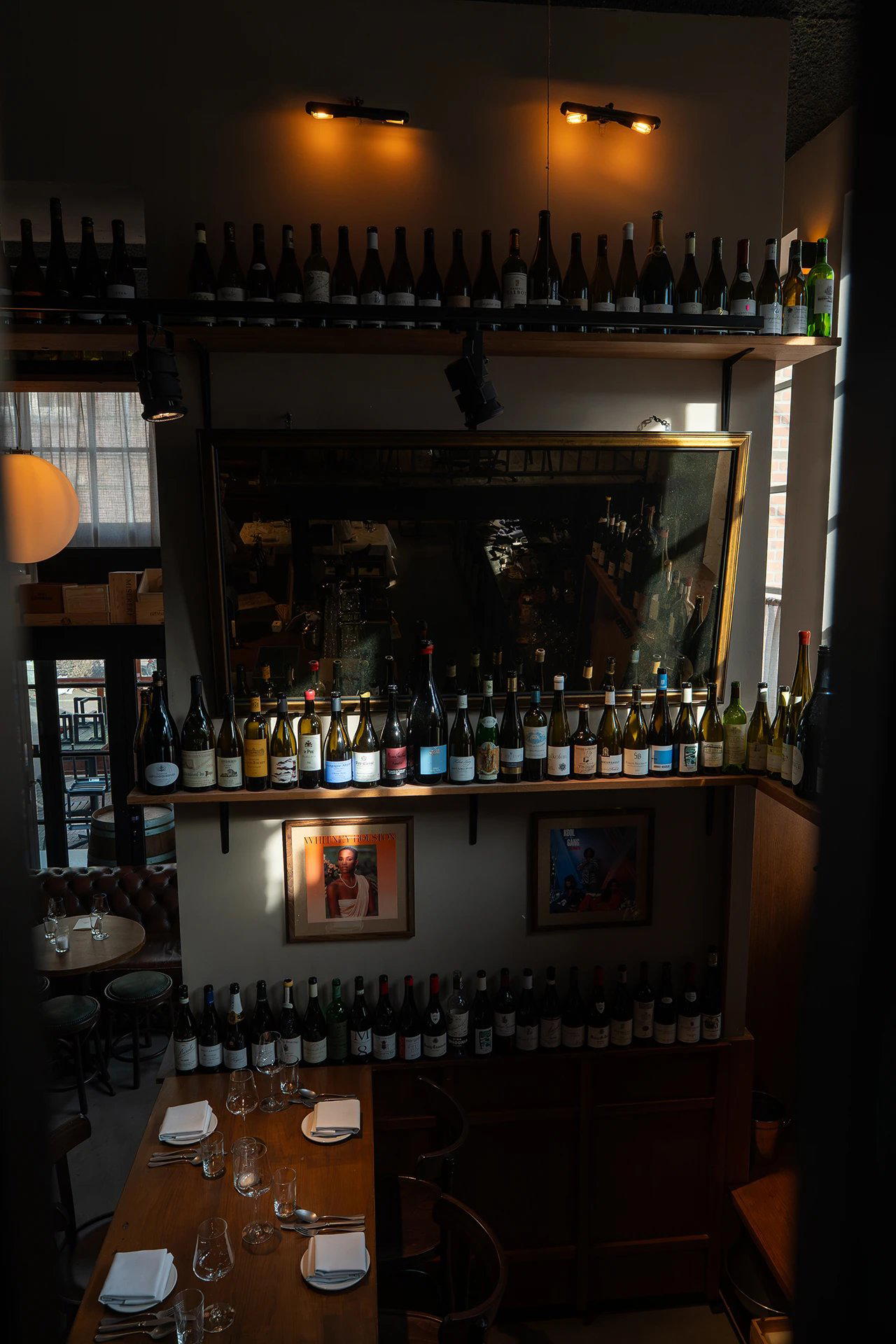
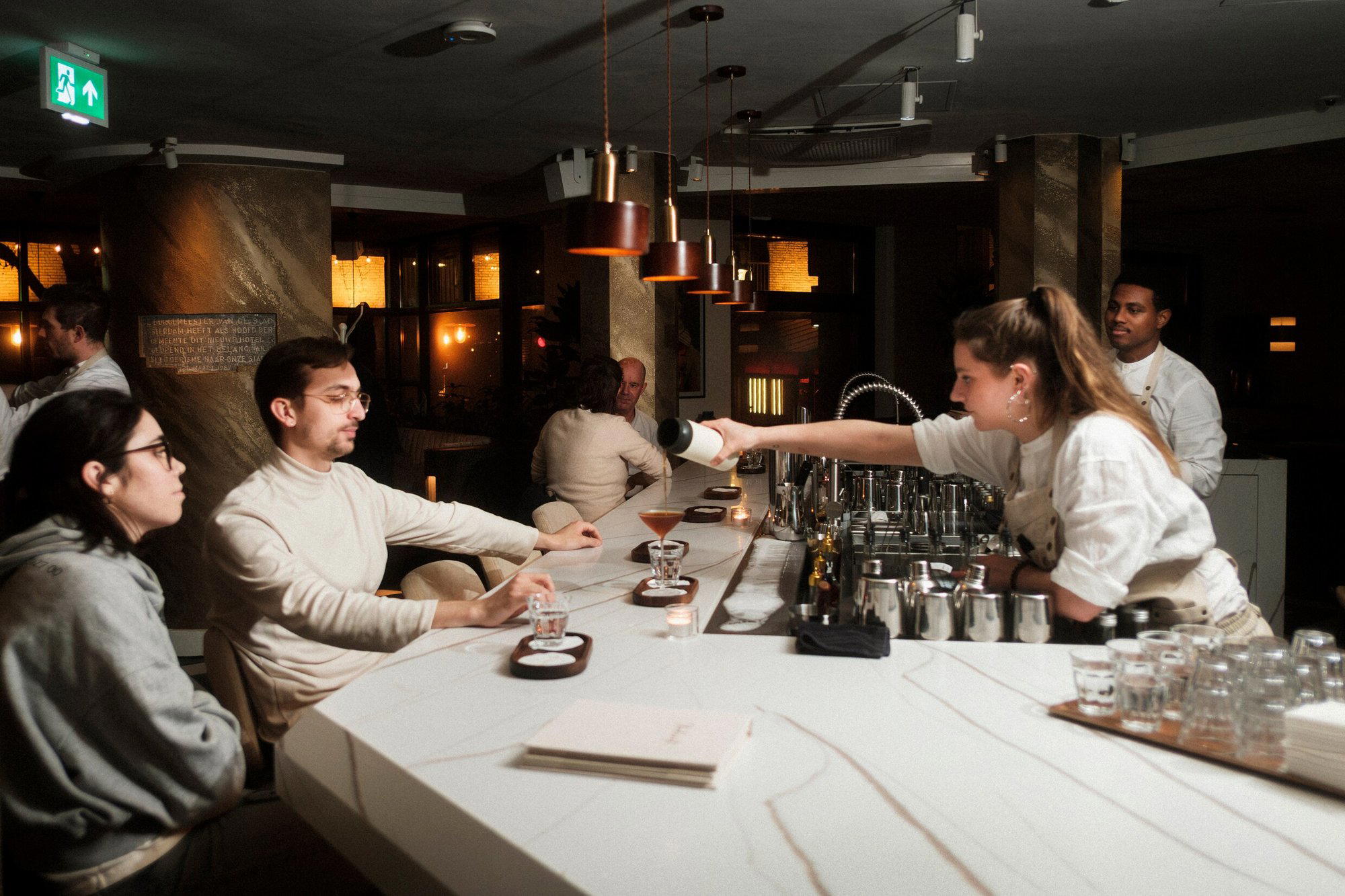
Bars in Amsterdam
All bars in Amsterdam →
Hotels in Amsterdam
All hotels in Amsterdam →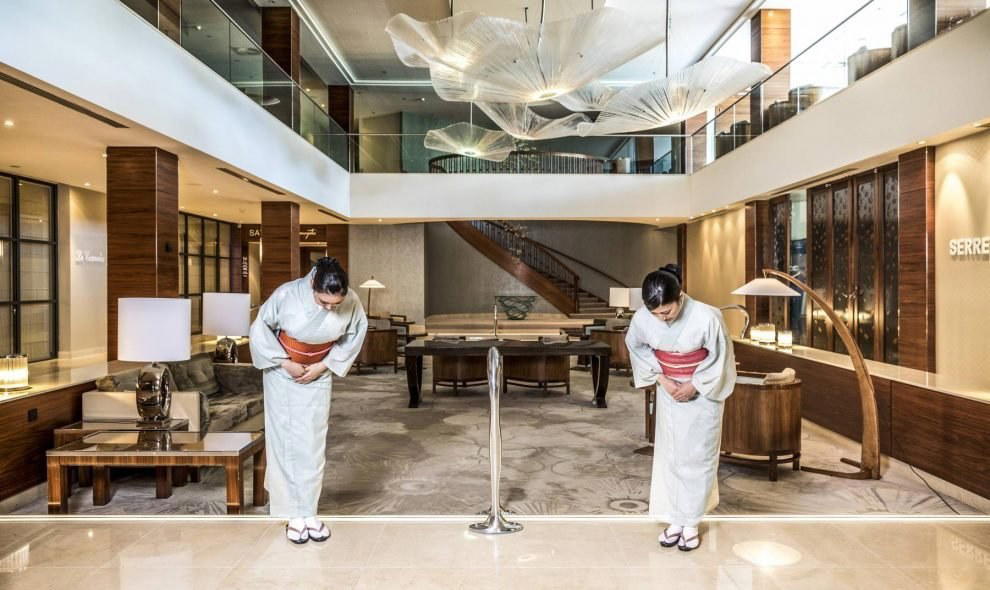
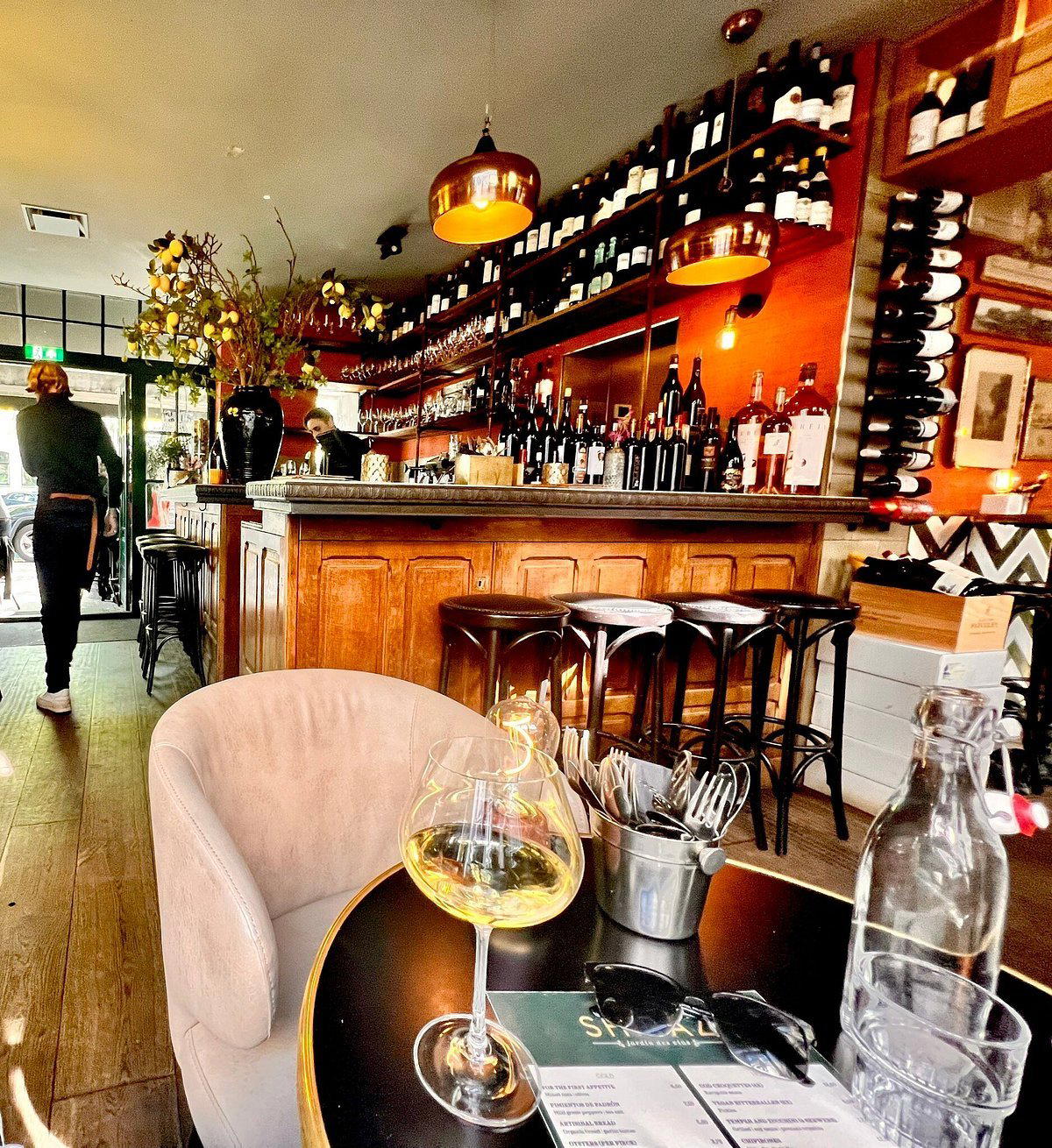
Wineries in Amsterdam
All wineries in Amsterdam →
Details
- Elegant
- Intimate
- Cozy
- Modern
- Sophisticated
- Date Night
- Special Occasion
- Open Kitchen
- Extensive Wine List
- Tasting Menu
- A La Carte
- Vegetarian Friendly
- Vegan Options
Current opening hours
- Monday
- Closed
- Tuesday
- Closed
- Wednesday
- Closed
- Thursday
- 6–10 PM
- Friday
- 6–10 PM
- Saturday
- 12–4 PM, 6–10 PM
- Sunday
- 12–4 PM, 6–10 PM
Hours can change for holidays and private events. Hours as of .
Stylish, minimalistic interior with quiet, atmospheric, and cozy lighting fostering an elegant yet relaxed fine dining experience.