Bistro Féline

Michelin Plate
Our verdict
On a corner plot in Amsterdam's Jordaan, Bistro Féline carries the Michelin-trained credentials of chef Dennis Huwaë into a format built around ease rather than ceremony. The marble counter, warm lighting, and a frequently updated menu of oysters, lobster tail, and razor clams position it at the more accessible end of Amsterdam's modern cuisine tier, where technique serves the food rather than announces itself.

Pearl is the En Primeur Club membership app, where members save venues, book tables and use the concierge.
The menu
What to order
- Poultry Brioche
- Rib eye steak with asparagus & hazelnut gnocchi
- Chocolate moelleux
A Corner in the Jordaan That Gets the Balance Right
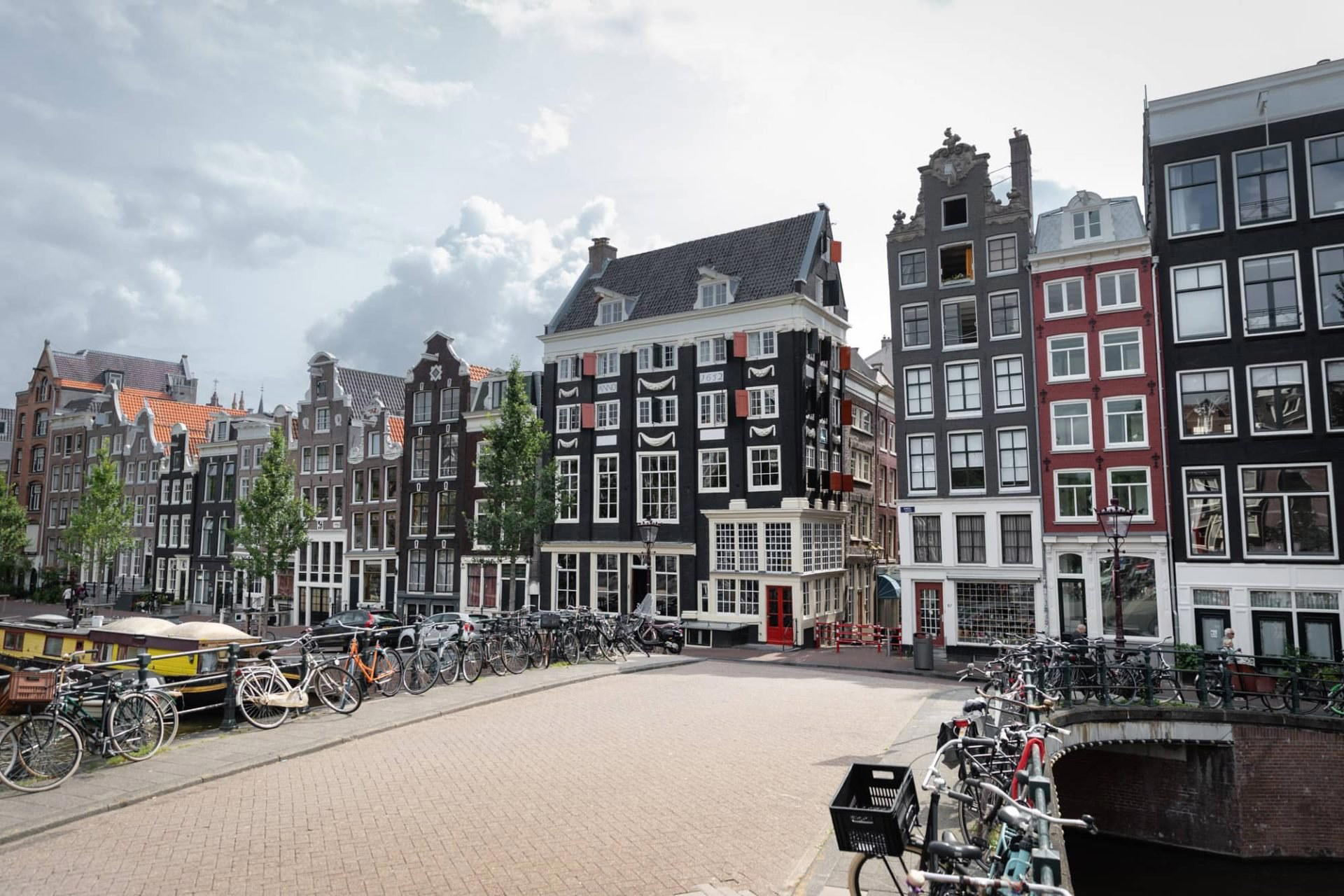
The Jordaan has long been Amsterdam's most reliably atmospheric quarter for eating well without occasion. Its canal-side streets and narrow brown-brick buildings have, over the past decade, attracted a particular type of restaurant: technically accomplished, unshowy in format, and priced in the middle tier where Amsterdam's dining scene is at its most interesting. Lindengracht 90, the corner address that houses Bistro Féline, is a characteristic example of how that neighbourhood logic plays out in practice.
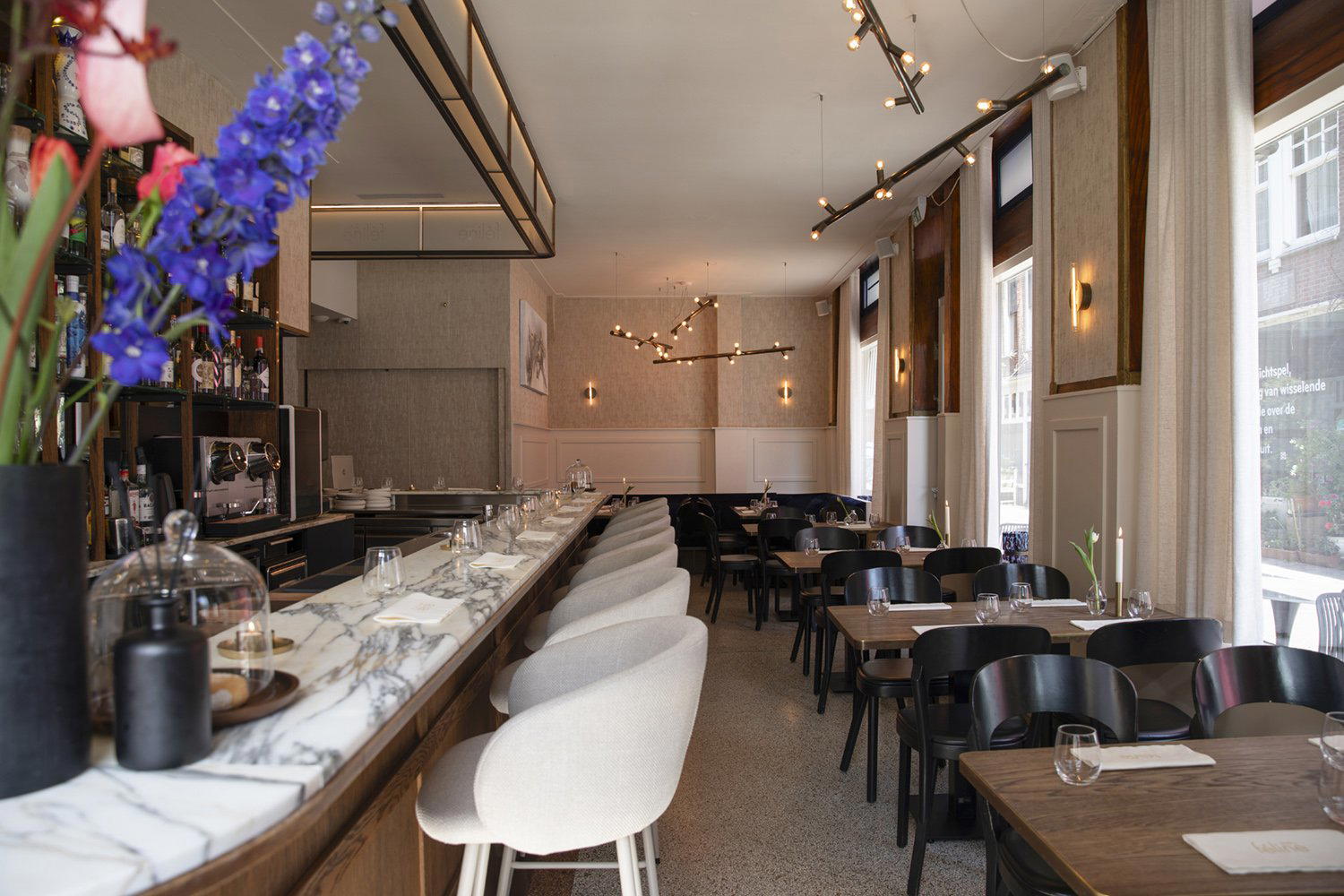
The building announces itself before you step inside. A corner plot in the Jordaan carries its own geometry, wider sight lines, more glass, a presence on the street that single-frontage restaurants rarely achieve. Inside, the design follows through. Warm lighting keeps the room from feeling clinical, and the interior furnishings read as considered without being stiff. This is not the austere Scandi-minimalism that defined a wave of Amsterdam openings in the mid-2010s, nor the vintage-industrial aesthetic that followed. The space sits closer to a French bistro register: materials that have some weight to them, a room that looks better once people are in it.
The Counter as the Room's Centrepiece
Choice between a table and a spot at the marble counter is more than a seating preference, it shapes what kind of meal you have. In Amsterdam's modern bistro tier, the counter format has become a reliable signal of a kitchen confident enough to want proximity to its guests. Marble, specifically, has become the material of choice for counters in this category across European cities: it reads as casual and durable while carrying enough visual weight to anchor a room. At Bistro Féline, the counter functions as both workspace and social object, giving solo diners and pairs an alternative to the formality of a table service format.
Relationship between counter seating and the open kitchen, or at minimum, the bar programme, encourages a different pace. Ordering a freshly shaken cocktail while reviewing the menu is less a sequence of steps than a single, continuous act. The menu updates frequently, which is itself a design decision: it signals a kitchen working with what is available rather than a static list optimised for efficiency. For the diner, that means the menu repays reading rather than scanning.
Where the Food Sits in Amsterdam's Tier Structure
Amsterdam's restaurant tier at the €€€ price point occupies an interesting position in the city's overall dining map. Below it, the city has a dense and capable casual scene. Above it, a cluster of ambitious tasting-menu restaurants pull the city's Michelin count higher each year: Ciel Bleu (€€€€ · Creative), Flore (€€€€ · Contemporary), and Spectrum (€€€€ · Creative) all operate in the upper bracket, where the format is structured and the price reflects it. The €€€ tier is where that ambition gets translated into something more flexible: a la carte menus, shorter commitments of time, and kitchens that apply serious technique without imposing a narrative on the meal.
Bistro Féline sits inside this tier and draws on a specific credential. Dennis Huwaë's work at Michelin-starred Daalder is the relevant comparison point here. That training background places him in the company of Dutch chefs who have absorbed the discipline of starred kitchens and then chosen to apply it in a lighter format. The bistro register is not a retreat from technique, it is a different editorial decision about how technique should show up in the dining room. Dishes like chopped lobster tail with razor clams, creamy orzo, and crisp vegetable elements carry the structural logic of a kitchen that has cooked at a higher level; the bistro framing changes the stakes, not the execution.
For broader context on Amsterdam's €€€ modern cuisine tier, Sinne and Senses operate in a comparable register and make useful reference points when mapping the city's mid-upper bracket. If you are building a longer Dutch itinerary, the same level of ambition in different formats appears at Aan de Poel in Amstelveen, and further afield at De Librije in Zwolle, 't Nonnetje in Harderwijk, Basiliek in Harderwijk, De Bokkedoorns in Overveen, De Groene Lantaarn in Staphorst, and Brut172 in Reijmerstok.
The Menu's Logic: Classic Structure, Modern Execution
The menu at Bistro Féline follows a format that has become familiar in European bistros applying fine-dining technique to a more relaxed service model: classic entry points, oysters, caviar on toast, followed by more composed plates that carry the kitchen's real argument. This structure is deliberate. It lets the room settle, gives the kitchen a clear sequence to work with, and positions the main plates as the true measure of the evening rather than an afterthought to a long tasting progression.
The lobster and razor clam combination is characteristic of a kitchen working in the French-inflected modern bistro mode that has spread across European cities in the past decade. Orzo as a base for shellfish preparations has precedent in both Italian and French coastal cooking; its appearance here speaks to the broader cross-referencing that defines Amsterdam's modern cuisine tier, where Dutch cooking identity is present but not the only frame of reference. The addition of crisp vegetable elements introduces texture contrast, a technique more closely associated with contemporary fine dining than with traditional bistro cooking, and a reminder of where the kitchen was trained.
Planning Your Visit
Bistro Féline is located at Lindengracht 90, in the northern section of the Jordaan close to the Westerpark boundary. The address is walkable from Amsterdam Centraal in around twenty minutes, or a short tram or bike ride. The Jordaan's residential character means the street is quieter in the evening than central tourist corridors, which suits the room's relaxed atmosphere.
As with most Jordaan restaurants in this tier, reservations in advance are advisable, particularly for counter seats on weekend evenings. The frequently updated menu means there is little to be gained from researching specific dishes before arrival; arriving open to the current list is the more practical approach. Our full Amsterdam restaurants guide covers the broader dining picture, and if you are also organising accommodation, activities, or drinks, our Amsterdam hotels guide, bars guide, experiences guide, and wineries guide cover those categories in full. For a comparable bistro-meets-technique experience outside the Netherlands, Borkonyha Winekitchen in Budapest operates in a similar register at the €€€ level.
Frequently asked questions
How far ahead should I plan for Bistro Féline?
At a corner address in the Jordaan at the €€€ tier, with a kitchen carrying Dennis Huwaë's Michelin-starred Daalder credentials and a marble counter that limits total covers, Friday and Saturday evenings fill early. Booking a week out is reasonable for midweek; aim for two weeks or more at weekends to secure counter seating specifically.
Credentials Lens
Comparable venues nearby, for context on price, style, and recognition.
| Venue | Cuisine | Price | Awards | Notes |
|---|---|---|---|---|
| Bistro FélineThis venue (the venue you are viewing) | Modern French Bistro | $50–100 | Michelin Plate | Not listed |
| Veneur | Modern French Grill | $100–150 | Michelin Plate · Star Wine List | Den Texbuurt |
| Café Pigalle | French-Mediterranean Brasserie | $30–50 | Not listed | Amsterdam Zuidoost |
| Hotel de Goudfazant | Modern French-Dutch Bistro | $30–50 | Star Wine List | Bedrijventerrein Hamerstraat |
| Sinck | Modern French Bistro | $30–50 | Michelin Plate · Star Wine List | Passeerdersgrachtbuurt |
| Café-Restaurant Amsterdam | French-Dutch Bistro | $20–30 | Not listed | Ecowijk |
Recognition history
Dated appearances from independent guides and award organizations, with the underlying list record or original source where available.
Michelin Plate
Michelin
Continue exploring
More in Amsterdam
Restaurants in Amsterdam
All restaurants in Amsterdam →
Bars in Amsterdam
All bars in Amsterdam →
Hotels in Amsterdam
All hotels in Amsterdam →
Wineries in Amsterdam
All wineries in Amsterdam →
Details
- Romantic
- Cozy
- Elegant
- Intimate
- Sophisticated
- Date Night
- Special Occasion
- Group Dining
- Open Kitchen
- Extensive Wine List
- Local Sourcing
- A La Carte
- Small Plates
Current opening hours
- Monday
- Closed
- Tuesday
- 6 PM–1 AM
- Wednesday
- 6 PM–1 AM
- Thursday
- 6 PM–1 AM
- Friday
- 12:30 PM–1 AM
- Saturday
- 12:30 PM–1 AM
- Sunday
- Closed
Hours can change for holidays and private events. Hours as of .
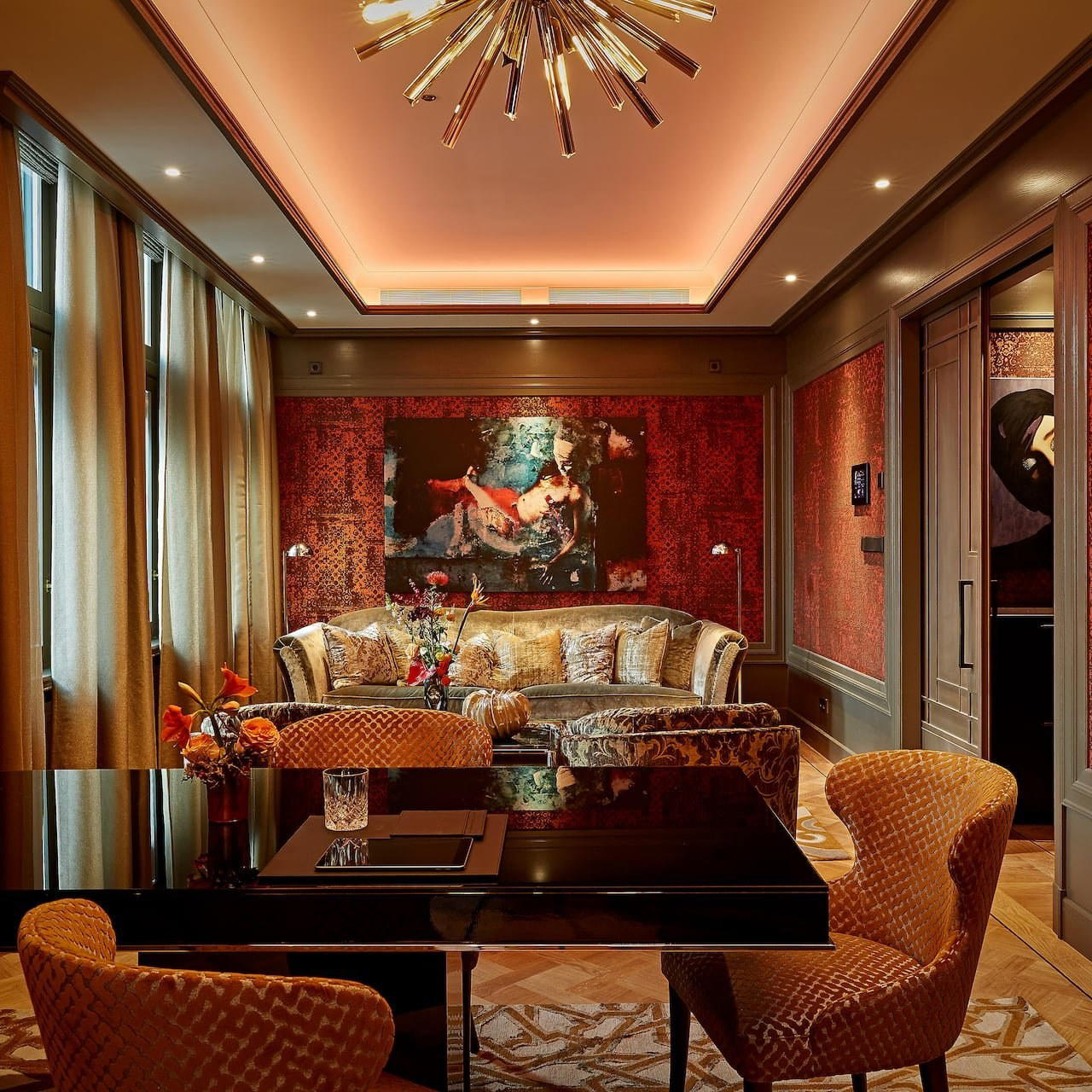
Warmly lit, cozy and elegant interior evoking Parisian bistro charm with soft lighting and relaxing atmosphere.