
Where Paseo de la Castellana Meets a Quieter Approach to Fine Dining Madrid's northern corridor along Paseo de la Castellana has long been the address of corporate towers, luxury hotels, and the kind of restaurants that serve expense accounts as...
Pearl is the En Primeur Club membership app — saves, bookings, and concierge access live there. Same editors, same standards.
- Address
- P.º de la Castellana, 259, E, Fuencarral-El Pardo, 28046 Madrid, Spain
- Phone
- +34690234729
- Website
- restaurantesinestesia.com
- Directions
- Get directions
 Saves & bookings on Pearl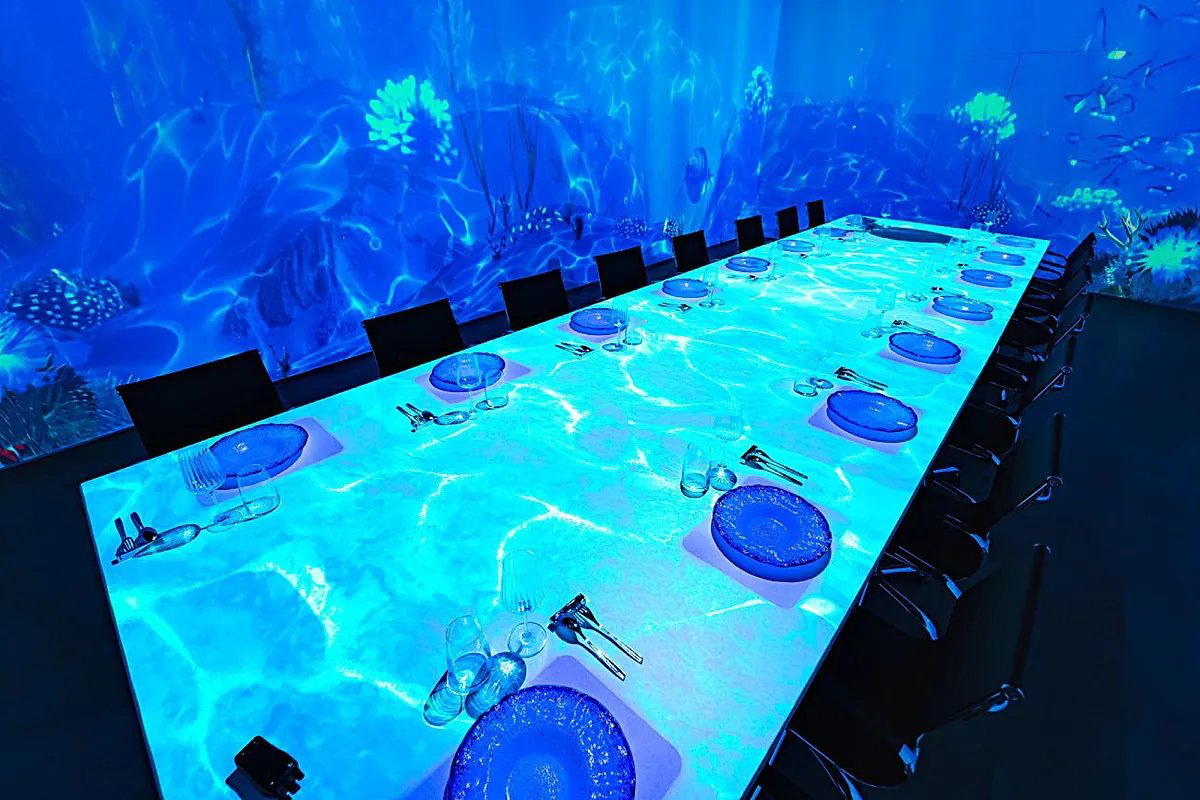
Where Paseo de la Castellana Meets a Quieter Approach to Fine Dining
Madrid's northern corridor along Paseo de la Castellana has long been the address of corporate towers, luxury hotels, and the kind of restaurants that serve expense accounts as readily as they serve food. Sinestesia Restaurante occupies a position in that stretch, at the upper end of the boulevard near the CTBA financial district, yet operates at a register that reads less like a power-lunch institution and more like a considered dining room with something specific to say. The name itself, referencing the neurological phenomenon where one sense triggers another, signals an intent that goes beyond plate presentation.
Madrid's premium restaurant tier has been reshaping itself over the past decade. The city's most-discussed tables, places like DiverXO with its three Michelin stars and Coque with its subterranean, ritual-driven format, have pulled fine dining toward the theatrical and multi-sensory. Sinestesia, by name and by apparent positioning, enters that conversation without matching the sheer scale of those operations. It sits closer to the tier occupied by Deessa and DSTAgE: creative, format-conscious dining rooms where the experience architecture matters as much as the cooking technique.
The Castellana Setting and What It Implies
The address, Paseo de la Castellana 259E, places Sinestesia inside one of Madrid's more functional-feeling northern zones. Unlike the compact barrio density of Malasaña or the market-adjacent energy of La Latina, this part of the city is wide avenues and glass facades. That context tends to sharpen a restaurant's need to create its own interior atmosphere rather than borrowing neighbourhood warmth from the street. Premium dining rooms in corporate corridors across European capitals, from London's Mayfair to Paris's 8th arrondissement, have long navigated this by investing heavily in acoustics, lighting design, and spatial rhythm. The premise of Sinestesia, where the environment is designed to interact with the food rather than simply surround it, suggests the room itself is doing considered work.
Sustainability as a Structural Commitment
Among Madrid's current generation of fine dining restaurants, the move toward ethical sourcing and waste-reduction frameworks has been uneven. At the high-recognition end of Spain's restaurant scene, sustainability has moved from a talking point to a structural commitment at several Michelin-decorated tables. Azurmendi in Larrabetzu is arguably Spain's most documented case, with its greenhouse integration and zero-waste protocols receiving consistent recognition. Aponiente in El Puerto de Santa María has built its entire identity around marine biodiversity and underused sea ingredients. These are not peripheral concerns at those restaurants; they are the creative engine.
Sinestesia's positioning in Madrid's Castellana corridor, where the pressure toward conventional luxury is high, makes a sustainability-led approach more structurally interesting, not less. Urban fine dining with a genuine ethical sourcing framework requires a different supply chain logic than a rural property with direct farm or ocean access. The challenge is traceability and relationship-building in a city context, sourcing from producers who can verify their practices and building menus around what those producers can actually deliver seasonally. The restaurants in Spain that have done this credibly, from Ricard Camarena in València to Cocina Hermanos Torres in Barcelona, have structured their menus around producer identity as a primary frame, not as a supporting footnote.
For a restaurant whose name references sensory overlap, the intersection of sourcing transparency and experiential dining is a coherent editorial position. Ingredients with a traceable origin carry a different kind of weight at the table, not a moralistic one, but a contextual one. Knowing the provenance of what arrives on the plate shifts how a diner processes the experience. That is, in a real sense, an extension of what synesthesia describes: one register of perception altering another.
The category Sinestesia competes in is well-populated in Madrid. Paco Roncero has held his position as one of the city's technical benchmark kitchens for years, while Deessa, operating from within the Mandarin Oriental Ritz, brings a hotel-backed resource base to creative Spanish cooking. At the absolute apex, DiverXO functions in a category largely of its own construction. The more instructive comparison for Sinestesia may be international rather than purely local. In New York, Atomix has demonstrated how a precise, course-by-course narrative format with strong ethical sourcing signals can generate sustained critical attention without relying on high-volume recognition. Le Bernardin, meanwhile, has shown over decades how rigorous sourcing discipline, in that case around sustainable seafood, can operate as both a creative and reputational asset at the highest price tier.
Spain's broader fine dining geography provides additional context. El Celler de Can Roca in Girona, Martin Berasategui in Lasarte-Oria, Arzak in San Sebastián, Mugaritz in Errenteria, and Quique Dacosta in Dénia have collectively defined what Spanish fine dining looks like at international level. Atrio in Cáceres adds a dimension of regional specificity and wine depth. What those restaurants share, beyond technical accomplishment, is a clear editorial identity: a reader or diner can state in one sentence what each stands for. For a Madrid table competing in that national conversation, developing an equally legible identity, whether through sourcing philosophy, format discipline, or sensory architecture, is the operative challenge.
Planning Your Visit
Sinestesia Restaurante is located at Paseo de la Castellana 259E in the Fuencarral-El Pardo district, in Madrid's northern Castellana corridor near the CTBA financial area. The address is accessible by metro via the Begoña or Pinar de Chamartín stations on Line 10. Given the restaurant's positioning in Madrid's creative fine dining tier, booking in advance is advisable, particularly for weekend sittings. For the most current information on hours, pricing, and reservation availability, check directly with the restaurant or via Madrid's established reservation platforms. Our full Madrid restaurants guide covers the broader dining context across price tiers and neighbourhoods.
Quick reference: Sinestesia Restaurante, Paseo de la Castellana 259E, Fuencarral-El Pardo, Madrid 28046. Advance booking recommended.
How Sinestesia Restaurante Madrid compares with similar nearby venues.
| Venue | Cuisine | Price |
|---|---|---|
| La Maruca | Spanish | €€ |
Recognition history
Dated appearances from independent guides and award organizations, with the underlying list record or original source where available.
Macarfi 6.8 Food Rating
Macarfi
Continue exploring
More in Madrid
Restaurants in Madrid
Browse all →
Bars in Madrid
Browse all →
Hotels in Madrid
Browse all →


At a Glance
- Modern
- Trendy
- Sophisticated
- Intimate
- Special Occasion
- Date Night
- Celebration
- Open Kitchen
- Craft Cocktails
Current opening hours
- Monday
- Closed
- Tuesday
- Closed
- Wednesday
- 1:45–4:30 PM, 8:45–11:30 PM
- Thursday
- 1:45–4:30 PM, 8:45–11:30 PM
- Friday
- 1:45–4:30 PM, 8:45–11:30 PM
- Saturday
- 1:45–4:30 PM, 8:45–11:30 PM
- Sunday
- 1:45–4:30 PM, 8:45–11:30 PM
Hours can change for holidays and private events. Last verified .
Dynamic atmosphere with projected visuals, sounds, music, colors, and aromas creating a fun and surprising sensory journey around a single table.
Know Before You Go
- Getting there
- P.º de la Castellana, 259, E, Fuencarral-El Pardo, 28046 Madrid, Spain