Seoryung

Michelin Bib Gourmand
Our verdict
Seoryung in Seoul's Jung-gu has held a Michelin Bib Gourmand in both 2024 and 2025, making it one of the city's most consistently recognised specialists in memil-guksu, the buckwheat noodle tradition rooted in Korea's mountainous north. Under chef Jeong Jong-mun, the kitchen keeps its focus narrow and its execution tight, a rare combination at this price point in a city that often rewards complexity over restraint.

Pearl is the En Primeur Club membership app, where members save venues, book tables and use the concierge.
The menu
What to order
- Seoryung Sunmyeon (Pure Buckwheat Noodles)
- Bibim Sunmyeon
- Perilla Oil Sunmyeon
- Korean Beef Sirloin Bulgogi
- Jeyuk (Braised Pork Jowl)
- Mandoo (Steamed Dumplings)
A Bowl That Earns Its Place at the Table
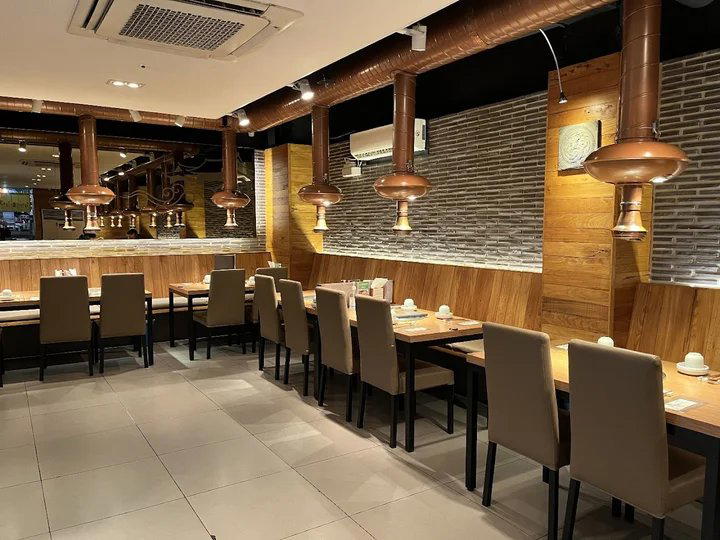
Sowol-ro cuts through Jung-gu in a way that most visitors to Seoul experience only from a distance: the road runs beneath Namsan, flanking the hillside that separates the old city centre from the leafy residential gradient climbing toward N Seoul Tower. The addresses here carry a certain quietness, a step removed from the density of Myeongdong below and the commercial hum of Itaewon to the west. It is in this setting that Seoryung operates, not as a destination restaurant engineered for spectacle, but as a specialist house built around a single culinary discipline: memil-guksu, the buckwheat noodle tradition associated with the colder inland and northern regions of Korea.
In Seoul's broader restaurant conversation, which frequently tilts toward tasting menus, modernist technique, and international crossover, venues like Mingles or alla prima occupy a different register entirely, Seoryung represents a counter-argument. The ₩ price tier places it at the accessible end of the Seoul dining spectrum, and the focus on one cuisine category, executed with precision, is itself a statement of intent. Michelin's Bib Gourmand, awarded in both 2024 and 2025, is the guide's explicit recognition of venues that deliver exceptional cooking at prices below the starred threshold. Two consecutive years of that designation is not incidental; it signals a kitchen operating with consistency rather than novelty.
Buckwheat Noodles as a Culinary Tradition
Memil-guksu belongs to a lineage of Korean noodle cookery that runs parallel to, and in some ways predates, the more globally visible cold noodle formats. Buckwheat, grown in regions where the climate limits rice cultivation, produces a grain with a distinctive mineral quality. The noodles milled from it are darker than wheat-based alternatives, with a texture that requires careful calibration: too long in the water and they lose their character; too brief and they resist the broth. The broth itself, in traditional preparations, tends toward the restrained end, clear, cold or warm depending on the season, designed to carry the grain's flavour rather than compete with it.
This is the tradition that Seoryung works within. Seoul has a cluster of memil specialists, and the competitive set includes venues like Yangyang Memil Makguksu and Yurimmyeon, each bringing regional inflections to the format. What distinguishes the venues that earn Michelin recognition within this category is not invention but fidelity, the ability to execute a demanding preparation to a standard that rewards repeat visits. The double Bib Gourmand at Seoryung is Michelin's assessment that it belongs in that tier.
The Case for a Special Occasion Bowl
There is a tendency, when discussing milestone meals or occasion dining in Seoul, to default to the city's tasting-menu circuit. The logic is understandable: a multi-course format provides a clear arc, a shared narrative, and a price point that signals the meal was considered. But this framing misses something about how Korean dining culture actually structures significant moments. A carefully chosen specialist restaurant, the kind where the menu is narrow, the craft is legible, and the setting carries its own weight, has a long history as an occasion venue in Korea. The bowl of noodles brought to the table at a family gathering or a formal lunch carries social meaning that a tasting menu designed around international technique may not.
Seoryung, at its Sowol-ro address in Jung-gu, sits in a neighbourhood with enough remove from tourist circuits to feel considered as a choice. Bringing someone here for a significant lunch communicates that you know the city at a level beyond the obvious. The Michelin Bib Gourmand provides the kind of external validation that removes the need for explanation, two consecutive years of recognition means the quality argument is already made. At a ₩ price point, the occasion is defined by the quality of the cooking and the specificity of the choice, not by the invoice at the end.
For visitors planning a Seoul itinerary that includes both the higher-register end of the dining spectrum, venues such as Gaon or Kwon Sook Soo, and something that represents a different dimension of Korean culinary heritage, Seoryung provides the latter without requiring a significant outlay. It is also worth noting that Seoul's memil tradition connects to a broader Korean craft geography: the grain comes from regions whose culinary identity is expressed in other venues too, including Baegyangsa Temple in Jangseong-gun and Mori in Busan, each approaching Korean food with a similar attention to origin and material.
Chef Jeong Jong-mun and the Discipline of Restraint
Korean noodle specialists who achieve Michelin recognition do so within a category where the margin for differentiation is narrow. Chef Jeong Jong-mun operates a kitchen that has now sustained Bib Gourmand status across two consecutive annual cycles, which in practice means consistent sourcing, consistent technique, and consistent execution across service.
Planning Your Visit
Seoryung sits at 10 Sowol-ro in Jung-gu, in a part of Seoul accessible from the Myeongdong and Itaewon areas. The ₩ price tier means a meal here sits well below the cost of Seoul's contemporary tasting-menu circuit, which makes it viable as part of a multi-restaurant day without budget strain. For a wider view of Seoul's dining options across price points and formats, see our full Seoul restaurants guide.
| Venue | Cuisine | Price Tier | Recognition | Format |
|---|---|---|---|---|
| Seoryung | Memil-guksu | ₩ | Michelin Bib Gourmand 2024 & 2025 | Noodle specialist |
| Yangyang Memil Makguksu | Memil-guksu | Not specified | Not specified | Noodle specialist |
| Yurimmyeon | Korean noodles | Not specified | Not specified | Noodle specialist |
| Mingles | Korean contemporary | ₩₩₩₩ | Michelin starred | Tasting menu |
For hotels, bars, wineries, and experiences in Seoul, see our full city guides: hotels, bars, wineries, and experiences. If your Seoul dining interests extend internationally, Atomix in New York represents how Korean culinary thinking translates into a different competitive context, while Le Bernardin and Emeril's in New Orleans illustrate how specialist craft at high execution standards reads across different culinary traditions. For a broader view of Korean dining outside Seoul, The Flying Hog in Seogwipo offers a contrasting regional perspective.
Frequently asked questions
Is Seoryung more mid-range or high-end?
Pricing at Seoryung is listed as ₩.
Is Seoryung award-winning?
Seoryung has received recognition including: Michelin Bib Gourmand (2025); Michelin Bib Gourmand (2024).
What should I order at Seoryung?
Seoryung's two consecutive Michelin Bib Gourmand awards, in 2024 and 2025, are anchored to its memil-guksu: buckwheat noodle preparations that define what chef Jeong Jong-mun does here. That is where to start. The ₩ price tier keeps the decision low-risk, so ordering across the noodle menu to compare preparations makes sense on a first visit.
What style of cooking does Seoryung do?
Where do I go for Seoryung?
Seoryung is located at 10 Sowol-ro, Jung-gu, Seoul, 04527, South Korea, Seoul.
At-a-Glance Comparison
A quick peer list to put this venue’s basics in context.
| Venue | Cuisine | Price | Awards | Notes |
|---|---|---|---|---|
| SeoryungThis venue (the venue you are viewing) | Pyongyang-Style Cold Noodles (Naengmyeon) | $10–20 | Michelin Bib Gourmand | Not listed |
| 7th Door | Modern Korean Fermentation Fine Dining | $100–150 | 1 Michelin Star · World's 50 Best #49 | Korean, Contemporary |
| Solbam | Contemporary Neo-Classical Korean | $200–300 | 1 Michelin Star · World's 50 Best #55 | Contemporary |
| Onjium | Modern Korean Royal Court Cuisine | Not listed | 1 Michelin Star · World's 50 Best #14 | Korean |
| L'Amitié | Classic French Fine Dining | $100–150 | 1 Michelin Star · La Liste Top Restaurants | French |
| Zero Complex | Modern French Neo-Bistro | $100–150 | 1 Michelin Star · La Liste Top Restaurants | Korean-French, Innovative |
Recognition history
Dated appearances from independent guides and award organizations, with the underlying list record or original source where available.
Michelin Bib Gourmand
Michelin
Full recognition history (3 entries)
Michelin Bib Gourmand
Michelin
Michelin Bib Gourmand
Michelin