Sosuheon

2 Michelin Stars
Our verdict
A Michelin-starred sushi counter operating inside a traditional hanok in Jung-gu, Sosuheon places Chef Park Kyung-jae's precise nigiri work within one of Seoul's most considered architectural settings. The eight-seat format, pre-nigiri course progression, and quiet counter atmosphere make it a serious candidate for occasion dining in a city with no shortage of high-stakes restaurant choices.

Pearl is the En Primeur Club membership app, where members save venues, book tables and use the concierge.
The menu
What to order
- Gizzard shad nigiri
- Creamy cuttlefish nigiri
- Cod roe with hairy crab
- Steamed tilefish
- Grilled hairtail
- Matcha
A Hanok Frame for a Milestone Meal
Seoul's fine dining circuit is built, overwhelmingly, on concrete and glass. The city's premium restaurant tier tends to occupy upper floors of commercial towers or purpose-built spaces in Gangnam and Cheongdam, where the architecture signals modernity as loudly as the cooking does. Jung-gu operates differently. This older central district, where the pace of redevelopment has been less aggressive, still holds pockets of traditional urban fabric, and it is inside one of those, a restored hanok with its characteristic low tiled rooflines and courtyard geometry, that Sosuheon makes its case. Before a dish is served, the setting has already done significant work. Approaching the building, with the contemporary Seoul skyline visible over the rooftop, is itself an act of temporal dislocation that most occasion meals in this city cannot replicate.
That contrast between ancient form and refined technique is not incidental. Seoul's premium sushi scene has expanded considerably over the past decade, with Japanese-trained Korean chefs and Japanese imports filling a growing pool of omakase counters across the city. Within that pool, the physical environment of the counter rarely distinguishes one address from another. Sosuheon, by placing its eight-seat counter inside a hanok, creates a frame for the meal that carries genuine weight, one that makes it a natural choice when the dinner is meant to mark something.
The Counter and the Progression
Eight seats is the relevant number here. At that scale, the gap between guest and chef collapses. The format is consistent with the intimate omakase model that defines serious sushi counters across Asia, compare the configuration at Harutaka in Tokyo, Sushi Shikon in Hong Kong, or Shoukouwa in Singapore, and it carries the same implication: each guest is close enough to observe the preparation in full, which transforms the counter from a service point into a stage for craft. Chef Park Kyung-jae's movements are described as quiet and concentrated, a register that suits both the intimacy of the counter and the character of the hanok around it.
The meal structure follows the logic common to serious omakase formats: a pre-nigiri sequence of cooked and prepared dishes establishes pace and builds appetite before the main counter work begins. The recorded progression includes cod roe with hairy crab and steamed tilefish as representative of the early courses, with grilled hairtail also part of the record. These are not warm-up dishes in the dismissive sense. Hairtail and tilefish are fish that reward careful preparation, and their presence signals a menu oriented toward Korean coastal species rather than a wholesale replication of Tokyo omakase templates. The pre-nigiri sequence is, in this sense, the section where the menu's own identity is most legible.
The nigiri that follows is, by recorded account, generous in proportion. Gizzard shad and cuttlefish are highlighted among the pieces, the shad (kohada in Japanese-style counters) is a fish that functions almost as a technical test at serious sushi counters, its strong flavor requiring precise curing to integrate rather than overwhelm. The cuttlefish is described as creamy, pointing to a preparation that prioritises texture. Matcha closes the meal, a clean and deliberate finish that reads as considered rather than incidental.
Where Sosuheon Sits in Seoul's Premium Dining Map
A 2024 Michelin star places Sosuheon in a defined tier within Seoul's competitive restaurant scene, which now carries more starred addresses per capita than almost any city outside Tokyo and Paris. That density matters for context: a single star in Seoul is no longer a novelty credential, but it remains a meaningful signal of technical consistency and quality threshhold in a field where the gap between very good and starred is genuinely competitive.
The relevant peer group for Sosuheon is not the broader Seoul fine dining circuit, which spans Korean tasting menus at Kwonsooksoo and Gaon, contemporary Korean at Mingles, and innovative formats at alla prima and Jungsik. Sosuheon's peer group is specifically the city's serious sushi counter tier, a smaller subset where the comparison points are counter size, fish sourcing, technical lineage, and menu architecture. At ₩₩₩₩ pricing, it sits at the top of that tier, consistent with the wider Asian omakase market, where eight-seat counters with starred credentials price against quality and scarcity rather than against entry-level sushi.
For context outside Seoul, the counter format and price tier place Sosuheon alongside regional peers in the cities where serious omakase has the deepest roots. Seoul is a younger market for this format than Tokyo or Hong Kong, but its starred sushi addresses have matured quickly, and Sosuheon's setting adds a variable that its regional counterparts rarely carry. You can find HANE and Kwon Sook Soo within the broader high-end Seoul circuit, but the combination of hanok architecture and starred sushi at this counter size has no direct parallel in the city.
Occasion Dining, Specifically
The case for Sosuheon as an occasion restaurant rests on several converging factors, none of which is about novelty alone. The eight-seat counter ensures that no milestone dinner is diluted by the ambient noise or anonymity of a larger room. The hanok setting carries cultural resonance that is specific to Korea, making it a meaningful choice for occasions where the setting should do more than recede into the background. The format's pacing, with an extended pre-nigiri sequence followed by the counter work and a deliberate matcha close, gives the meal a structure that feels composed rather than merely sequential. These are the markers of a meal designed to hold memory.
Seoul's broader fine dining options at this price point are not sparse. For Korean cuisine at the ₩₩₩₩ tier, addresses like Mingles, Jungsik, and alla prima all hold awards credentials and receive consistent critical attention. For occasion dining specifically, the question is whether the environment can carry the weight of the moment as effectively as the food does. Sosuheon's answer to that question is architectural: a centuries-old building type in a city that has demolished most of its equivalents.
Beyond Seoul, for those building a broader Korean dining itinerary, the comparison with Mori in Busan or Baegyangsa Temple in Jangseong-gun illustrates how different Korean dining traditions, coastal, monastic, urban, operate in parallel rather than in hierarchy. Sosuheon occupies the urban fine dining pole of that spectrum, but its use of traditional architecture gives it a cultural depth that purely contemporary addresses in the same bracket lack.
Explore the full context of dining, drinking, and staying in the city through our Seoul restaurants guide, Seoul hotels guide, Seoul bars guide, Seoul wineries guide, and Seoul experiences guide.
Know Before You Go
- Address: 8 Mallijae-ro 21-gil, Jung-gu, Seoul, 04500, South Korea
- Cuisine: Sushi / Omakase
- Counter size: Eight seats
- Price range: ₩₩₩₩
- Awards: Michelin One Star (2024)
- Setting: Traditional hanok building, Jung-gu
- Booking: Advance reservation strongly advised given counter size
Frequently asked questions
What dish is Sosuheon famous for?
Sosuheon does not hang its reputation on a single signature dish in the way a casual restaurant might. The counter format is omakase, meaning the chef determines the progression. Within that, the Michelin-recognised meal is structured in two distinct phases: a pre-nigiri sequence of cooked preparations, including cod roe with hairy crab, steamed tilefish, and grilled hairtail, followed by the nigiri work of Chef Park Kyung-jae, where gizzard shad and cuttlefish are among the recorded highlights. The gizzard shad, a demanding fish to prepare at serious sushi counters, and the cuttlefish, noted for its creamy texture, represent the technical range of the nigiri progression. Matcha closes the meal. If any single element defines the experience, it is probably the combined effect of the hanok setting and the counter's intimate scale rather than any one piece of fish.
Cuisine and Credentials
| Venue | Cuisine | Price | Awards | Notes |
|---|---|---|---|---|
| SosuheonThis venue (the venue you are viewing) | Premium Omakase Sushi | $200–300 | 2 Michelin Stars | Not listed |
| 7th Door | Modern Korean Fermentation Fine Dining | $100–150 | 1 Michelin Star · World's 50 Best #49 | Korean, Contemporary |
| Solbam | Contemporary Neo-Classical Korean | $200–300 | 1 Michelin Star · World's 50 Best #55 | Contemporary |
| Onjium | Modern Korean Royal Court Cuisine | Not listed | 1 Michelin Star · World's 50 Best #14 | Korean |
| L'Amitié | Classic French Fine Dining | $100–150 | 1 Michelin Star · La Liste Top Restaurants | French |
| Zero Complex | Modern French Neo-Bistro | $100–150 | 1 Michelin Star · La Liste Top Restaurants | Korean-French, Innovative |
Recognition history
Dated appearances from independent guides and award organizations, with the underlying list record or original source where available.
Michelin 2 Stars
Michelin
Full recognition history (3 entries)
Michelin 1 Star
Michelin
Michelin 1 Star
Michelin
Continue exploring
More in Seoul
Restaurants in Seoul
All restaurants in Seoul →
Bars in Seoul
All bars in Seoul →
Details
- Elegant
- Intimate
- Quiet
- Sophisticated
- Date Night
- Special Occasion
- Chefs Counter
- Open Kitchen
- Historic Building
- Sake Program
- Sommelier Led
- Local Sourcing
- Sustainable Seafood
- Omakase
- Counter Dining
- Sake
- Matcha
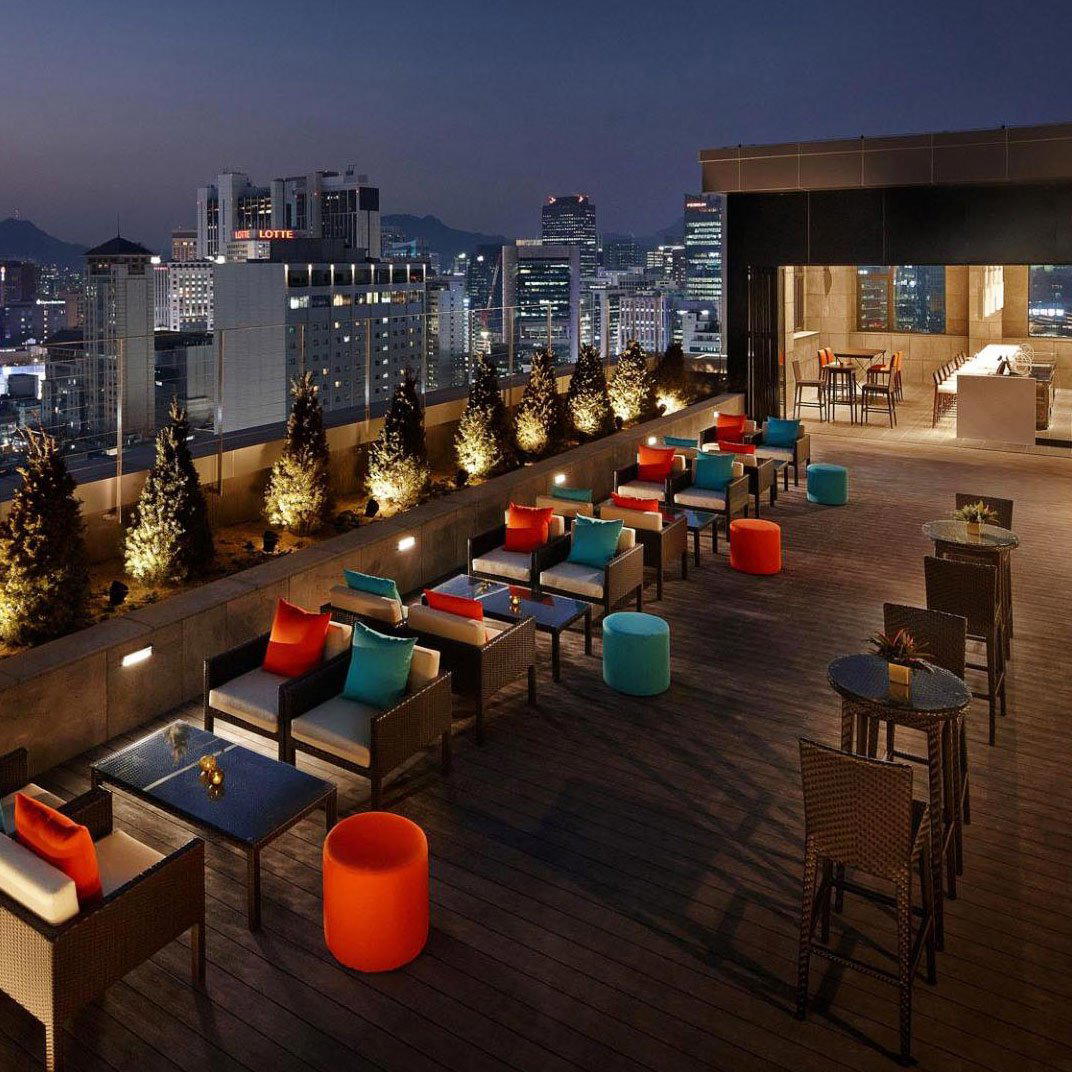
Serene and elegant traditional Korean hanok setting juxtaposed against the contemporary Seoul skyline, with calming and refined atmosphere.