Mapo Ok

Michelin Bib Gourmand
Our verdict
Mapo Ok has held the Michelin Bib Gourmand in both 2024 and 2025, a rare back-to-back recognition that places this Mapo-gu seolleongtang house among Seoul's most consistent addresses for the genre. The format is traditional: slow-simmered ox-bone broth, delivered at a price point that keeps the neighbourhood regulars alongside the destination diners.

Pearl is the En Primeur Club membership app, where members save venues, book tables and use the concierge.
The menu
What to order
- Yangji Seolleongtang
- Seolleongtang
The Bowl Seoul Keeps Coming Back To
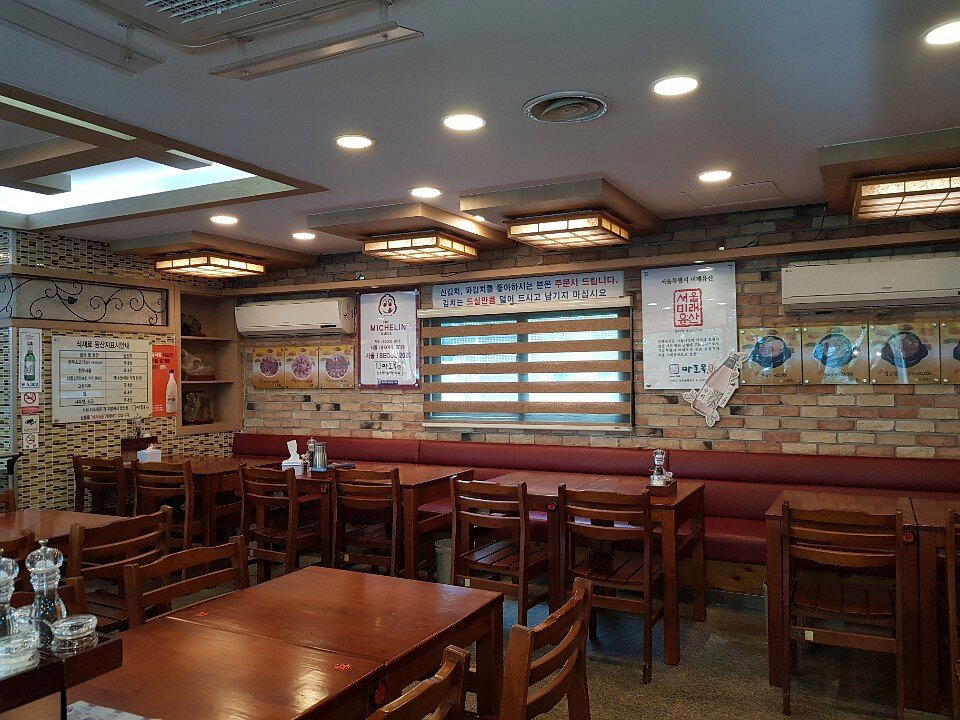
Arrive on Tojeong-ro in Mapo-gu on any weekday morning and the scene outside Mapo Ok reads the same way it has for years: a queue that moves steadily, a dining room that fills and empties with the rhythm of a canteen rather than a restaurant, and steam rising from ceramic bowls as soon as they hit the table. This is what seolleongtang looks like when the surrounding neighbourhood treats it as a daily institution rather than a tourist attraction. The broth is white-grey from hours of ox-bone simmering, the rice arrives separately, and the table is set with kimchi and salt so each diner can adjust seasoning to their own preference. Nothing about the format is designed to impress. The impression it leaves is a different matter.
Bib Gourmand, Twice Over: What the Recognition Actually Means
Seoul's Michelin ecosystem distributes its stars at the upper end of the price spectrum, where tasting-menu Korean at venues like Mingles, Jungsik, and Gaon occupies a different competitive tier entirely. The Bib Gourmand category works differently. It identifies cooking that achieves a standard the inspectors consider noteworthy at a price point the guide defines as accessible, and in Seoul that means single-dish specialists, noodle houses, and traditional broth restaurants qualify alongside more elaborate formats.
Mapo Ok earned the Bib Gourmand in 2024 and retained it in 2025. Back-to-back recognition matters in this context because it rules out the possibility of a single good visit or a favorable inspection window. It signals consistency, which in a broth-based cuisine is arguably the harder technical achievement. Seolleongtang quality is determined almost entirely by process: the proportion of bone to water, the duration and temperature of the simmer, and the discipline to maintain those variables across every service. Two consecutive Bib Gourmand awards suggest those variables are under reliable control here.
For a frame of reference within the genre, Mapo Ok sits alongside Imun Seolnongtang and Oegojip Seolleongtang as part of a small cohort of Seoul institutions where the Michelin organisation has formally acknowledged a broth tradition that the city's residents have been endorsing for generations. Being included in that group places Mapo Ok in the upper tier of the genre by the only external benchmark the industry currently provides.
Seolleongtang in Context: A Seoul Tradition on Its Own Terms
Seolleongtang occupies a specific position in Seoul's food culture that distinguishes it from other ox-bone preparations. The defining characteristic is the milky-white colour of the broth, which results from a prolonged boiling process that emulsifies the collagen and fat from the bones into the liquid. This is not a quick stock. Traditional preparation runs for many hours, sometimes overnight, and the result is a soup with a body and mineral depth that lighter broths cannot replicate.
The cuisine has working-class roots and a democratic pricing history. For much of the twentieth century, seolleongtang was sustenance food, sold cheaply and in volume, associated with early-morning workers and late-night regulars rather than occasion dining. That legacy shapes the experience at almost every serious house in the city: the service is efficient rather than ceremonial, the portions are generous, and the pricing remains low relative to what the kitchen investment in time and ingredient actually represents. Seoul's ₩ price tier is precisely where seolleongtang belongs, and the Bib Gourmand's implicit argument is that value and quality are not in tension here.
The broader Seoul dining scene has moved in several directions simultaneously. At the leading end, contemporary Korean tasting menus at places like Kwon Sook Soo and innovation-driven formats at alla prima compete with international fine dining. The single-dish traditional category, by contrast, has maintained its format integrity while absorbing the attention of food critics who began taking Korean broth culture seriously at the same time international interest in the city's restaurant scene accelerated. Mapo Ok benefits from both trends without needing to change what it does.
Mapo-gu as a Dining District
Mapo-gu district sits west of the Han River's north bank, away from the Gangnam addresses where much of Seoul's high-end dining concentrates. Tojeong-ro itself is a commercial artery rather than a dining destination in the way that certain Gangnam or Jongno streets function. That geography matters because Mapo Ok's clientele is not primarily made up of destination diners.
For visitors planning around Seoul's broader dining options, the full Seoul restaurants guide maps the city's range from this kind of neighbourhood institution to the multi-course formats that occupy the opposite end of the spectrum. Those planning wider travel around South Korea might also consider the context provided by Mori in Busan or Baegyangsa Temple in Jangseong-gun for a sense of how Korean culinary tradition expresses itself across different regions and formats.
The Case for Ordering Seolleongtang Here
The seolleongtang is the order. At a venue that carries the Bib Gourmand specifically for this dish, ordering around it makes little sense. The mechanics of a good bowl are worth understanding in advance: the broth arrives unseasoned, and the salt on the table is functional, not decorative. The standard approach is to add salt and pepper incrementally, tasting as you go, rather than seasoning once at the start. Brisket, tendon, or tripe cuts typically accompany the broth depending on what the kitchen is running that day; the rice goes in towards the end as the bowl empties, to absorb the remaining liquid. Kimchi on the side provides the acidity that the broth itself deliberately lacks.
The pricing at the ₩ tier means this is not a deliberate occasion dinner. It is a meal that justifies itself through execution of a specific tradition rather than through ceremony, setting, or length. By that standard, two consecutive Bib Gourmand awards represent a more demanding achievement than they might appear at first reading.
Know Before You Go
- Address: 312 Tojeong-ro, Mapo-gu, Seoul, South Korea
- Cuisine: Seolleongtang (ox-bone broth)
- Price tier: ₩ (accessible; Bib Gourmand range)
- Awards: Michelin Bib Gourmand 2024 and 2025
- Booking: Not confirmed; walk-in is the standard format for this category
- Hours: Not listed; confirm locally before visiting
For the full picture of where to eat, drink, stay, and spend time in the city, see our full Seoul restaurants guide, our full Seoul hotels guide, our full Seoul bars guide, our full Seoul wineries guide, and our full Seoul experiences guide.
Frequently asked questions
at Mapo Ok?
Order the seolleongtang. The Michelin Bib Gourmand, awarded in both 2024 and 2025, is explicitly tied to this dish and this price tier, which makes it the reference point for why the venue earns critical attention. Season the broth at the table with the salt provided, add the rice towards the end of the bowl, and treat the accompanying kimchi as the acidic counterpoint the broth is designed to need. There is no supplementary menu worth the distraction from what this kitchen does at the level the awards confirm.
How It Stacks Up
| Venue | Cuisine | Price | Awards | Notes |
|---|---|---|---|---|
| Mapo OkThis venue (the venue you are viewing) | Traditional Korean Seolleongtang | $10–20 | Michelin Bib Gourmand | Not listed |
| 7th Door | Modern Korean Fermentation Fine Dining | $100–150 | 1 Michelin Star · World's 50 Best #49 | Korean, Contemporary |
| Solbam | Contemporary Neo-Classical Korean | $200–300 | 1 Michelin Star · World's 50 Best #55 | Contemporary |
| Onjium | Modern Korean Royal Court Cuisine | Not listed | 1 Michelin Star · World's 50 Best #14 | Korean |
| L'Amitié | Classic French Fine Dining | $100–150 | 1 Michelin Star · La Liste Top Restaurants | French |
| Zero Complex | Modern French Neo-Bistro | $100–150 | 1 Michelin Star · La Liste Top Restaurants | Korean-French, Innovative |
Recognition history
Dated appearances from independent guides and award organizations, with the underlying list record or original source where available.
Michelin Bib Gourmand
Michelin
Full recognition history (2 entries)
Michelin Bib Gourmand
Michelin
Continue exploring
More in Seoul
Restaurants in Seoul
All restaurants in Seoul →
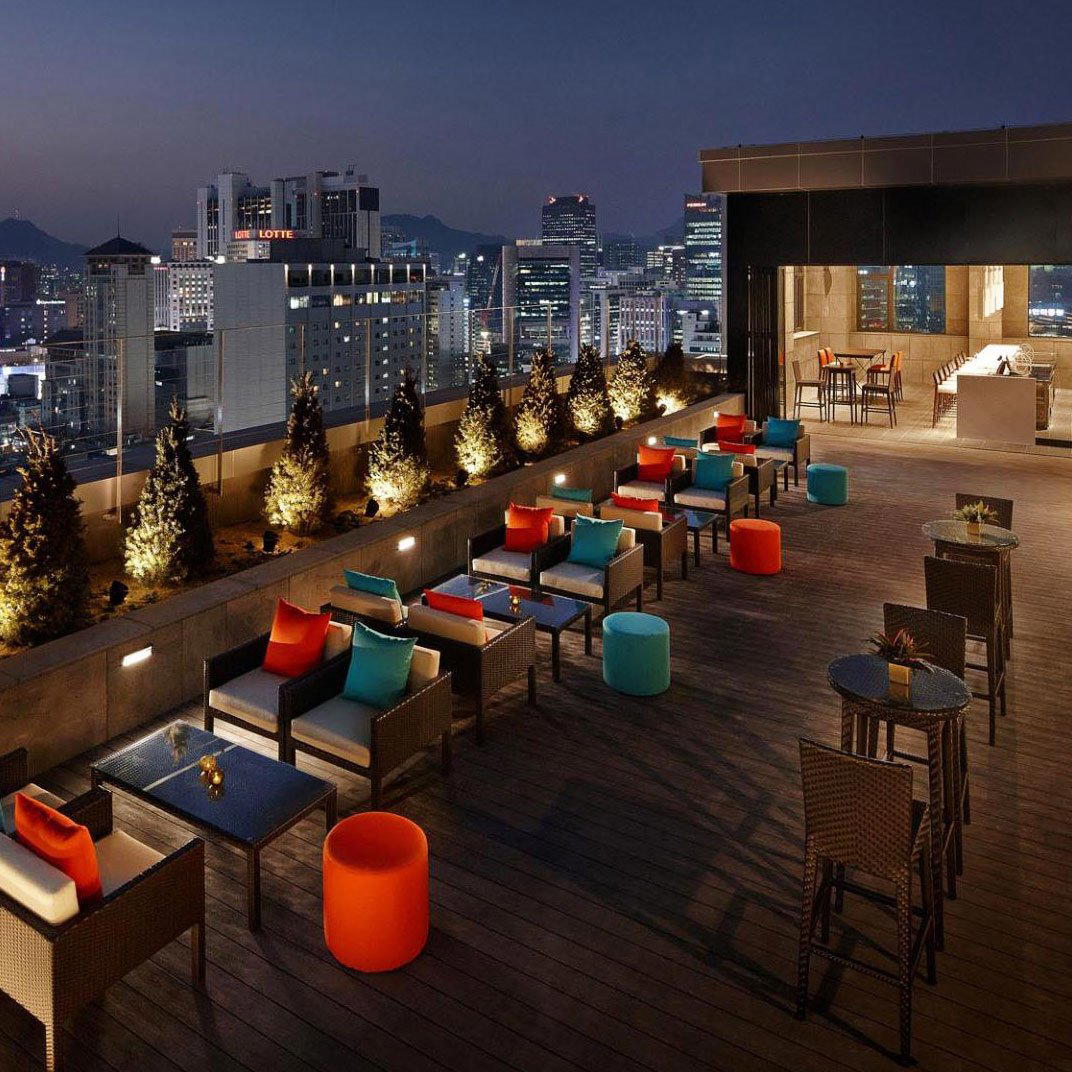
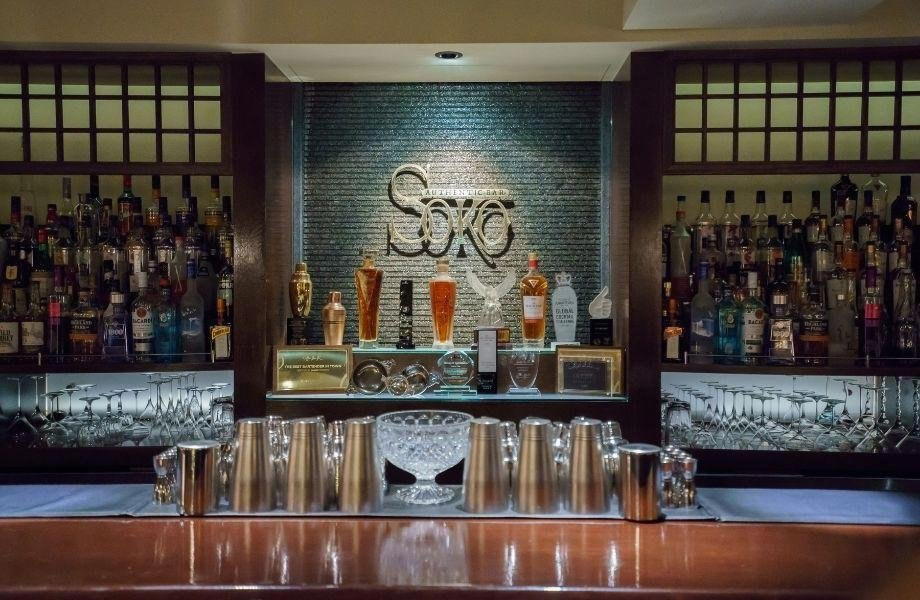
Bars in Seoul
All bars in Seoul →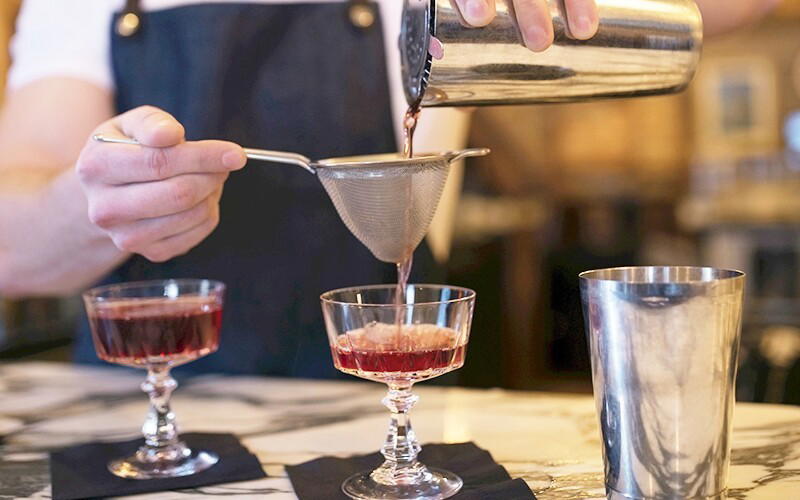
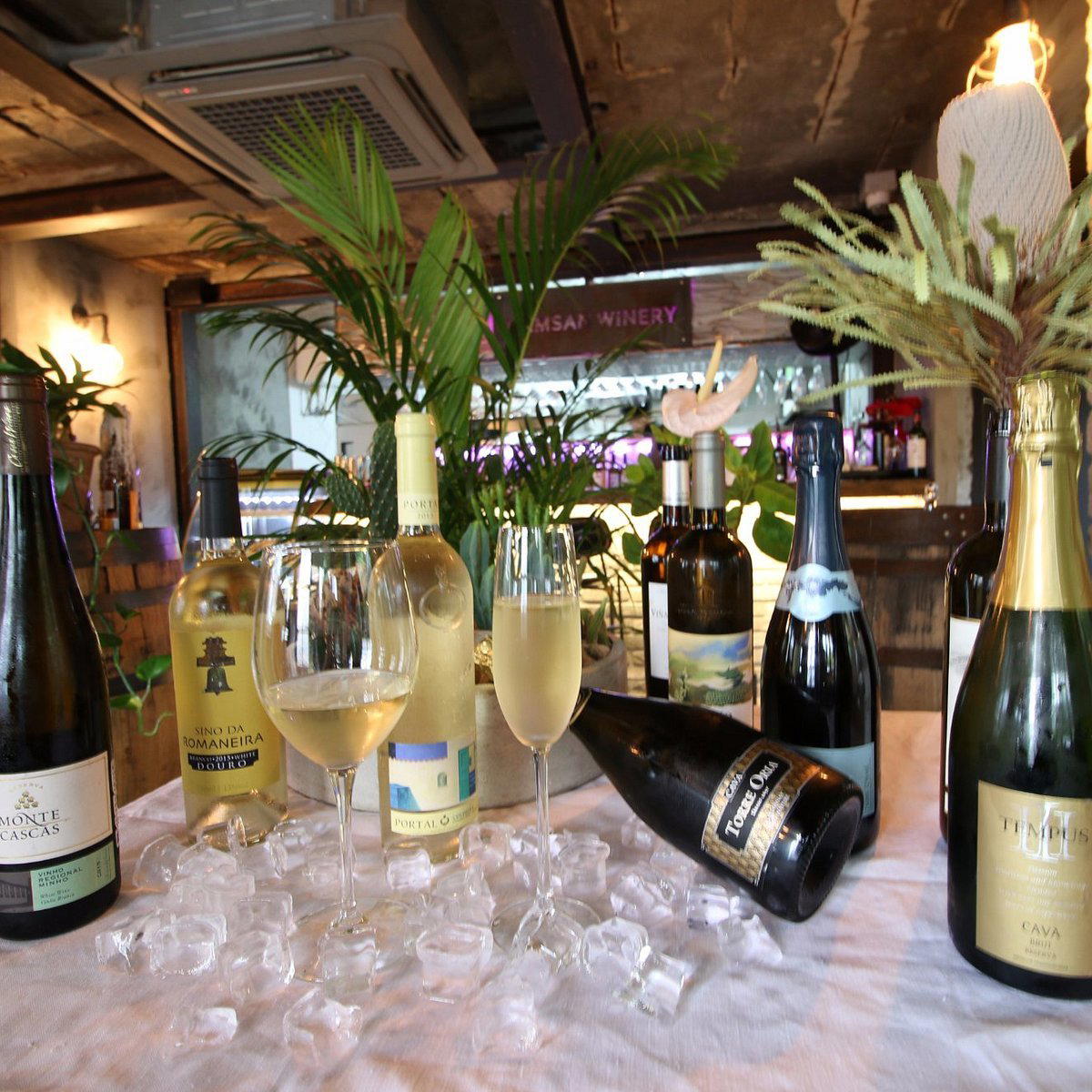


Details
- Classic
- Cozy
- Well Known
- Casual Hangout
- Historic Building
- Beer Program
- Local Sourcing
- A La Carte
- Beer
Current opening hours
- Monday
- 7 AM–9 PM
- Tuesday
- 7 AM–9 PM
- Wednesday
- 7 AM–9 PM
- Thursday
- 7 AM–9 PM
- Friday
- 7 AM–9 PM
- Saturday
- 7 AM–5 PM
- Sunday
- 7 AM–5 PM
Hours can change for holidays and private events. Hours as of .