Mandujip

Michelin Bib Gourmand
Our verdict
Thirty years into Apgujeong's fashion-forward stretch of Gangnam, Mandujip has held its ground on a single specialty: Pyeongando-style mandu. Six large dumplings arrive in a clear beef broth built from brisket, the filling a precise combination of minced beef, bean curd, mung bean sprouts, green onions, and sesame oil.

Pearl is the En Primeur Club membership app, where members save venues, book tables and use the concierge.
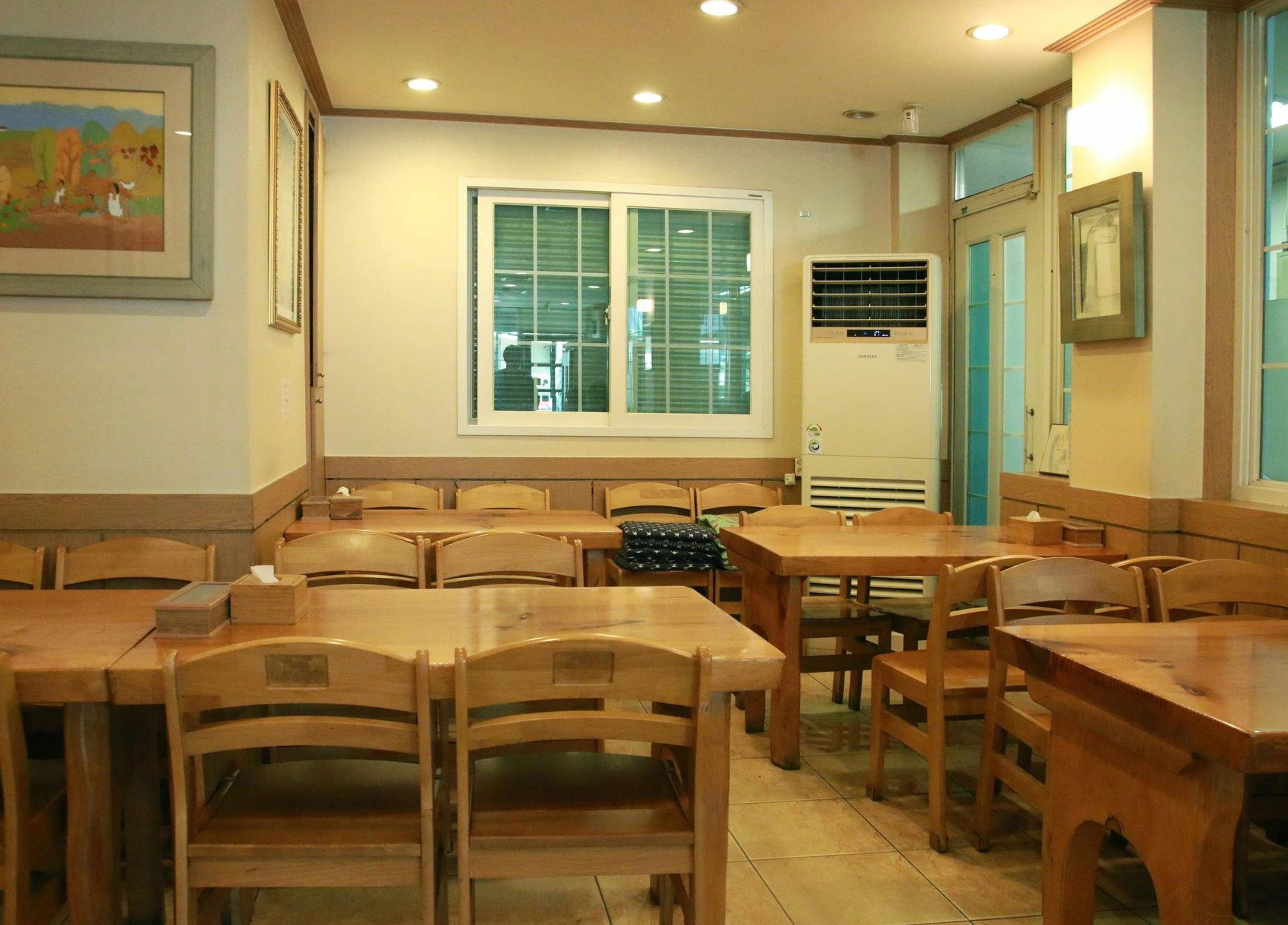
Where Apgujeong's Pace Slows Down
Apgujeong-ro is not the address where you expect to find restraint. The strip running through Gangnam's most fashion-conscious corridor is defined by flagship boutiques, skin-care clinics, and restaurants that rotate with the speed of a seasonal collection. Against that backdrop, a single-dish dumpling house that has occupied the same address for three decades reads as a statement in itself. Not of nostalgia, but of confidence.
Mandujip has been at 338 Apgujeong-ro for thirty years. That kind of tenure in this specific neighbourhood tells you something the Michelin Bib Gourmand designation only confirms: the regulars have always been here, and they keep coming back on their own terms.
The Logic of the One-Dish Counter
Seoul's mandu tradition spans a wide spectrum, from the folded dumplings served at home-style joints in Mapo to the elaborate presentations found at fine-dining tables like Gaon or Kwon Sook Soo. Mandujip operates at neither extreme. Its register is the focused, artisan middle: one style of dumpling, one broth, executed with the kind of consistency that three decades of daily repetition produces.
The specific reference point is Pyeongando-style mandu, a preparation with roots in the northwestern Korean peninsula. What separates it from the more common Gyeonggi or Seoul-style versions is a filling philosophy that favours a specific balance of ingredients: minced beef, bean curd, mung bean sprouts, green onions, and sesame oil. The ratio matters. Too much tofu and the filling softens into mush; too little sesame oil and the aromatic structure collapses. The broth is clear, built from brisket, and arrives with visible chunks of meat rather than the concentrated, reduced stocks that define restaurant cooking at a different price tier.
Each order comes as six large dumplings. The portion size is deliberate. This is a full meal format, not a supporting act.
What the Regulars Know
Venues that hold a loyal base in a neighbourhood like Apgujeong do so through a combination of product consistency and social function. Mandujip's repeat clientele includes Gangnam office workers eating at lunch, older residents for whom this style of mandu connects to a regional culinary memory, and a younger crowd that treats the Bib Gourmand as a signal that the unfussy can be the worthy. The mix is unusual for a block dominated by high-concept spending.
What draws people back is rarely the novelty. With thirty years of operation, there is no novelty left. What draws people back is the knowledge of exactly what they are getting: six dumplings, clear broth, brisket, the specific aromatic finish of the sesame oil in the filling. That kind of menu certainty is rare at any price point, and at the ₩ tier, it is rarer still.
Compared to the long-running mandu specialists in other parts of Seoul, including Jaha Son Mandu in Buam-dong or Gaeseong Mandu Koong near Insadong, Mandujip occupies an unusual geographic position. Those houses sit in neighbourhoods where traditional Korean food is part of the ambient identity. Mandujip sits in fashion-forward Apgujeong, which makes its survival less a product of location advantage and more a function of the product itself.
Positioning Within Seoul's Mandu Scene
Seoul's dedicated mandu restaurants have attracted increasing critical attention over the past decade, partly as broader interest in Korean regional food traditions has grown among both domestic and international diners. The Michelin Bib Gourmand category, which recognises quality cooking at accessible prices, has been particularly relevant for this segment. Mandujip's 2024 inclusion places it in a recognised tier of Seoul restaurants where the value proposition is explicitly part of the critical judgement.
Within the wider Gangnam dining context, the contrast is sharp. The neighbourhood sustains restaurants like Mingles, operating at a multi-course, high-price tier with deep wine and jang-based cooking credentials, and contemporary Korean houses at the ₩₩₩₩ level such as Bongsanok and Mipildam. Mandujip does not compete with any of them. Its competitive set is the city's specialist mandu houses, and on that basis, its longevity and award recognition speak clearly.
Volume at that level means the dining base is not restricted to critics or food media. The regulars are voting too, and consistently.
The Broader Pull of Regional Korean Cooking
Interest in Korean regional food traditions has expanded well beyond Seoul in recent years, with restaurants like Mori in Busan and Baegyangsa Temple in Jangseong-gun drawing attention to how much Korean culinary identity exists outside the capital's fine-dining circuit. Pyeongando-style cooking, with its roots in what is now North Korea's northwestern provinces, sits within that broader story of preserved regional technique. In Seoul, you encounter it most reliably at a small number of specialist houses, of which Mandujip is among the most accessible and most consistently recognised.
For travellers building a Seoul eating itinerary around Korean culinary breadth rather than tasting-menu prestige, Mandujip belongs on the list alongside the city's fine-dining references. The price tier and format are different; the cultural depth of the product is not. Our full Seoul restaurants guide maps both categories, and the Seoul experiences guide covers related cultural programming worth pairing with this kind of food-focused itinerary.
Know Before You Go
| Location | 338 Apgujeong-ro, Gangnam District, Seoul, South Korea |
|---|---|
| Cuisine | Mandu (Pyeongando-style dumplings) |
| Price | ₩ (accessible) |
| Recognition | Michelin Bib Gourmand 2024 |
| Booking | Not confirmed, check on arrival or local booking platforms |
| Hours | Not confirmed, verify before visiting |
Frequently asked questions
What is the signature dish at Mandujip?
Mandujip specialises in Pyeongando-style mandu: six large dumplings filled with minced beef, bean curd, mung bean sprouts, green onions, and sesame oil, served in a clear beef broth made with brisket. The format is a full meal portion rather than a side dish or shared starter. The 2024 Michelin Bib Gourmand recognition is directly tied to this single preparation, which the restaurant has maintained as its core offering across thirty years of operation in Apgujeong. For broader context on Seoul's mandu tradition, see our guides to Jaha Son Mandu and Gaeseong Mandu Koong, as well as the full Seoul restaurants guide. For accommodation and bar options in the city, the Seoul hotels guide and Seoul bars guide are useful companions. Our Seoul wineries guide is also available for those extending their itinerary.
The Short List
| Venue | Cuisine | Price | Awards | Notes |
|---|---|---|---|---|
| MandujipThis venue (the venue you are viewing) | Pyeongan-do Style Mandu (Korean Dumplings) | Not listed | Michelin Bib Gourmand | Not listed |
| 7th Door | Modern Korean Fermentation Fine Dining | $100–150 | 1 Michelin Star · World's 50 Best #49 | Korean, Contemporary |
| Solbam | Contemporary Neo-Classical Korean | $200–300 | 1 Michelin Star · World's 50 Best #55 | Contemporary |
| Onjium | Modern Korean Royal Court Cuisine | Not listed | 1 Michelin Star · World's 50 Best #14 | Korean |
| L'Amitié | Classic French Fine Dining | $100–150 | 1 Michelin Star · La Liste Top Restaurants | French |
| Zero Complex | Modern French Neo-Bistro | $100–150 | 1 Michelin Star · La Liste Top Restaurants | Korean-French, Innovative |
Recognition history
Dated appearances from independent guides and award organizations, with the underlying list record or original source where available.
Michelin Bib Gourmand
Michelin
Full recognition history (2 entries)
Michelin Bib Gourmand
Michelin
Continue exploring
More in Seoul
Restaurants in Seoul
All restaurants in Seoul →
Bars in Seoul
All bars in Seoul →

Details
- Classic
- Cozy
- Intimate
- Casual Hangout
- Standalone
- A La Carte
Current opening hours
- Monday
- 12–9:30 PM
- Tuesday
- 12–9:30 PM
- Wednesday
- 12–9:30 PM
- Thursday
- 12–9:30 PM
- Friday
- 12–9:30 PM
- Saturday
- 12–9:30 PM
- Sunday
- Closed
Hours can change for holidays and private events. Hours as of .
Simple and neat traditional Korean atmosphere in an intimate hanok-inspired space.