
Sanchome no Teuchi Udon places Sayama’s everyday noodle culture in a serious hand-cut frame: udon, tempura, and curry udon at a lunch-friendly JPY 1,000–1,999 range. Its Tabelog 100 Udon EAST 2024 selection, 19-seat room, and house-restaurant setting make it a small-format stop for travelers reading Saitama through flour, broth, and local routine rather than ceremony.
Pearl is the En Primeur Club membership app — saves, bookings, and concierge access live there. Same editors, same standards.
- Address
- 埼玉県狭山市水野1266-49
- Phone
- +81429583262
- Website
- santyoume.jimdofree.com
 Saves & bookings on Pearl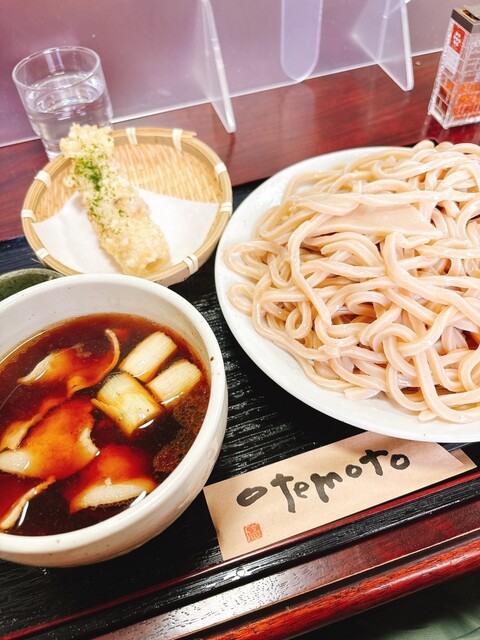
Approach the Mizuno side of Sayama and the dining rhythm changes from capital-city precision to suburban routine: low buildings, residential streets, and the kind of udon shop where the room matters because it keeps the format honest. Saitama has a serious wheat-noodle culture, and hand-cut udon here is less about performance than repetition: flour, water, salt, resting time, knife work, broth, and speed of service. Sanchome no Teuchi Udon fits that tradition at neighborhood scale, with a 19-seat room split between counter seating and sunken kotatsu tables, and a menu orbiting udon, tempura, and curry udon rather than a sprawling izakaya script.
The useful way to read this address is through sourcing and structure. Udon shops live or fail by basic inputs: wheat quality, dough handling, dashi discipline, frying oil management, and the timing between boiling and serving. A Tabelog 100 Udon EAST 2024 selection puts Sanchome no Teuchi Udon in a regional conversation that includes specialist noodle counters rather than general Japanese restaurants. The score, 3.65, is not a luxury signal; it is a public-review signal for consistency in a category where a narrow menu and repeat local traffic matter more than theatrical plating.
Hand-cut udon in Sayama's wheat-noodle belt
Eastern Japan’s udon culture has several identities. Tokyo often prizes convenience and station-adjacent speed; Saitama and neighboring inland areas have deeper ties to thicker, chewier wheat noodles, partly because wheat historically mattered in local agriculture. The handmade format makes that context visible. A hand-cut noodle is not automatically superior, but it gives the kitchen fewer places to hide: unevenness can be charm or flaw, thickness affects chew, and boiling time has to match the dough rather than a factory standard.
That is why the category mix here is editorially useful. Udon, tempura, and curry udon cover three different tests of a noodle shop. Plain or broth-led udon asks whether the noodle and dashi can carry the bowl. Tempura tests frying control and pacing. Curry udon measures whether the noodle can hold its shape under a heavier sauce. The presence of sake, listed as nihonshu, also places the shop within a casual Japanese dining register rather than a fast-food noodle stand, though the core appeal remains the bowl rather than the drink list.
Price keeps the address in everyday territory. At JPY 1,000–1,999, it sits close to Udonya Kazu, another udon specialist in the same broad price band, and far below more occasion-led regional dining such as Unagiya Shubo Gasou Echigoya, where listed budgets move into the JPY 4,000–5,999 range. That gap matters for travelers: this is not a splurge meal dressed down as local color. It is a low-ticket, high-specificity stop where the value lies in category focus.
A small room changes the pace of the meal
The 19-seat footprint shapes expectations before any bowl arrives. Three counter seats suit solo diners, while four sunken kotatsu tables create a more domestic rhythm for families or small groups. The house-restaurant setting reinforces the point: this is a compact local room, not a design-led dining room built for destination traffic. Children are welcome, private rooms are unavailable, and the shop is non-smoking, details that make the experience legible for visitors traveling with different dining needs.
Service details point to a practical, low-friction operation. Water is self-service, orders can be placed by QR code, and verbal orders are accepted. Take-out is listed, which gives the kitchen an additional neighborhood function beyond seated dining. Reservations are unavailable, so the better strategy is to treat the meal as a lunch-window target rather than a fixed appointment. The listed schedule centers on midday service, with Tuesday and Wednesday closures, a pattern that rewards travelers who check timing before building a Sayama day around noodles.
Logistics also favor the locally mobile. The restaurant is listed as a nine-minute walk from the East Exit of Musashi-Fujisawa Station on the Seibu Ikebukuro Line, with parking available across the road. Payment is cash-oriented: credit cards, electronic money, and QR code payments are not accepted. Those details are not glamorous, but they define the meal as much as the noodle texture does. Japan’s serious everyday restaurants often remain analog in the places where tourists expect frictionless payment.
How to place it in a wider Japan itinerary
Sanchome no Teuchi Udon makes the strongest case when Sayama is treated as part of a broader Saitama or Seibu-line food day rather than a standalone detour from central Tokyo. The reward is specificity: handmade udon in a small suburban room, selected for Tabelog 100 Udon EAST 2024, at a price point that keeps the meal casual. For travelers building a wider map, start with Our full Sayama restaurants guide, then layer in Our full Sayama hotels guide, Our full Sayama bars guide, Our full Sayama wineries guide, and Our full Sayama experiences guide.
The comparison becomes sharper when set against Japan’s broader casual-specialist dining. A sukiyaki meal such as -Grilled beef Sukiyaki- KAMAKURA TANUKIAN 鎌倉 たぬき庵 in Kamakura asks for a different appetite and budget logic; . 鮪と炭火焼き うお炭 秋葉原店 in Tokyo sits closer to seafood-and-grill urban dining; .cafe in Osaka and .know in Kumamoto reflect café and contemporary formats; (Shoku) Vietnam in Kawasaki shifts the lens to Vietnamese cooking in Japan. For other narrow-format stops, compare [Curry Senmon Ten] Maruyama Kyoju. in Sapporo, [ki:] in Kyoto, #肉といえば松田 奈良本店 in Kashihara, 1/3 HAMBURGER FACTORY in Kanazawa, 1000 in Yokohama, and 1000mヒュッテ 1000m Hut in Kutchan. Japanese food culture abroad adds another frame through Jōdo Saké Bar in Los Angeles and Onigiri Time in Pasadena.
The editorial call is simple: come for the category, not for spectacle. Sayama’s value here is the chance to eat a focused hand-cut udon meal in its natural setting, where a small seating count, midday hours, no-reservation policy, and cash payment all point to a local operation built around repeat noodle demand. The Tabelog 100 selection supplies the external signal; the stronger reason to care is how directly the format connects wheat, technique, and suburban Saitama dining culture.
Fast Comparison
Comparable venues by cuisine and price in the same metro.
| Venue | Cuisine | Price | Notes |
|---|---|---|---|
| Sanchome no Teuchi UdonThis venue — the venue you are viewing | Musashino-style handmade udon | $ | Not listed |
| 菊屋 | Traditional Japanese Noodles (Chanpon & Udon) | $ | 中央町 (Chuo-cho) |
| Syokudoh TANUKI (食堂たぬき) | Traditional Japanese Canteen | $ | Myoko City |
| Buta Daigaku (豚大学) | Grilled Pork Bowl (Butadon) | $ | Shimbashi |
| Musashino Dentou no Aji Ryotaro | Japanese Udon | $ | Tokorozawa |
| Chuka Soba Hirai | Ramen & Tsukemen Shop | $ | Fuchu |
Recognition history
Dated appearances from independent guides and award organizations, with the underlying list record or original source where available.
Tabelog 100 #17 · No. 17
Tabelog · Tabelog 100 - Udon - EAST - 2024
Continue exploring
More in Sayama
Restaurants in Sayama
Browse all →



Bars in Sayama
Browse all →




Hotels in Sayama
Browse all →




Wineries in Sayama
Browse all →
At a Glance
- Cozy
- Classic
- Solo
- Family
- Casual Hangout
- Group Dining
- After Work
- Standalone
- Local Sourcing
A simple, homey neighborhood udon shop focused on substance over design, with a casual, family-friendly atmosphere typical of local Musashino udon eateries.