
Chuka Soba Hirai places Fuchu ramen in Tokyo’s serious-value bracket: a nine-seat, counter-led shop selected for Tabelog Ramen TOKYO “Tabelog 100” from 2021 through 2025, with average spend held at JPY 1,000–1,999. The draw is not luxury framing but concentration: ramen and tsukemen, tight service rules, and a queue culture that rewards planning.
Pearl is the En Primeur Club membership app — saves, bookings, and concierge access live there. Same editors, same standards.
- Address
- 東京都府中市栄町2-11-7
- Website
- tabelog.com
 Saves & bookings on Pearl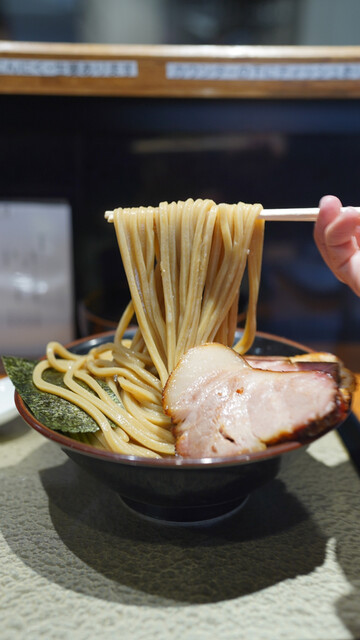
Approaching ramen in outer Tokyo changes the tempo. Central noodle shops often rely on commuter flow and late-night density; Fuchu requires a deliberate trip, shifting the economics of the bowl. At Chuka Soba Hirai, a small room makes the counter the experience, and scarcity sharpens the value: nine seats, lunch-only service, and a JPY 1,000–1,999 price band place it where Tokyo ramen is judged by broth discipline, noodle handling, and line management rather than design budgets or imported luxury cues.
That matters in 2026 because Tokyo ramen has split into several markets: the everyday station-side bowl, the collector’s queue, the specialist tsukemen shop, and the destination counter that keeps repeat recognition while staying accessible. Chuka Soba Hirai belongs to the last group. Its selection for Tabelog Ramen TOKYO “Tabelog 100” every year from 2021 through 2025 is a measurable signal in a city where ramen reputations flare and fade quickly. The award does not replace judgment; it tells travelers this is not a casual add-on between museums, but a small-format shop inside Tokyo’s competitive noodle conversation.
Fuchu ramen, priced like lunch and treated like a destination
The strongest reason to cross town is value. Tokyo has many meals at this price, but fewer combining recognition, limited seats, and category focus. The menu frame is ramen and tsukemen, dipping noodles, one of the city’s defining modern formats: concentrated soup, separate noodles, and a meal dependent on proportion as much as flavor. On Fridays, service is limited to chuka soba, which helps explain its appeal to regulars and first-timers with different priorities. Travelers who specifically want tsukesoba should treat timing as part of the meal, since it may sell out.
Compared with Tokyo venues in the same broad spend band such as Kurumi Do Kissa Ten, KURUMED COFFEE, Teuchi Kage Hinata, Goto Udon Bizenya, and Curry no Mise Pusan, this is the ramen specialist version of the sub-JPY 2,000 destination meal. The price does not buy spaciousness or flexibility. It buys access to a narrow, practiced format where each seat turns inside a compact service window: less lingering than a café, udon shop, or curry counter, and more emphasis on arrival discipline.
Tokyo dining guides often overvalue centrality. Fuchu’s position west of the core makes the meal feel less incidental, which helps readers decide whether to build a day around it. The area lacks the restaurant density of Shinjuku, Ginza, or Akasaka, so the decision is sharper: go for the bowl, not because the neighborhood offers endless backups. For wider planning, Our full Tokyo restaurants guide gives context across categories, while travelers pairing food with lodging, drinks, or culture can cross-reference Our full Tokyo hotels guide, Our full Tokyo bars guide, Our full Tokyo wineries guide, and Our full Tokyo experiences guide.
The compact-counter rules are part of the value calculation
Ramen etiquette in Japan is often described too softly. At small shops, it is operational architecture. Here, guests are asked to purchase meal tickets in advance, even before opening, and saving places in line is not accepted. The waiting estimate is explicit: about one hour if 20 customers are ahead. That is more useful than vague popularity claims; it tells a traveler with a tight schedule whether the meal fits.
The setup rewards solo diners. Seven counter seats and one table create a room where small parties move more easily than groups, and the no-reservations format keeps the transaction direct. Payment is cash-oriented in practice, since credit cards, electronic money, and QR code payments are not accepted. Parking is not provided, though paid parking exists nearby, and the practical approach is public transport plus patience. From Kita-Fuchu or Kokubunji, the walk is listed at 1.5 km; from Kokubunji Station, the Keio Bus Tera 91 route stops at Sakaemachi Police Box North, 191 meters away.
These details are the difference between a satisfying ramen detour and a badly planned queue. A nine-seat lunch service absorbs fewer mistakes than a larger dining room. The shop is non-smoking, private rooms and private use are not part of the format, and strong perfume is discouraged. In ramen, that is not preciousness; it protects the shared counter, where aroma and close seating make other guests part of the meal’s conditions.
Where it sits in a Tokyo eating day
Chuka Soba Hirai is not an all-purpose Tokyo restaurant recommendation. It suits travelers who value a tightly run, low-cost specialist meal enough to reach Fuchu and wait if the line is deep. It is less suited to large groups, diners needing a long lunch, or visitors stacking several central Tokyo reservations in one day. Its opening date, May 10, 2021, places it among relatively recent shops that entered the city’s ramen conversation quickly, then maintained recognition across multiple Tabelog cycles.
The smarter comparison is not with luxury dining, but with precise Japanese casual formats. A traveler weighing a focused noodle stop against casual Tokyo options such as 3 Chome no Curry Ya San, 124. KAGURAZAKA (Yakitori), or 12/10 Shinjuku ten should think in terms of format, not hierarchy. Ramen compresses the meal into speed, heat, and sequence; yakitori and curry ask for different pacing. Nearby or broader Tokyo planning may also point toward 鮪と炭火焼き うお炭 秋葉原店 or 2D Cafe, but those are different stops entirely.
Across Japan and abroad, the same logic applies: category focus beats generic praise. A diner choosing between -Grilled beef Sukiyaki- KAMAKURA TANUKIAN 鎌倉 たぬき庵 in Kamakura.cafe in Osaka.know in Kumamoto, (Shoku) Vietnam in Kawasaki, [Curry Senmon Ten] Maruyama Kyoju. in Sapporo, [ki:] in Kyoto, Jōdo Saké Bar in Los Angeles, and Onigiri Time in Pasadena is choosing a dining rhythm. In Fuchu, that rhythm is compact, rule-bound, and priced with unusual restraint for a multi-year Tabelog 100 ramen selection.
Comparable Spots
Comparable venues by category and price.
| Venue | Cuisine | Price | Notes |
|---|---|---|---|
| Chuka Soba HiraiThis venue — the venue you are viewing | Ramen & Tsukemen Shop | $ | Not listed |
| Teuchi Udon Fukusuke | Handmade Udon & Sake Bar | $ | Kodaira |
| Chuka Soba Ibuki | Niboshi-focused ramen | $ | Itabashi |
| Taiyaki Hiiragi | Traditional Japanese Taiyaki Shop | $ | Shibuya |
| TOUJOURS DEBUTER | Traditional Japanese kissaten cafe | $ | Shinagawa |
| Akasaka Aono Honten | Traditional Japanese Wagashi Shop | $ | Minato |
Recognition history
Dated appearances from independent guides and award organizations, with the underlying list record or original source where available.
Tabelog 100 #77 · No. 77
Tabelog · Tabelog 100 - Ramen - TOKYO - 2025
Continue exploring
More in Tokyo
Restaurants in Tokyo
Browse all →



Bars in Tokyo
Browse all →



Hotels in Tokyo
Browse all →




Wineries in Tokyo
Browse all →
At a Glance
- Cozy
- Lively
- Intimate
- Solo
- Family
- Casual Hangout
- After Work
- Chefs Counter
- Standalone
A compact, non‑smoking neighborhood ramen shop with just nine seats, counter‑focused layout, and a casual, energetic atmosphere shaped by steady queues and quick turnover rather than lingering meals.