1 Michelin Star
Our verdict
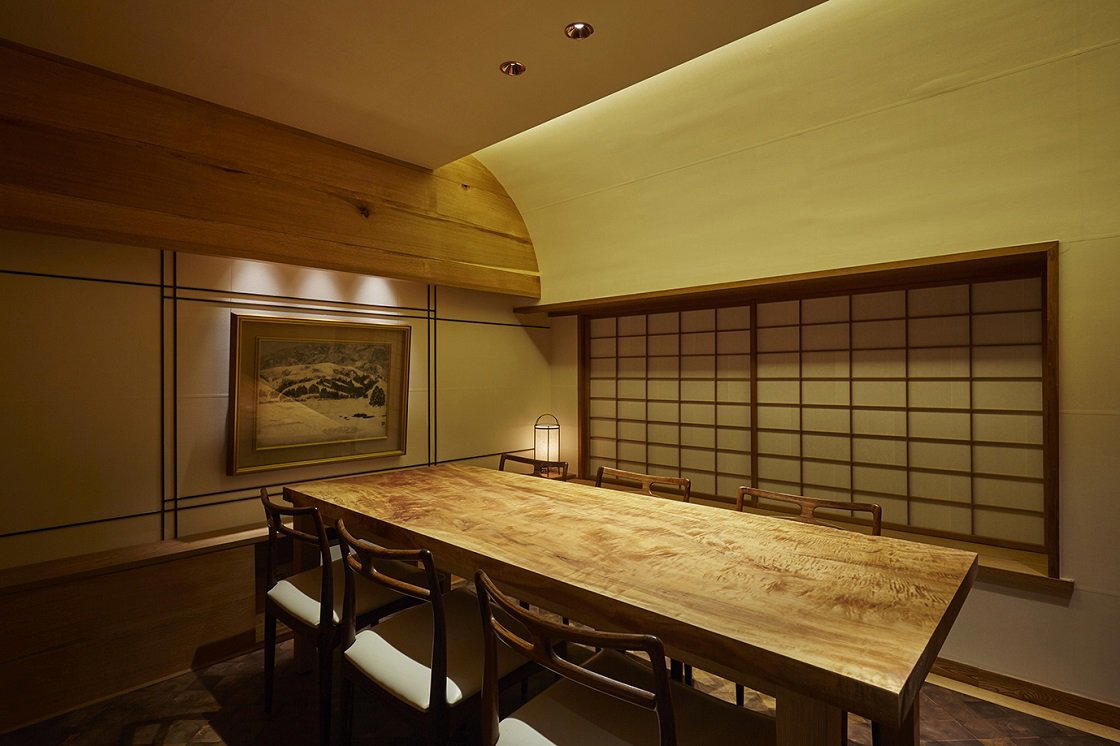
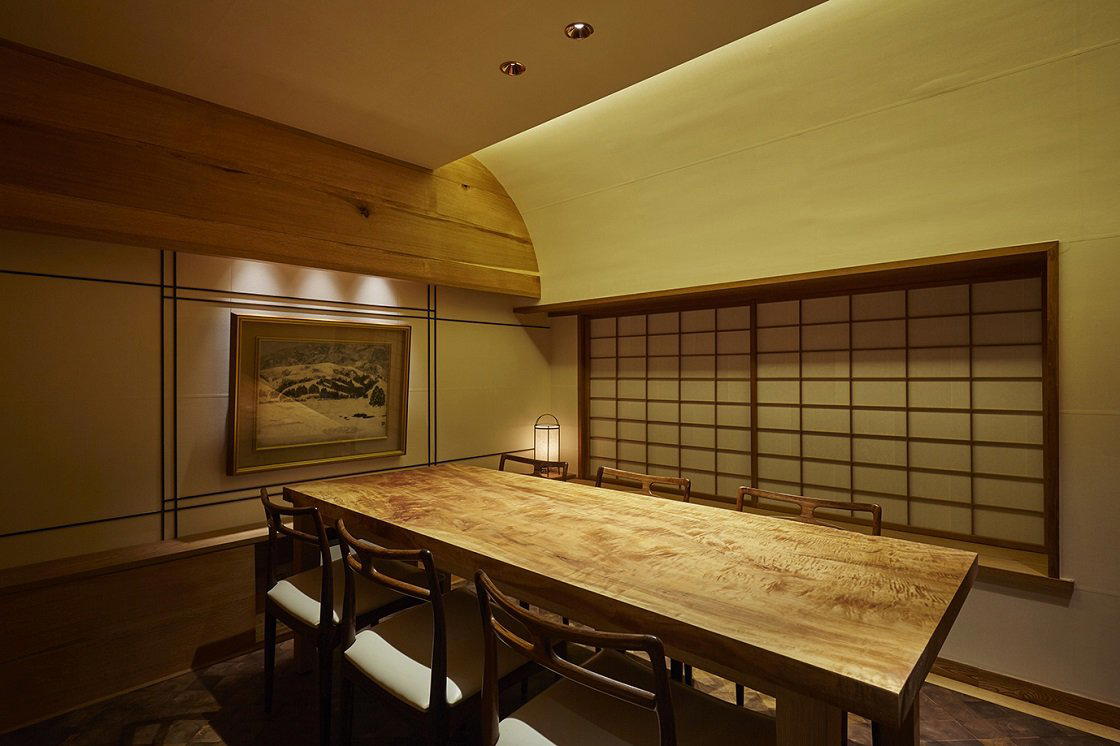
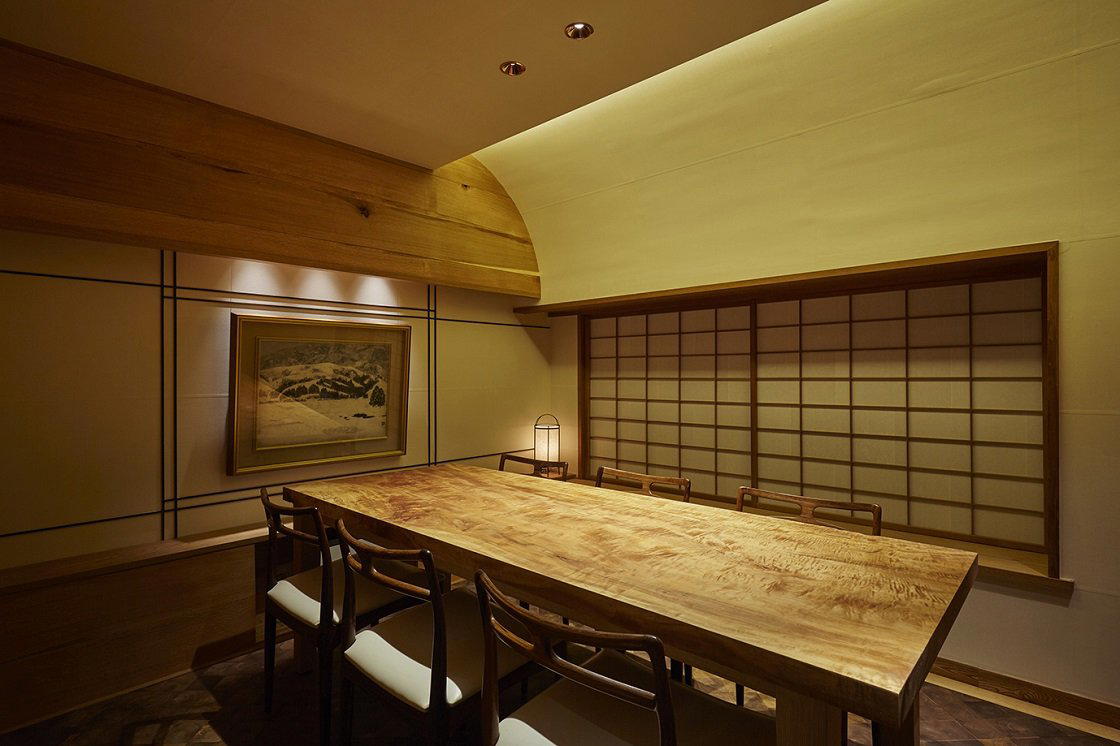
Rakushin in Osaka's Fukushima ward sits at the premium tier of Osaka kaiseki, where Western-influenced touches and seasonal lacquerware presentation operate within the grammar of traditional Japanese dining. Chef Katayama's approach fuses creative exchange with overseas chefs alongside deep respect for Japanese culinary convention, placing it in a competitive bracket alongside the city's most thoughtfully constructed multi-course restaurants.

Pearl is the En Primeur Club membership app, where members save venues, book tables and use the concierge.
Fukushima's Quiet Seriousness
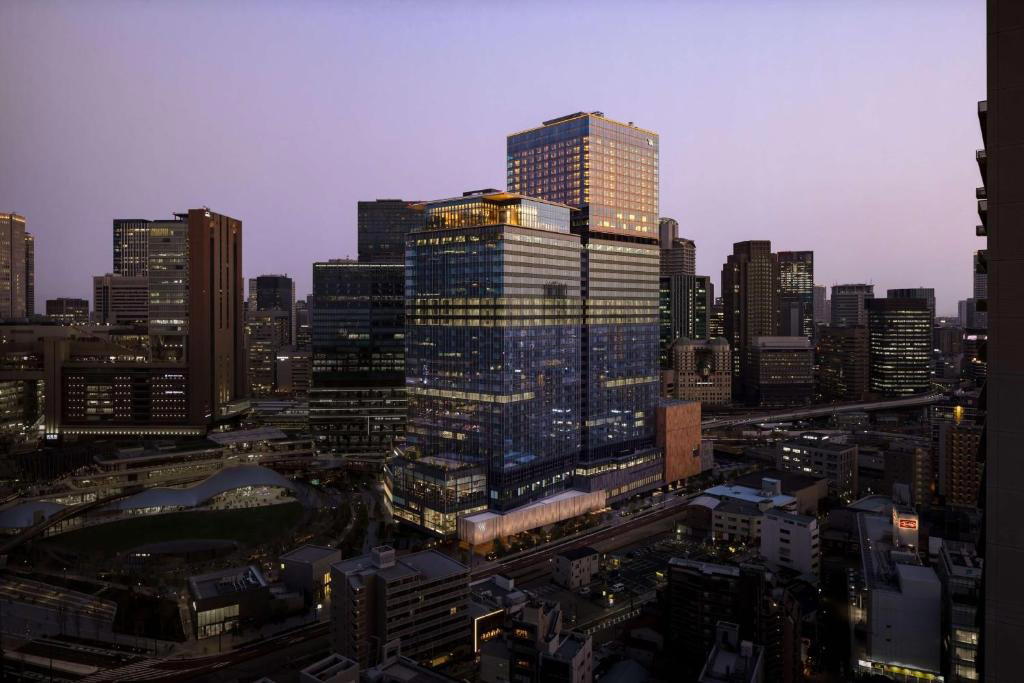
Osaka's Fukushima ward sits just west of the Umeda interchange, close enough to feel urban but without the density that compresses the city's central dining blocks. The neighbourhood has attracted a clutch of considered Japanese restaurants that operate below the tourist radar while drawing a loyal local clientele. It is not the Namba strip, not the Shinsaibashi grid. Arriving at a Fukushima address for dinner carries an implicit understanding: this is a room built for people who already know what they want.
That context matters for reading Rakushin. The restaurant occupies the ¥¥¥¥ bracket, the same price tier as Kashiwaya Osaka Senriyama at its upper reaches, and comparable in positioning to Yugen among Osaka Japanese addresses that blend tradition with a degree of creative extension. Within that set, Rakushin signals its intent through the name itself: written to reference both the chef's given name, Shintaro, and the phrase meaning 'spirit of fun', it is an unusual double meaning for a serious kitchen, and that tension between playfulness and reverence is where the restaurant's identity lives.
The Ritual Grammar of Japanese Dining
Japanese multi-course dining at this price point is not just a sequence of dishes. It is a set of accumulated decisions about pacing, presentation, and the physical objects through which food arrives at the table. Lacquered wooden trays and flower-garnished dishes are not decorative choices made independently of the food; they are part of a representational system in which the season is made legible at every course. A guest at Rakushin is not simply eating; they are being oriented in time, in the agricultural calendar, in the relationship between craft and ingredient.
This ritual dimension separates serious kaiseki-adjacent dining from Japanese restaurants that adopt the form without the logic. At Rakushin, seasonal presentation is consistent with a kaiseki lineage that extends to rooms like Oimatsu Hisano and Tenjimbashi Aoki in Osaka, and to the broader Kansai tradition exemplified in Kyoto by Gion Sasaki. What Rakushin adds to that continuity is a deliberately open posture toward outside influence, specifically, the creative exchanges Chef Katayama has pursued with overseas chefs that introduce Western elements into the menu without displacing the underlying structure.
Evolution as a Formal Position
The incorporation of Western elements into Japanese kaiseki-influenced cooking is not a recent development in Japan's metropolitan dining scene, but the ways kitchens manage that incorporation vary considerably. Some treat it as embellishment, a French sauce technique applied to a Japanese protein. Others pursue a more structural integration, where the logic of the course sequence or the flavour architecture shifts. At Rakushin, the stated goal is the evolution of Japanese cuisine, and the framing is explicit rather than incidental. This puts the restaurant in company with a small number of Japanese kitchens that have foregrounded the question of what the tradition permits and where its boundaries might move.
In Osaka, that question sits alongside a wider competitive set that includes the French-Japanese synthesis practiced at high-end addresses like Hajime (¥¥¥¥, innovative French) and the technically inventive approach of Fujiya 1935 (¥¥¥¥, innovative). Where those rooms largely operate within a Western fine-dining formal structure applied to local ingredients, Rakushin inverts the orientation: the Japanese meal structure is primary, and the outside influence is integrated selectively. For diners comparing options across Japan, a useful reference point further afield is Goh in Fukuoka, which similarly works at the edge of Japanese form without abandoning it, and Myojaku in Tokyo or Azabu Kadowaki, where Tokyo's premium Japanese dining applies related but distinct reference points.
What the 4.5 Rating Tells You
At ¥¥¥¥ in Fukushima, the clientele is self-selected: diners at this price point in a non-central ward are not arriving by accident. The score is consistent with a kitchen that meets its implied promise reliably, which at the ¥¥¥¥ tier is a more demanding standard than the number alone suggests. For comparison, Miyamoto operates in the same general Osaka Japanese dining tier with its own distinct positioning.
Osaka in the Wider Kansai Dining Frame
Osaka occupies a specific position in Japan's dining hierarchy that sometimes gets flattened into a simple contrast with Tokyo. The city's food culture is deeper and more locally referential than its casual reputation suggests. The ¥¥¥¥ Japanese tier in Osaka, which includes Rakushin, is a smaller bracket than its equivalent in Tokyo, which means the addresses that occupy it are, in practice, quite visible within the local professional dining conversation. Rooms at this level tend to know each other's menus and to be tracked by the same returning guests.
For visitors building a Kansai itinerary, Rakushin's Fukushima location makes it a logical anchor for a dedicated evening rather than a casual addition. It is not proximate to the central Namba or Shinsaibashi clusters in the way that some Osaka premium dining is, but Fukushima is well served by rail and the journey from central Osaka is short. Broader Kansai dining context, including Nara's akordu and the Tokyo anchors of Harutaka, can help frame where Osaka's Japanese premium tier sits relative to the national conversation. Readers building a Japan-wide view of premium Japanese dining should also consider 1000 in Yokohama and 6 in Okinawa for a full sense of regional variation.
Planning a Visit
| Detail | Rakushin | Comparable Osaka Japanese |
|---|---|---|
| Price tier | ¥¥¥¥ | ¥¥¥–¥¥¥¥ depending on address |
| Location | Fukushima Ward, Osaka | Scattered; some central, some residential |
| Format | Japanese multi-course | Kaiseki to evolved Japanese |
| Varies by venue | ||
| Booking | Often reservation-only at this tier |
The address is 1 Chome-6-27 Fukushima, Fukushima Ward, Osaka. For a full picture of Osaka dining at every price point, see our full Osaka restaurants guide. Further Osaka planning resources include our full Osaka hotels guide, our full Osaka bars guide, our full Osaka wineries guide, and our full Osaka experiences guide.
Frequently asked questions
How do I find Rakushin?
Rakushin is located at 1 Chome-6-27 Fukushima, Fukushima Ward, Osaka, 553-0003, Japan, Osaka.
What should I expect cuisine-wise at Rakushin?
Does Rakushin have a Michelin star or similar recognition?
Rakushin has received recognition including: The name means ‘spirit of fun’ and also refers to the chef’s given name, Shintaro. All occupations have their joys and sorrows, but the chef maintains a spirit of fun. At the same time, he never forgets reverence for tradition. Lacquered wo….
What dish is Rakushin famous for?
Rakushin does not publish a fixed signature dish, which is consistent with how Chef Katayama frames the restaurant's purpose: lacquered wooden trays and seasonally garnished presentations shift with the calendar, so no single item defines the counter. The kitchen's identity sits in its approach, Western-influenced technique applied within traditional Japanese boundaries, rather than in any one preparation.
What should I budget for a meal at Rakushin?
Pricing at Rakushin is listed as ¥¥¥¥.
Is Rakushin reservation-only?
Reservation details are not listed publicly for Rakushin. At ¥¥¥¥ pricing in Osaka's Fukushima ward, the format is multi-course Japanese cuisine with a committed regular audience, which typically means seats are allocated in advance. Contacting the restaurant directly at its Fukushima address, 1 Chome-6-27 Fukushima, Fukushima Ward, is the most reliable approach.
The Minimal Set
| Venue | Cuisine | Price | Awards | Notes |
|---|---|---|---|---|
| RakushinThis venue (the venue you are viewing) | Modern Kaiseki | $150–200 | 1 Michelin Star | Not listed |
| HAJIME | Avant-Garde Japanese Fine Dining | $300–500 | 3 Michelin Stars · World's 50 Best #83 | French, Innovative |
| La Cime | Modern French with Japanese Ingredients | $150–200 | 2 Michelin Stars · World's 50 Best #13 | French |
| Kashiwaya Osaka Senriyama | Seasonal Kaiseki Omakase | $200–300 | 3 Michelin Stars · La Liste Top Restaurants | Japanese |
| Taian | Traditional Japanese Kaiseki Omakase | $150–200 | 3 Michelin Stars · La Liste Top Restaurants | Kaiseki, Japanese |
| Fujiya 1935 | Modern Japanese with European influences | $100–150 | 2 Michelin Stars · La Liste Top Restaurants | Innovative |
Recognition history
Dated appearances from independent guides and award organizations, with the underlying list record or original source where available.
Michelin 1 Star
Michelin
Full recognition history (2 entries)
Michelin 1 Star
Michelin