
Michelin Plate
Our verdict
At Oriental Plaza on East Chang'an Avenue, Qiao Dong Bei reframes the cooking of China's three northeastern provinces, Heilongjiang, Liaoning, and Jilin, in a setting that trades the genre's usual rusticity for tailored suits and red-and-white modern interiors. Classic Dongbei dishes arrive in tighter portions and more considered presentations, alongside less familiar preparations like crayfish 'tofu' that rarely appear elsewhere in the city.

Pearl is the En Primeur Club membership app, where members save venues, book tables and use the concierge.
The menu
What to order
- Crayfish tofu
- Pork stew with pickled cabbage
- Fried pork loin in sweet and sour sauce
Where Northeast China Meets Central Beijing
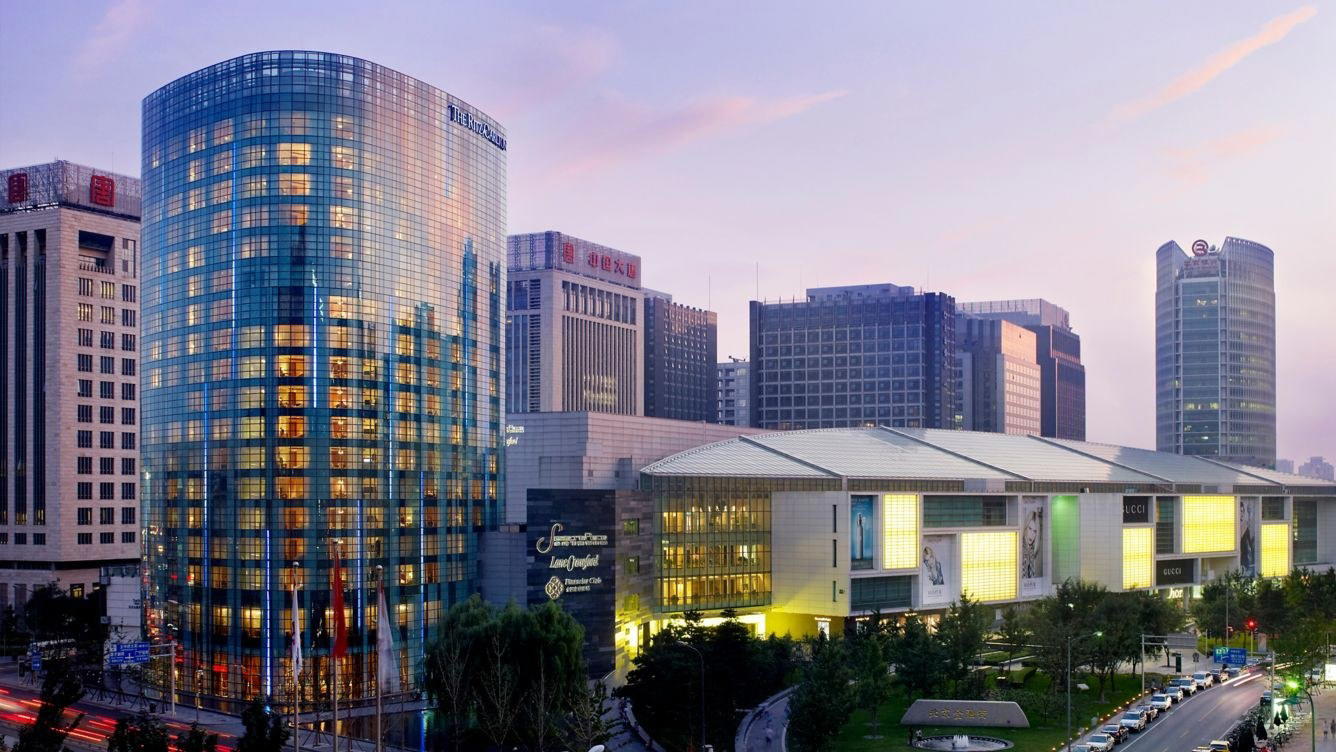
The ground-floor podium of Oriental Plaza, facing East Chang'an Avenue in Dongcheng, is not where most diners expect to find the cooking of Heilongjiang or Jilin. The mall complex sits between Tiananmen Square and Wangfujing, in the most formally central stretch of the capital, surrounded by international hotel dining rooms and polished Cantonese operations. Dongbei food, the hearty, ferment-forward cuisine of China's northeastern provinces, belongs, in the popular imagination, to street-level canteens and communal tables heaped with food. Qiao Dong Bei occupies that contradiction deliberately, and the tension between context and cuisine is precisely what makes it worth attention.
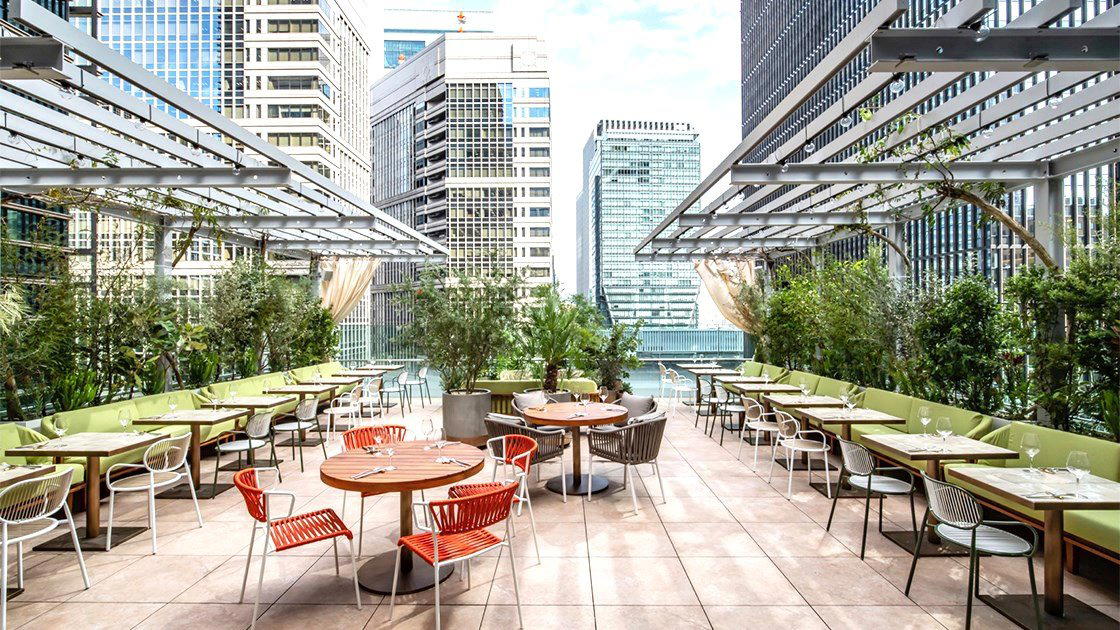
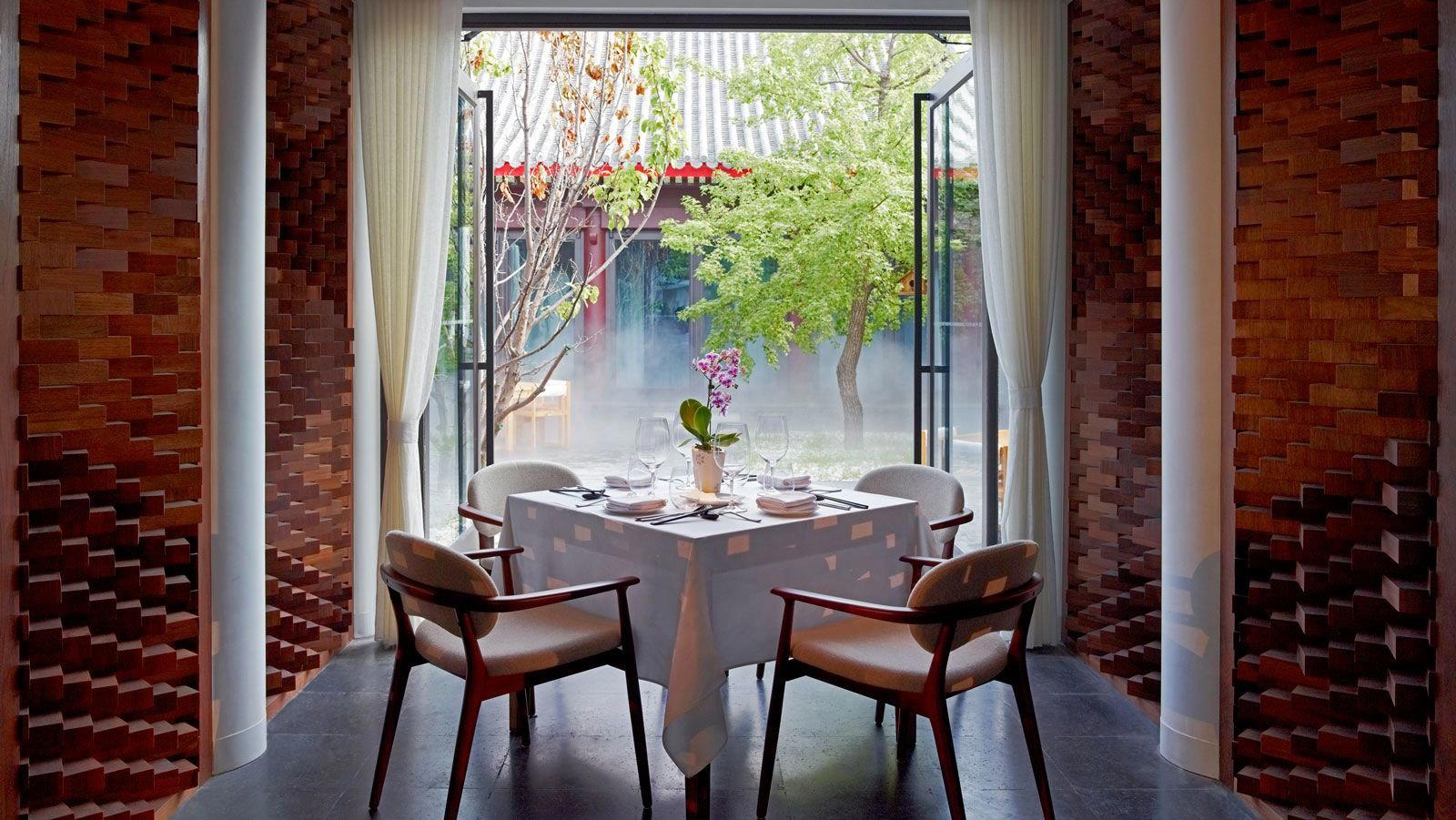
Inside, the room signals its intentions immediately. The red-and-white palette and servers in tailored suits set a register that sits several tiers above the category's norm in Beijing. This is not a rustic canteen with pretensions; it is a considered attempt to give Dongbei cooking the same presentation standards that Cantonese and Shanghainese cuisines have long enjoyed in the capital's formal dining tier. For a broader picture of where this fits within Beijing's Chinese regional dining scene, see our full Beijing restaurants guide.
The Architecture of a Dongbei Menu
Dongbei cuisine draws from three provinces, Heilongjiang in the north, Liaoning along the coast, and Jilin in between, and the differences between them are real: Heilongjiang cooking leans on game and freshwater fish, Liaoning brings more seafood influence and proximity to Korean and Manchu techniques, and Jilin sits somewhere between the two in temperament. A menu that claims all three simultaneously is making an ambitious editorial statement, and the way Qiao Dong Bei handles that claim reveals the kitchen's hierarchy of priorities.
The classic preparations are present and treated with discipline: fried pork loin in sweet and sour sauce (guo bao rou, the dish that defines Harbin's culinary identity for most of China) and pork stew with pickled cabbage (suan cai bai rou huo guo, the fermented-vegetable-and-pork braise that anchors the Dongbei winter table) both appear on the menu. These are not curiosities for adventurous diners, they are foundational dishes that have sustained northeastern Chinese households through some of the continent's harshest winters, and their presence here is a statement that the kitchen is not embarrassed by its source material.
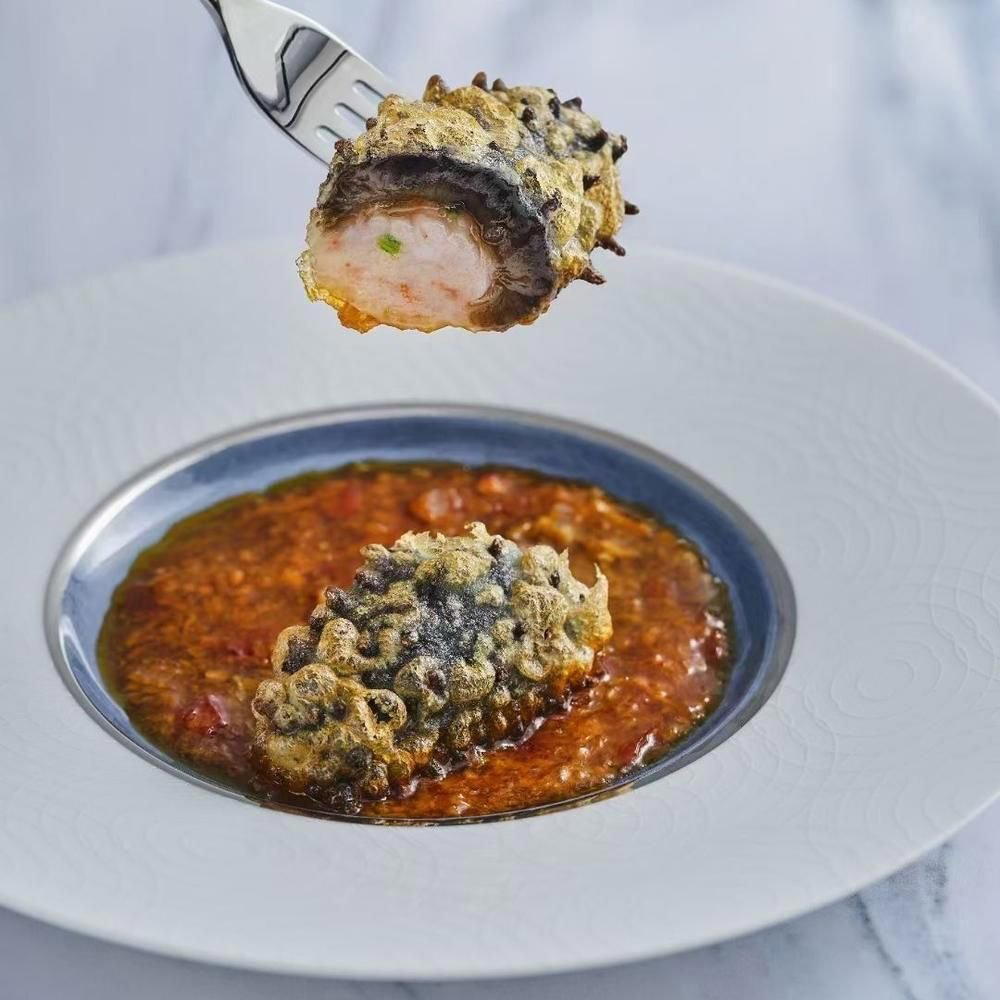
What distinguishes the menu architecture is the inclusion of less-circulated preparations alongside these standards. Crayfish 'tofu', a dish that almost never appears in Beijing's more mainstream Dongbei restaurants, points to a deliberate curatorial approach: the kitchen is reaching into the broader regional repertoire rather than relying entirely on the dozen or so dishes that constitute Dongbei's popular canon. This matters because it shifts the menu from a greatest-hits exercise into something with genuine editorial ambition.
Portion sizes are smaller than the category's tradition. In a genre defined by abundance, dishes designed to fill large round tables, shared without ceremony, with quantity as a signal of hospitality, a conscious reduction in portion size is a meaningful choice. It changes how the food is eaten, inviting a more considered pace that suits the formal setting without distorting the flavours themselves. This approach echoes what has happened in other regional Chinese categories when they migrate into premium urban contexts: compare the considered plating at Xin Rong Ji (Xinyuan South Road), which applies similar logic to Taizhou cuisine at a ¥¥¥¥ price point, or the Chaozhou refinement at Chao Shang Chao (Chaoyang). The pattern across these restaurants is consistent: regional cooking gains a foothold in Beijing's formal dining tier by moderating scale while preserving flavour identity.
The Dongbei Tradition in Context
Dongbei cuisine has long occupied an ambiguous position in China's culinary hierarchy. It is enormously popular, the northeastern diaspora is vast and the food has genuine mass appeal, but it has rarely been taken seriously in the way that Cantonese, Shanghainese, or Sichuan cooking has been by the country's food press. Part of this is cultural: northeastern food is associated with hardship, with cold winters, with the kind of sustaining calories that sophisticated urban diners have historically wanted to distance themselves from. Part of it is structural: the genre's defining dishes are not expensive to produce, which means the margins that fund formal dining experiences have been hard to justify.
Restaurants like Qiao Dong Bei represent an argument that this positioning is an accident of class signalling rather than a reflection of the food's actual complexity. Fermented cabbage prepared well requires patience and attention to lactic acid cultures that is no less technically demanding than the fermentation work in high-end European kitchens. Guo bao rou executed properly is a study in temperature, texture, and the behaviour of starch under heat. The cuisine has the depth; what it has historically lacked is the institutional credibility that formal presentation confers. For a sense of how vegetable-forward Chinese cooking achieves similar institutional standing in Beijing, King's Joy and Lamdre offer instructive contrasts, while Jingji shows how native Beijing cuisine has pursued formal legitimacy through its own distinct route.
Across China's other major dining cities, the same conversation about regional elevation is happening in different registers. Ru Yuan in Hangzhou and Xin Rong Ji in Chengdu each make versions of this argument for their own provincial traditions, as does Imperial Treasure Fine Chinese Cuisine in Guangzhou for Cantonese cooking at a formal register. The critical question in each case is whether the formalisation illuminates or obscures what makes the source tradition worth preserving.
Location and Planning
Oriental Plaza is accessible directly from Wangfujing subway station on Line 1, and the podium-level address means the restaurant is easy to locate within the complex. The Dongcheng location places it within reach of several of Beijing's most-visited cultural sites, which makes it a practical option for a meal anchored in a sightseeing day without requiring a dedicated cross-city journey. That said, the setting reads as a dinner venue rather than a lunch stop; the formal interiors and tailored-suit service have a gravitational pull toward evening hours. For visitors planning a wider circuit of Beijing's dining options, our full Beijing hotels guide, bars guide, and experiences guide provide further context for building an itinerary around this neighbourhood.
Given the mall setting and the restaurant's position as one of the more formalised Dongbei options in central Beijing, it is reasonable to expect that weekday lunches carry lower demand than weekend dinners, though this remains unverified.
Frequently asked questions
Has Qiao Dong Bei (Dongcheng) won any awards?
Qiao Dong Bei (Dongcheng) has received recognition including: This place stands out from the crowd of typical Dongbei restaurants with its modern decor done out in red and white, and servers in tailored suits. That said, the food is unmistakably Dongbei, covering recipes from Heilongjiang, Liaoning an….
Where exactly is Qiao Dong Bei (Dongcheng)?
Qiao Dong Bei (Dongcheng) is located at No. 01-03, Office Tower C2, Podium, The Malls At Oriental Plaza, 1 East Chang'an Avenue, Dongcheng, Beijing.
What should I eat at Qiao Dong Bei (Dongcheng)?
Two dishes are the clearest entry points into the menu: guo bao rou, the fried pork loin in sweet and sour sauce that defines Harbin's cooking tradition, and pork stew with pickled cabbage (suan cai), a Dongbei household staple. Beyond those, the kitchen offers rarer preparations such as crayfish "tofu", which sits outside the standard Dongbei canon most Beijing restaurants default to. The menu draws from all three northeastern provinces, Heilongjiang, Liaoning, and Jilin, so the range is broader than a single-region reading would suggest.
Can I walk in to Qiao Dong Bei (Dongcheng)?
EP Club holds no booking data for this address, so confirmed walk-in or reservation policy cannot be stated. The restaurant occupies a ground-floor podium unit at Oriental Plaza, 1 East Chang'an Avenue, Dongcheng, a high-footfall commercial complex. Visiting outside peak lunch and dinner hours is a reasonable hedge until direct contact confirms policy.
What do critics highlight about Qiao Dong Bei (Dongcheng)?
Published commentary centres on two points: the deliberate visual break from the Dongbei restaurant norm, with modern red-and-white decor and servers in tailored suits replacing the rustic aesthetic most competitors maintain, and the decision to serve classic recipes in smaller portions with finer presentation. The food itself remains grounded in the northeastern tradition, recipes from Heilongjiang, Liaoning, and Jilin, so the shift is presentational rather than a departure from the source cuisine. Rarer items such as crayfish "tofu" are also flagged as distinguishing the menu from the standard Dongbei repertoire in Beijing.
Is Qiao Dong Bei (Dongcheng) allergy-friendly?
Pork is a structural ingredient across Dongbei cooking, appearing in multiple preparations including the signature guo bao rou and the pork-and-suan-cai stew, so this is not a practical choice for anyone avoiding pork or pork derivatives. Fermented cabbage (suan cai) is a recurring element and will be relevant to guests with fermented-food sensitivities. No allergen menu or dietary accommodation data is held in EP Club's records for this address; guests with specific requirements should confirm directly with the restaurant before visiting.
How does Qiao Dong Bei differ from other Dongbei restaurants in Beijing?
Most Dongbei restaurants in Beijing operate on a format of oversized portions, loud communal settings, and a menu that cycles through the same core ten to fifteen dishes. Qiao Dong Bei at Oriental Plaza shifts that template: the decor runs to modern red-and-white interiors, staff wear tailored suits, and dishes arrive in smaller portions with more considered plating. The menu still covers the canonical recipes from Heilongjiang, Liaoning, and Jilin, but adds less common preparations such as crayfish "tofu" alongside the expected classics.
Standing Among Peers
Comparable venues nearby, for context on price, style, and recognition.
| Venue | Cuisine | Price | Awards | Notes |
|---|---|---|---|---|
| Qiao Dong Bei (Dongcheng)This venue (the venue you are viewing) | Modern Dongbei | Not listed | Michelin Plate | Not listed |
| Ji Chuan | Modern Sichuan (Chongqing-inspired) | $50–100 | Michelin Plate | Chaowai |
| Café Zi | Contemporary Cantonese | $30–50 | Michelin Plate | Dashanzi |
| Everlasting Happiness | Modern Hunan | $50–100 | Michelin Plate | Chaoyang |
| Made in China | Traditional Northern Chinese with Peking Duck | $50–100 | Not listed | Wangfujing |
| Beef & Dumplings (Chaoyang) | Beef & Dumplings | $10–20 | Michelin Plate | Xiangheyuan |
Recognition history
Dated appearances from independent guides and award organizations, with the underlying list record or original source where available.
Michelin Plate
Michelin · 2026 Michelin Plate
Continue exploring
More in Beijing
Restaurants in Beijing
All restaurants in Beijing →
Bars in Beijing
All bars in Beijing →


Details
- Modern
- Elegant
- Sophisticated
- Business Dinner
- Special Occasion
- Group Dining
- Private Dining
- Extensive Wine List
- A La Carte
- Prix Fixe
- Vegetarian Friendly
Crisp modern decor in lacquered red and clean white with servers in tailored suits creating a sophisticated, urbane atmosphere.