
Michelin Plate
Our verdict
A Michelin Plate-recognised Hunanese restaurant on Beijing's South Third Ring Road, Everlasting Happiness occupies a price tier where the cuisine's characteristic heat and intensity meet occasion-ready presentation. Two consecutive Michelin Plates (2024 and 2025) confirm its standing within Beijing's broader regional Chinese dining circuit, and the ¥¥¥ price point positions it comfortably between casual Hunan canteens and the capital's four-symbol fine-dining heavyweights.

Pearl is the En Primeur Club membership app, where members save venues, book tables and use the concierge.
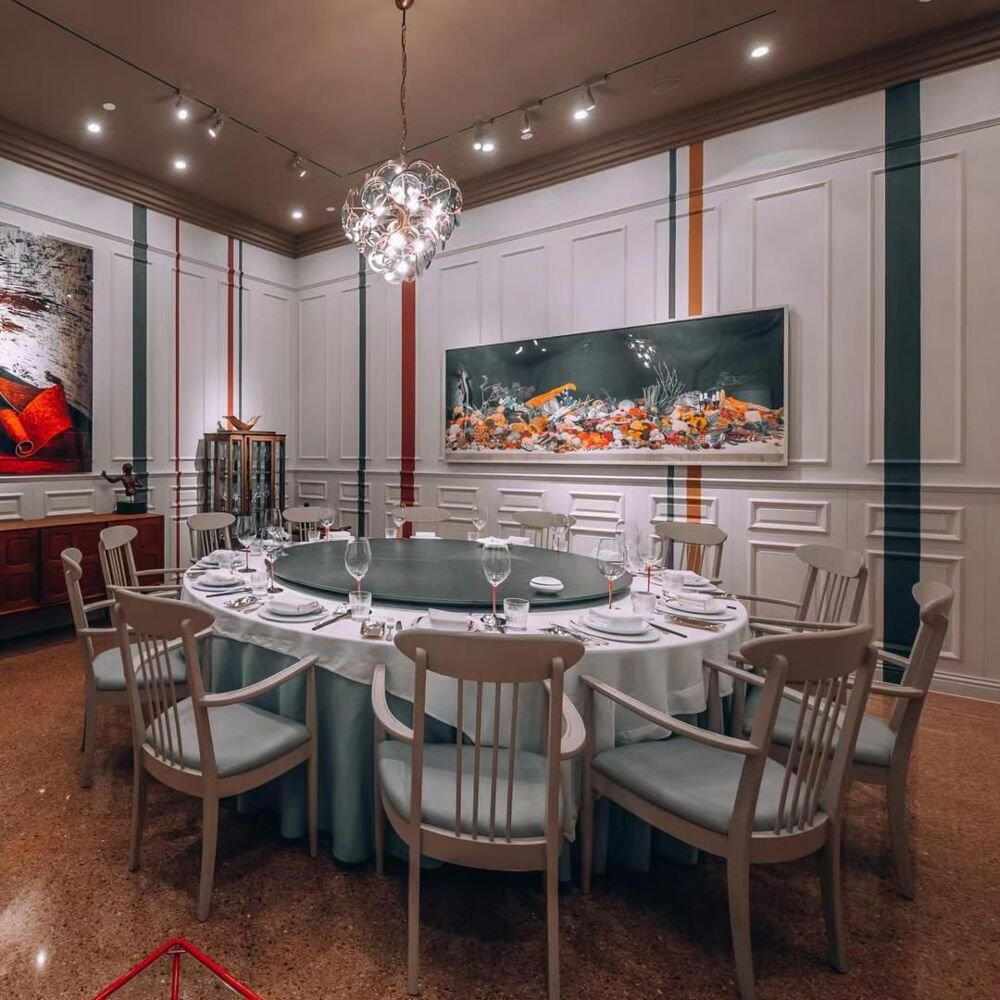
The menu
What to order
- Fried pork loin with crackling
- Rice paddy eel
Where the South Third Ring Meets Hunanese Fire
Fengtai District sits south of Beijing's more celebrated dining corridors, away from the Sanlitun clusters and the hutong restaurants that draw most international attention. Along the South Third Ring Road, the city thins out into a more functional register: wider roads, fewer tourists, and a dining scene that serves the people who actually live and work there. It is in this context that Everlasting Happiness has built its reputation, earning back-to-back Michelin Plates in 2024 and 2025 without the institutional backing of a hotel address or a flagship location.
The Michelin Plate designation, awarded in both years, signals a kitchen that meets the guide's threshold for good cooking rather than a property that has been packaged for international visitors. In Beijing's regional Chinese circuit, that consistency across consecutive years carries weight: the guide's coverage of Chinese cuisines in the capital is selective, and Hunanese representation within it remains thinner than the cuisine's broader popularity might suggest.
Hunanese Cooking in a City That Prefers Its Own Cuisine
Beijing is, culinarily speaking, a proudly parochial city. The grilled lamb skewers of Xinjiang, the fiery mala of Sichuan, and the clean broth traditions of Cantonese cooking all have established footholds, but the capital's own repertoire, roast duck, zhajiangmian, the slow-braised dishes of imperial-era restaurants, commands the first loyalty of most residents. Hunanese food occupies a different position: it arrived in force through the national affection for Chairman Mao's home province, but the cuisine's sharpness and depth sit at some distance from Beijing's own flavour instincts.
The differences are worth understanding before arriving. Where Sichuan cooking builds its heat through the numbing compound of Sichuan peppercorn and dried chilli, Hunanese cuisine works with fresh and pickled chillies, producing a clean, direct burn that lingers differently. The cuisine also leans harder on preserved and fermented ingredients, salted fish, pickled vegetables, aged black beans, which give it an intensity that can read as confrontational to an uninitiated palate. These are not flavours that soften for an audience. They are there to be engaged with, which is part of what makes the cuisine a specific choice for a milestone meal rather than a default one.
For a useful cross-reference within Beijing's Michelin-recognised regional scene, Chao Shang Chao (Chaoyang) and Xin Rong Ji (Xinyuan South Road) represent the ¥¥¥¥ tier, with three Michelin Stars each, where Chaozhou and Taizhou cuisines respectively reach their formal ceiling. Everlasting Happiness operates a rung below that price bracket, which positions it as the considered choice when the occasion calls for something serious but not ceremonial.
Occasion Dining in Fengtai: The Case for Going South
The occasion-dining logic in Beijing tends to default north and east: Chaoyang for modern Chinese, Dongcheng for the heritage restaurants, the embassy belt for imported formats. Fengtai rarely features in that shorthand, which is precisely what gives a restaurant like Everlasting Happiness its particular character. Celebrations held here are not performed for an audience of fellow visitors; they sit inside a neighbourhood that takes its food seriously on its own terms.
The ¥¥¥ price range puts the per-head spend in a bracket comparable to Furong and In Love (Gongti East Road), both of which operate in Beijing's mid-to-upper tier. For a group milestone, a birthday, an anniversary, a business dinner where the cuisine rather than the setting is meant to do the talking, that price point, attached to two years of Michelin recognition, offers a specific kind of confidence.
Hunanese food also suits communal formats naturally. The cuisine is built for shared plates: large fish braised with pickled peppers, whole portions of steamed pork, clay pot preparations that arrive still bubbling. The sharing structure maps well onto the ritual logic of occasion dining, where the meal is as much about the table as the individual plate.
Hunanese Across China: The Wider Context
For readers tracking Hunanese cooking across the country, the comparison set beyond Beijing is instructive. Café Hunan in Hong Kong's Western District and Cheers on Kaichuang Avenue in Guangzhou represent how the cuisine travels south, where Cantonese palates and ingredient availability reshape it. In those cities, the sharper edges of authentic Hunanese tend to be moderated. In Beijing, operating in a district without tourist pressure, Everlasting Happiness has less reason to accommodate unfamiliar palates, which is both the appeal and the caveat.
Elsewhere in China's Michelin-recognised fine dining circuit, the range of regional Chinese cooking at comparable tiers is instructive: Ru Yuan in Hangzhou, 102 House in Shanghai, and Xin Rong Ji in Chengdu each demonstrate how regional specificity at the Michelin-recognised level looks different across cities. The guide's Plate designation for Everlasting Happiness places it within that national conversation, even at its current tier.
For a broader sweep of where this restaurant sits within Beijing's dining options, our full Beijing restaurants guide maps the full range across cuisine types and price tiers. Those planning a longer visit can also consult our Beijing hotels guide, bars guide, and experiences guide for a complete picture of the city.
Adjacent Hunanese options in Beijing for comparison include Xiang Shang Xiang on Jinhe East Road, which operates within the same cuisine category and provides a useful reference point for those building a shortlist.
Planning Your Visit
Everlasting Happiness sits on the South Third Ring West Road in Fengtai District, which requires a deliberate journey from central Beijing rather than a casual detour. The South Third Ring is accessible by metro (Line 10 runs along the southern section of the ring road), though the specific address on 南三环西路 places the restaurant at some distance from the nearest interchange. A taxi or rideshare is the more practical option for most visitors, particularly for groups arriving for a dinner occasion.
The ¥¥¥ price positioning means the bill will register as a considered spend rather than an incidental one, appropriate for the occasion framing the restaurant has earned. Booking details, current hours, and table availability are not published centrally, so direct contact or a third-party reservation platform is the prudent approach for anyone planning a specific date. For comparable Michelin-level regional Chinese in other Chinese cities that may inform itinerary planning, Imperial Treasure Fine Chinese Cuisine in Guangzhou, Chef Tam's Seasons in Macau, and Dai Yuet Heen in Nanjing provide reference points across the broader circuit. The Beijing wineries guide is also available for those pairing a visit with wider exploration.
Frequently asked questions
What should I budget for a meal at Everlasting Happiness?
Pricing at Everlasting Happiness is listed as ¥¥¥.
Does Everlasting Happiness have a Michelin star or similar recognition?
Everlasting Happiness has received recognition including: Michelin Plate (2025); Michelin Plate (2024).
What dish is Everlasting Happiness famous for?
The Michelin Plate recognition in both 2024 and 2025 covers the kitchen's Hunanese cooking as a whole rather than any single confirmed signature dish. Hunanese cuisine is defined by dry heat, cured pork, preserved vegetables, and fresh chilli, distinct from the numbing mala of Sichuan, and that regional identity appears to be what the Michelin assessors recognised here. For specific current dishes, checking directly with the restaurant before visiting is advisable.
Where exactly is Everlasting Happiness?
Everlasting Happiness is located at China, Beijing, Fengtai District, 南三环西路, Beijing.
Can I walk in to Everlasting Happiness?
Two consecutive Michelin Plate recognitions (2024 and 2025) at a ¥¥¥ price point in Fengtai District mean demand is likely higher than a typical neighbourhood restaurant. Walk-in chances are more realistic at off-peak hours on weekday lunches, though the Fengtai location draws a local clientele rather than tourist footfall, which can work in your favour. Reserving ahead where possible is the safer approach.
A Pricing-First Comparison
A quick peer reference to anchor this venue in its category.
| Venue | Cuisine | Price | Awards | Notes |
|---|---|---|---|---|
| Everlasting HappinessThis venue (the venue you are viewing) | Modern Hunan | $50–100 | Michelin Plate | Not listed |
| Jing | Modern French with Asian Influences | $300–500 | 1 Michelin Star · Black Pearl 1 Diamond | French Contemporary |
| Xin Rong Ji (Xinyuan South Road) | Taizhou Chinese Fine Dining | $300–500 | 3 Michelin Stars · World's 50 Best #84 | Taizhou |
| Chao Shang Chao (Chaoyang) | Modern Teochew (Chaoshan) Fine Dining | $200–300 | Michelin Plate · La Liste Top Restaurants | Chao Zhou |
| Lamdre | Modern Plant-Based Chinese Vegetarian | Not listed | 2 Michelin Stars · World's 50 Best #17 | Vegetarian |
| Jingji | Imperial Beijing Royal Cuisine | $200–300 | 2 Michelin Stars · La Liste Top Restaurants | Beijing Cuisine |
Recognition history
Dated appearances from independent guides and award organizations, with the underlying list record or original source where available.
Michelin Plate
Michelin
Full recognition history (2 entries)
Michelin Plate
Michelin
Continue exploring
More in Beijing
Restaurants in Beijing
All restaurants in Beijing →
Bars in Beijing
All bars in Beijing →
Details
- Modern
- Elegant
- Sophisticated
- Cozy
- Special Occasion
- Date Night
- Open Kitchen
- Extensive Wine List
- Local Sourcing
- A La Carte
Warm low lighting reflecting off subtle lacquer and stone, with a hum of quiet anticipation.