Michelin Plate
Our verdict
Ji Chuan brings Sichuan cooking to Beijing's Chaoyang district at a mid-range price point backed by consecutive Michelin Plate recognition in 2024 and 2025. The address on Chaoyangmen Outer Street places it within reach of the embassy quarter and the district's denser commercial corridors, making it a practical and credentialled choice for Sichuan in a city where the cuisine competes against strong local and imported alternatives.

Pearl is the En Primeur Club membership app, where members save venues, book tables and use the concierge.

The menu
What to order
- Mapo tofu with marbled beef
- Pickled chillies with peach kernels
- Bingfen
Sichuan in Beijing: The Case for Chaoyangmen
Beijing's restaurant map has always required Sichuan to prove itself twice over. The cuisine travels well, its foundational techniques are codified enough that a competent kitchen anywhere can produce a recognisable version, but in a city that takes considerable pride in its own roast duck tradition and its proximity to imperial-era cooking, Sichuan kitchens operate under a kind of productive pressure. The ones that earn Michelin recognition here tend to do so by committing fully to the source, not by softening the heat or smoothing out the fermented complexity that defines the tradition at its most serious.
Ji Chuan sits on Chaoyangmen Outer Street in Chaoyang, a district that runs a wide register from diplomatic compounds and international office towers to older residential lanes. The address at number 26-4 places it in a corridor with strong lunchtime and dinner foot traffic from the surrounding commercial blocks, which shapes a particular kind of dining room: not a destination-only room that depends on advance planning, but one that can sustain a mixed crowd of regulars, business lunches, and deliberate visitors. Consecutive Michelin Plate recognition in 2024 and 2025 confirms that the kitchen has held its standard across a full review cycle.
The Physical Container
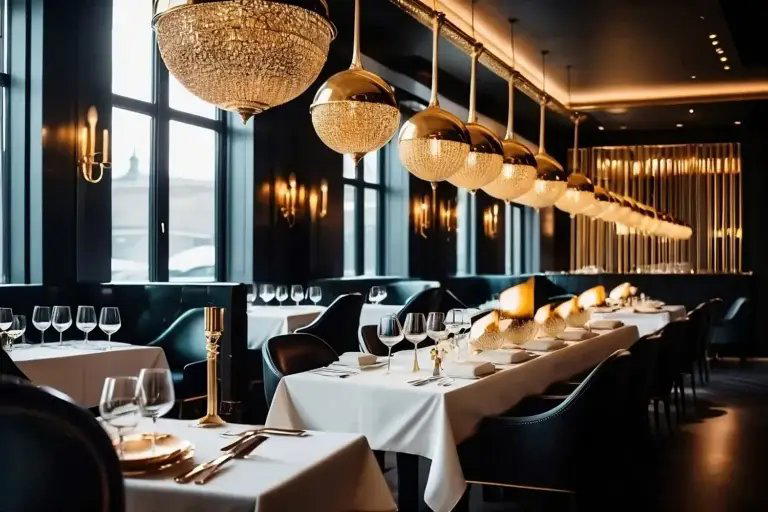
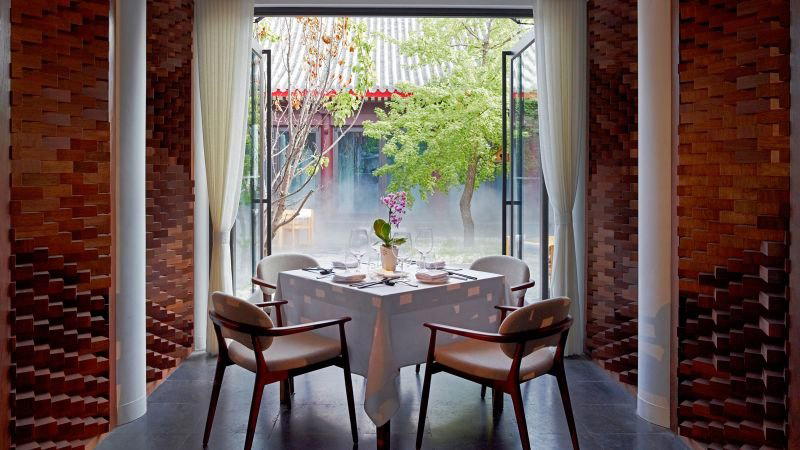
Sichuan restaurants in Chinese cities tend to fall into two architectural camps. The first is the large, loud format, high ceilings, round tables for groups, red lantern references, a room that performs its provenance before a single dish arrives. The second, a smaller and more recent tendency, moves toward quieter interiors: controlled lighting, closer seating arrangements, materials that read as considered rather than decorative. Ji Chuan's Chaoyangmen setting, at a ¥¥ price point, occupies territory between these poles. The room is not a white-tablecloth production, but the Michelin Plate designation signals a kitchen operating at a level of consistency that the guide reserves for food worth seeking out, regardless of format complexity.
In Beijing's broader dining picture, the space on Chaoyangmen Outer Street performs a practical function that larger or more theatrical Sichuan rooms do not: it allows the cooking to be the primary event. Where venues like Chef 1996 or Rong Pao operate in their own distinct registers, one rooted in Chengdu nostalgia, the other in a more formal Chinese dining context, Ji Chuan's physical positioning is legible and functional. You arrive on a busy commercial street, the scale is human rather than monumental, and the Sichuan cooking that comes to the table has room to be assessed on its own terms.
Where Ji Chuan Sits in Beijing's Sichuan Field
Beijing's Michelin-recognised Sichuan options tend to cluster at higher price tiers. Several of the city's starred and plated venues for regional Chinese cuisines operate at ¥¥¥¥, where the investment in room design, service depth, and premium ingredient sourcing pushes the spend per head considerably. Ji Chuan's ¥¥ positioning makes it one of the more accessible Michelin Plate Sichuan addresses in the city, which is an editorial fact worth holding onto: the guide's Plate designation indicates food worth noting, and at this price bracket, that signals value that is harder to find as the city's premium Chinese restaurant tier continues to move upward.
The comparison with Sichuan specialists elsewhere in the EP Club network is instructive. In Chengdu, Yu Zhi Lan and Fang Xiang Jing represent the cuisine at its source, high-prestige formats working within the home city of Sichuan cooking, where access to produce, regional suppliers, and culinary lineage is direct. Ji Chuan operates at a remove from that supply chain, in a city where Sichuan cuisine competes against Beijing's own strong regional identity. That it has held Michelin recognition for consecutive years in this context says something about kitchen discipline that a single award cycle cannot.
Within Chaoyang itself, Sichuan is not the dominant culinary register. The district's dining offer skews international, and regional Chinese kitchens here compete for attention against French, Japanese, and fusion formats at comparable and higher price points. Nearby Michelin addresses in the district operate at ¥¥¥¥, venues like the three-starred Chao Shang Chao working in Chao Zhou, or Jingji in Beijing cuisine at two stars. Ji Chuan's mid-range positioning holds a specific tier that benefits diners looking for recognised Sichuan cooking without the spend of Beijing's highest-end Chinese dining rooms. For a broader view of how the district's restaurant options stack up, see our full Beijing restaurants guide.
Reading the Menu Through the Tradition
Sichuan cooking's technical vocabulary is specific enough that where a kitchen chooses to focus reveals its priorities. The cuisine's most widely replicated formats, the slow-braised red meats, the numbing-hot dry-fried preparations, the cold dishes where chilli oil and Sichuan peppercorn share the dressing, are also the ones where execution differences are most visible. A kitchen at Michelin Plate level working in this tradition has made choices about sourcing and preparation that distinguish it from the mid-market Sichuan chains that populate shopping malls across Beijing's commercial districts. The two-year recognition record at Ji Chuan points to consistency in those decisions.
Other Beijing restaurants holding similar Michelin recognition, including Gongyuan Shulou, Lao Chuan Ban, and Yibin, operate across different price points and kitchen traditions. Taken together, they map a city where the Michelin guide has found sufficient depth to recognise a range of Chinese regional cuisines beyond the capital's own canon. Ji Chuan's place in that map is as a mid-range Sichuan address holding a quality signal that its price point does not always predict.
For a broader view of Chinese restaurant recognition in the EP Club network, the range is considerable: from 102 House in Shanghai and Chef Tam's Seasons in Macau at the high-prestige end, to more regionally specific addresses like Ru Yuan in Hangzhou, Xin Rong Ji in Chengdu, Imperial Treasure Fine Chinese Cuisine in Guangzhou, and Dai Yuet Heen in Nanjing. Ji Chuan is firmly in the middle of that register, not a high-ceremony destination, but a kitchen that has made its case to one of the industry's most scrutinised review systems, twice.
Planning a Visit
Ji Chuan is located at 26-4 Chaoyangmen Outer Street in Chaoyang, accessible from the Chaoyangmen metro station on Lines 2 and 6. The ¥¥ price range positions a meal comfortably below the city's top-tier Chinese restaurant spend. No booking method is listed in public records, and the venue does not publish a website, so walk-in or phone enquiry via the address is the most reliable route. As with most Sichuan restaurants in Beijing that have earned Michelin recognition, demand on weekends and during peak dinner hours can exceed capacity quickly, so arriving early or during off-peak lunch slots is advisable for those without a confirmed reservation.
For broader planning across the city, EP Club covers hotels, bars, wineries, and experiences across Beijing's main districts.
Frequently asked questions
How do I find Ji Chuan?
Ji Chuan is located at 26-4 Chaoyangmen Outer St, 26, Chaoyang, Beijing, China, 100010, Beijing.
What's the cuisine at Ji Chuan?
What's Ji Chuan known for in terms of accolades?
Ji Chuan has received recognition including: Michelin Plate (2025); Michelin Plate (2024).
What should I order at Ji Chuan?
Ji Chuan holds a Michelin Plate for 2024 and 2025, recognition that points to consistent execution across the kitchen's Sichuan repertoire rather than a single showpiece dish. Sichuan menus at this level typically foreground the cuisine's technical range: ma la preparations built on Sichuan peppercorn and dried chilli, dry-fried and twice-cooked techniques, and cold dressed dishes that open a meal. At a ¥¥ price point in Beijing, the menu sits accessibly enough to work through multiple courses, which is the more instructive way to read what a Sichuan kitchen prioritises.
What's the price range at Ji Chuan?
Pricing at Ji Chuan is listed as ¥¥.
Cuisine-First Comparison
| Venue | Cuisine | Price | Awards | Notes |
|---|---|---|---|---|
| Ji ChuanThis venue (the venue you are viewing) | Modern Sichuan (Chongqing-inspired) | $50–100 | Michelin Plate | Not listed |
| Jing | Modern French with Asian Influences | $300–500 | 1 Michelin Star · Black Pearl 1 Diamond | French Contemporary |
| Xin Rong Ji (Xinyuan South Road) | Taizhou Chinese Fine Dining | $300–500 | 3 Michelin Stars · World's 50 Best #84 | Taizhou |
| Chao Shang Chao (Chaoyang) | Modern Teochew (Chaoshan) Fine Dining | $200–300 | Michelin Plate · La Liste Top Restaurants | Chao Zhou |
| Lamdre | Modern Plant-Based Chinese Vegetarian | Not listed | 2 Michelin Stars · World's 50 Best #17 | Vegetarian |
| Jingji | Imperial Beijing Royal Cuisine | $200–300 | 2 Michelin Stars · La Liste Top Restaurants | Beijing Cuisine |
Recognition history
Dated appearances from independent guides and award organizations, with the underlying list record or original source where available.
Michelin Plate
Michelin
Full recognition history (2 entries)
Michelin Plate
Michelin