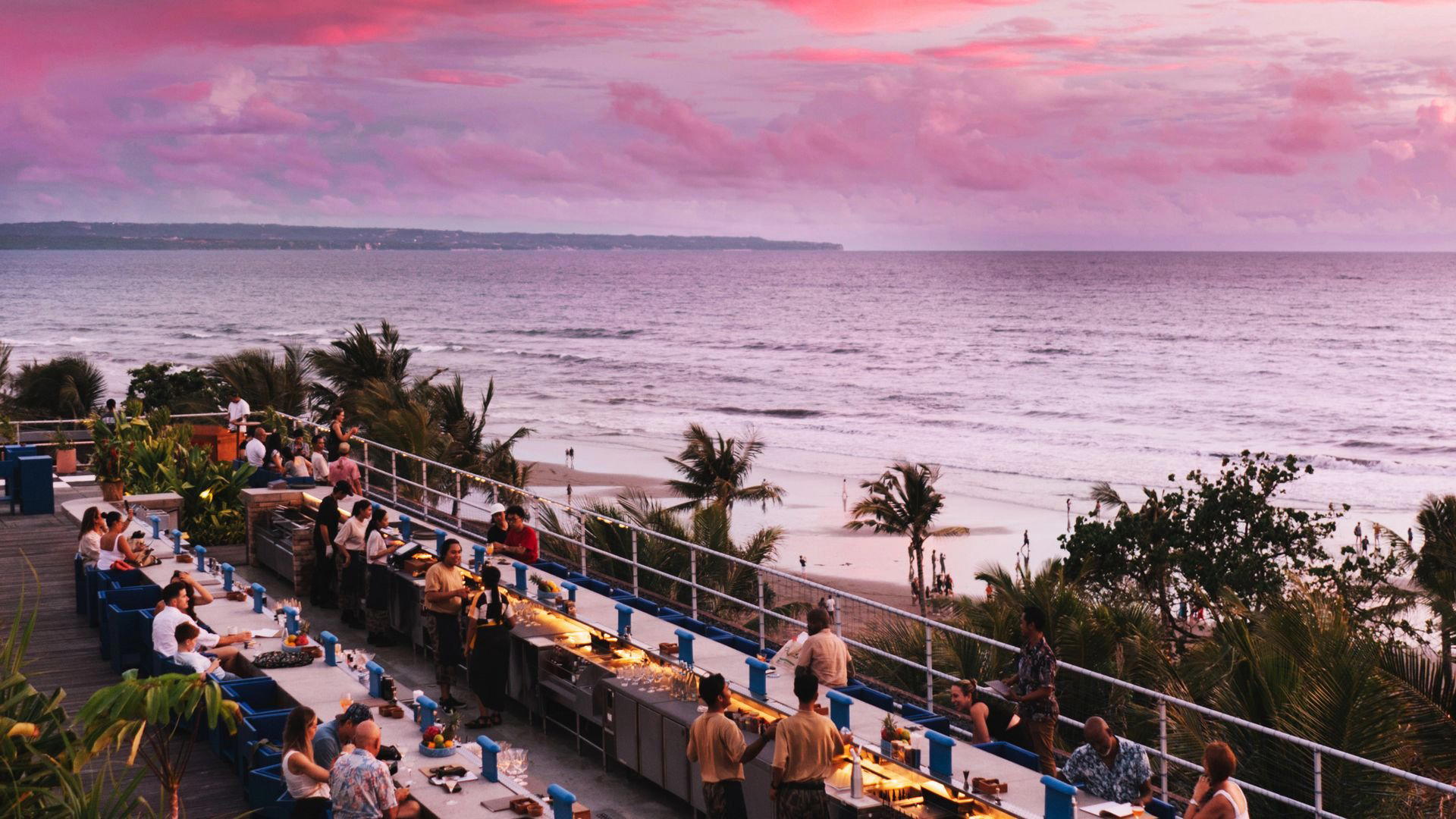
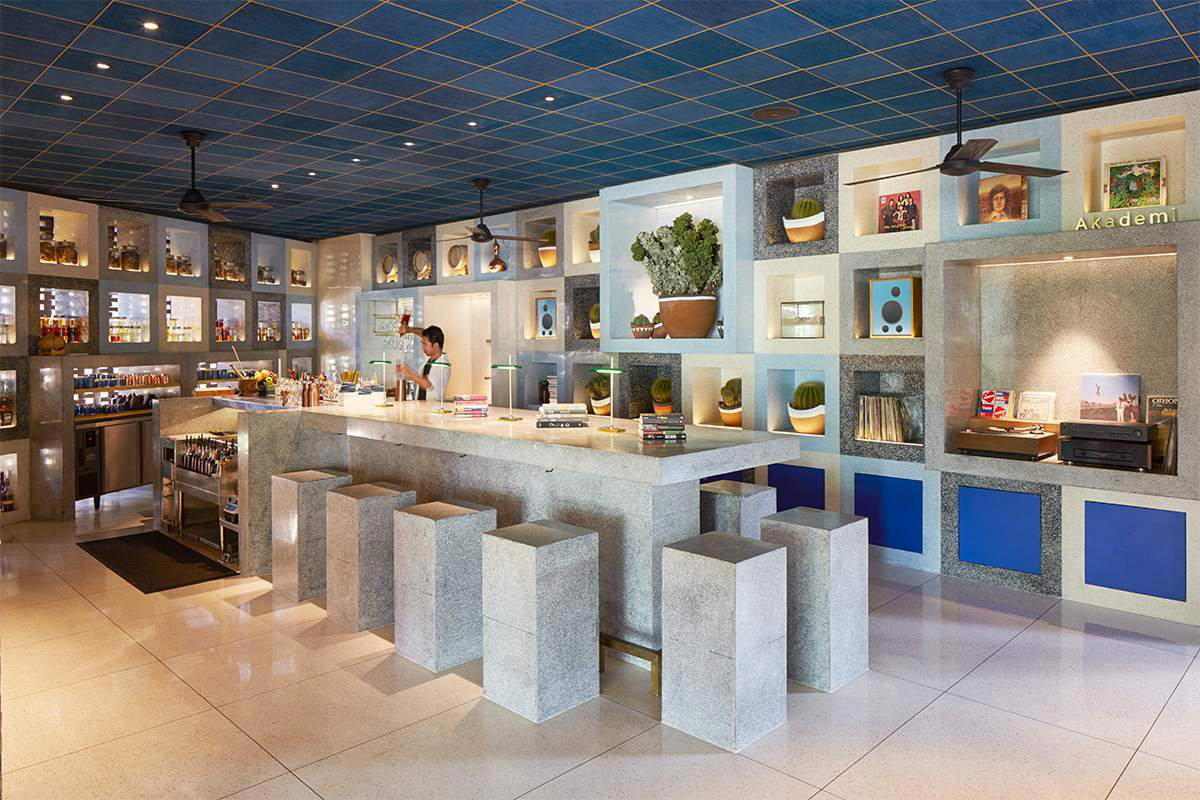
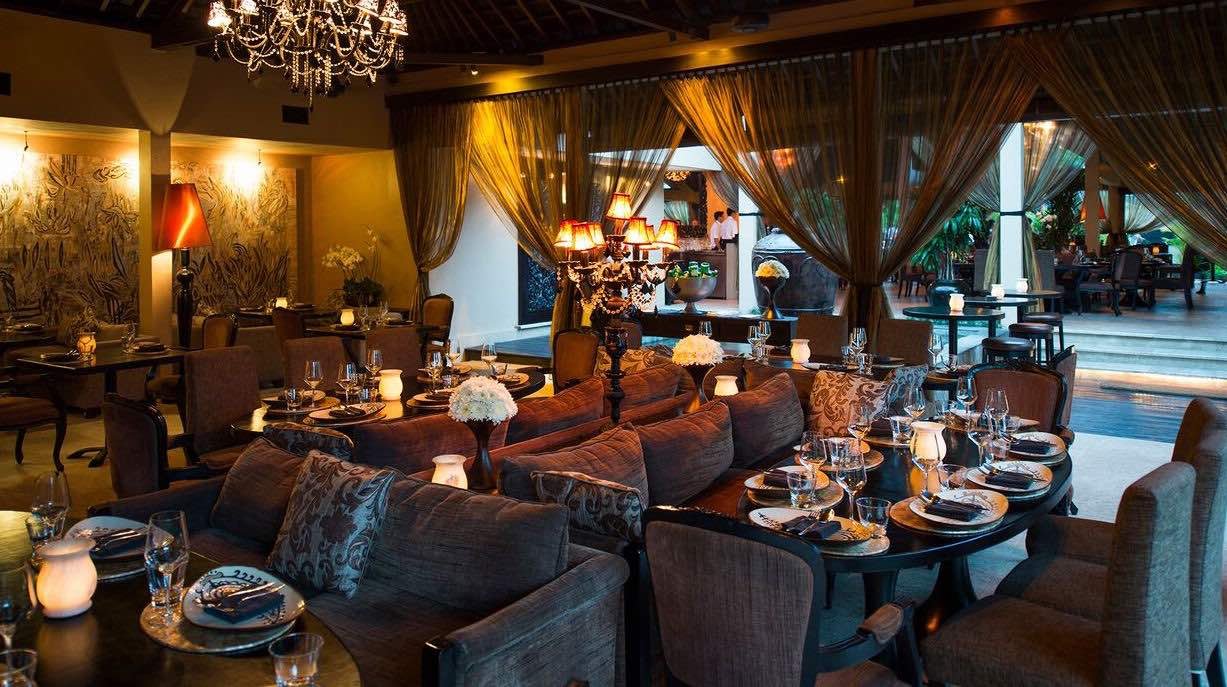
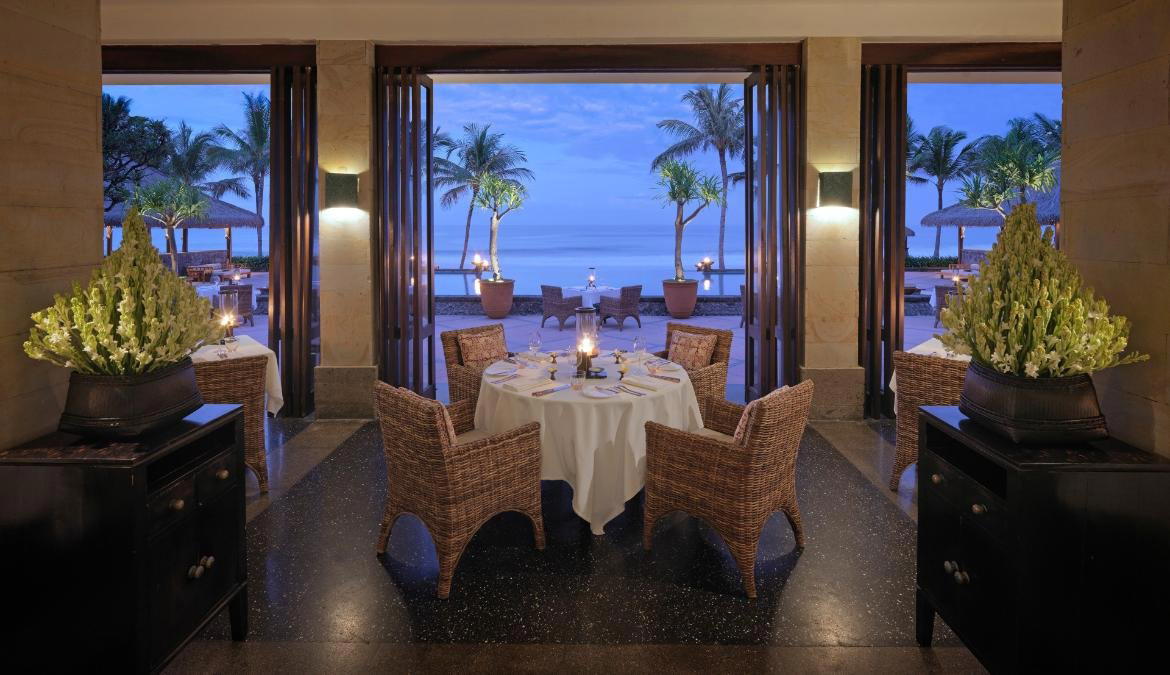
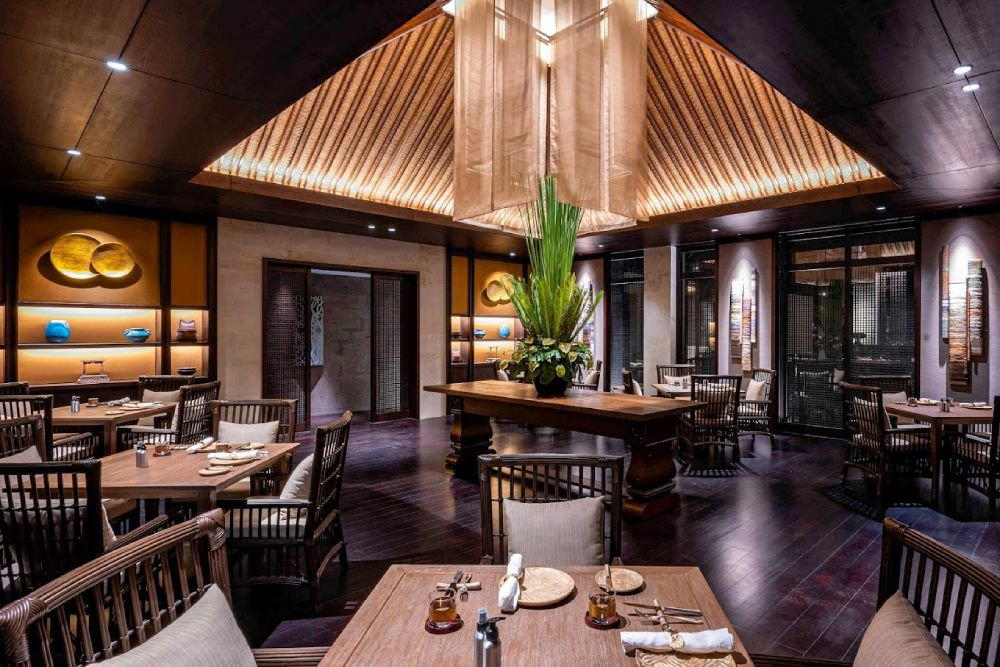
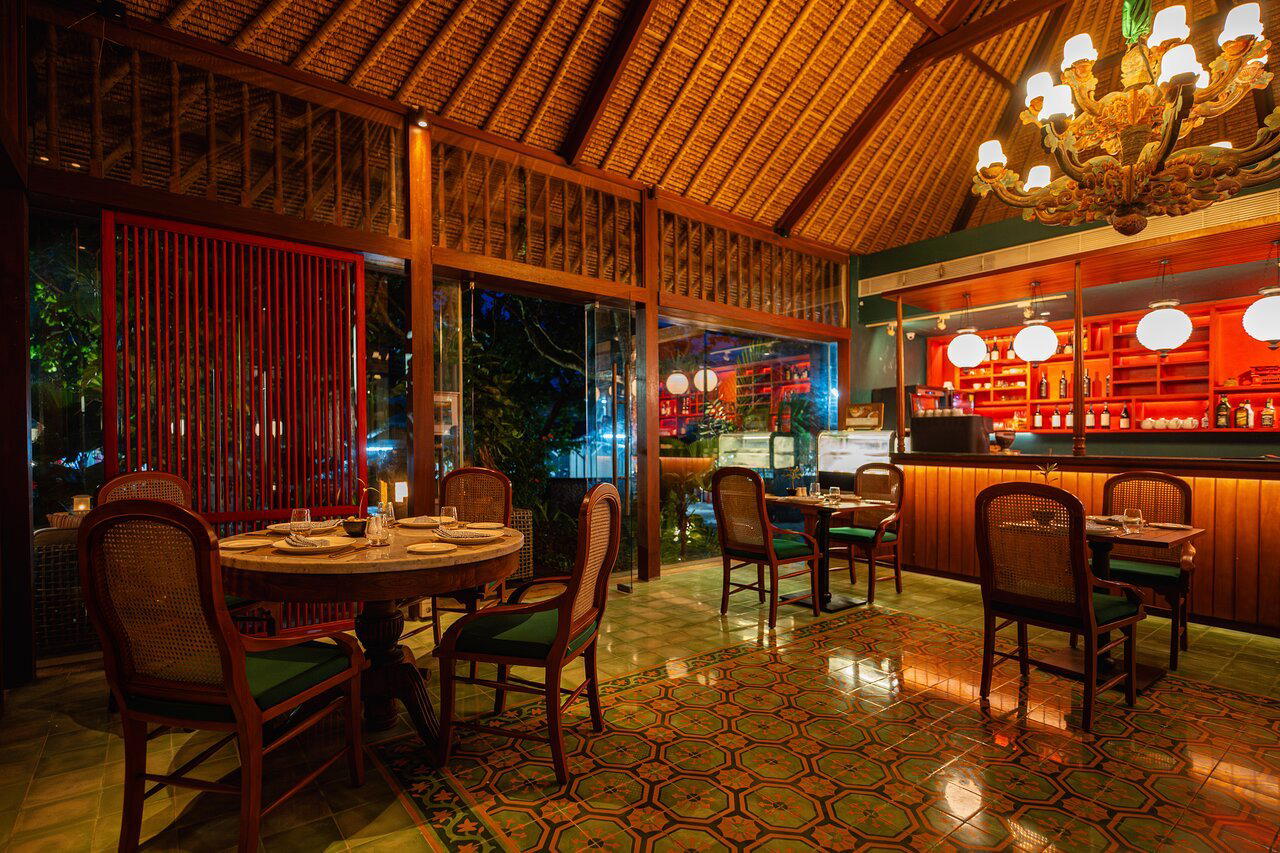
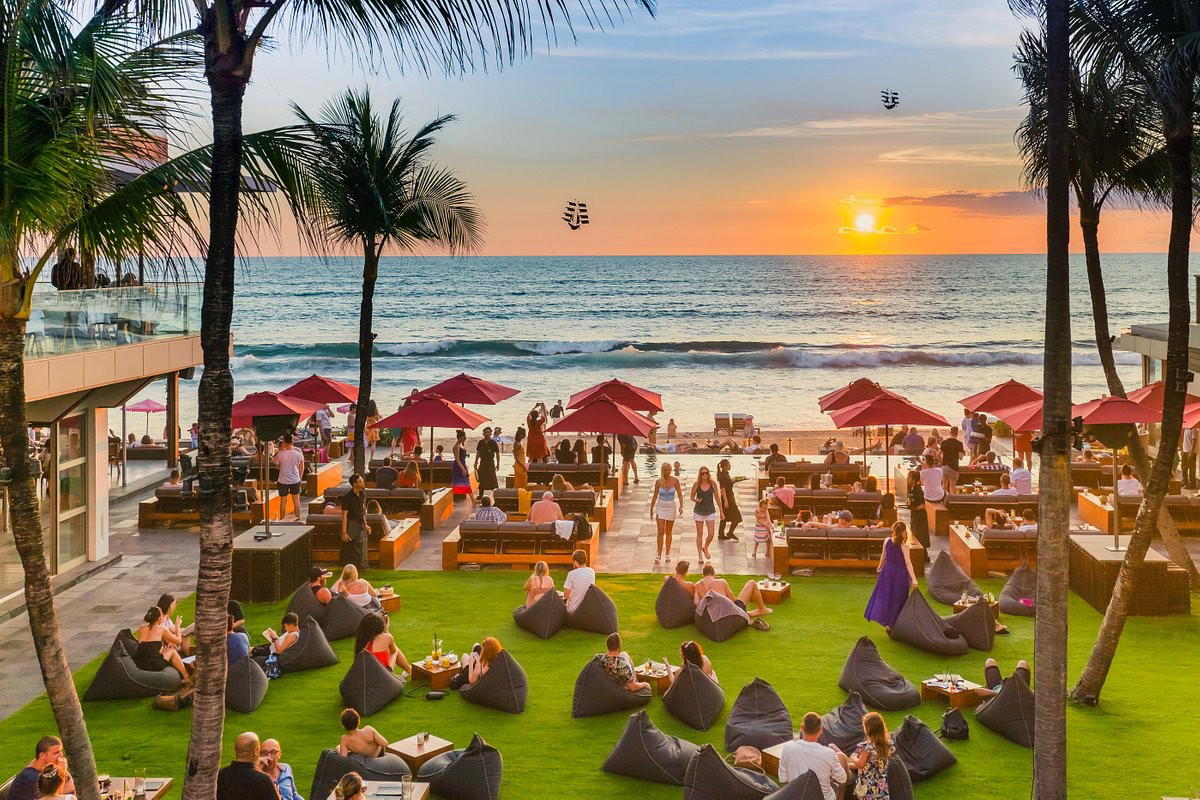
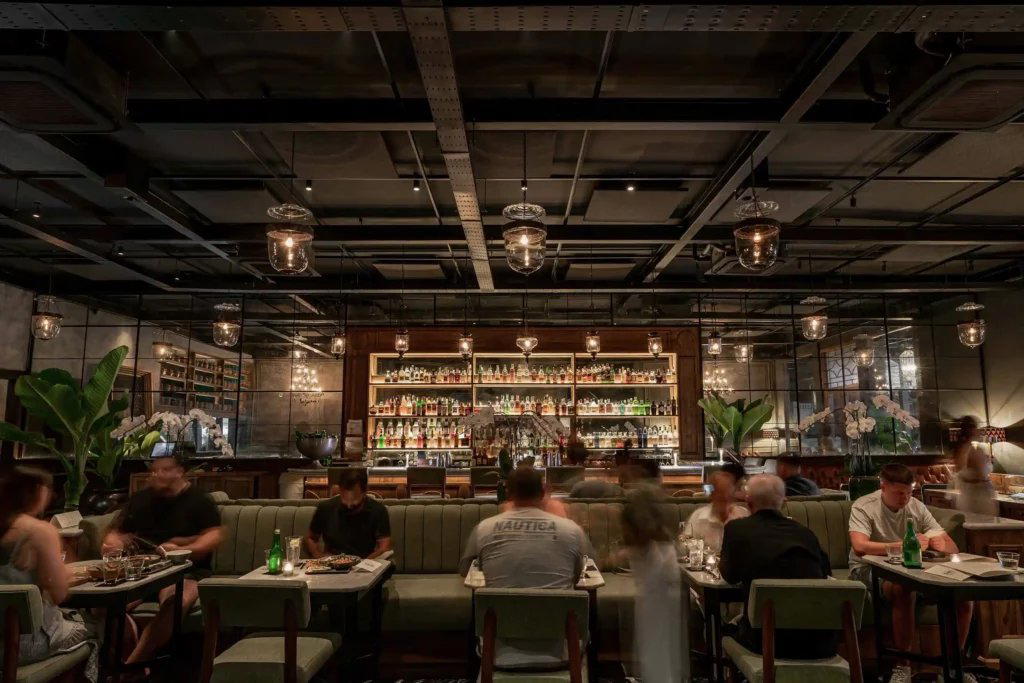
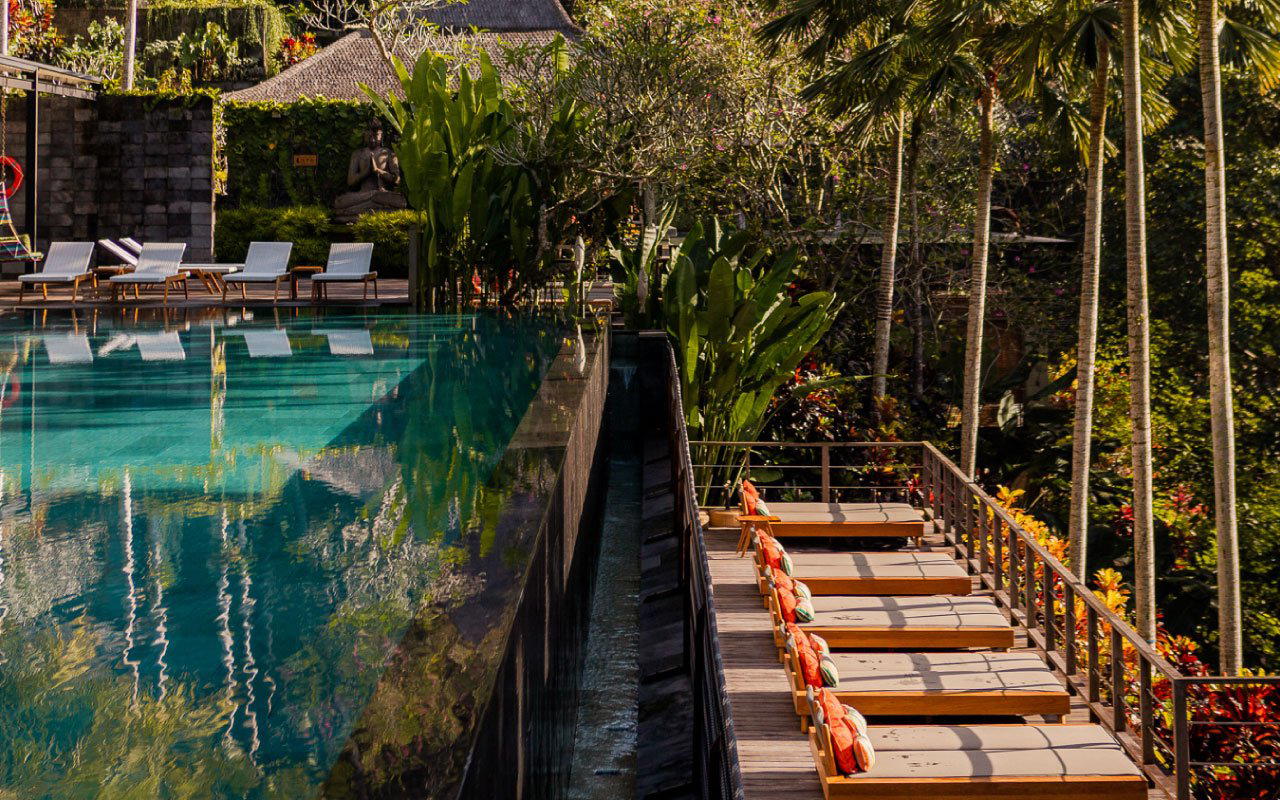
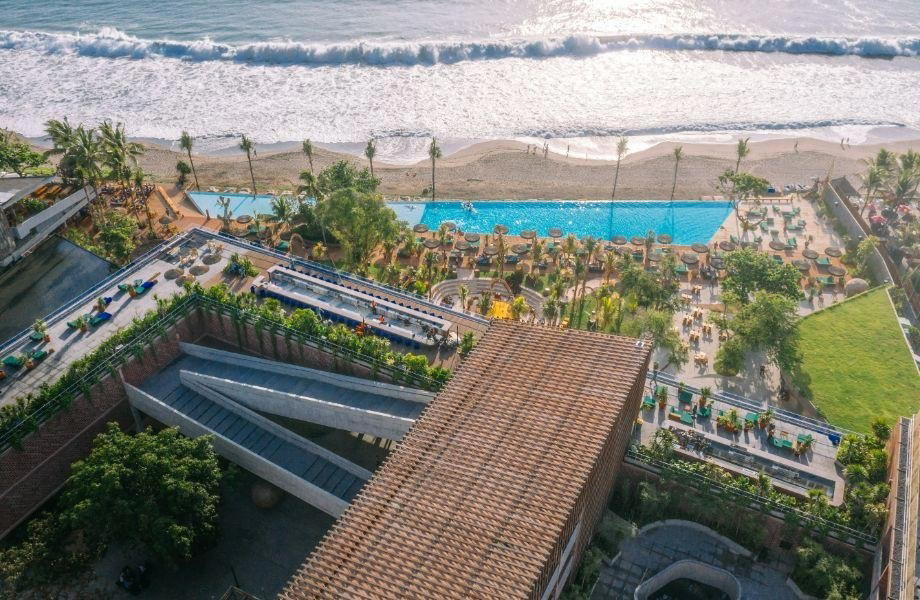
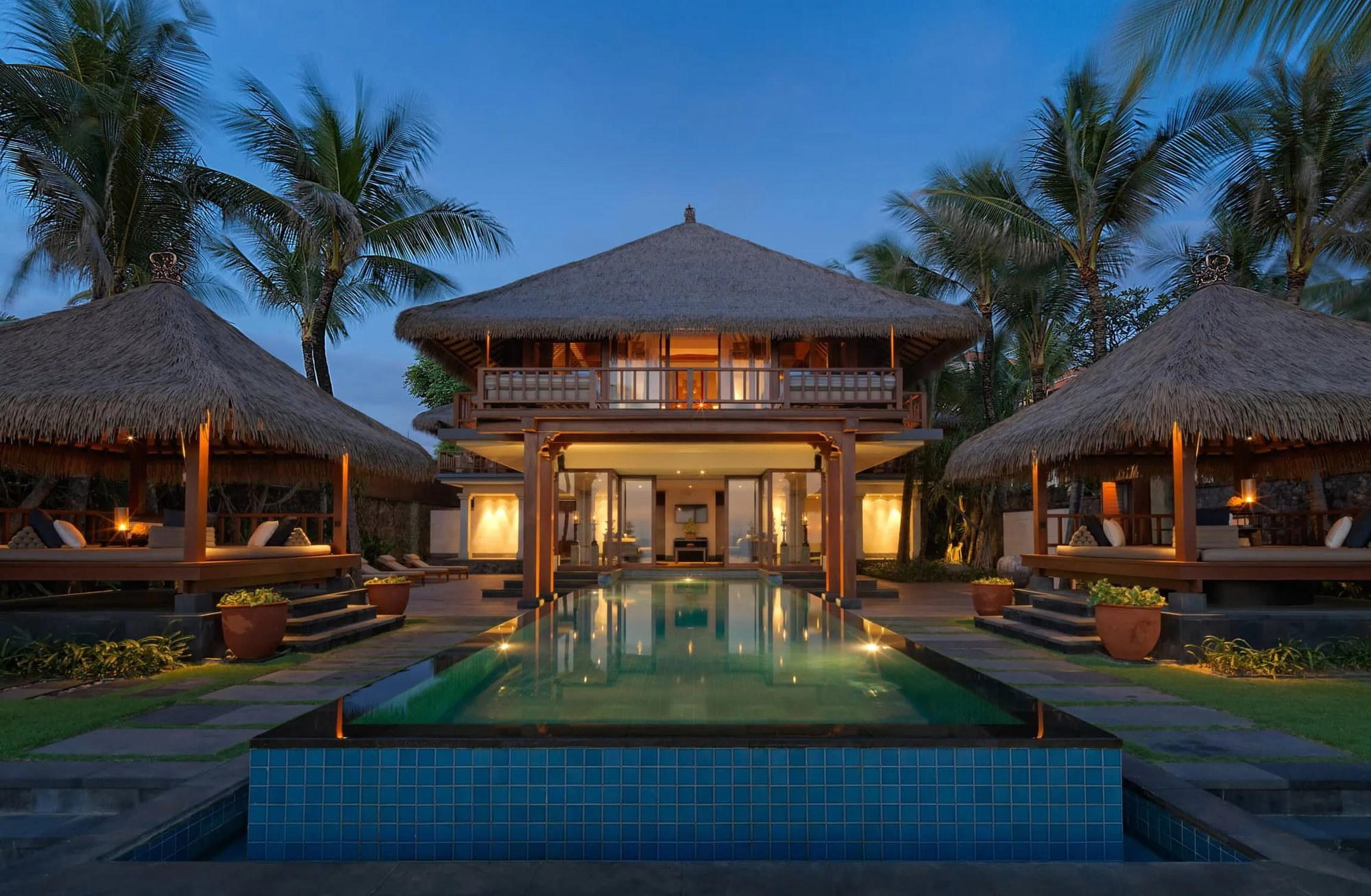
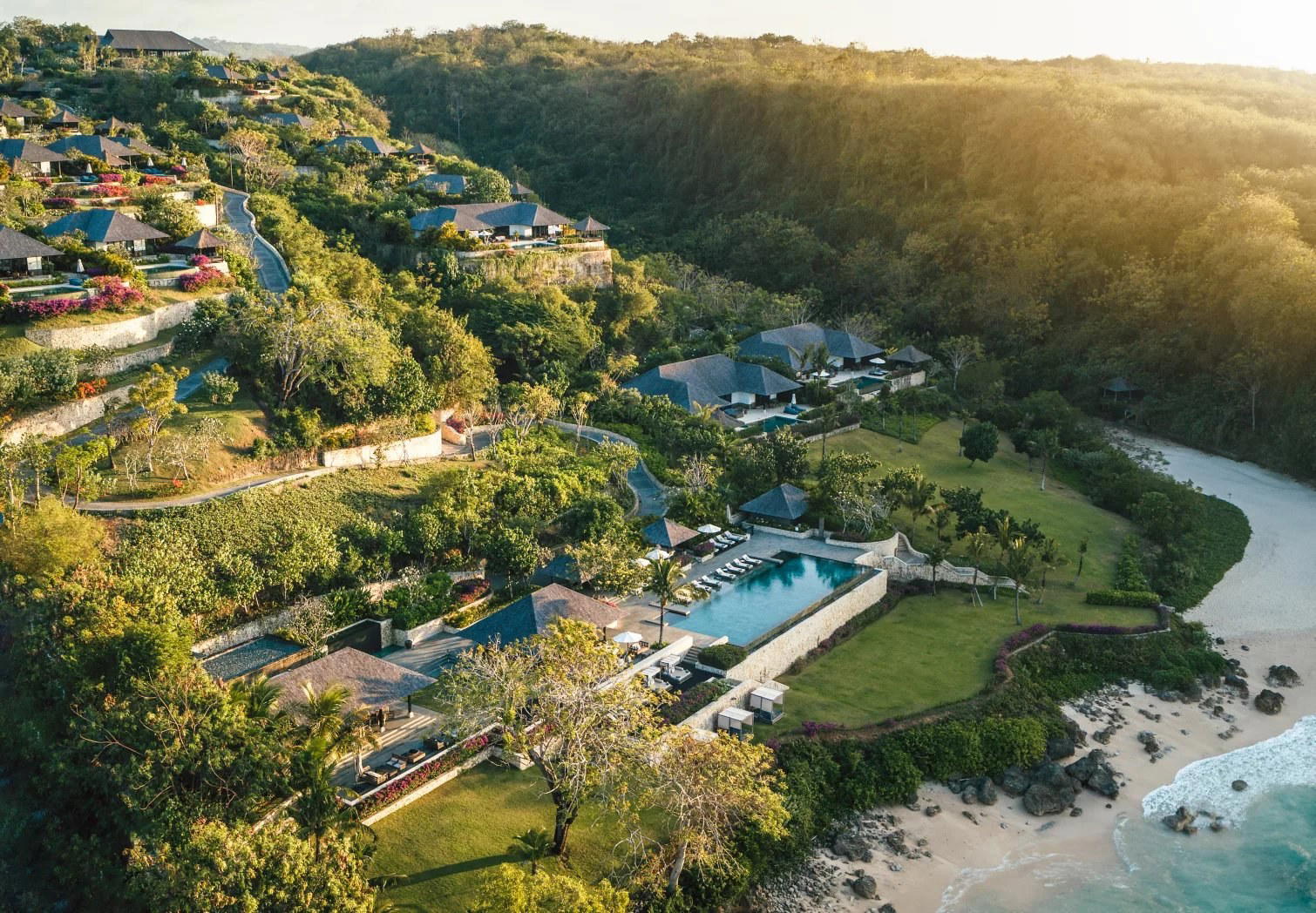
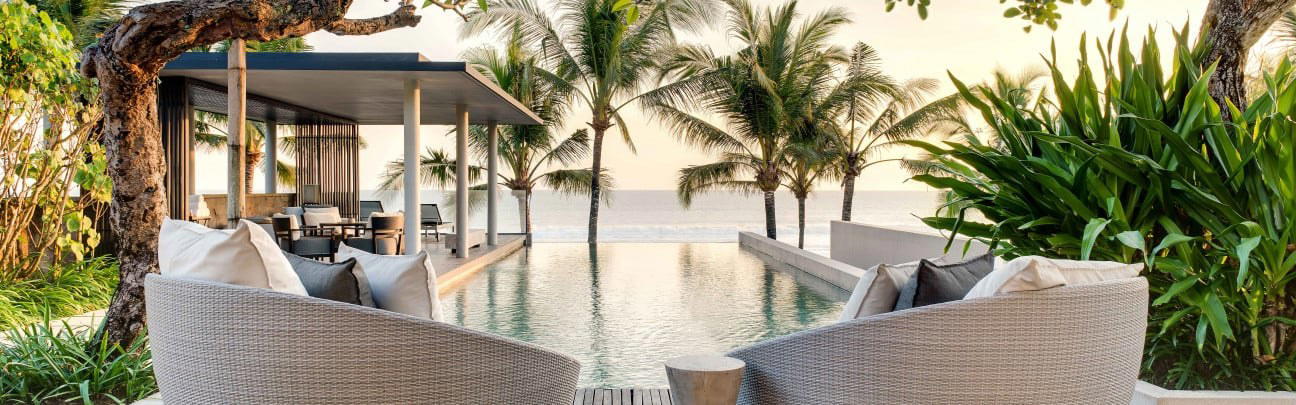
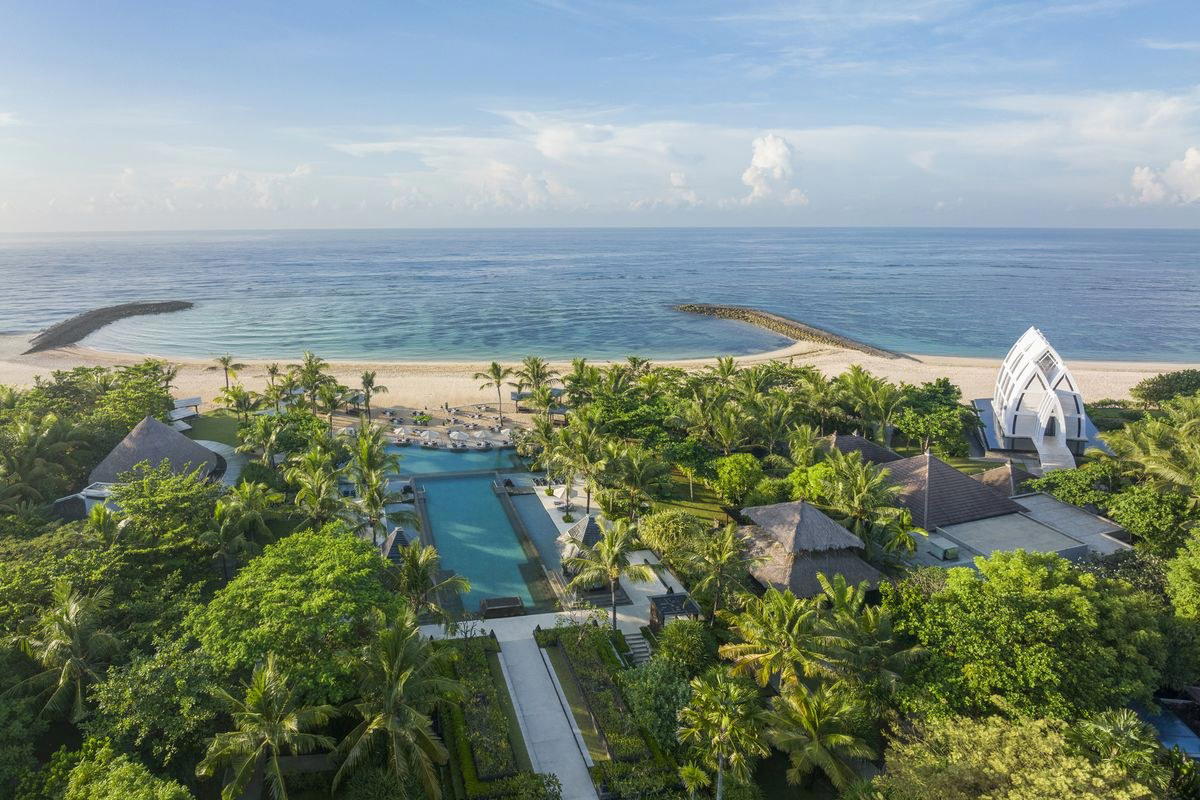
"Be a Potato Head in Bali Though it has a silly name, the Potato Head Beach Club on Seminyak beach is a cool spot to spend the day. A collage of antique 18th-century veranda shades surrounds an amphitheater-like space that contains a beach bar, a grassy lawn, and an infinity pool. Three additional restaurants (one homey, one Southeast Asian, one high-end) and a stellar concert lineup make Potato Head a destination, morning ‘til night. A soon-to-open boutique hotel will extend the party even further. Jln. Petitenget, Seminyak, Bali 80361, Indonesia, 62/(0) 361 473 7979."

Where Seminyak Meets the Indian Ocean
Approaching along Jalan Petitenget, the noise of Seminyak's main drag gives way to something more deliberate. The low-slung architecture of Potato Head Beach Club rises against the treeline, its curved facade of reclaimed wooden shutters and antique doors drawing the eye before you've crossed the threshold. This is a venue built to be seen from a distance, and what you see from that distance tells you something about the broader shift in Bali's beach club scene over the past decade: the move away from transient party venues toward more permanent, design-conscious destination spaces that hold their own as architectural statements.
Seminyak and the adjacent Petitenget corridor have consolidated into Bali's premium beachfront strip. Where the early 2000s saw a scatter of informal warung and surf shacks, the area now hosts a tier of large-format beach clubs competing on design, programming, and food-and-beverage ambition. Potato Head occupies the upper end of that tier, positioned not just as a place to drink by the water but as a mixed-use cultural space that combines hospitality, art, and sustainability in a format that has few direct comparisons on the island.
The Architecture as Atmosphere
The physical environment here does a significant amount of the venue's editorial work. The facade, assembled from thousands of salvaged wooden window shutters and doors sourced across Java and Bali, represents one of the more photographed pieces of vernacular-material architecture in Southeast Asia's hospitality sector. Inside, the spatial logic moves from a shaded indoor zone through to a long pool deck and then down to the beach itself, so the transition from the dimmer interior cool to the open-sky brightness of the pool area happens gradually, which is the right choice for the equatorial light. By late afternoon, the sun drops low enough to turn the whole western face of the venue into a warm amber register that's difficult to replicate with any design choice other than orientation and material honesty.
The pool area holds the bulk of daytime activity. Sunbeds and cabanas are arranged across multiple levels, with the beach itself accessible from the lower terrace. The sound design shifts across the day: ambient electronic music carries the afternoon, with programming moving toward live DJ sets as the evening approaches. That arc from relaxed to energised is a deliberate format choice that distinguishes this category of premium beach club from the more static resort-pool experience.
The Food and Drink Program
Beach clubs across Bali occupy a wide range on the food-and-beverage spectrum, from venues where drinking is the clear priority and eating is an afterthought, to properties that have invested in serious kitchen programs. Potato Head sits in the latter category. The venue runs multiple food and drink concepts under the same roof, including a full restaurant alongside the beach club operation, which allows it to serve guests across a longer portion of the day and at different levels of formality.
The cocktail program here reflects wider trends in Bali's premium bar scene: there's a commitment to house-made components, tropical-sourced ingredients, and presentations that hold up under the full daylight glare of a beach setting. This places the venue in a different register from indoor-focused cocktail bars such as those in Jakarta's more concentrated dining corridor, where venues like August in Jakarta prioritise depth of technique over environmental showmanship. At a beach club, the drink has to work against sunlight, heat, and the ambient distraction of the setting. The better operations understand that constraint and build accordingly.
For visitors approaching Bali's dining scene for the first time, it helps to understand that the island has developed distinct geographic clusters for different dining registers. The Seminyak-Petitenget corridor covers the beach club and casual-to-mid-formal dining tier. The Canggu area, where venues like Sarong Bali in Canggu and Cafe Organic Canggu in Banjar Badung operate, trends younger and more casual. Ubud, anchored by Locavore NXT in Ubud, is where the island's most technically ambitious cooking concentrates. Knowing which zone you're in helps set expectations appropriately.
Sustainability as Operational Framework
Potato Head's parent company has made sustainability investment a public and structural commitment rather than a branding exercise. The venue operates composting systems, has worked toward reducing single-use plastics across its food and beverage operations, and sources building materials from reclaimed stock. This matters in the context of Bali's broader tourism pressures, where rapid development along the southern coast has created documented environmental stress on waterways, coral reef systems, and coastal vegetation. A venue at this scale, drawing the visitor volumes that Potato Head does, has an outsized effect on local consumption patterns whether it chooses to engage with that or not. The fact that it has chosen to engage places it in a specific tier of the regional hospitality conversation, alongside properties elsewhere in Southeast Asia that have made similar commitments at the design and operational level.
The Broader Badung Scene
Badung Regency contains Bali's highest concentration of international tourist infrastructure, and the dining scene reflects that. The full range runs from neighbourhood warungs serving dishes like those found at Ayam Betutu Khas Gilimanuk through to venues targeting the premium international traveller. Within the beach club category specifically, Potato Head competes against properties like Bikini Restaurant Bali on design ambition and food-and-beverage quality, while operating at a larger scale than most of its immediate peers.
Other Badung venues worth considering in relation to Potato Head include Barbacoa for live-fire cooking, Akademi for a different approach to the regional dining format, and Coco Bistro Tanjung Benoa for a more relaxed southern coast alternative. For visitors building a wider Bali itinerary, Rumari in Jimbaran and Moksa in Bali offer distinct registers that complement a Seminyak-based stay. The full Badung restaurants guide covers the complete range across the regency.
For reference points outside Bali, the design-led beach hospitality model has analogues in venues across Southeast Asia, though the specific combination of reclaimed-material architecture, sustainability programming, and beach-club-meets-cultural-space format is harder to replicate in denser urban environments. The comparison is less to fine dining counters like Le Bernardin in New York City or Lazy Bear in San Francisco and more to mixed-use hospitality destinations that have chosen site and format to serve a specific kind of all-day engagement.
Planning Your Visit
Petitenget Street runs parallel to the beach in Seminyak, and the venue address at No.51B is accessible by taxi or ride-hailing app from central Seminyak in under ten minutes. The dry season months from May through October carry the most consistent daytime weather for pool-and-beach use, with the peak July-August period bringing the highest visitor volumes. Arriving before noon on a weekend secures better positioning on the pool deck. The transition to evening programming makes a late-afternoon arrival a reasonable option for those primarily interested in the bar and restaurant rather than the beach club operation. Checking the venue's current event calendar before visiting is advisable, as programming changes affect the character of the space significantly across different nights. For additional reference, The Legian in Seminyak offers a quieter, hotel-based alternative in the same neighbourhood for visitors who prefer a lower-volume setting. International options from the wider Indonesian archipelago, including Kahyangan in Gondangdia, Jungle Fish Bali in Gianyar, and CARANO Masakan Padang in Bekasi, round out the wider regional picture for visitors extending their Indonesia itinerary beyond Bali.
Frequently Asked Questions
- What do people recommend at Potato Head Beach Club?
- The most consistent recommendations centre on the pool deck experience during the late afternoon, when the light and the venue's westward orientation create the setting the space is designed around. The cocktail program draws regular mention alongside the food operations, which run at a more serious level than most beach club competitors in the Seminyak corridor. The architectural facade is frequently cited as a reference point in regional design coverage of Bali's hospitality scene.
- Do they take walk-ins at Potato Head Beach Club?
- Walk-in access varies by day and season. During peak periods (July and August, and the Christmas-New Year window), the venue operates at high capacity and cabana or sunbed access may require advance arrangement. In Bali's shoulder season (May-June or September-October), walk-in access to the bar and restaurant areas is generally more available. For the pool deck specifically, arriving before midday improves options considerably regardless of season.
- What do critics highlight about Potato Head Beach Club?
- Coverage in regional hospitality and design media has focused consistently on three elements: the reclaimed-material facade as a piece of architecture that holds its own outside the hospitality context; the sustainability operational framework as a more structural commitment than is typical in this venue category; and the mixed-use format that positions the space as a cultural destination rather than a single-function beach club. The food-and-beverage program receives positive framing relative to beach club peers in the Seminyak-Petitenget corridor.
- Is Potato Head Beach Club worth visiting outside of peak beach season?
- The venue's indoor dining and bar areas, alongside its event and arts programming, make it a relevant destination outside of optimal beach weather. Bali's wet season (November through March) brings afternoon rain and lower pool demand, which creates a quieter version of the experience with a stronger emphasis on the food-and-beverage and indoor cultural programming. The Petitenget address remains accessible year-round, and the restaurant operation runs independently of beach conditions.
City Peers
A fast peer set for context, pulled from similar venues in our database.
| Venue | Cuisine | Price | Notes |
|---|---|---|---|
| Potato Head Beach Club | This venue | ||
| Cuca Restaurant | |||
| Bikini Restaurant Bali | |||
| LACALITA Canggu | |||
| Motel Mexicola | |||
| Mrs Sippy Bali |
Need a table?
Our members enjoy priority alerts and concierge-led booking support for the world's most difficult tables.
Get Exclusive Access