Our verdict
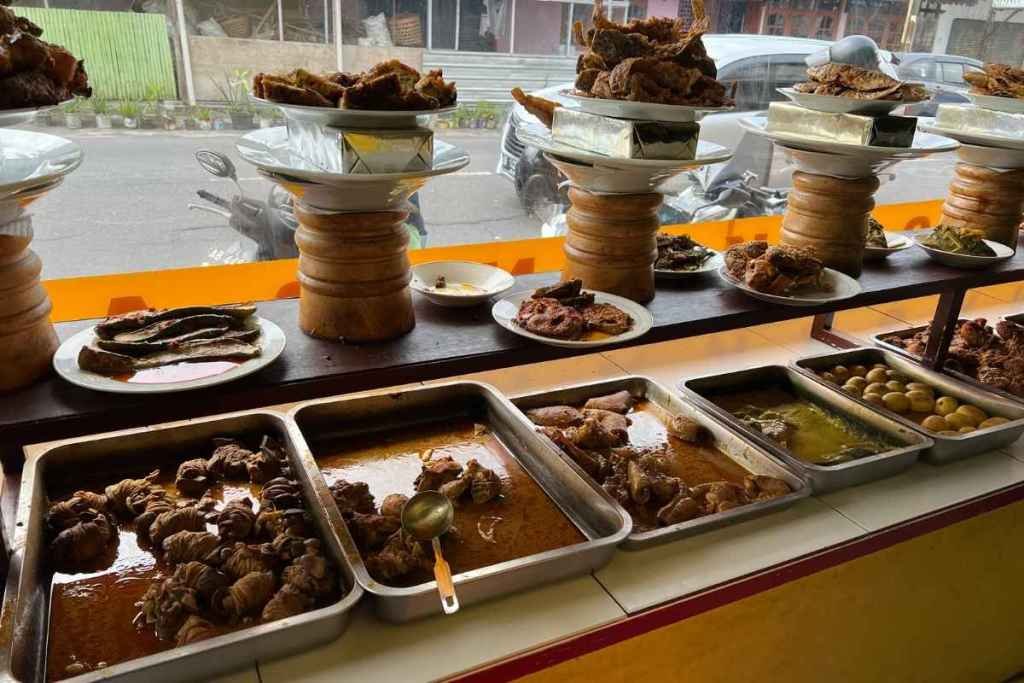
CARANO Masakan Padang sits on Jalan Letnan Arsyad Raya in South Bekasi's Kayuringin Jaya district, representing the kind of neighbourhood Padang warung that West Java residents rely on for the real register of Minangkabau cooking. The format is straightforward: a spread of pre-cooked dishes arranged in tiers, served to your table in the traditional hidang style. For anyone tracking Indonesian regional cuisine beyond Bali's tourist circuit, this is where Bekasi's everyday food culture lives.
The menu
What to order
- Rendang
- Ayam pop
- Sambal ijo
Where Minangkabau Cooking Lands in Bekasi
Approach almost any mid-size Indonesian city at mealtimes and the smell of rendang fat hitting a hot wok is a reliable orientation device. In South Bekasi's Kayuringin Jaya district, along Jalan Letnan Arsyad Raya, that signal leads to CARANO Masakan Padang, a Padang restaurant operating in the culinary tradition that has, arguably, done more than any other regional format to define how Indonesians eat away from home. Padang restaurants, with their stacked dishes, communal tables, and pay-for-what-you-eat logic, represent one of the country's most effective systems for distributing Minangkabau flavour across geographies. CARANO is one node in that network, planted in a part of Greater Jakarta's eastern corridor that visitors rarely prioritise but residents depend on daily.
The physical setting is what most Padang restaurants share: dishes arrive at the table in a cluster, arranged in bowls and plates that cover every available inch of surface. You eat what you want; the rest goes back. It is a system designed around abundance and trust rather than theatrics, and it has sustained Minangkabau culinary culture far outside West Sumatra for generations. For a broader survey of where Indonesian regional cooking appears across the country's cities and resort towns, the our full Bekasi restaurants guide maps the options across the district.
The Sourcing Logic Behind Padang Cuisine
Masakan Padang's reputation for depth of flavour rests almost entirely on how its core ingredients are treated before they reach the pot. Rendang, the dish most associated with the tradition internationally, is a long-cooked dry curry that relies on the quality of its beef, the freshness of its coconut milk, and the balance of its spice paste: galangal, lemongrass, turmeric leaf, kaffir lime, and dried chilli in ratios that vary by cook and by region within West Sumatra itself. When the beef is sourced well and the coconut milk is pressed from mature coconuts rather than reconstituted, the resulting rendang holds a different character entirely: drier, darker, with a caramelised exterior that gives way to fibrous meat inside.
This is the standard against which neighbourhood Padang restaurants are quietly measured by the people who eat at them regularly. In Bekasi, a city of more than 2.5 million people with a substantial Minangkabau migrant population, that scrutiny is applied by diners who know the reference point from direct experience. The Padang restaurant format across Indonesia has split into at least two tiers: the large, air-conditioned chains that prioritise consistency and throughput, and the smaller, family-run operations where recipes remain closer to the source. CARANO, positioned on a residential street in Kayuringin Jaya rather than in a commercial mall corridor, sits in the latter category by location and format, if not by any awarded distinction we can verify.
Beyond rendang, the Padang repertoire encompasses gulai, a looser, coconut-milk-based curry applied to fish, offal, or vegetables, alongside sambal ijo (green chilli sambal, a West Sumatran signature), perkedel (fried potato patties), and various preparations of jackfruit and cassava leaves. Each of these dishes depends on a supply chain that, in the leading cases, runs from West Sumatra to the restaurant's kitchen with minimal industrial processing. Whether CARANO maintains direct sourcing relationships with Sumatran suppliers is not information we can confirm, but the cuisine's logic rewards restaurants that do.
Bekasi's Dining Position and What It Means for This Format
Bekasi occupies an awkward editorial position: close enough to Jakarta to be functionally part of its metropolitan food ecosystem, but far enough from the capital's premium dining concentration to operate on different terms. The restaurants drawing international editorial attention in Indonesia tend to cluster in Bali (see Locavore NXT in Ubud or Moksa in Bali) or in Jakarta's central districts (such as August in Jakarta). Restaurants like Sarong Bali in Canggu, Rumari in Jimbaran, and Cuca Restaurant in Badung operate in resort contexts shaped by international visitor flows. Bekasi's food scene, by contrast, is built almost entirely around the preferences and habits of its resident population.
That population creates consistent demand for Padang cooking, which means that the restaurants serving it are accountable to regulars who return multiple times a week. This accountability, the daily customer who knows exactly what rendang should taste like, tends to keep quality honest in ways that tourist-facing restaurants don't always experience. Other Bekasi restaurants operating in similarly neighbourhood-anchored formats include Kuretake Restaurant and The Grit Family Billiard & Bistro, though the latter occupies a very different category.
For comparison points further afield in the Indonesian archipelago, Kahyangan in Gondangdia and Cafe Organic Canggu in Banjar Badung illustrate how different the regional Indonesian dining spectrum is across cities and islands. Beyond Indonesia, high-technique restaurants like Le Bernardin in New York City or Lazy Bear in San Francisco operate in a different register entirely, but the ingredient-first discipline that drives Padang cooking at its most serious has more in common with those kitchens than the formats suggest. Sourcing integrity is sourcing integrity, regardless of price point or presentation.
Other Indonesian regional formats worth tracking alongside Masakan Padang include the Balinese warungs represented by operations like Jungle Fish Bali in Gianyar and the Lombok dining scene anchored by spots such as Banyan Tree Café in Lombok. Coffee culture parallels exist too, as illustrated by Agreya Coffee Bogor in Bogor. Duck preparations occupy their own sub-tradition in Indonesian cooking, explored through restaurants like bebek goreng harissa in Sidoarjo. And for dessert-forward Indonesian dining, The Legian in Seminyak represents the resort tier of that spectrum.
Planning Your Visit
CARANO Masakan Padang is located at Jalan Letnan Arsyad Raya No. 12, Kayuringin Jaya, Kecamatan Bekasi Selatan, in South Bekasi. The address places it in a residential-commercial zone typical of the area, accessible by private vehicle or ride-hailing apps from central Bekasi. Walk-in is the standard format for this restaurant category. No awards or public ratings are recorded at the time of writing.
Frequently asked questions
Is CARANO Masakan Padang child-friendly?
Masakan Padang restaurants in Indonesia are broadly family-oriented by format: dishes arrive at the table simultaneously in shared portions, which suits mixed groups and children who can pick from mild or spiced options. CARANO's address on Jalan Letnan Arsyad Raya in a residential pocket of South Bekasi points toward a neighbourhood setting rather than a late-night dining bar. That format generally works well for families with children.
What kind of setting is CARANO Masakan Padang?
CARANO sits on Jalan Letnan Arsyad Raya No. 12 in Kayuringin Jaya, a residential district of Kecamatan Bekasi Selatan. That address places it squarely in neighbourhood-dining territory: the kind of spot that serves the surrounding community rather than positioning itself as a destination restaurant for visitors crossing from central Jakarta. Expect a practical, unfussy room oriented around the food.
How does CARANO Masakan Padang fit into Bekasi's broader Minangkabau food scene?
Bekasi's proximity to Jakarta means it shares the greater metropolitan area's appetite for Minangkabau cooking, one of Indonesia's most widespread and institutionally deep regional cuisines. CARANO operates in Kayuringin Jaya, Kecamatan Bekasi Selatan, a district with a dense local population that sustains neighbourhood-level Padang restaurants through daily repeat custom rather than tourist traffic. That community-driven model tends to keep kitchens accountable to consistent output over time.
What do people recommend at CARANO Masakan Padang?
Rendang is the anchor dish of any Padang kitchen, and at establishments running this format it draws the majority of repeat orders. Padang dining works as a spread: dishes like gulai, sambal, and perkedel are placed on the table for diners to select from, so the recommendation is less about a single plate and more about how the full spread is composed on any given day.
Where do I go for CARANO Masakan Padang?
CARANO Masakan Padang is located at Nomor, Jl. Letnan Arsyad Raya No.12, RT.005/RW.008, Kayuringin Jaya, Kec. Bekasi Sel. Kota Bks, Jawa Barat 17144, Indonesia, Bekasi.
Can I walk in to CARANO Masakan Padang?
Masakan Padang restaurants operate on a walk-in model almost universally across Indonesia: food is prepared in bulk at the start of service and displayed for immediate selection, meaning reservations are rarely part of the format. CARANO's location on Jalan Letnan Arsyad Raya in South Bekasi follows this convention. Arriving at peak mealtimes, particularly around midday, is the standard approach.
What do critics highlight about CARANO Masakan Padang?
The restaurant's position in Kayuringin Jaya, a working residential area of South Bekasi, puts it outside the Jakarta-centric coverage zone that most critics operate within. That editorial gap is a structural feature of Bekasi's dining scene rather than a reflection of food quality.
Comparison Snapshot
| Venue | Cuisine | Price | Awards | Notes |
|---|---|---|---|---|
| CARANO Masakan PadangThis venue (the venue you are viewing) | Masakan Padang | Not listed | Not listed | Not listed |
| Ibu Oka | Balinese Babi Guling | $1–10 | Not listed | Balinese |
| Mozaic | Modern Indonesian-European Fine Dining | $200–300 | La Liste Top Restaurants · Les Grandes Tables du Monde Member | French |
| Nusantara By Locavore | Modern Indonesian Regional | $20–30 | Not listed | Indonesian |
| Room 4 Dessert | Dessert-Focused Tasting Menu | $50–100 | La Liste Pastry: Pastry Game Changer Award · Tatler Listed in Best Restaurants Asia-Pacific | Dessert |
| Locavore NXT | Hyper-Local Modern Indonesian Tasting | $100–150 | World's 50 Best #44 · La Liste Top Restaurants | Indonesian |
Continue exploring
More in Bekasi
Restaurants in Bekasi
All restaurants in Bekasi →

Bars in Bekasi
Browse all →

Details
- Casual Hangout
- Family
- A La Carte
- Halal
Casual dining atmosphere typical of Padang restaurants