




Recognised in The World's 50 Best Hotels for three consecutive years (2023, 2024, 2025) and holder of its Eco Award, Potato Head Suites & Studios occupies a full creative village on Jl. Petitenget in Seminyak, where 88 suites split between two architecturally distinct buildings. Designed by OMA and Andra Matin, the property is B Corp certified and has reduced waste to landfill to just 0.5%, positioning it among Bali's most credentialed sustainability-led addresses.
Pearl is the En Primeur Club membership app — saves, bookings, and concierge access live there. Same editors, same standards.
- Address
- Jl. Petitenget No.51B, Seminyak, Kec. Kuta Utara, Kabupaten Badung, Bali 80361
- Phone
- +62 361 6207979
- Website
- seminyak.potatohead.co
- Directions
- Get directions
 Saves & bookings on Pearl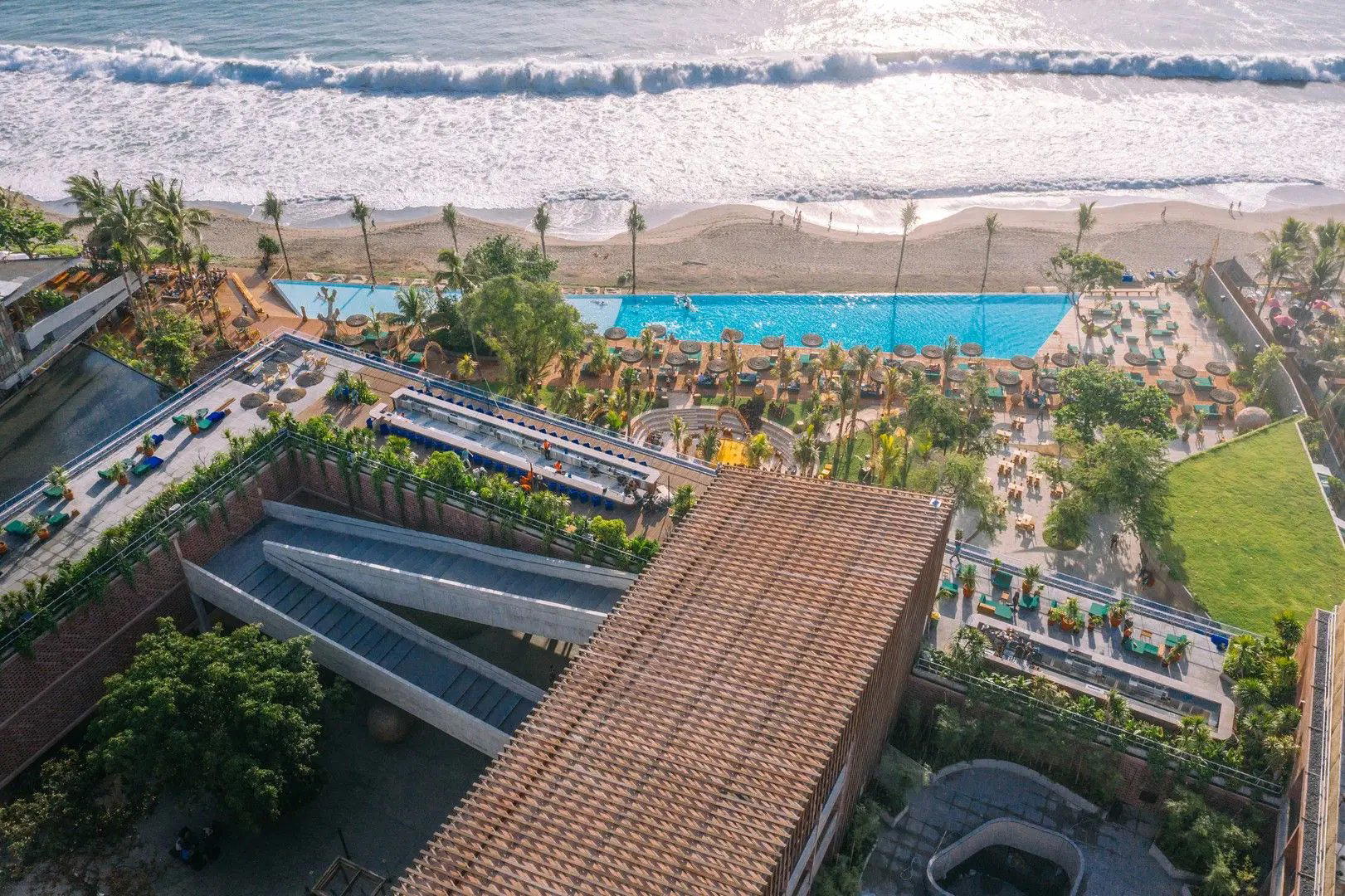
Jl. Petitenget and the address that shapes the stay
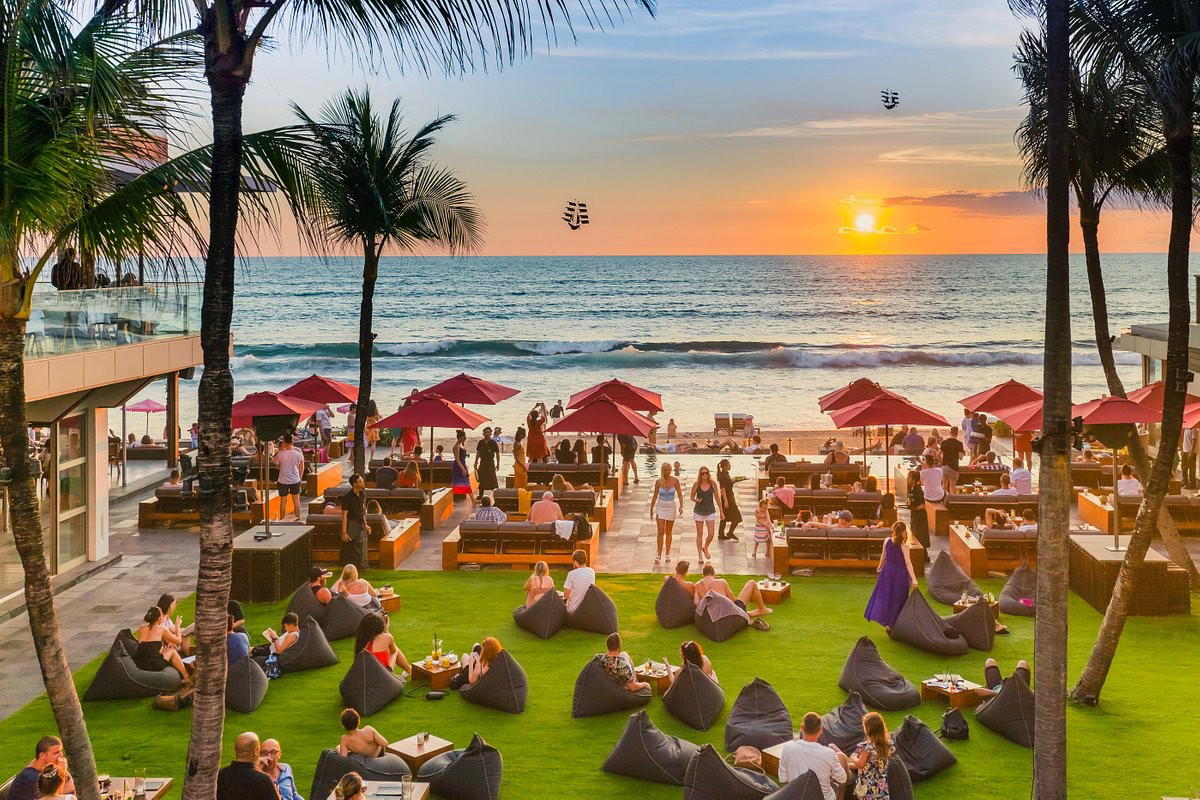
Seminyak's Jl. Petitenget corridor has become the reference strip for Bali's design-conscious hotels, attracting properties that trade on architecture and cultural programming rather than resort scale alone. Potato Head Suites & Studios sits on that strip at No. 51B, and the address does specific work: it places guests within walking range of Seminyak's restaurant cluster while keeping them at the quieter, more local-facing end of the beach road, away from the commercial density of the Legian end. That positioning matters when the property itself functions as a destination. The 88 suites anchor a full creative village, bars, restaurants, a beach club, an outdoor amphitheatre, sculpture gardens, a music venue, and a wellbeing centre, meaning the question of what's nearby is partly answered by what's already on site. For guests comparing options along this stretch, including Alila Seminyak, The Legian Seminyak, and W Bali – Seminyak, the distinction is that Potato Head operates less like a hotel with amenities and more like a neighbourhood within a neighbourhood.
Two buildings, two readings of Balinese materiality
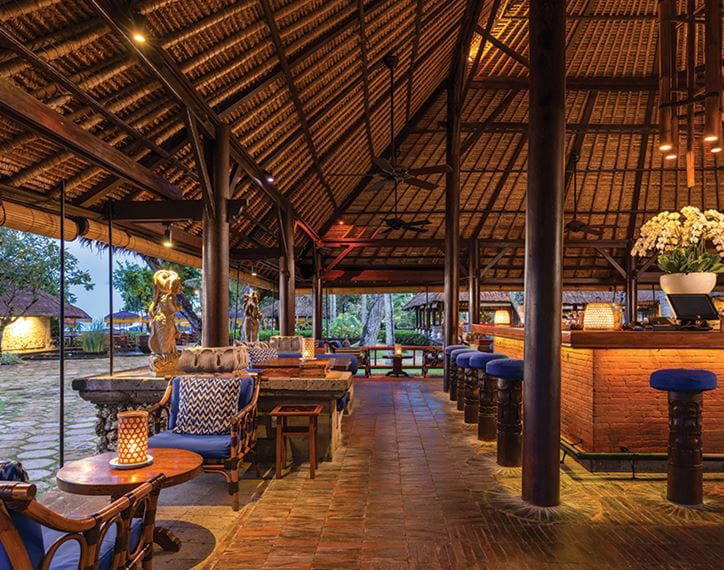
The property's dual-building structure reflects a deliberate editorial choice about what luxury in Bali can mean. In the Andra Matin-designed building, suites draw on local craftsmanship, Balinese artisans working with regional materials and traditional construction techniques produce interiors that read as warm and rooted, connected to the island's making traditions. In the OMA-designed building, the register shifts: interiors are sleeker and more contemporary, built substantially from reclaimed and repurposed materials, with the aesthetic language of adaptive reuse rather than heritage craft. Neither building subordinates itself to the other; they operate as different arguments about the same underlying commitment to material care. This dual-architecture format is uncommon in Bali's luxury segment, where most properties converge on a single design language, either tropical vernacular or international minimalism. The coexistence of both, designed by two practices with distinct international profiles, gives the property a comparable set that extends beyond Seminyak. Properties like Bambu Indah in Banjar Badung pursue heritage craft with similar conviction, while Desa Seni Baturiti in Tabanan takes a comparable village-format approach, but the OMA contribution at Potato Head places it in a different conversation about international architectural ambition in Indonesian hospitality.
The village format and what it changes about a Bali stay
Bali's premium hospitality has historically been organised around the private villa, a contained compound offering seclusion, a personal pool, and a fixed daily rhythm. Desa Potato Head inverts that logic. The 88 suites feed into shared social infrastructure: a library, multiple bars and restaurants, a beach club on the Indian Ocean, sculpture gardens, an outdoor amphitheatre, and a music venue described as state-of-the-art. The result is a property where the common spaces carry as much programming weight as the rooms themselves. This positions Potato Head closer to the creative campus model, where guests are expected to move through the property, encounter cultural events, and use the venue as a social base, than to the traditional resort model, where amenities exist primarily to support in-room seclusion. For guests accustomed to the private villa format found at properties like Alila Villas Uluwatu or the reserve-scale isolation of Mandapa, a Ritz-Carlton Reserve in Ubud, the village format represents a fundamentally different proposition. It suits guests who want cultural density alongside comfort, rather than withdrawal from it.
Sustainability as operating principle, not positioning
The World's 50 Best Hotels Eco Award, received at particularly recent awards ceremony, and B Corp certification together place Potato Head in a tier of properties where sustainability functions as an operating system rather than a communications layer. The 0.5% waste-to-landfill figure is one concrete data point: at that level, the property has effectively closed its material loop on waste, which requires supply chain discipline, kitchen practice, and facilities management working in alignment rather than in isolation. The dining program reflects the same logic, local sourcing, whole ingredients, and circular practices are documented commitments rather than menu copy. Within Indonesia's broader hospitality picture, this level of verified environmental performance is uncommon. Nihi Sumba pursues community-impact models in Sumba, and Hotel Komune and Beach Club Bali in Gianyar has its own sustainability commitments, but the combination of B Corp status, 50 Best Eco recognition, and documented landfill metrics at Potato Head represents a specific and measurable cluster of credentials. The property's La Liste Leading Hotels score of 91 points for 2026 adds another measure of recognition.
Wellness in context
The wellbeing centre operates in a register that connects innovation with tradition, culturally rooted treatments alongside contemporary wellness approaches. This framing matters in Bali, where the wellness market ranges from luxury resort spa formats to genuinely practitioner-led healing traditions. The island has its own deep wellness infrastructure, and properties that engage with local tradition rather than importing a generic spa menu tend to deliver experiences with more specificity and depth. Potato Head's positioning within that spectrum places it closer to properties like Bliss Sanctuary for Women Seminyak and Bliss Sanctuary for Women Villa Peace, which make wellness the organizing principle of the stay, though Potato Head integrates it within a broader cultural and social program rather than centering it exclusively. Daily rituals and a slower, more deliberate pace are built into the property's rhythm by design.
Planning a stay: what to know before booking
Potato Head Suites & Studios is a 5-star hotel in Seminyak, Bali, at Jl. Petitenget No. 51B, Kabupaten Badung. Potato Head Suites & Studios sits at Jl. Petitenget No. 51B in Seminyak, within Kabupaten Badung, Bali. The property operates as Desa Potato Head Bali, a full creative village, so arrival logistics differ from a standard hotel check-in; guests arrive into a compound with multiple entry points and social spaces rather than a single lobby. Guests access the full 159-room inventory, spanning both the Andra Matin and OMA buildings, with the room choice effectively determining the design register of the stay. Advance planning is advisable for high-season Bali travel, which concentrates in July, August, and the Christmas-New Year period. The property's beach club and dining venues attract both hotel guests and day visitors, which means the social spaces can be active at peak hours even outside full hotel occupancy. Guests interested in comparing the Potato Head brand's other Indonesian address can look at Desa Potato Head in Denpasar. For those extending a Bali itinerary, Amankila in Manggis and Batur Natural Hot Spring in Kintamani represent contrasting approaches to the island's eastern and highland regions. Further afield in Indonesia, Amanwana on Moyo Island and Kampung Sampireun Resort & Spa in Garut offer reference points for different archipelago experiences. International comparisons for the design-forward, culturally programmed hotel format can be drawn from properties like Aman New York, The Fifth Avenue Hotel in New York City, and Aman Venice, all of which operate in the intersection of architecture, cultural programming, and hospitality.
The Short List
Comparable venues nearby, for context on price, style, and recognition.
| Venue | Cuisine | Price | Notes |
|---|---|---|---|
| Potato Head Suites & StudiosThis venue — the venue you are viewing | Not listed | $$$$ | Not listed |
| Je Ne Sais Quoi, Seminyak | Seminyak, Luxury boutique villa resort | $$$$ | Not listed |
| W Retreat and Spa Bali - Seminyak | Not listed | $$$$ | Seminyak, Contemporary beach resort blending Balinese cultural elements with W's signature bold luxury. |
| The Elysian | Not listed | $$$$ | Seminyak, Contemporary Balinese village-style boutique resort with private villa accommodations and secluded garden compounds. |
| Bliss Sanctuary for Women Villa Peace | Seminyak, barefoot luxury wellness villa | $$$$ | Not listed |
| Alila Seminyak | Not listed | $$$$ | Seminyak, Contemporary Balinese luxury resort with minimalist design elements and thoughtful cultural integration. |
Recognition history
Dated appearances from independent guides and award organizations, with the underlying list record or original source where available.
La Liste Top Hotels
La Liste
Virtuoso Luxury Hotel Partner
Virtuoso
Michelin Selected
Michelin
Tatler Listed in Best Hotels Asia-Pacific
Tatler
Tatler Best Design
Tatler
World's 50 Best Best Hotels #18
World's 50 Best
Tatler Best Innovation
Tatler
World's 50 Best Best Hotels #21
World's 50 Best
World's 50 Best Best Hotels #40
World's 50 Best
Continue exploring
More in Seminyak
Hotels in Seminyak
Browse all →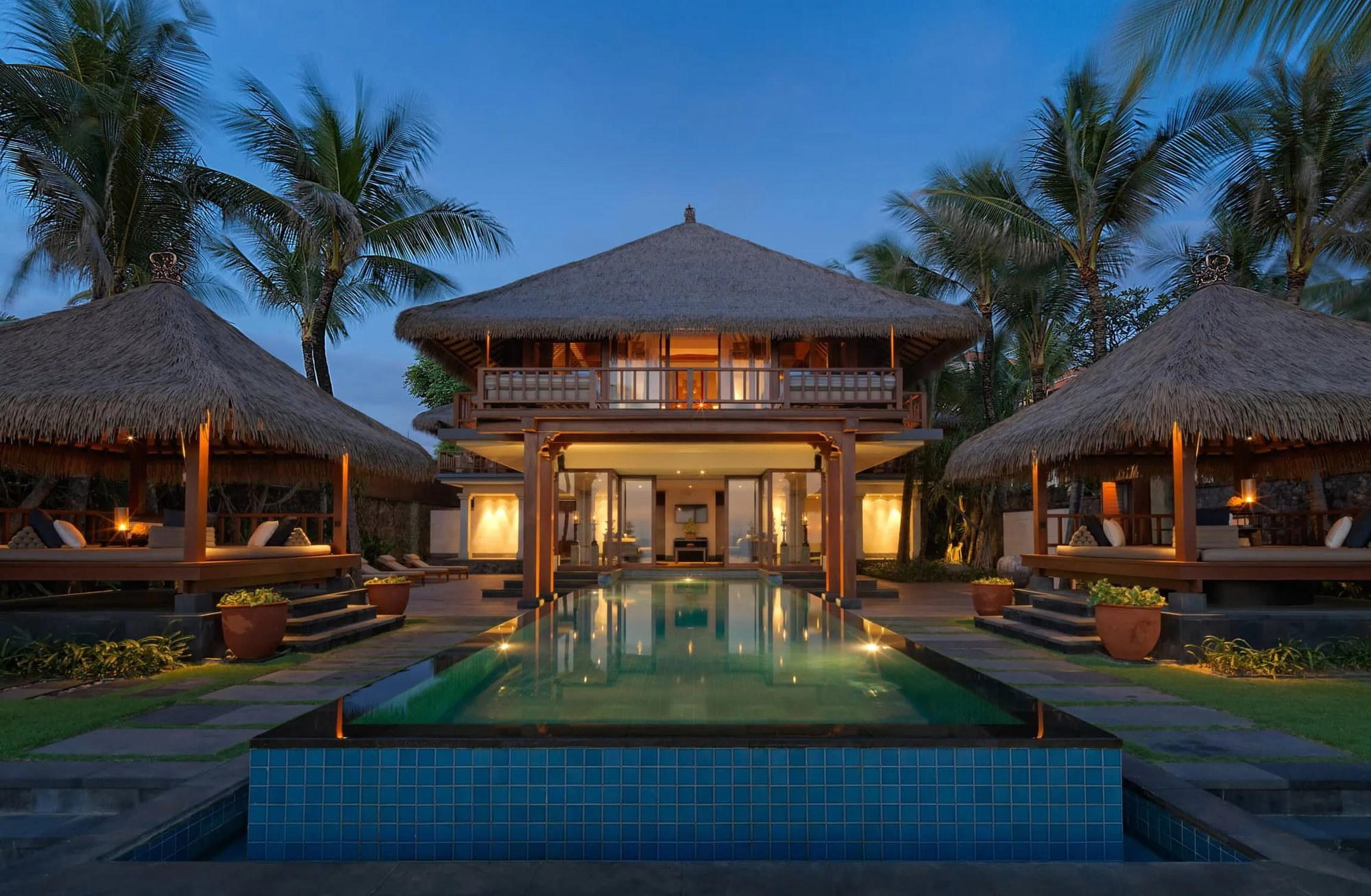
At a Glance
- Modern
- Trendy
- Sophisticated
- Minimalist
- Honeymoon
- Romantic Getaway
- Wellness Retreat
- Weekend Escape
- Beachfront
- Infinity Pool
- Rooftop Pool
- Destination Spa
- Wi Fi
- Pool
- Spa
- Fitness Center
- Room Service
- Concierge
- Beach Access
- Waterfront
- Garden
- Wi Fi
- Pool
- Spa
- Fitness Center
- Room Service
- Concierge
- Beach Access
Relaxed barefoot luxury with natural textures, open-air spaces, and a mindful, eco-conscious atmosphere praised for its calming yet curated energy.