Poké Makai brings Hawaiian-inspired bowl culture to Cologne's Altstadt-Nord, occupying a direct address on Marzellenstraße a short walk from the cathedral quarter. The format sits within Germany's growing fast-casual wave, where fresh-assembled grain and fish bowls have found a foothold between traditional German eating and the city's younger, internationally minded dining crowd.
Pearl is the En Primeur Club membership app — saves, bookings, and concierge access live there. Same editors, same standards.
- Address
- Marzellenstraße 12a, 50667 Köln, Germany
- Phone
- +492212703888
- Website
- poke-makai.de
- Directions
- Get directions
 Saves & bookings on Pearl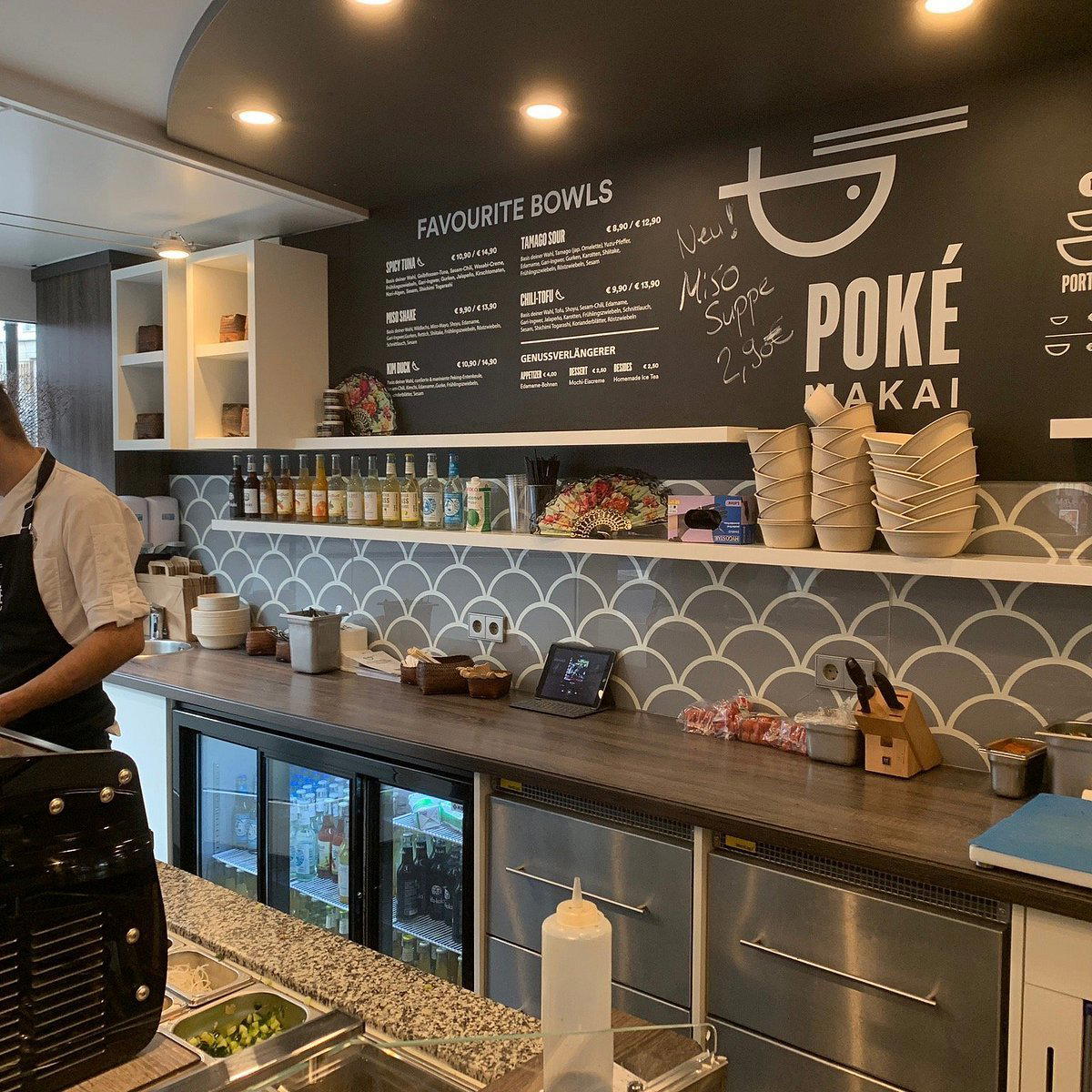
Bowl Culture Arrives in the Cathedral Quarter
Cologne's eating habits have shifted noticeably over the past decade. The city that once defined itself through beer halls, Himmel un Ääd, and the occasional fine-dining room in the old town has quietly absorbed a wave of fast-casual formats aimed at a midday crowd that wants something light, fresh, and built to order. Poké Makai, on Marzellenstraße 12a, sits at the intersection of that shift, placing Hawaiian-style rice bowls within a few minutes' walk of the Kölner Dom. The address puts it in Altstadt-Nord, a part of the inner city where office workers, tourists, and students converge at lunch, creating exactly the kind of foot traffic that sustains a bowl concept.
The broader poke format, raw fish or protein over a grain base, dressed with soy, sesame, or ponzu-adjacent sauces, finished with toppings that range from edamame and seaweed to pickled vegetables, arrived in German cities after establishing itself firmly in London, Amsterdam, and Paris. Cologne was not the first German city to take it up, but the format has found durable traction here, partly because it fills a genuine gap. The city's formal lunch options lean heavy: schnitzel, Sauerbraten. A cold-built bowl with rice, salmon, and avocado answers a different set of needs.
Where Poké Makai Sits in Cologne's Broader Eating Map
Understanding what Poké Makai offers requires placing it against Cologne's wider range. At the higher end of the city's dining spectrum, places like Ox & Klee and La Cuisine Rademacher represent the tasting-menu tier, where multi-course commitments and serious price points are the norm. La Société and Le Moissonnier Bistro occupy a middle register of French-leaning cooking with more flexible formats. maiBeck brings modern German sensibility to the Rhine-adjacent neighbourhood. Poké Makai operates in an entirely different register, casual, fast, built for repetition rather than occasion dining.
That distinction matters because it means the restaurant's competition is not the Michelin-tracked rooms or the bistro circuit. Its comparable set is the city's growing inventory of health-oriented fast-casual concepts: grain bowl shops, ramen counters, sushi-adjacent formats. Within that group, the Hawaiian bowl concept carries a specific identity: it foregrounds raw fish, customisation, and relative speed, rather than the knife-forward theatre of a Japanese sushi counter or the slow comfort of a ramen bowl. Germany's poke segment has grown sharply since 2018, tracking a Europe-wide appetite for protein-and-grain formats that read as both nutritious and satisfying.
The Format and Its Execution
The editorial angle worth pressing on at any poke concept is whether the team has built a system that holds under volume. Fast-casual bowl formats live or die by throughput: the interaction between whoever is building the bowl, whoever is managing the line, and whoever is handling the front of the operation during a compressed lunch rush. When the collaboration between those roles is well-calibrated, the format feels fluid. When it breaks down, the queue backs up, the rice sits too long under heat lamps, and the fish loses its edge. At a location like Marzellenstraße, dense with foot traffic, proximate to both tourist routes and office blocks, that operational discipline is the central test.
The Hawaiian bowl tradition itself rewards careful sourcing. The raw fish component (typically salmon, tuna, or both) demands cold-chain reliability, and the toppings, sesame oil, soy marinade, crispy shallots, pickled ginger, need enough variety to sustain repeat visits from a regular lunch crowd. Customisation is part of the format's appeal, but too many options slow the line; too few limit return visits. How the restaurant has resolved that tension is, ultimately, something the team on the floor determines each day.
Germany's Fast-Casual Moment and What It Means for Cologne
Germany arrived later than its western European neighbours to the fast-casual wave that remade city-centre eating in the 2010s. London built a sophisticated poke scene well before Berlin, and Amsterdam's food halls accelerated the format's normalization in Northern Europe. German cities have been catching up through the early 2020s, with Berlin, Munich, and Hamburg absorbing the highest concentrations of bowl concepts. Cologne's position, large enough to sustain a diverse food scene, compact enough that good concepts spread by word of mouth quickly, makes it a reasonable market for a format that depends on repeat visitors.
The city's fast-casual tier is still establishing its hierarchies. Unlike the fine-dining room, where Michelin recognition and chef lineage create legible signals, Aqua in Wolfsburg, JAN in Munich, or Schwarzwaldstube in Baiersbronn), the casual segment has fewer external validators. CODA Dessert Dining in Berlin shows that even unconventional formats can attract serious critical attention in Germany, but that is the exception rather than the rule for fast-casual operations. At the poke level, reputation builds through volume of visits, not award cycles.
For context on what Cologne's serious dining infrastructure looks like beyond its borders, the city sits within reach of Vendôme in Bergisch Gladbach and Waldhotel Sonnora in Dreis, both of which operate at the summit of the German fine-dining hierarchy. That context is worth holding when calibrating what the restaurant represents: it is a different kind of offer entirely, serving a different moment in the day and a different set of expectations. The same city also draws visitors who know Restaurant Haerlin in Hamburg, Schanz in Piesport, or even international references like Le Bernardin in New York City and Atomix in New York City. For those visitors, a well-executed poke bowl near the cathedral is a practical lunch rather than a dining destination, and the format needs to deliver on that register. ES:SENZ in Grassau and Victor's Fine Dining by christian bau in Perl further illustrate how Germany's serious dining tier has spread across smaller towns and regions, leaving city-centre casual concepts to serve a genuinely different function.
Know Before You Go
Address: Marzellenstraße 12a, 50667 Köln, Germany
Neighbourhood: Altstadt-Nord, central Cologne, close to Kölner Dom
Format: Fast-casual poke bowl concept
Price level: About US$15 per person
Hours: Mon to Sat 12 to 7:30 PM; Sun closed
Booking: Walk-in friendly
Reputation Context
Comparable venues nearby, for context on price, style, and recognition.
| Venue | Cuisine | Price | Notes |
|---|---|---|---|
| Poké MakaiThis venue — the venue you are viewing | Hawaiian Poké Bowls | $$ | Not listed |
| Mangal Restaurant | Authentic Turkish Grill | $$ | Neustadt/Nord |
| Kleine Glocke | Traditional German Gastropub | $$ | Altstadt/Nord |
| Punky Panda | Asian Izakaya Ramen Fusion | $$ | Altstadt/Süd |
| L´assaggio Da Rocco | Modern Italian Tapas | $$ | Neustadt/Süd |
| Cafe 1980 | Vietnamese Bánh Mì Cafe | $$ | Altstadt/Süd |
Continue exploring
More in Cologne
Restaurants in Cologne
Browse all →
Bars in Cologne
Browse all →
Hotels in Cologne
Browse all →

At a Glance
- Trendy
- Modern
- Casual Hangout
Current opening hours
- Monday
- 12–7:30 PM
- Tuesday
- 12–7:30 PM
- Wednesday
- 12–7:30 PM
- Thursday
- 12–7:30 PM
- Friday
- 12–7:30 PM
- Saturday
- 12–7:30 PM
- Sunday
- Closed
Hours can change for holidays and private events. Last verified .
Bright, fresh, and casual snack bar atmosphere with a small space featuring only a few tables.