Brewery Päffgen on Friesenstraße is one of Cologne's oldest Kölsch brewhouses, operating under the customs that define how the city drinks its native beer. Köbes staff circulate with tall, narrow trays of fresh 0.2-litre Stangen, replacing empties without being asked until a coaster signals the session is over. The ritual is the experience.

Pearl is the En Primeur Club membership app — saves, bookings, and concierge access live there. Same editors, same standards.
- Address
- Friesenstraße 64-66, 50670 Köln, Germany
- Phone
- +49 221 135461
- Hours
- Mon–Thu 12 PM–12 AMFri–Sat 12 PM–12:30 AMSun 12 PM–12 AM
- Website
- paeffgen-koelsch.de
- Directions
- Get directions
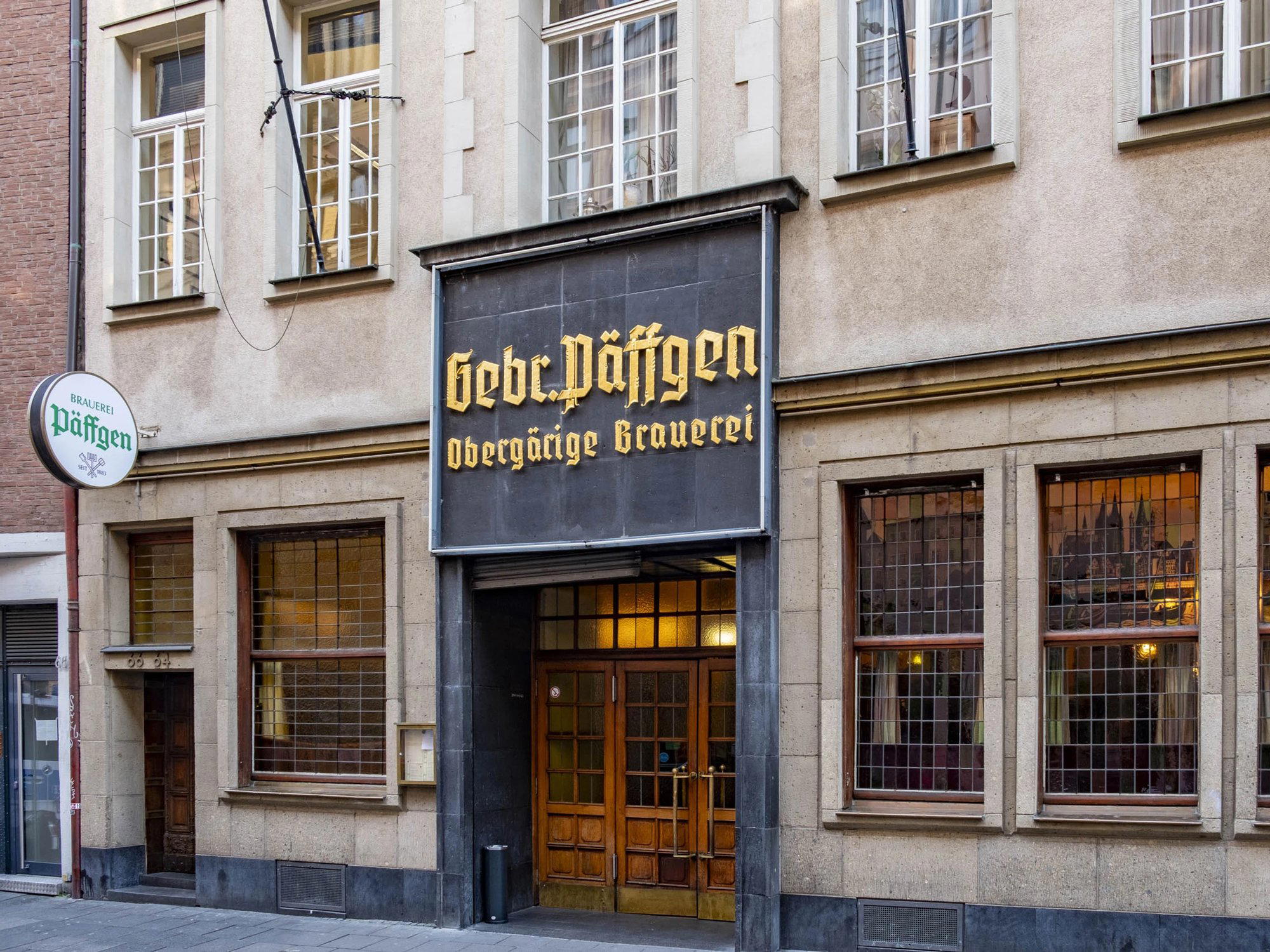
The Rhythm of a Kölsch Brewery
There is a specific grammar to drinking beer in Cologne, and it is nowhere more legible than at a traditional Brauhaus operating by the old rules. At Päffgen, on Friesenstraße in the Friesenviertel neighbourhood, the format has not been adapted for tourist comfort or streamlined for speed. The Köbes, Cologne's name for the traditionally brusque brewery waiter, arrives without being summoned, swaps an empty Stange for a full one, and marks the running tally with a pencil stroke on a cardboard coaster. The session ends when the drinker places that coaster on top of the glass. Until that signal, service continues at its own pace. This is not a gimmick reconstructed for visitors — it is the operational logic that Brauhaus culture has used across the city for generations, and Päffgen is one of its more consistent surviving expressions.
Kölsch as a Category, Not Just a Style
To understand why a brewery like Päffgen occupies the position it does in Cologne's drinking culture, it helps to understand what Kölsch actually is. Unlike most beer styles, Kölsch carries a geographic designation protected under European law since 1997 by the Kölsch Konvention, a document signed by Cologne's brewing houses that restricts the name to pale, top-fermented, warm-conditioned beer brewed within the city limits. It is served exclusively in the Stange, a cylindrical glass holding 0.2 litres, which keeps the beer cold and fresh across a short drinking window. The small serving size is not affectation but function: Kölsch oxidises quickly and is designed to be consumed in rapid succession rather than nursed. This is why the Köbes tradition exists in its particular form. The brewery controls the drinking pace, not the drinker.
Among German beer cities, this format sits apart. In Munich, half-litre and litre Masskrüge define the tempo. In Düsseldorf, Altbier is served from wooden barrels in a slightly warmer, maltier idiom by the same round-tray service system, as visitors to Uerige in Dusseldorf will recognise. Cologne's insistence on the 0.2-litre Stange puts it closer to the wine-bar model of consumption: small pours, frequent rotation, conversation built into the structure of the service.
The Room and What Happens in It
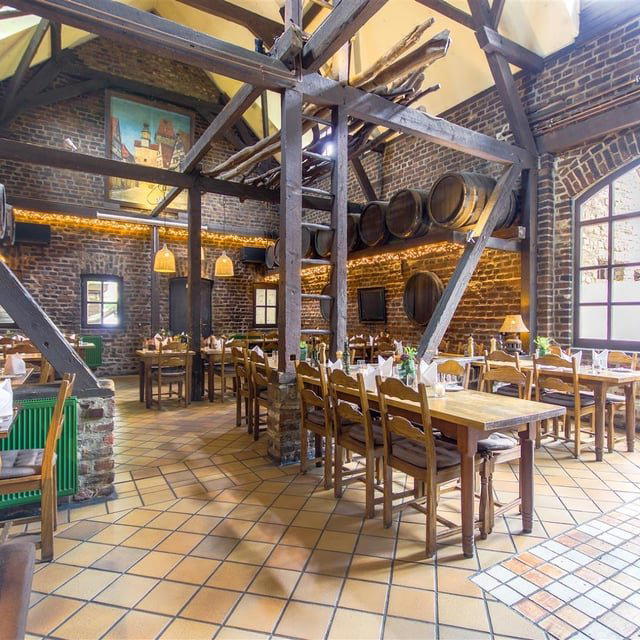
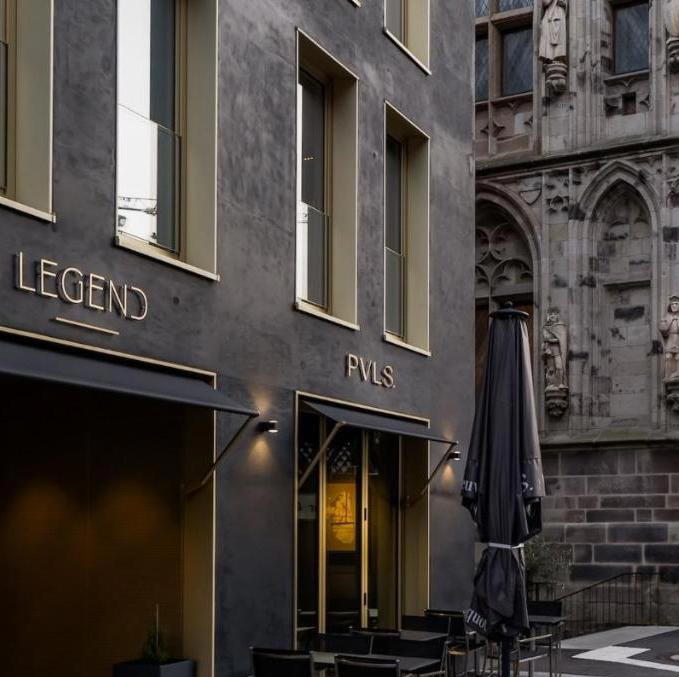
The Päffgen premises on Friesenstraße follow the Brauhaus template: long communal tables, wooden surfaces darkened over decades of use, a working brewery visible or implied in the architecture, and a room volume that absorbs noise without turning a full house into an uncomfortable experience. These rooms are designed for groups that do not know each other to sit close together without friction. Communal seating at this scale is not incidental to the Brauhaus format — it is the format. A solo visitor seated at a table of eight strangers is not unusual; it is what the room expects. The Brauhaus has always operated as a civic space as much as a hospitality one.
Food follows the same logic as the drink: Cologne's Brauhaus kitchen produces the dishes that anchor the local repertoire. Himmel un Ääd (apple purée with black pudding), Halver Hahn (a rye bread roll with aged Gouda), and Reibekuchen (potato pancakes) are the dishes most associated with this format across the city's breweries. These are not dishes to photograph; they are dishes designed to accompany extended drinking sessions in a room with no particular interest in the trends of the wider restaurant industry. For context on the broader range of Cologne's eating and drinking options across neighbourhoods, see our full Cologne restaurants guide.
Where Päffgen Sits in Cologne's Brauhaus Tier
Cologne supports a range of Brauhaus-format venues, from tourist-facing operations near the cathedral to neighbourhood houses that primarily serve a local clientele. Päffgen occupies a position closer to the latter: the Friesenviertel address places it within walking distance of the Ringe, the ring roads that define the inner city, in a neighbourhood with a resident population rather than a tourist concentration. This geographic placement shapes the customer mix. The evening crowd at a Friesenviertel Brauhaus trends differently than the one you encounter near the Alter Markt.
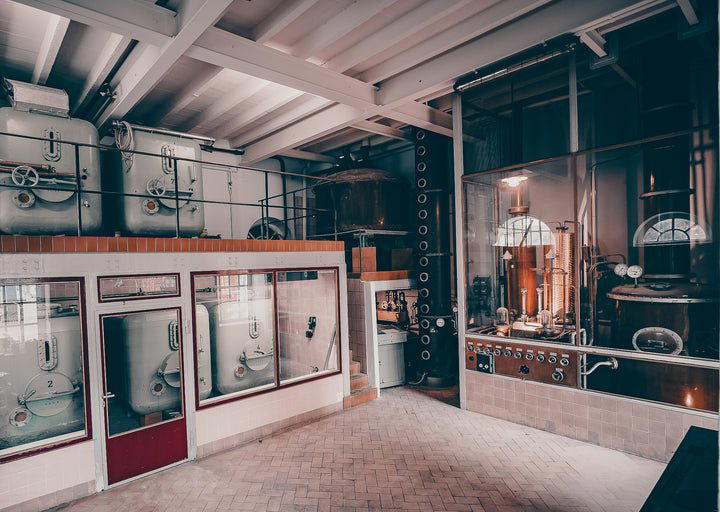
The comparison extends to how Päffgen's brewing identity fits the Cologne category. Alongside Reissdorf, Früh, Gaffel, and Sion, Päffgen is one of a smaller group of Cologne houses that brews its own Kölsch on the premises rather than contracting production. This distinction matters within the Kölsch Konvention framework: a venue that brews is a Brauerei; one that serves without brewing is a Brauhaus or Gaststätte. The on-site production at Päffgen places it in the category that still connects the drinking experience directly to the production process, even if the tanks are not visible from every table.
For drinkers exploring Germany's bar and brewery culture more broadly, the Brauhaus model at venues like Päffgen connects to a tradition of place-specific, production-linked hospitality that has parallels at Kieler Brauerei am Alten Markt in Kiel. In cities less defined by a single native style, cocktail-led hospitality follows a different logic, as at The Parlour in Frankfurt on the Main, Buck and Breck in Berlin, Goldene Bar in Munich, or Le Lion Bar de Paris in Hamburg.
Planning a Visit
Päffgen is located at Friesenstraße 64-66 in the 50670 postal district, accessible on foot from the Friesenplatz U-Bahn station. No reservations are typically taken for standard Brauhaus seating, arrival and communal table placement follows the traditional format. Evening sessions, particularly Thursday through Saturday, fill the room early; arriving before 19:00 on peak evenings avoids the longer wait for a place at the communal tables. The Kölsch pricing at Cologne Brauhäuser remains among the more affordable in German brewing culture, with individual Stangen priced well below comparable pours at premium craft operations in other German cities. Service operates on the Köbes model, so signalling for your bill requires placing the coaster on your glass rather than flagging down staff.
Cologne's bar and drinking scene beyond the Brauhaus circuit includes venues like Bar Rix, Bar Trattoria Celentano, Barracuda Bar, and Bei Oma Kleinmann, each operating in a different format and neighbourhood context. For drinkers curious about how Cologne's hospitality extends well beyond beer, Bar Leather Apron in Honolulu offers an interesting international counterpoint in precision cocktail format.
Cuisine and Recognition
Comparable venues nearby, for context on price, style, and recognition.
| Venue | Cuisine | Price | Awards | Notes |
|---|---|---|---|---|
| Brewery PäffgenThis venue — the venue you are viewing | beer_bar | $20–30 | Not listed | Not listed |
| Barracuda Bar - Köln | cocktail_bar | $20–30 | Not listed | Neustadt/Nord |
| Biergarten Rathenauplatz Veedelstreff | beer_bar | $10–20 | Not listed | Neustadt/Süd |
| Bumann & SOHN | lounge | $20–30 | Not listed | Ehrenfeld |
| Café Storch | cocktail_bar | Not listed | Not listed | Neustadt/Süd |
| Frohnatur | wine_bar | $20–30 | Star Wine List · Falstaff Wine Bar - 91 Falstaff Points | Altstadt/Nord |
Continue exploring
More in Cologne
Bars in Cologne
Browse all →

Restaurants in Cologne
Browse all →
Hotels in Cologne
Browse all →

Details
- Rustic
- Lively
- Classic
- Well Known
- After Work
- Group Outing
- Casual Hangout
- Historic Building
- Seated Bar
- Communal Tables
- Craft Beer
Current opening hours
- Monday
- 12 PM–12 AM
- Tuesday
- 12 PM–12 AM
- Wednesday
- 12 PM–12 AM
- Thursday
- 12 PM–12 AM
- Friday
- 12 PM–12:30 AM
- Saturday
- 12 PM–12:30 AM
- Sunday
- 12 PM–12 AM
Hours can change for holidays and private events. Last verified .
Rustic, centuries-old brewery hall with lively, traditional energy and hearty Rhineland vibes.