On a quiet stretch of Tóth Kálmán utca in Budapest's ninth district, Pizziozo sits inside the city's expanding casual dining conversation, a neighbourhood pizza address operating at some distance from the Michelin-table circuit that defines Budapest's premium dining identity. Direct to find, less direct to fully characterise without more public data, it represents the kind of local fixture worth tracking.
Pearl is the En Primeur Club membership app — saves, bookings, and concierge access live there. Same editors, same standards.
- Address
- Budapest, Tóth Kálmán u. 27, 1097 Hungary
- Phone
- +36301250103
- Website
- opentable.com
- Directions
- Get directions
 Saves & bookings on Pearl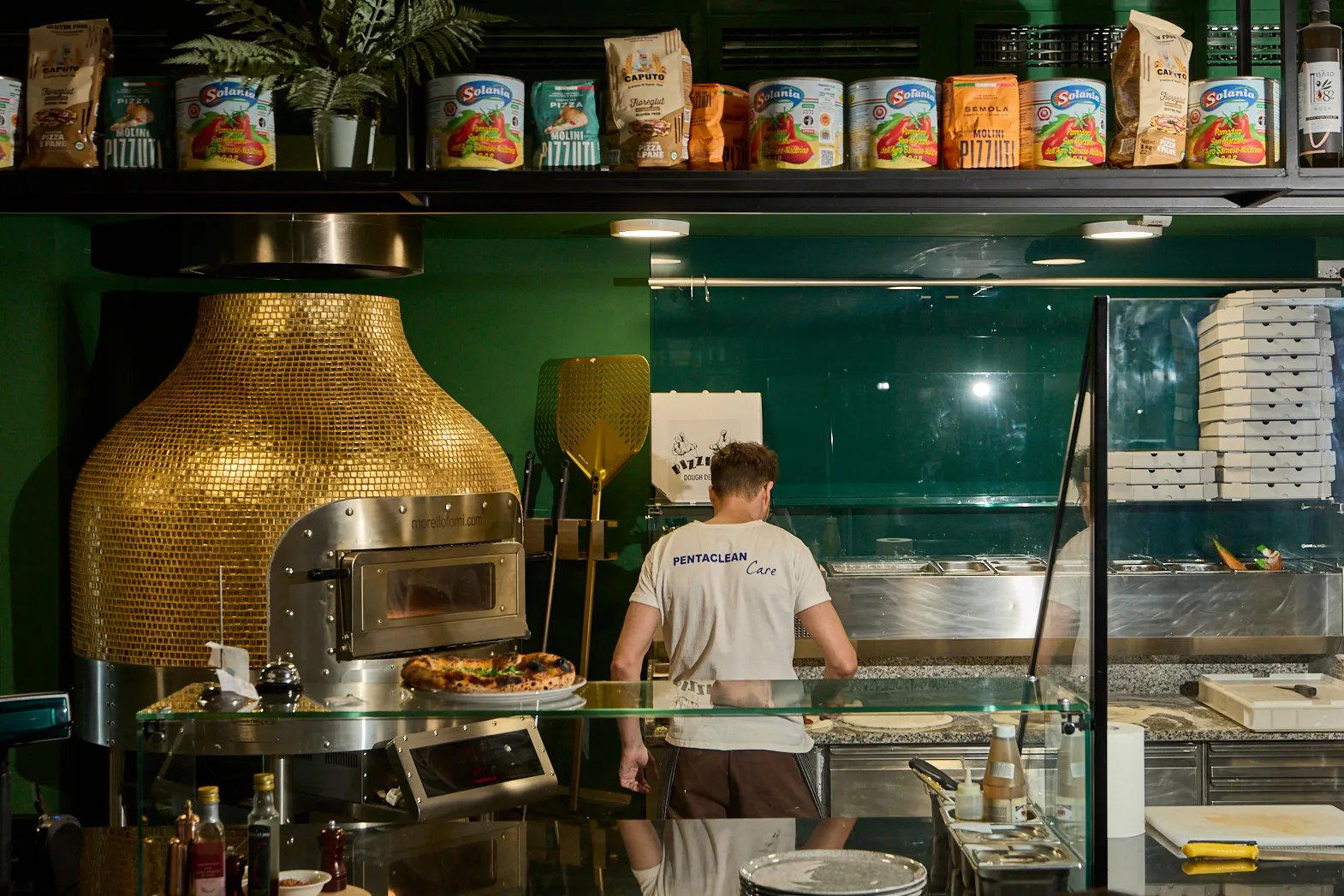
Budapest's Pizza Question and Where Tóth Kálmán Street Fits In
Budapest's dining scene has spent the past decade building a credible fine-dining identity, anchored by Michelin-starred addresses and a generation of Hungarian chefs who trained abroad and came back with new frameworks. That story gets told frequently. What gets told less often is what fills the space between the Costes-tier tables and the city's neighbourhood eating culture, the casual, district-specific spots that serve the people who actually live in these postcodes. Pizziozo Budapest is a restaurant at Tóth Kálmán u. 27, 1097 Hungary in Budapest, serving Neapolitan-Middle Eastern Fusion Pizza.
The ninth district, Ferencváros, has undergone considerable change. Once associated primarily with a football club and working-class housing stock, it now holds a mixed population of longer-term residents and newer arrivals drawn by lower rents relative to the central fifth and sixth districts. Restaurant culture here tends to be practical rather than performative. A pizza address in this context is read differently than one in the tourist corridor around Váci utca or the design-bar strip of the seventh district. It answers a different kind of need.
What the Booking Picture Looks Like
The editorial angle the venue invites most directly is a logistical one. Venues operating at the higher end of Budapest's restaurant spectrum, from Stand through to Babel, maintain strong digital presences, reservation systems, and press-facing infrastructure. Pizziozo operates in a register where that infrastructure is lighter or less formalised.
For visitors planning around this address, the standard pre-visit research loop may not resolve cleanly. This is common for neighbourhood-tier restaurants in Budapest's outer districts. Many of the city's most dependable local addresses operate with minimal online presence and fill their tables through repeat custom and word of mouth rather than through aggregator platforms.
Contrast this with the planning experience at the other end of Budapest's dining range: Borkonyha Winekitchen and essência both operate with clear booking windows and advance reservation requirements. At that tier, the question is lead time, not access method. At the neighbourhood tier, the question inverts: you often have shorter lead times but less reliable remote booking infrastructure.
Pizza in the Central European Context
Pizza as a category has had an interesting trajectory in Central European capitals. Warsaw, Prague, and Budapest all followed broadly similar patterns: a first wave of low-quality, post-communist fast food approximations in the 1990s, a second wave of Italian-style casual dining in the 2000s and early 2010s, and more recently a fragmented premium pizza movement influenced by Neapolitan technique and sourdough-culture thinking that has spread across Western European cities. Budapest's premium pizza identity is thinner than Warsaw's or Prague's, but it exists. Addresses modelling Neapolitan-style high-heat, short-bake pizza have appeared in the central districts, and the conversation around dough fermentation and sourced ingredients has entered the local food media in a modest way.
Where Pizziozo sits within that trajectory is not fully documentable from available public data. The ninth district address and the limited digital presence suggest a neighbourhood operator rather than a trend-chasing concept. Whether the kitchen uses long-ferment dough, wood-fire technique, or a more conventional approach to pizza production is not confirmed. What can be said with confidence is that the Budapest pizza market at the casual end is not yet as developed or as critically tracked as its fine-dining counterpart, venues like La Pizza Del Lupo in Onga get traction in regional food writing partly because the category benchmark is still being established. That context matters for how you calibrate expectations going in.
Ferencváros and the Broader Eating Circuit
Visitors to Budapest who confine their eating to the first, fifth, and sixth districts miss a significant portion of the city's actual restaurant character. The ninth, along with the eighth, hosts more of the city's everyday eating culture than the tourist-facing postcode would suggest. If you are spending more than two nights in Budapest and have already secured a table at one of the higher-tier addresses, Costes for its Michelin-tracked modern Hungarian cooking or Borkonyha for wine-forward modern cuisine, a session at a neighbourhood spot in Ferencváros gives you a different and necessary register of the city.
For those extending their Hungarian eating itinerary beyond Budapest, the country's regional restaurant circuit has broadened in recent years. Platán Gourmet in Tata and Pajta in Őriszentpéter represent the kind of destination-restaurant thinking that has moved outside the capital. Aranysárkány Vendéglő in Szentendre sits close enough to Budapest to function as a day-trip eating option. Halasi Pince Panzió in Villány connects to the wine-producing south. And for those curious about how Hungarian dining culture plays out in the country's other major cities, Forst-Ház Étterem és Kávézó in Eger and Classic Grill Serbian Restaurant Underground in Szeged offer useful contrast points. BoriMami in Gyöngyös and Astro Tea & Kávéház in Gyor round out the regional picture further. For international comparison, the documentary discipline of places like Le Bernardin in New York City or the tasting-format rigour of Atomix in New York City illustrates how differently the premium-casual divide plays out in a market with deeper restaurant criticism infrastructure. Almalomb in Hosszúhetény also merits attention for those willing to travel into the Mecsek hills.
Planning Your Visit
Tóth Kálmán utca 27 is in Ferencváros, reachable from central Budapest via the M3 metro line to Ferenc körút or by tram. The address is residential in character, which means on-street parking is generally available outside peak hours, and the immediate area is walkable from the district's main commercial streets. One reliable approach is to visit during service hours and confirm availability on the spot.
Accolades, Compared
Comparable venues nearby, for context on price, style, and recognition.
| Venue | Cuisine | Price | Notes |
|---|---|---|---|
| Pizziozo BudapestThis venue — the venue you are viewing | Neapolitan-Middle Eastern Fusion Pizza | $$ | Not listed |
| Porcellino Grasso | Traditional Italian Pizza and Pasta | $$ | Buda |
| Jamie's Italian Budapest | Italian Classics & Artisan Pizza | $$ | Varhegy |
| Spinoza Café & Restaurant | Hungarian & Mediterranean with Jewish influences | $$ | Belvaros |
| Apacuka | Modern European Fun Dining | $$ | Terézváros |
| Fat Mama | Hungarian BBQ Gastropub | $$ | Belvaros |
Continue exploring
More in Budapest
Restaurants in Budapest
Browse all →
Bars in Budapest
Browse all →
Hotels in Budapest
Browse all →

At a Glance
- Trendy
- Modern
- Lively
- Casual Hangout
- Group Dining
- Open Kitchen
- Terrace
Current opening hours
- Monday
- 11 AM–9 PM
- Tuesday
- 11 AM–9 PM
- Wednesday
- 11 AM–9 PM
- Thursday
- 11 AM–9 PM
- Friday
- 11 AM–9 PM
- Saturday
- 11 AM–9 PM
- Sunday
- 11 AM–9 PM
Hours can change for holidays and private events. Last verified .
Mafia vibes meet culinary finesse in a modern, trendy setting with cozy terrace.