

1 Michelin Star · La Liste Top Restaurants · Wine Spectator Best of Award of Excellence
Our verdict
Rumour by Rácz Jenő occupies a 21-seat counter wrapped around an open kitchen in central Budapest, serving a creative set menu that draws on international technique while keeping Hungarian wine at the centre of the pairing program. Scoring 76 points on La Liste's 2026 ranking, it sits in the top tier of Budapest's creative dining scene alongside Babel and Stand.

Pearl is the En Primeur Club membership app — saves, bookings, and concierge access live there. Same editors, same standards.
- Address
- Budapest, Petőfi tér 3-5, 1051 Hungary
- Phone
- +36 20 926 7837
- Hours
- Mon ClosedTue–Sat 5–11 PMSun Closed
- Website
- rumour.restaurant
- Directions
- Get directions
Concrete, Mirrors, and a Counter That Demands Your Attention
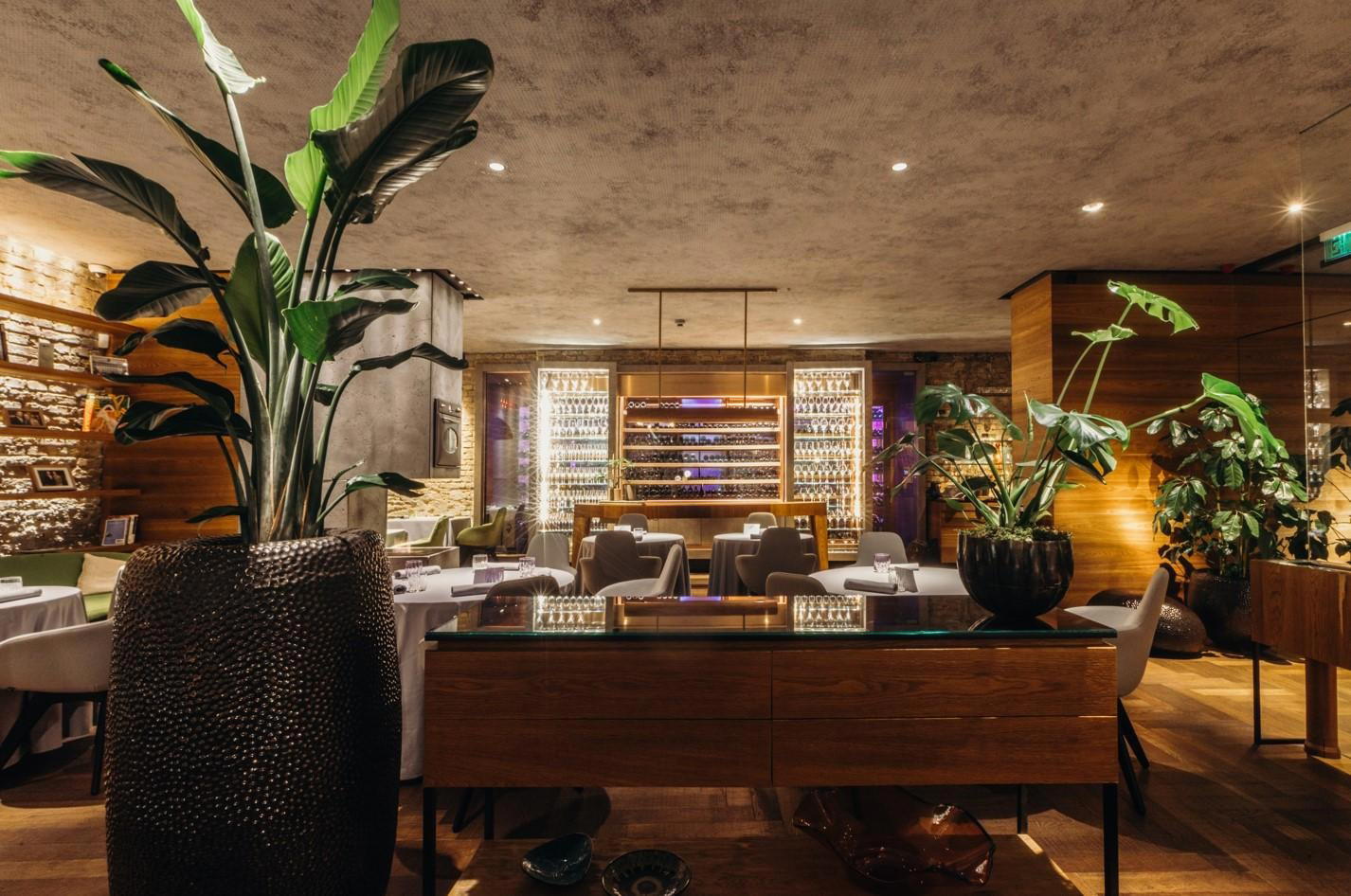
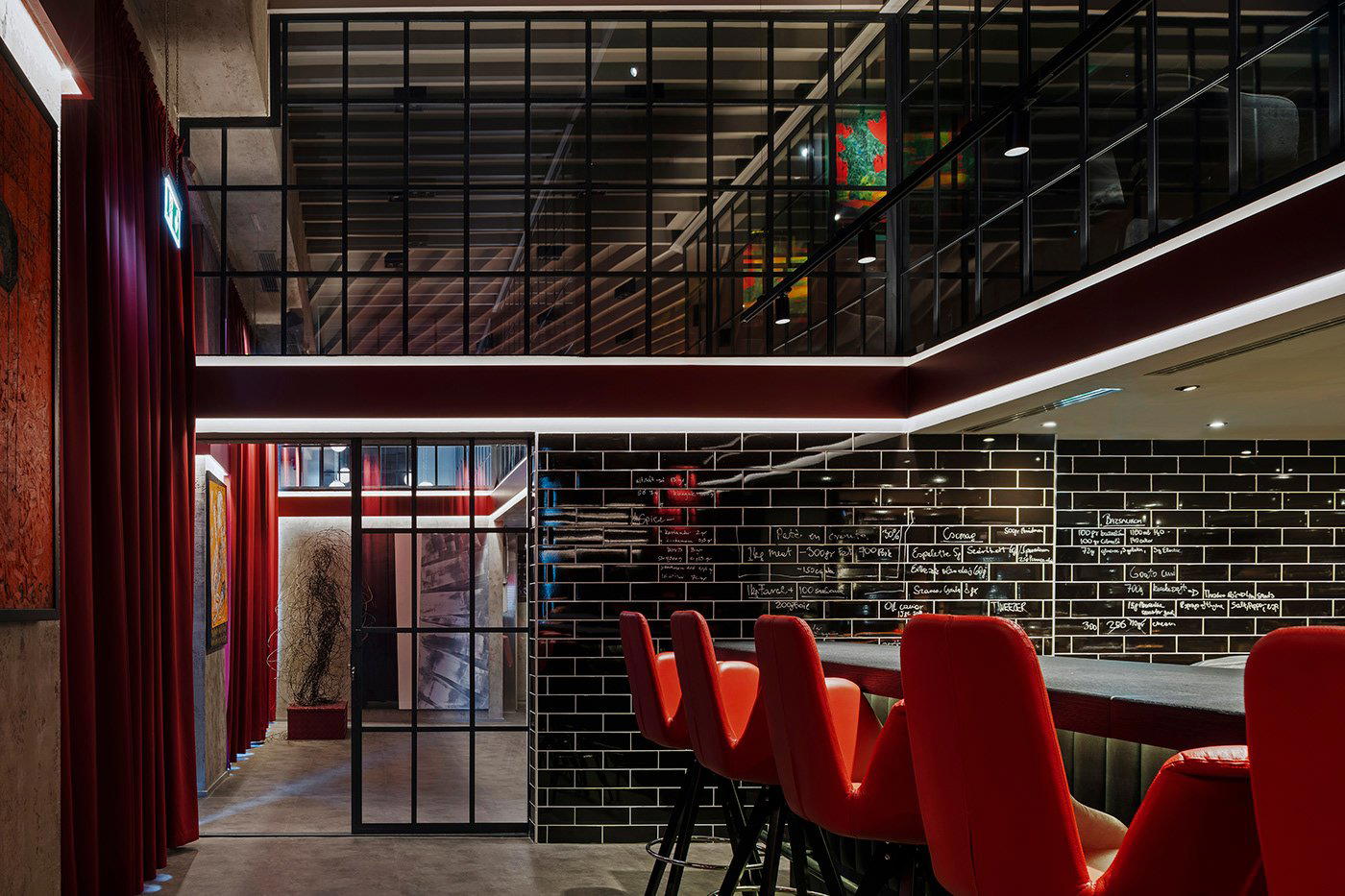
Budapest's premium restaurant scene has been quietly redefining itself over the past decade, moving away from formal dining rooms with tablecloths and armies of sommeliers toward something leaner and more direct: counter-first formats where the kitchen is the room. Rumour by Rácz Jenő, on Petőfi tér in the fifth district, belongs firmly to this newer configuration. The dining space is built around a 21-seat counter that wraps the open kitchen, positioning every guest as a direct observer of the cooking process rather than a spectator separated from it by distance and decor.
The material palette reads as deliberately austere: concrete walls hung with mirrors, red leather stools, red placemats providing the only warm punctuation against the harder surfaces. The effect is a room that feels considered rather than decorated, and the soundtrack — described as trending toward the contemporary rather than ambient — reinforces the sense that this is not trying to replicate the traditional fine-dining atmosphere found at older Budapest institutions. Sound, surface, and sightlines all point toward the same design intention: focus on what is happening in front of you at the counter.
At 21 seats, the format places Rumour in a small-capacity specialist tier that Budapest's leading end has increasingly favored. Babel (€€€€ · Modern Cuisine) and Stand (€€€€ · Modern Cuisine) operate in the same price bracket, but with different physical formats; the counter-only structure at Rumour creates a more compressed, theatre-of-cooking experience that is closer in concept to the omakase tradition than to a conventional tasting menu room.
The Menu's Frame of Reference
Budapest's current generation of creative restaurants shares a structural challenge: how to be simultaneously international in ambition and locally coherent. The set menu at Rumour addresses this through a format that draws on the chef's international travels without abandoning Hungarian identity. The result sits somewhere between a contemporary European tasting menu and something more personal in its referencing, with dishes described as refined and creative, occasionally playful, built to carry complexity without losing the thread of what they are trying to say.
This kind of format, where global technique meets localized identity, has become a meaningful point of differentiation in Budapest's leading dining tier. Costes (€€€€ · Modern Cuisine) and essência (€€€€ · Modern Cuisine) both operate in the €€€€ bracket with their own approaches to this tension. What distinguishes the Rumour format is the directness of the counter setting: the set menu lands course by course in front of guests who can see it being assembled, which concentrates attention on each dish in a way that a conventional room does not.
The wine pairing program merits specific attention. Budapest's fine dining tier has been slow to build serious Hungarian-focused wine programs, often defaulting to international bottles at the leading end. Rumour's Hungarian pairing option positions it as an outlier in this respect, offering bespoke choices drawn from the country's more obscure and distinctive producers. Hungary's wine geography, from Tokaj's oxidative whites to the volcanic soils of Somló and the warming reds of Villány and Eger, provides raw material that most Budapest restaurants leave underexplored. That Rumour has built a specific Hungarian pairing path alongside what one assumes is a more internationally anchored alternative suggests a deliberate positioning within the local fine-dining ecosystem, and one that rewards guests willing to commit to the regional route. For those interested in exploring Hungarian wine culture further, our full Budapest wineries guide covers the broader landscape.
Where It Sits in Budapest's Fine-Dining Tier
La Liste's scoring system aggregates data from restaurant guides, review platforms, and culinary press across multiple countries. Rumour's score of 76 points in 2026 (up from 75 in 2025) places it in the upper portion of Budapest's ranked creative restaurants, tracking incremental upward movement year on year. For context, the La Liste methodology weights consistency and press coverage heavily, meaning sustained scores in this range reflect a kitchen operating without significant variance across service.
Google's aggregate review score of 4.7 across 626 reviews provides a complementary data point: a large enough sample to be meaningful, and a score that holds across the tourist-heavy fifth district where review populations can dilute specialist-cuisine scores. The combination of La Liste recognition and strong public review data positions Rumour closer to Borkonyha Winekitchen (€€€ · Modern Cuisine) in terms of demonstrated consistency, though at a higher price point and with a more compressed, counter-focused format.
Budapest's creative restaurant tier has grown meaningfully since Costes became Hungary's first Michelin-starred restaurant in 2010. The city now supports several €€€€ operations with distinct identities, and the competition for a specific kind of internationally-minded diner has sharpened. Rumour occupies a niche within this set: smaller in seat count than most peers, counter-oriented in format, and more explicitly anchored to a single chef's point of view than a restaurant with broader ownership behind it.
The Fifth District Setting
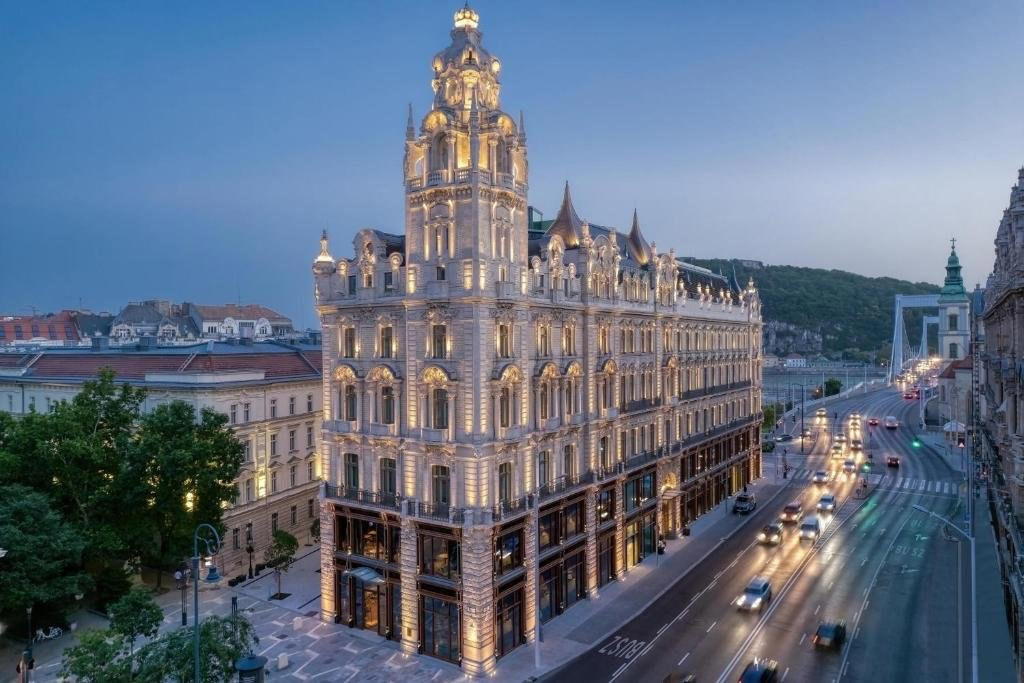
Petőfi tér is on the Pest bank of the Danube, close to the Elizabeth Bridge and within walking distance of the central market hall and the Inner City's main arteries. It is not a restaurant-quarter address in the way that some Budapest neighborhoods have developed clusters of dining destinations; it is more of a landmark-adjacent location, which tends to attract a mixed clientele of international visitors and local regulars rather than a purely destination-driven crowd. For a 21-seat counter with a set-menu-only format, the address works because the format itself filters for committed diners. This is not a restaurant you walk into on a whim.
The restaurant opens Tuesday through Saturday from 5 PM, with Monday and Sunday closed. Given the seat count and counter format, advance booking is the practical baseline: spontaneous availability at a 21-seat tasting menu counter in Budapest's top tier is not something to rely on, particularly during the summer high season and around major holidays. Guests planning visits from outside Budapest may find it useful to cross-reference against our full Budapest hotels guide for nearby accommodation options, and our full Budapest bars guide for pre- or post-dinner drinking in the district.
Hungary Beyond Budapest
For travelers using Budapest as a base to explore Hungary's wider fine-dining circuit, several restaurants outside the capital operate at comparable levels of ambition. Platán Gourmet in Tata and Pajta in Őriszentpéter represent the rural end of Hungary's creative dining scene, where agricultural context shapes the menus in ways that urban kitchens cannot replicate directly. 42 Restaurant in Esztergom, 67 Sigma in Székesfehérvár, A Konyhám Stúdió 365 in Fonyód, and Alkimista Kulináris Műhely in Szeged extend the map further. Seen against this national context, Budapest's concentration of €€€€ creative restaurants reflects a city that has developed a sophisticated dining infrastructure faster than the provincial cities, though the gap is narrowing.
For those curious about the creative format at this price point in other European markets, comparable counter-focused experiences at the €€€€ level include Aan de Poel in Amstelveen and De Groene Lantaarn in Staphorst, both operating in the creative tier in the Netherlands. The counter format and set-menu discipline cross borders readily; what changes is the ingredient palette and the regional wine logic, two areas where Rumour's Budapest setting gives it a distinct competitive position. See our full Budapest restaurants guide and our full Budapest experiences guide for broader city planning.
Frequently asked questions
What part of town is Rumour by Rácz Jenő in?
Rumour by Rácz Jenő is located at Budapest, Petőfi tér 3-5, 1051 Hungary, Budapest.
Does Rumour by Rácz Jenő have a Michelin star or similar recognition?
Rumour by Rácz Jenő has received recognition including: La Liste Top Restaurants (2026): 76pts; La Liste Top Restaurants (2025): 75pts; Chef: Jenő Rácz document.addEventListener("DOMContentLoaded", function { var el = document.getElementById("Achievements_chefs"); if (el && el.parentNode) { e….
What do people recommend at Rumour by Rácz Jenő?
Rumour operates on a set menu format, so the full counter experience is the thing to book for rather than individual dishes. The menu draws on Chef Jenő Rácz's international travels, moving through creative and occasionally playful courses built around refined technique. Regulars consistently highlight the Hungarian wine pairing option, which offers bespoke selections rather than a standard international list — a detail worth requesting when you book the 21-seat counter.
What type of food is Rumour by Rácz Jenő known for?
The Quick Read
A small set of peers for context, based on recorded venue fields.
| Venue | Cuisine | Price | Awards | Notes |
|---|---|---|---|---|
| Rumour by Rácz JenőThis venue — the venue you are viewing | Modern Fusion Tasting Menu | $100–150 | 1 Michelin Star · La Liste Top Restaurants | Not listed |
| Babel | Modern Hungarian Fine Dining | Not listed | 1 Michelin Star · La Liste Top Restaurants | Modern Cuisine |
| Borkonyha Winekitchen | Modern Hungarian-Inspired Bistro | $30–50 | 1 Michelin Star · La Liste Top Restaurants | Modern Cuisine |
| Stand25 Bisztró | Modern Hungarian Bistro | $50–100 | Michelin Plate | Traditional Cuisine |
| Bilanx | Modern Hungarian Contemporary | $50–100 | Michelin Plate | Contemporary |
| Goli | Modern Middle Eastern Grill | $30–50 | Michelin Bib Gourmand | Middle Eastern |
Recognition history
Dated appearances from independent guides and award organizations, with the underlying list record or original source where available.
Michelin 1 Star
Michelin
La Liste Top Restaurants
La Liste
Wine Spectator Best of Award of Excellence
Wine Spectator
The Best Chef Two Knives
The Best Chef
Full recognition history (6 entries)
La Liste Top Restaurants
La Liste
Michelin 1 Star
Michelin