Aranysárkány Vendéglő
Aranysárkány Vendéglő sits on one of Szentendre's quieter streets, a few steps from the tourist-heavy main square but a register removed from the souvenir-shop circuit. The kitchen works within the Hungarian vendéglő tradition, where the emphasis falls on produce sourced from the surrounding Dunakanyar region and preparation methods that predate modernist intervention. For visitors moving between Budapest and the Danube Bend, it occupies a sensible place in the local dining order.
Pearl is the En Primeur Club membership app — saves, bookings, and concierge access live there. Same editors, same standards.
- Address
- Szentendre, Alkotmány u. 1/a, 2000 Hungary
- Phone
- +36303014796
- Website
- aranysarkany.hu
- Directions
- Get directions
 Saves & bookings on Pearl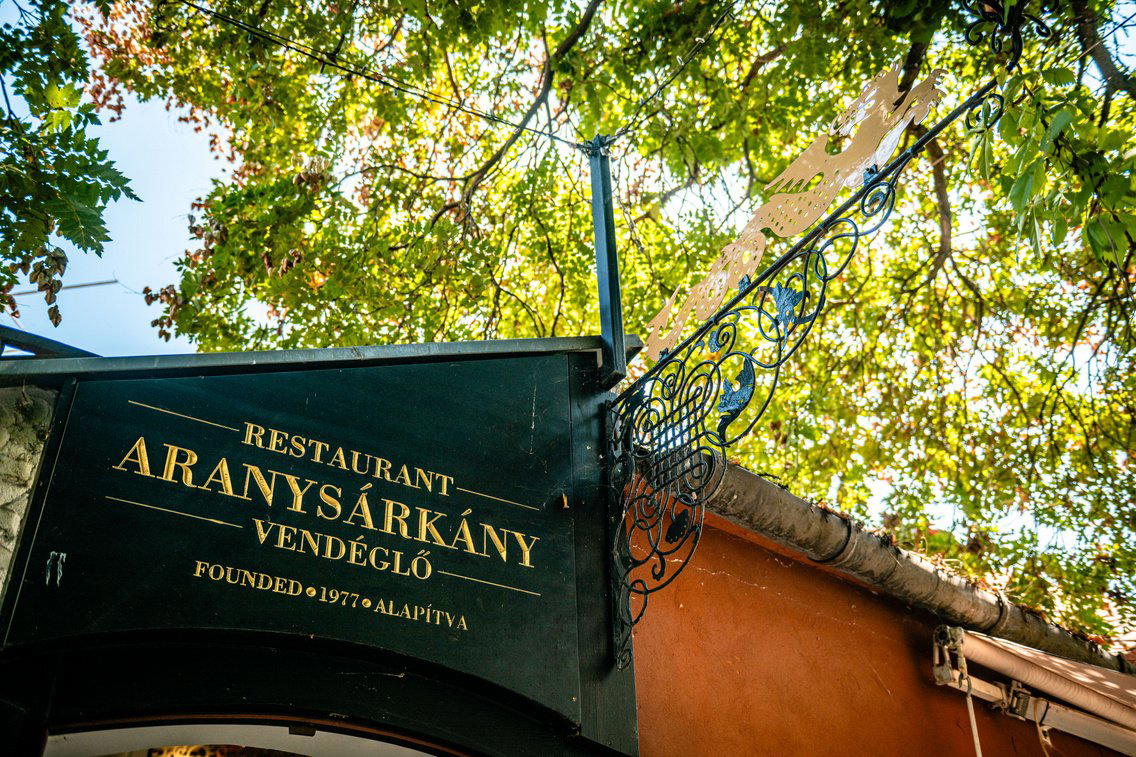
Where Szentendre Steps Back from the Postcard
Alkotmány utca runs parallel to the pedestrian corridor that most visitors to Szentendre never leave. The street is quieter, the facades less restored, and the light in the late afternoon falls differently here than it does on Fő tér, the town's cobblestone centrepiece. It occupies a ground-floor address at number 1/a, and the building's proportions belong to the kind of provincial Hungarian townhouse that Szentendre has been steadily renovating since the 1990s. The effect, approaching from the street, is one of understatement: a traditional vendéglő that hasn't been redesigned to attract Instagram traffic.
Szentendre itself sits at the northern tip of the Budapest metropolitan reach, roughly 20 kilometres up the Danube from the capital. It draws day-trippers via the HÉV suburban rail from Batthyány tér (the journey runs around 40 minutes depending on the service), and by summer weekends the town's art galleries and ceramic studios are well attended. The restaurants that cluster near the waterfront and the Serbian Orthodox cathedral tend to price for the tourist moment. Aranysárkány's address, slightly off that axis, positions it differently in the local dining order.
The Dunakanyar as a Larder
Hungarian vendéglő cooking, at its most considered, is built around what the surrounding region produces rather than what the central wholesale market can deliver cheaply. The Danube Bend, Dunakanyar in Hungarian, runs through a transitional agricultural zone where the Pilis hills meet the river plain. The area has long supplied Budapest's markets with freshwater fish, game, and garden vegetables, and the proximity of small producers to Szentendre's kitchens has historically given the town's better restaurants access to ingredients that larger Budapest operations would have to source from further afield.
This sourcing geography matters in practice. Freshwater fish cookery, particularly carp and fogas (pike-perch from Lake Balaton and the Danube system), remains one of the defining registers of Hungarian table tradition in this part of the country. When the supply chain is short, the fish arrives without the deterioration in texture that longer cold-chain transport causes. Game from the Pilis, boar, venison, hare, follows a similar logic: the hills above Szentendre have been hunting territory for centuries, and autumn menus in the Dunakanyar region have historically reflected what the season produces. For context, Hungarian restaurants operating in this tradition at a higher price point, Pajta in Őriszentpéter and Hosszú Tányér in Hosszúhetény both work within regional sourcing frameworks, tend to foreground those supply relationships explicitly. A neighbourhood vendéglő operates the same logic with less ceremony around it.
Comparison with the broader Hungarian dining scene places Aranysárkány in a recognisable tier. Budapest's Stand and the Michelin-recognised addresses on the capital's contemporary circuit price and present differently, while the casual end of the Budapest bisztró scene, Stand25 Bisztró at the €€ level, operates on higher volume. A town-scale vendéglő in Szentendre sits between those poles: more ingredient-driven than a tourist-facing grill, less ambitious in format than the country's contemporary fine-dining tier.
The Vendéglő Format and What It Asks of the Diner
The vendéglő as a category is worth distinguishing from the étterem (restaurant) and the csárda (roadside inn with folk associations). A vendéglő is, historically, a neighbourhood eating house: the menu is shorter than a formal restaurant's, the room is plainer, the cooking is direct. Paprikás, gulyás, töltött káposzta (stuffed cabbage), roasted meats with braised accompaniments, these are the structural pillars. The format doesn't attempt to reimagine Hungarian cuisine so much as to execute its established forms with care for the ingredients used.
That distinction matters for setting expectations. Diners arriving from the international fine-dining circuit, those accustomed to the tasting-menu format at addresses like Le Bernardin in New York or the community-table approach of Lazy Bear in San Francisco, are in different territory. The pleasure at a well-run vendéglő is not revelation but fidelity: does the pörkölt taste like pörkölt made with good meat and proper time? Is the lard-fried bread a vehicle for something worth eating? These are different questions, and they require a different mode of attention from the diner.
Within Szentendre's own dining tier, Aranysárkány sits alongside Labirintus Étterem and Teyföl as part of a small cluster of Hungarian-focused restaurants in the town. The full context of the local offer is covered in our full Szentendre restaurants guide. Elsewhere in the Hungarian regions, restaurants working in traditional formats with serious ingredient sourcing, Öreg Prés in Mór, Kővirág in Köveskál, and Botanica in Dánszentmiklós, each demonstrate how the country's regional cooking traditions can hold their own when the kitchen takes produce seriously. The Balaton wine country adds another dimension: Petrányi Csopak in Csopak and Sauska 48 in Villány show what happens when regional produce and a serious wine program work in tandem. At the gourmet end of the regional spectrum, Platán Gourmet in Tata applies more technical ambition to a similar geographic context. For fish specifically, Old Kőrössy in Szegedin, Tiszavirág in Szeged, and Horgonyzó Kisvendéglő in Tiszalök represent the country's riverine cooking traditions at different price points. Padi in Rátka adds a northeastern Tokaj-region counterpoint to any map of serious Hungarian regional cooking.
Planning a Visit
Aranysárkány is reachable from Budapest in under an hour by HÉV from Batthyány tér metro station, which makes it a practical lunch destination rather than a dedicated half-day commitment. Szentendre's main tourist flow peaks between May and September, with Sundays drawing the heaviest crowds from the capital. Weekday lunches in spring and autumn offer the town at something closer to its actual pace. The address at Alkotmány u. 1/a places the restaurant within a few minutes' walk of the HÉV terminus and the town's main square, but on a street quiet enough that the approach doesn't involve negotiating groups.
Comparable Spots, Quickly
Comparable venues nearby, for context on price, style, and recognition.
| Venue | Cuisine | Price | Awards | Notes |
|---|---|---|---|---|
| Aranysárkány Vendéglő | Traditional Hungarian with Contemporary Techniques | $$ | Not listed | Szentendre |
| Labirintus Étterem | Traditional Hungarian | $$ | Not listed | Szentendre |
| Teyföl | Modern Hungarian Bistro | $$ | Michelin Plate | Old Town |
| Gléda Vendéglö | Modern Hungarian | $$ | Not listed | Obuda |
| Vadrózsa | Traditional Hungarian & International | $$ | Not listed | Pasaret |
| Cafe Vian Gozsdu Udvar | Traditional Hungarian Bistro | $$ | Not listed | Belvaros |
Continue exploring
More in Szentendre
Restaurants in Szentendre
Browse all →
Bars in Szentendre
Browse all →
Hotels in Szentendre
Browse all →

At a Glance
- Cozy
- Classic
- Rustic
- Intimate
- Date Night
- Family
- Group Dining
- Casual Hangout
- Special Occasion
- Terrace
- Standalone
- Historic Building
- Beer Program
- Local Sourcing
- Street Scene
Current opening hours
- Monday
- Closed
- Tuesday
- 12–10 PM
- Wednesday
- 12–10 PM
- Thursday
- 12–10 PM
- Friday
- 12–10 PM
- Saturday
- 12–10 PM
- Sunday
- 12–6 PM
Hours can change for holidays and private events. Last verified .
Warm and inviting with traditional décor, charming cobblestone street-front seating, and a cozy interior dining room on the first floor that evokes authentic local character.