



1 Michelin Star · La Liste Top Restaurants · Star Wine List
Our verdict
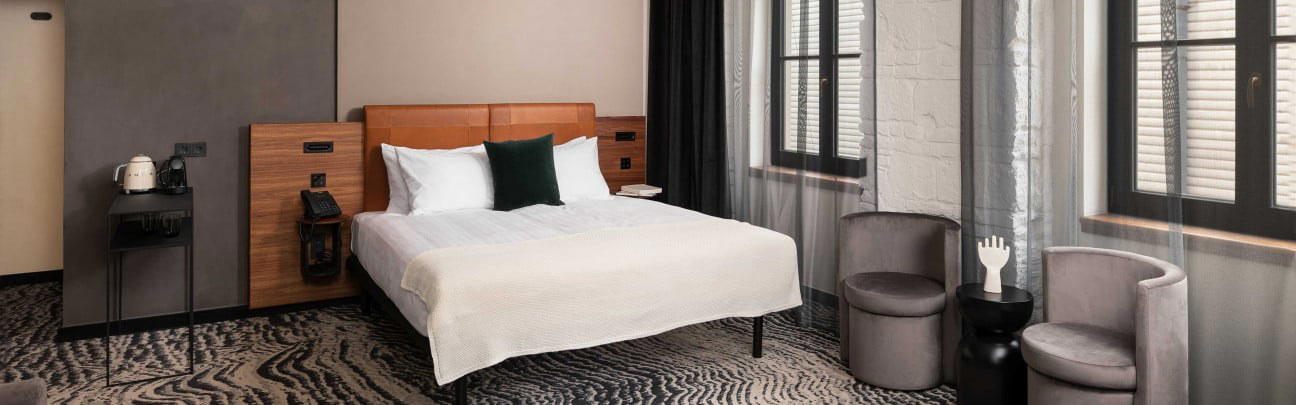
Salt holds a Michelin star and consecutive La Liste scores of 75–76 points, placing it among Budapest's most critically recognised tasting-menu addresses. Set inside a boutique hotel on Királyi Pál utca, the restaurant's open kitchen and foraged-ingredient pantry reflect a broader shift in Hungarian fine dining toward regional provenance and ingredient-led cooking. A 15-course surprise menu runs in both omnivore and vegetable formats.

Pearl is the En Primeur Club membership app, where members save venues, book tables and use the concierge.
Where Budapest's Fine Dining Scene Lands Its Sharpest Focus
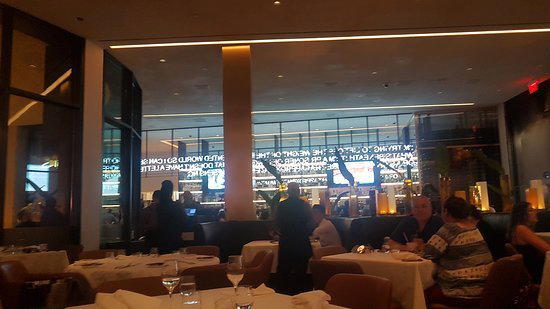
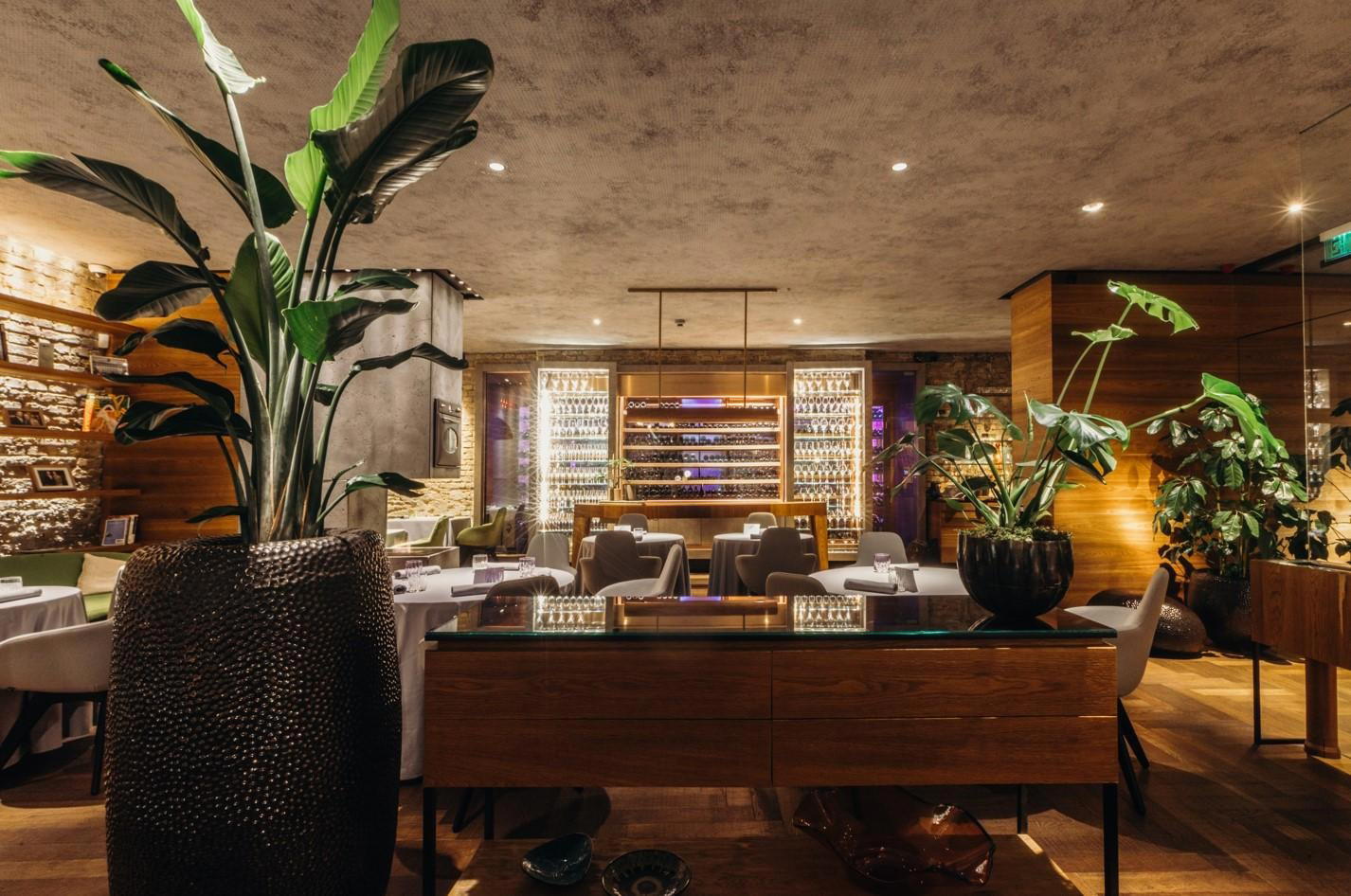
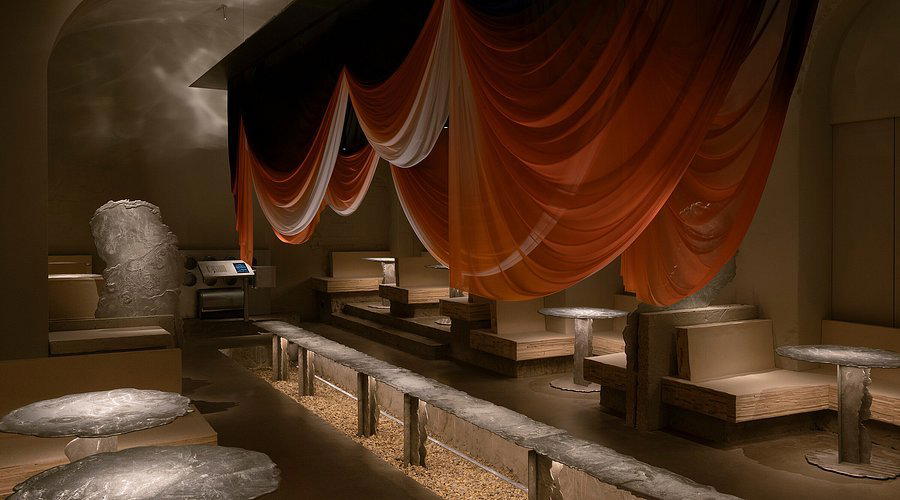
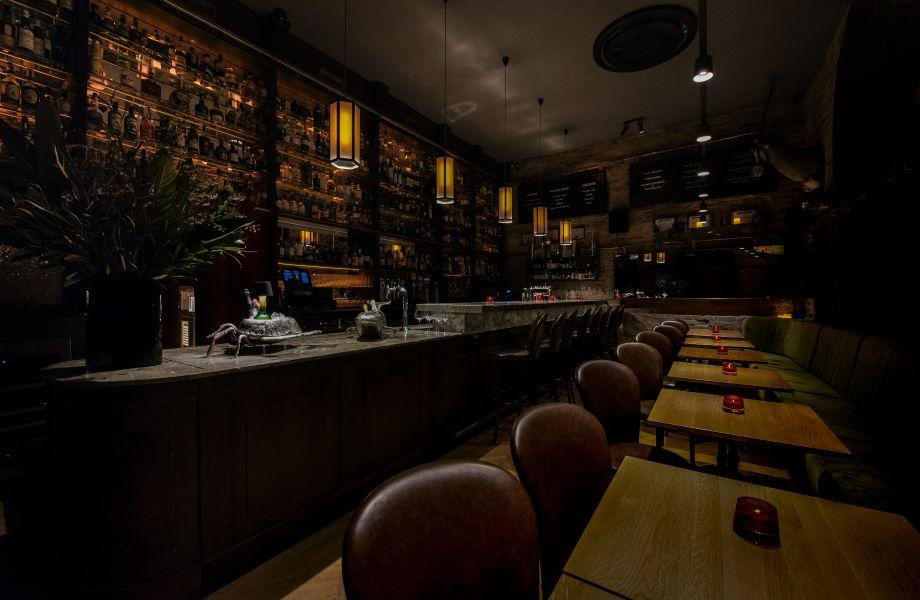
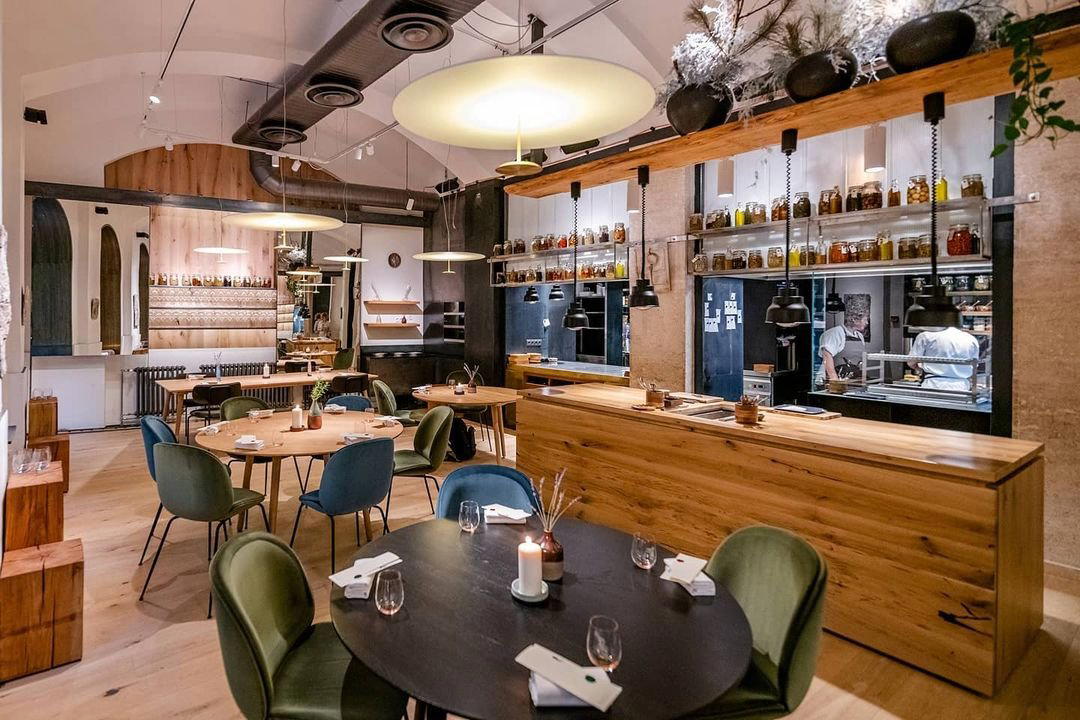
The room at Salt makes its priorities immediately apparent. Shelves along the walls hold jars of preserved foraged fruits, vegetables, and herbs, a pantry that reads as both larder and manifesto. The open kitchen faces the dining room directly, with every table oriented toward the wood-clad pass where courses are assembled in plain sight. That transparency is a recurring characteristic of the more serious end of Budapest's current fine-dining generation: no curtained-off theatre, just the work itself.
Salt sits on Királyi Pál utca in the 5th district, within a boutique hotel, at the four-euro-sign price tier that places it alongside Babel and Costes in Budapest's premium tasting-menu bracket. The address is a short walk from the Inner City's main artery, Váci utca, though the restaurant itself operates in a register far removed from that tourist corridor.
Critical Reception and What It Signals
Salt earned a Michelin star in 2024, joining a compact tier of Budapest restaurants that hold star recognition. The award confirmed what La Liste had already begun to signal: the restaurant scored 75 points in the 2025 La Liste ranking and moved to 76 points in 2026, a trajectory that places it in the upper range of recognised Hungarian fine-dining addresses. La Liste's notes specifically highlight the refinement of presentation and the quality of the vegetable-led menu as distinctive features, not as an afterthought, but as a programme that may, their entry suggests, eventually warrant its own status within the standard booking format.
Compare it to Stand, which works in a more classical tradition, or essência, which leans toward Portuguese-Hungarian cross-reference, Salt's distinguishing axis is the foraged-and-fermented pantry, expressed through a surprise format that gives the kitchen room to change course with seasons and supply.
The Format and What It Implies
The structure at Salt is a 15-course surprise menu, with two tracks: the standard menu incorporating fish and meat, and a fully vegetable option available when requested at the time of booking. That vegetable menu is not a concession or an afterthought; La Liste's annotators noted it as a programme that rivals the main offering in refinement. The butter, lardo, and Mangalitsa ham served across the meal are produced in-house, Mangalitsa being a Hungarian indigenous breed whose fat-marbled meat has become a marker of provenance-conscious Hungarian cooking over the past decade.
Much of the menu draws on updated interpretations of classic Hungarian recipes, a curatorial move that positions Salt alongside the broader regional fine-dining approach visible at Arany Kaviár and, outside the capital, at destinations like Platán Gourmet in Tata and Pajta in Őriszentpéter. The difference is emphasis: Salt's cooking is routed through wild picking and collaboration with regional growers, which means the ingredient sourcing is itself a structural element of the menu rather than a supporting note.
For guests who do not drink alcohol, Salt offers a dedicated non-alcoholic pairing. This is no longer a differentiator among serious European tasting-menu restaurants, it is increasingly a baseline expectation, but its presence here reflects the operational seriousness that characterises restaurants at this recognition level.
Chef Szilárd Tóth and the Provenance Logic
Chef Szilárd Tóth's connection to wild picking and regional growers is documented across La Liste's entries for consecutive years. That orientation is relevant not as biography but as a production system: a kitchen that forages and ferments its own pantry, and works directly with growers, operates with different seasonal constraints and creative possibilities than one that sources through standard supply chains. The preserved jars visible throughout the dining room are the physical record of that system, accumulated across seasons and displayed as working inventory rather than decoration.
Hungary's fine-dining scene has, over the past fifteen years, developed a generation of chefs who work at the intersection of local tradition and contemporary technique. Salt's position within that generation is defined by its commitment to raw-material sourcing at the ingredient level, a characteristic it shares, in different expressions, with 42 Restaurant in Esztergom and Alkimista Kulináris Műhely in Szeged. Across Hungary, this sourcing-first approach has become one of the clearest markers separating the country's serious tasting-menu addresses from the broader mid-market.
Budapest in European Context
Budapest's Michelin-starred restaurants operate within a Central European fine-dining context that differs from the density of stars in Paris or Copenhagen but shares the direction of travel: ingredient provenance, regional identity, and restrained presentation have replaced the excess of earlier luxury-hotel dining. Salt's La Liste scores place it in a comparable conversation with serious European tasting-menu restaurants outside the major Western capitals, including addresses like De Librije in Zwolle and De Bokkedoorns in Overveen, which operate in similarly specialist registers within their own national scenes.
Within Hungary beyond Budapest, the fine-dining circuit has expanded. Addresses like 67 Sigma in Székesfehérvár and A Konyhám Stúdió 365 in Fonyód indicate that the serious tasting-menu format is no longer confined to the capital. Salt's recognition, however, remains among the most formally documented in the country, with two consecutive La Liste entries and Michelin confirmation in the same period.
Planning a Visit
Salt is located at Királyi Pál utca 4, in the 5th district of Budapest, within a boutique hotel. Given the Michelin star awarded in 2024 and the restaurant's La Liste recognition, forward booking is advisable; the dining room is small and the format is set-menu only, which limits table availability at any given service. The vegetable menu requires advance notice at the time of booking. A non-alcoholic pairing is available alongside the wine programme. The price tier is €€€€, consistent with Budapest's premium tasting-menu addresses. For broader context on the city's dining scene, see our full Budapest restaurants guide, and for planning the rest of a visit, our Budapest hotels guide, bars guide, wineries guide, and experiences guide cover the surrounding territory.
Frequently asked questions
Is Salt Michelin-listed?
Salt has received recognition including: La Liste Top Restaurants (2026): 76pts; Chef Szilard Toth loves wild picking and is thus close to nature. He also collaborates with friendly regional growers. At Salt, he can fully roll out his passion and style. The basic 15-course menu is….
What style of cooking does Salt do?
What do regulars order at Salt?
Salt runs exclusively as a 15-course surprise menu, so the kitchen sets the sequence rather than the guest. The standard track includes fish and meat courses; a fully vegetable menu is available if requested at the time of booking. Chef Szilárd Tóth's sourcing from wild-foraged ingredients and regional growers shapes the menu, and in-house productions such as butter, lardo, and Mangalitsa ham feature across the courses. A non-alcoholic pairing is also available alongside the menu.
What price level is Salt?
Pricing at Salt is listed as €€€€.
What are the opening hours for Salt?
Hours at Salt: Location.
What part of town is Salt in?
Salt is located at Budapest, Királyi Pál u. 4, 1053 Hungary, Budapest.
Where the Accolades Land
Comparable options at a glance, pulled from our tracked venues.
| Venue | Cuisine | Price | Awards | Notes |
|---|---|---|---|---|
| SaltThis venue (the venue you are viewing) | Modern Hungarian Fine Dining | $150–200 | 1 Michelin Star · La Liste Top Restaurants | Not listed |
| Babel | Modern Hungarian Fine Dining | Not listed | 1 Michelin Star · La Liste Top Restaurants | Modern Cuisine |
| Borkonyha Winekitchen | Modern Hungarian-Inspired Bistro | $30–50 | 1 Michelin Star · La Liste Top Restaurants | Modern Cuisine |
| Rumour by Rácz Jenő | Modern Fusion Tasting Menu | $100–150 | 1 Michelin Star · La Liste Top Restaurants | Creative |
| Stand25 Bisztró | Modern Hungarian Bistro | $50–100 | Michelin Plate | Traditional Cuisine |
| Bilanx | Modern Hungarian Contemporary | $50–100 | Michelin Plate | Contemporary |
Recognition history
Dated appearances from independent guides and award organizations, with the underlying list record or original source where available.
Michelin 1 Star
Michelin
La Liste Top Restaurants
La Liste
Star Wine List
Star Wine List
Opinionated About Dining Top Restaurants in Europe Recommended
Opinionated About Dining
The Best Chef Two Knives
The Best Chef
Full recognition history (8 entries)
La Liste Top Restaurants
La Liste
We're Smart World 3 Radishes
We're Smart World
Michelin 1 Star
Michelin